
The Overview
Michael Fulton
Melbourne-based skier and snowboarder with 50+ resorts across 5 continents. Specialises in Australian resorts and international resort comparisons.
Silver Mountain's summit reaches 6,299 feet, dropping 2,198 vertical feet to a base at 4,101 feet across 80 runs spread over 1,600 acres above Kellogg, Idaho. Terrain splits 40 per cent intermediate, 30 per cent advanced, 20 per cent beginner and 10 per cent expert, with average annual snowfall of roughly 300 inches. The resort carries Indy Pass and Powder Alliance affiliation. Six lifts, including a gondola, one quad chair and two triple chairs, serve the mountain alongside two double chairs.
Silver Mountain's defining feature is its gondola, which climbs 3.1 miles directly from the town of Kellogg to the mountain base, the world's longest single-stage gondola ride at close to twenty minutes each way. This unusual base-to-mountain link was built specifically to revive a Silver Valley economy devastated by the decline of mining and logging. The resort's terrain and lift network sit above the gondola's upper terminal at Mountain House.
The ski area first opened in January 1968 as Jackass Ski Bowl on Wardner Peak, later renamed Silverhorn in 1973 following an ownership change. In the mid-1980s, Kellogg city councilman Wayne Ross conceived the idea of a gondola linking the depressed valley floor town directly to an expanded resort, aiming to stimulate the local economy. In December 1987, the US Congress approved 6.4 million US dollars in matching funds toward construction.
In September 1988, the economically struggling town of Kellogg voted by more than 82 per cent to tax itself two million US dollars over twenty years, and Swiss lift manufacturer Von Roll Tramways agreed to guarantee much of the remaining funding. Ground broke for the gondola and base village on 25 April 1989, and the resort was renamed Silver Mountain that summer. Adult daily tickets run from 79 to 99 US dollars, with season passes from 349 dollars, reflecting the resort's role as both a ski destination and a community revival project.
2,198ft
Vertical
80
Runs
1,600 acres
Skiable
25ft
Annual snow
Indy / Powder Alliance
Pass
The Terrain
80 runs across 1,600 acres skiable
Silver Mountain above Kellogg offers 80 runs across about 1,600 acres (648 hectares) in the Silver Valley, with a base at 4,100 feet (1,250 m) and a summit at 6,300 feet (1,920 m), roughly 2,200 feet (670 m) of vertical. Intermediates account for 40%, advanced skiers 30%, beginners 20% and experts 10%. Skiers reach the slopes on a 3.1-mile gondola from town, and a quad, two triples and two doubles do the work above Mountain House. The mix gives intermediate skiers plenty of cruising, with enough steeper pitches to keep stronger skiers interested.
Above Mountain House, the quad and triple chairs lead to the top of Kellogg Peak, where steeps, bumps and a number of alternative lines open up toward neighbouring Wardner Peak. The Wardner side, served by a double chair, is known for chutes and mogul runs, and sits close to the original Jackass Ski Bowl area. Chair 2 reaches glades and advanced terrain, while chairs 3 and 4 serve gentler intermediate runs. Silver Mountain suits strong intermediates and advanced skiers wanting varied terrain and short lift lines, and the gondola means beginners can ride to the base without a mountain drive.
Terrain split
80
runs
80 runs across 4 grades
Beginner16 runs · 20%
Intermediate32 runs · 40%
Advanced24 runs · 30%
Expert8 runs · 10%
Time it right
When to visit Silver Mountain
The 2025-26 season at Silver Mountain ran from 21 November 2025 to 19 April 2026, a roughly twenty-one-week season supported by average annual snowfall of around 300 inches. This substantial snowfall, combined with the resort's Silver Valley location, gives Silver Mountain a reliable natural season relative to many Idaho resorts of similar size. Season dates can shift slightly depending on early and late-season weather.
Midwinter, from December through February, typically brings the most consistent conditions to the mountain's varied terrain. The gondola ride itself is a year-round draw for visitors, meaning the resort sees traffic even from those not necessarily skiing, though winter operations centre on the lift-served terrain above Mountain House. Weekday visits tend to be quieter than weekends.
As an Indy Pass and Powder Alliance resort, Silver Mountain draws visiting skiers holding those multi-resort passes in addition to its regional Silver Valley base. The historic mining-town setting of Kellogg adds a distinct cultural dimension to the resort experience beyond the slopes themselves. School holiday periods bring increased family visitation, supported by the resort's indoor waterpark as a non-ski amenity.
Specific event programming beyond standard lift and gondola operations is not confirmed in available resort information. The combination of substantial snowfall and the novelty of the world's longest single-stage gondola ride continues to define the Silver Mountain visitor experience through the season. Kellogg's ongoing economic reliance on the resort, dating to its founding purpose in the late 1980s, remains a backdrop to its operations.
Season 2026 - 2027
28 Nov 2026
Opens
18 Apr 2027
Closes
141
Days open
25 ft
Annual snow
Getting there
Getting to Silver Mountain, and where to stay
Silver Mountain rises above the town of Kellogg in the Silver Valley of northern Idaho, with a base elevation of 4,101 feet and a summit at 6,299 feet across a 2,198-foot vertical drop over 1,600 acres. The resort sits just south of Interstate 90 in Shoshone County, a region historically built on mining and logging.
Kellogg itself is the resort's gateway town, connected directly to the mountain by the 3.1-mile gondola that climbs from the town centre to the ski area's base facilities. This direct link means visitors can begin their mountain experience from downtown Kellogg rather than driving to a separate base area, a distinctive arrangement among Idaho resorts. The town's mining heritage remains visible throughout the Silver Valley.
Interstate 90 runs directly through Kellogg, providing straightforward access from both Idaho and neighbouring Washington and Montana. Winter driving conditions on I-90 can include snow and ice during storms, though the route is well maintained given its role as a major interstate corridor. The gondola itself removes the need for a separate winding mountain access road once visitors reach town.
Spokane International Airport, roughly an hour to the west along I-90, is the nearest airport with substantial commercial service. This gives Silver Mountain reasonably convenient access for fly-in visitors from the broader Inland Northwest. Most visitors, however, arrive by car along Interstate 90 from Idaho, Washington or Montana before taking the gondola up from Kellogg.
Where to stay
Search all stays →Hotels and lodges near Silver Mountain, powered by Stay22.
Latest News
From the SnowStash desk
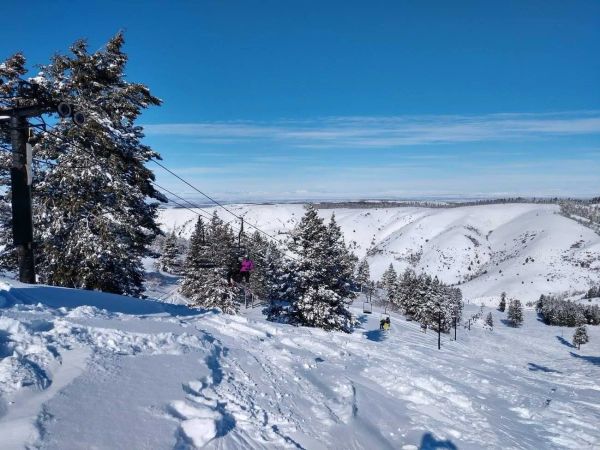
Kelly Canyon, Idaho, Adds Snowmaking, a Bigger Terrain Park and More Parking for 2026-27
Kelly Canyon had a rough 2025-26, and the Idaho resort has spent the summer making sure it doesn’t repeat. Snowmaking now reaches the top of Goldrush, the terrain park is doubling in size with a stereo system, lights and a snack shack, and the car park is getting bigger. Grooming is stepping up too. Target opening is December 4, conditions permitting.
9 Oct 2026
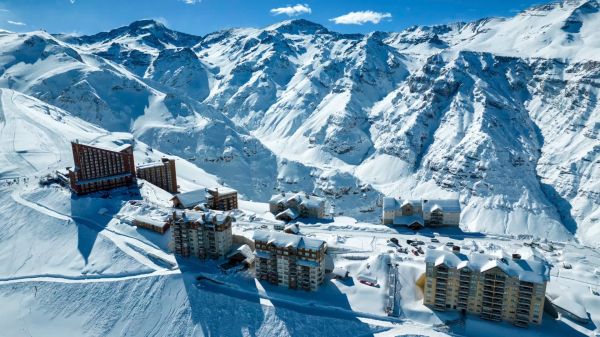
Valle Nevado Extends Season to November 8 After 108 cm in 48 Hours
Winter was meant to be winding down in Chile. Then Valle Nevado took 108 cm in 48 hours in early October, and the resort has pushed its closing date out to November 8 - its latest in 38 years of operation. That makes 143 days of skiing since opening day on June 19, with 690 cm banked for the season. Only part of the mountain is running while the storm settles, so check the mountain report before you plan a trip.
9 Oct 2026
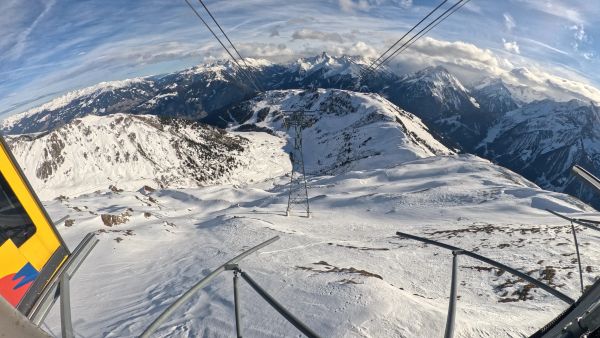
Alps Snow Forecast: Cold Front Brings Thursday Snow to the High Alps
The Alps look a lot more like winter today, for a day or so. A cold front is moving west to east, dropping up to 35 cm on high glaciers and peaks, with snow levels falling to around 1,500-1,800 m at times. Don’t plan a trip around it: mid-elevation snow will be thin and wet, every area is closed bar a limited Sölden glacier opening tomorrow, and warmer weather returns by Monday.
8 Oct 2026
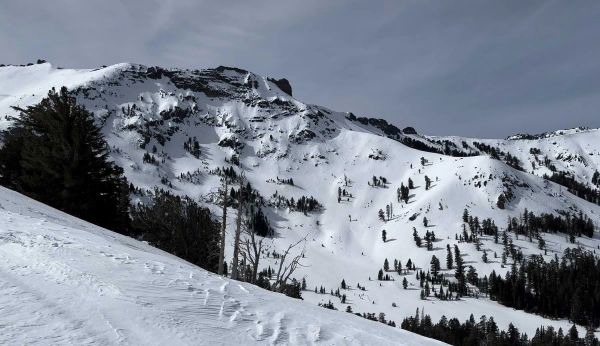
California Ski Resort Opening Dates 2026-27: Mammoth Leads, Tahoe Follows
Mammoth Mountain is first up in California, targeting Friday 13 November after a dusting of September snow. Heavenly and Northstar follow on 20 November, Palisades Tahoe on Wednesday 25 November and Sugar Bowl on 27 November, with Kirkwood on 4 December and June Mountain on 19 December. Plenty of smaller areas have no date yet. A super El Niño favours the Sierra, but a warmer storm track is the catch.
7 Oct 2026
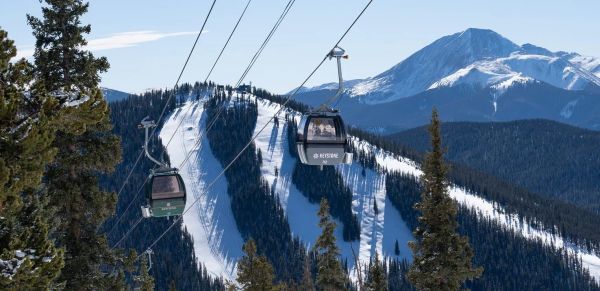
Colorado Ski Resort Opening Dates 2026-27: A-Basin and Keystone Race to Be First
Arapahoe Basin, Keystone and Winter Park are all chasing an October start, though none has a firm date yet. The first dated openers are Breckenridge and Copper on Friday 6 November, then Vail on 13 November, with most of the rest bunched around US Thanksgiving. Hesperus did not open at all last season. A super El Niño offers hope but no guarantee, and forecasters say the southern mountains have the better odds.
5 Oct 2026
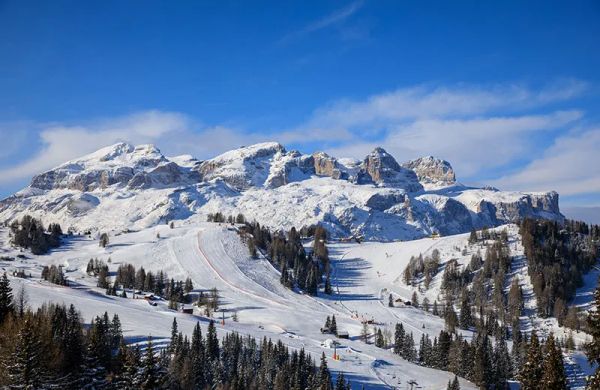
Dolomiti Superski 2026-27: Four New Gondolas, New Reservoirs and an €89 Peak Day Pass
Dolomiti Superski is spending around €100 million across its 12 areas before winter. Kronplatz gets a new 10-passenger gondola with a middle station, 3 Zinnen gets Helmissimo, and Val di Fassa swaps a chairlift for a gondola above Col Valvacin. New water-storage basins and upgraded snowmaking follow, and construction has started on the San Martino to Passo Rolle link. A peak adult day pass is €89.
4 Oct 2026
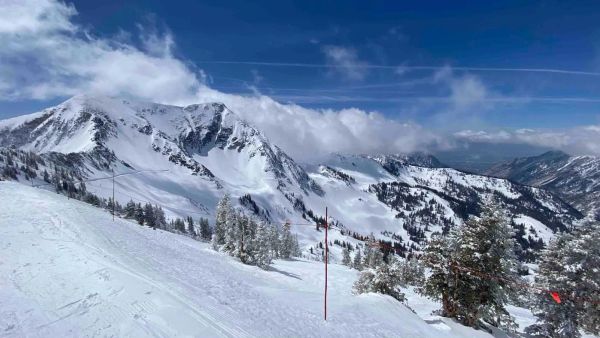
Utah Ski Resort Opening Dates 2026-27: Brian Head First, Eagle Point Out
Brian Head is targeting 6 November, though last year it aimed for 7 November and did not open until the 25th. Park City, Alta and Solitude are pencilled in for 20 November, Snowbird and Snowbasin for 27 November, and Deer Valley for 5 December. Eagle Point will stay closed after the Cottonwood Fire. A super El Niño is forecast, but the big snow is not expected until January.
4 Oct 2026
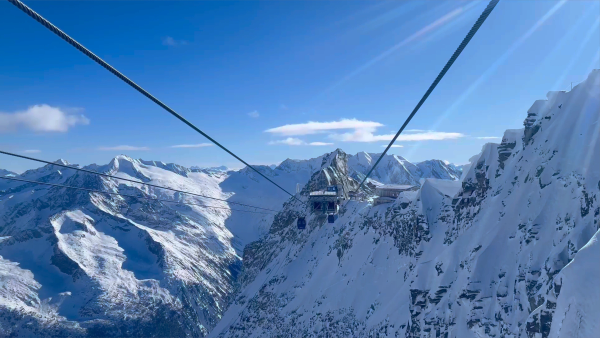
Hintertux Glacier Opens for 2026-27 With 12 Kilometres of Piste
Hintertux became Austria's second glacier to open for 2026-27 on Friday 2 October, after the Pitztal Glacier. Twelve kilometres of piste are running around the Olperer and Gefrorene Wand, served by one gondola and two drag lifts, with the Betterpark also open. Lifts officially run 8:15 am to 4:30 pm, but skiing stops at 2 pm for now.
4 Oct 2026
Silver Mountain Snow Report
Snow Report
Updated 9 Oct 2026
6,299ft
summit
+0in
new snow · last 24 hours
Overcast31°F / 51°F · SW 19mph
Snowfall
24 hours
0in
48 hours
0in
7 days
0in
Base depth
0in
Season total
0in
Total lifts6
Live open status isn’t available right now.
28 Nov 2026 - 18 Apr 2027
Hour by Hour
Next 42 hours· Updated Oct 9, 2026 at 6:02 AM
Scroll for the full outlook · Open-Meteo
7-Day Outlook
6,299 ftUpdated Oct 9, 2026 at 6:02 AMOpen-Meteo
Days 1–7
0.0"
Days 8–14
0.0"
Fri, Oct 9
Dense Drizzle
Temp51° / 31°°F
Snow0.0"(18%)
Wind19 mph SW
Live snow from the resort feed; forecast from Open-Meteo, via Supabase.
Understanding the Silver Mountain snow report
Silver Mountain snow conditions, updated regularly: current snowfall, snow depth, temperatures, and the outlook for this Idaho resort on the Indy / Powder Alliance.
Snow measurements
Snow depth at Silver Mountain is tracked at both the base and summit, since the two elevations often see different totals — roughly a 670m difference here. We report fresh snowfall over the last 24 hours and 7 days alongside the running season total, in both metric and imperial units.
Weather conditions
Wind and temperature swings matter as much as fresh snowfall. Cold, calm conditions hold snow quality well, while wind-loading or a warm-up can change things quickly — especially given the elevation spread between Silver Mountain's base and summit.
Data sources
Snowfall and depth figures for Silver Mountain come from official mountain sources; weather and outlook data comes from independent forecasting services. The mountain is served by 6 lifts, including a quad chairlift and a gondola.
When to check
Snow reports are typically updated early morning and late afternoon. For the most current conditions, check back regularly, especially if a winter storm is approaching.