
The Overview
Michael Fulton
Melbourne-based skier and snowboarder with 50+ resorts across 5 continents. Specialises in Australian resorts and international resort comparisons.
Tamarack Resort's summit reaches 7,700 feet, dropping 2,802 vertical feet to a base at 4,898 feet across 50 runs spread over 1,100 acres overlooking Lake Cascade in central Idaho. Terrain splits 45 per cent intermediate, 38 per cent advanced and 17 per cent beginner, with no expert-rated runs, and average annual snowfall of roughly 300 inches. The resort carries Indy Pass affiliation. Seven lifts, including five quad chairs, serve the mountain alongside one surface lift and one t-bar.
Tamarack's lake-view setting and four-season resort amenities, including golf and a marina, distinguish it from Idaho's more purely ski-focused mountains. The resort's turbulent financial history has shaped much of its development, with terrain and lift buildout proceeding in stages tied to successive rounds of investment rather than a single continuous expansion. Its current 1,100-acre footprint remains smaller than the resort's original master-planned scope.
The project was first announced in 1988 as Valbois Resort on West Mountain in Valley County before going bankrupt, and in 1998 Mexican businessman Alfredo Miguel Afif purchased the assets and renamed it Westrock. When it opened in 2004 as Tamarack, it was the first new destination ski resort built in North America in 23 years. The resort's majority owners filed for Chapter 11 bankruptcy in February 2008 after failing to secure financing against an existing 262 million US dollar loan from Credit Suisse, and the resort closed in 2009.
A group of homeowners restarted limited ski operations in 2010 to keep the lifts running while foreclosure proceedings continued, with Credit Suisse ultimately gaining ownership through a 2014 sheriff's sale. New ownership group Tamarack Resort Holdings, a joint venture called Imperium Blue, took over in November 2018, and MMG Equity Partners assumed full ownership in October 2021, investing more than 245 million US dollars into the property since. Adult daily tickets run from 89 to 129 US dollars, with Boundless season passes from 699 dollars.
2,802ft
Vertical
50
Runs
1,100 acres
Skiable
25ft
Annual snow
Indy
Pass
The Terrain
50 runs across 1,100 acres skiable
Tamarack Resort stretches 50 runs over about 1,100 acres (445 hectares) on West Mountain above Lake Cascade, rising from 4,900 feet (1,493 m) to 7,700 feet (2,347 m) for roughly 2,800 feet (854 m) of vertical. Intermediates dominate with 45% of the terrain, advanced skiers hold 38% and beginners 17%, with no expert-rated runs. Five quad chairs, a t-bar and a surface lift handle the uphill traffic, so the lift system is modern and efficient. The mountain faces east, which brings morning sun and a distinctly big-mountain feel for its size.
The Summit Express serves the upper mountain, where the steepest runs and the most challenging pitches sit. Tamarack Express loads straight from the base and leads to beginner and intermediate runs, along with several terrain parks. Wildwood Express works the northern boundary, with groomed trails and fun tree skiing. Runs descend a long way before reaching the base, which gives strong skiers plenty of consistent fall line to enjoy. Tamarack suits intermediates and advanced skiers wanting quad-chair efficiency, and its lake views and four-season amenities add appeal for families on longer stays.
Terrain split
50
runs
50 runs across 4 grades
Beginner9 runs · 17%
Intermediate23 runs · 45%
Advanced19 runs · 38%
Expert0 runs · 0%
Time it right
When to visit Tamarack Resort
The 2025-26 season at Tamarack Resort ran from 27 November 2025 to 12 April 2026, a roughly nineteen-week season supported by average annual snowfall of around 300 inches. This snowfall total supports a reasonably long season for a resort of Tamarack's size and elevation. Season dates can shift slightly depending on early and late-season weather.
Midwinter, from December through February, typically brings the most consistent conditions across the resort's intermediate and advanced terrain. As a resort still rebuilding its destination profile following years of financial difficulty, Tamarack's crowd patterns tend to be lighter than more established Idaho destinations, even during peak holiday periods. Weekday visits are generally quiet.
The resort's four-season amenities, including golf and a marina on Lake Cascade, mean Tamarack's identity extends beyond winter operations alone, though ski season remains the primary draw during the colder months. As an Indy Pass resort, Tamarack draws some visiting skiers holding that multi-resort pass in addition to its regional Idaho base. School holiday periods bring increased family visitation to the resort's lodging and amenities.
Specific event programming beyond standard lift operations is not confirmed in available resort information. MMG Equity Partners' substantial ongoing investment since 2021 continues to shape the resort's development, with improvements extending across lodging and amenities as well as the ski terrain itself. The resort's lake-view setting remains a distinguishing feature relative to other central Idaho ski areas.
Season 2026 - 2027
27 Oct 2026
Opens
11 Apr 2027
Closes
166
Days open
25 ft
Annual snow
Getting there
Getting to Tamarack Resort, and where to stay
Tamarack Resort sits above Lake Cascade in Valley County, central Idaho, with a base elevation of 4,898 feet and a summit at 7,700 feet across a 2,802-foot vertical drop over 1,100 acres. The resort's West Mountain location places it within a scenic lake-and-mountain setting roughly 90 miles from Boise.
The nearby town of Donnelly and the larger community of McCall offer additional lodging and dining options beyond the resort's own on-site facilities. Lake Cascade itself is a significant regional recreation draw beyond winter sports, contributing to Tamarack's four-season resort identity. Boise, the nearest major city, supplies much of the resort's weekend and holiday visitor base.
Idaho State Highway 55 connects Boise to the Cascade and Donnelly area, with local roads then leading to the resort on West Mountain above the lake. The drive from Boise typically takes around 90 minutes depending on conditions, with winter weather occasionally requiring extra caution on the mountain roads near the resort. There is no direct public transport service to Tamarack.
Boise Airport is the nearest airport with substantial commercial service, roughly 90 miles south of the resort. This makes Tamarack accessible to fly-in visitors willing to make the drive north through the Treasure Valley and into the mountains. Most visitors, however, arrive by car from Boise or the broader western Idaho region rather than flying in directly.
Where to stay
Search all stays →Hotels and lodges near Tamarack Resort, powered by Stay22.
Latest News
From the SnowStash desk

Vermont Ski Resort Opening Dates 2026-27: Few Dates Set, Killington Waits on the Cold
Vermont's season is slow to take shape. Stratton is tentatively targeting 18 November and Sugarbush 21 November, while Pico has Friday 11 December on the calendar. Killington never sets a date and opens when the snowmaking allows, and Vail Resorts has yet to name days for Stowe, Okemo and Mount Snow. The forecasts disagree about snow, and the main El Niño worry for the Green Mountains is warmth.
9 Oct 2026
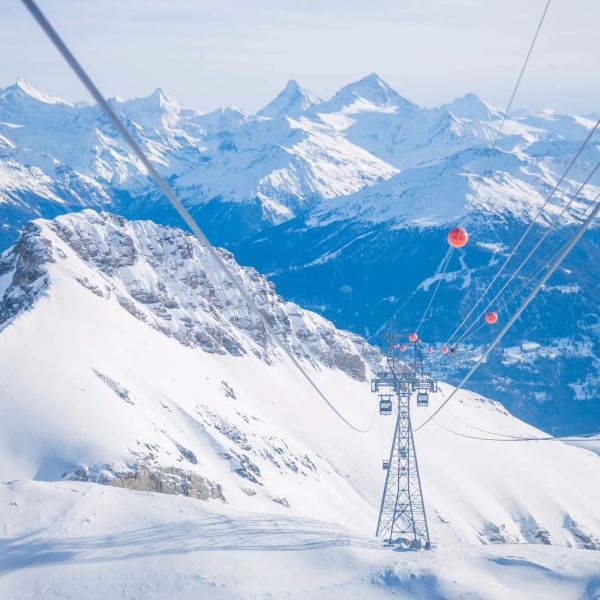
Crans-Montana 2027 World Championships President Resigns Ahead of Fraud Hearing
Less than four months out from the Crans-Montana 2027 World Championships, the man running the organising committee has stepped down. Claude-Alain Schmidhalter resigned as Swiss-Ski vice president and OC president after being indicted over a business dispute unrelated to skiing. He denies the allegations and faces court on October 27. Interim leaders are in place for the February 1-14 event.
9 Oct 2026
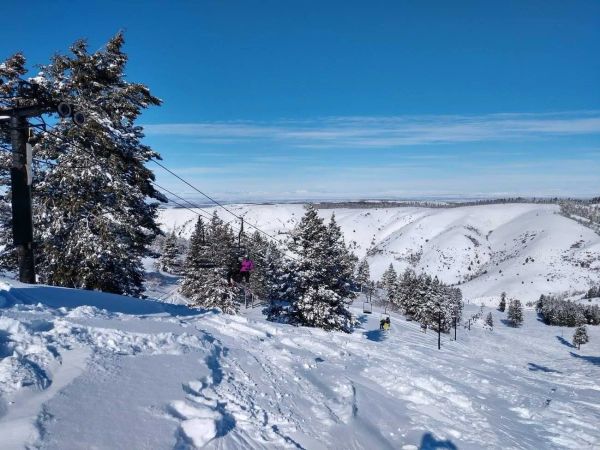
Kelly Canyon, Idaho, Adds Snowmaking, a Bigger Terrain Park and More Parking for 2026-27
Kelly Canyon had a rough 2025-26, and the Idaho resort has spent the summer making sure it doesn’t repeat. Snowmaking now reaches the top of Goldrush, the terrain park is doubling in size with a stereo system, lights and a snack shack, and the car park is getting bigger. Grooming is stepping up too. Target opening is December 4, conditions permitting.
9 Oct 2026
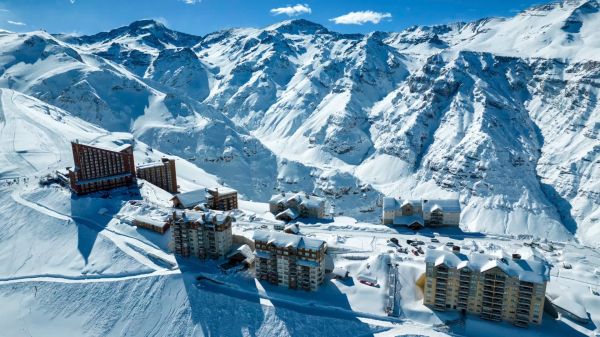
Valle Nevado Extends Season to November 8 After 108 cm in 48 Hours
Winter was meant to be winding down in Chile. Then Valle Nevado took 108 cm in 48 hours in early October, and the resort has pushed its closing date out to November 8 - its latest in 38 years of operation. That makes 143 days of skiing since opening day on June 19, with 690 cm banked for the season. Only part of the mountain is running while the storm settles, so check the mountain report before you plan a trip.
9 Oct 2026
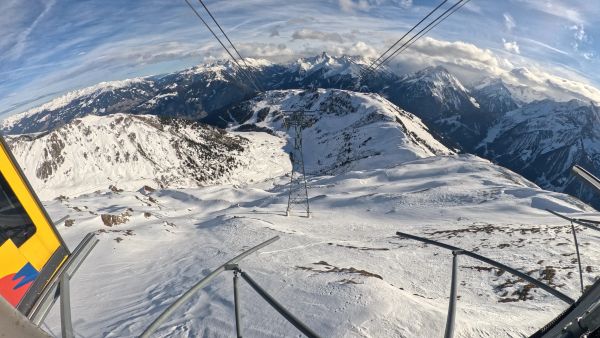
Alps Snow Forecast: Cold Front Brings Thursday Snow to the High Alps
The Alps look a lot more like winter today, for a day or so. A cold front is moving west to east, dropping up to 35 cm on high glaciers and peaks, with snow levels falling to around 1,500-1,800 m at times. Don’t plan a trip around it: mid-elevation snow will be thin and wet, every area is closed bar a limited Sölden glacier opening tomorrow, and warmer weather returns by Monday.
8 Oct 2026
California Ski Resort Opening Dates 2026-27: Mammoth Leads, Tahoe Follows
Mammoth Mountain is first up in California, targeting Friday 13 November after a dusting of September snow. Heavenly and Northstar follow on 20 November, Palisades Tahoe on Wednesday 25 November and Sugar Bowl on 27 November, with Kirkwood on 4 December and June Mountain on 19 December. Plenty of smaller areas have no date yet. A super El Niño favours the Sierra, but a warmer storm track is the catch.
7 Oct 2026
Colorado Ski Resort Opening Dates 2026-27: A-Basin and Keystone Race to Be First
Arapahoe Basin, Keystone and Winter Park are all chasing an October start, though none has a firm date yet. The first dated openers are Breckenridge and Copper on Friday 6 November, then Vail on 13 November, with most of the rest bunched around US Thanksgiving. Hesperus did not open at all last season. A super El Niño offers hope but no guarantee, and forecasters say the southern mountains have the better odds.
5 Oct 2026
Dolomiti Superski 2026-27: Four New Gondolas, New Reservoirs and an €89 Peak Day Pass
Dolomiti Superski is spending around €100 million across its 12 areas before winter. Kronplatz gets a new 10-passenger gondola with a middle station, 3 Zinnen gets Helmissimo, and Val di Fassa swaps a chairlift for a gondola above Col Valvacin. New water-storage basins and upgraded snowmaking follow, and construction has started on the San Martino to Passo Rolle link. A peak adult day pass is €89.
4 Oct 2026
Tamarack Resort Snow Report
Snow Report
Updated 11 Oct 2026
7,700ft
summit
+0in
new snow · last 24 hours
Overcast21°F / 35°F · NW 9mph
Snowfall
24 hours
0in
48 hours
0in
7 days
0in
Base depth
59in
Season total
0in
Total lifts7
Live open status isn’t available right now.
27 Oct 2026 - 11 Apr 2027
Hour by Hour
Next 41 hours· Updated Oct 11, 2026 at 6:02 PM
Scroll for the full outlook · Open-Meteo
7-Day Outlook
7,700 ftUpdated Oct 11, 2026 at 6:02 PMOpen-Meteo
Days 1–7
0.4"
Days 8–14
0.7"
Mon, Oct 12
Snow
Temp35° / 21°°F
Snow0.4"(17%)
Wind9 mph NW
Live snow from the resort feed; forecast from Open-Meteo, via Supabase.
Understanding the Tamarack Resort snow report
Tamarack Resort snow conditions, updated regularly: current snowfall, snow depth, temperatures, and the outlook for this Idaho resort on the Indy.
Snow measurements
Our snow reports measure snowfall in centimeters over multiple time windows — last 24 hours, last 7 days, and the season total. Base depth reflects accumulation at the 1493m base area, while summit depth captures conditions 854m higher at 2347m, where snow typically stays colder and lingers longer. Imperial conversions are shown alongside for convenience.
Weather conditions
Current weather conditions affect snow quality. Cold temperatures with low wind typically preserve snow quality, while warm temperatures or rain can impact conditions negatively — something worth watching closely at Tamarack Resort's 1493m base elevation, where temperatures run milder than the summit.
Data sources
Snowfall and depth figures for Tamarack Resort come from official mountain sources; weather and outlook data comes from independent forecasting services. The mountain is served by 7 lifts, including 5 quad chairlifts.
When to check
Conditions can change overnight, so mornings and late afternoons are the best times to check back on Tamarack Resort.