
Holimont
135 acres, 55 runs near Ellicottville. North America's largest private ski club, lake-effect powder.
Season 2026 - 2027
Opens
12 Dec 2026
Closes
3 Apr 2027
Days open
112
Annual snow
13ft
The Overview
Michael Fulton
Melbourne-based skier and snowboarder with 50+ resorts across 5 continents. Specialises in Australian resorts and international resort comparisons.
HoliMont's summit reaches 2,260 feet, dropping 702 vertical feet to a base at 1,558 feet across 55 runs spread over 135 acres near Ellicottville in western New York. Terrain splits 44 per cent advanced, 31 per cent intermediate and 25 per cent beginner, with no expert-rated runs, and average annual snowfall of roughly 150 inches from the region's lake-effect weather patterns. Five lifts, including two quad chairs and two triple chairs, serve the mountain alongside one double chair and two surface lifts.
HoliMont operates as North America's largest private ski club, a genuinely distinctive model in the industry that keeps its slopes notably uncrowded relative to comparably sized public resorts. The mountain welcomes the public on weekdays while reserving weekend access for members, a structure that shapes the entire visitor experience.
William Merk, inspired after witnessing the 1932 Winter Olympics at Lake Placid, pursued his passion for skiing in the Ellicottville area for years with the Ellicottville Ski Club before deciding to establish a private club of his own. In 1961, Merk initiated purchase options on land parcels along Route 242 with the backing of local investors, who coined the name HoliMont from the phrase Holiday Mountain. The first trail was cut in 1961, with seven more following in 1962, the club's official first season.
HoliMont has continued operating as a private, member-focused ski club since its founding, maintaining its distinctive weekday-public, weekend-members structure across more than six decades. Adult weekday daily tickets run from 75 to 85 US dollars, with substantially discounted rates for military members on Fridays.
702ft
Vertical
55
Runs
135 acres
Skiable
13ft
Annual snow
The Terrain
55 runs across 135 acres skiable
HoliMont is a private club that opens to the public on weekdays, covering 135 acres (55 hectares) on the edge of Ellicottville in western New York. Its 55 runs drop about 700 ft (214 m) from a 2,260 ft (689 m) summit to a base at 1,560 ft (475 m). The split leans steep, with 44% advanced, 31% intermediate and 25% beginner and no expert-rated runs. Two quad chairs, two triples, a double and two surface lifts serve the slopes, and the club's low crowd numbers make those lifts feel faster than they look on paper.
The slopes are best known for their steep drops and open views across Ellicottville, with groomed corduroy a regular feature because there is no night skiing to wear the snow down. The terrain suits strong intermediates and advanced skiers, with a lean towards steeper pitches, though easier runs exist for learners. Weekday visitors get a quiet mountain with a different character to neighbouring Holiday Valley, and weekends are reserved for members. It suits confident skiers who value space and groomed snow over terrain parks or night sessions.
Terrain split
55
runs
55 runs across 4 grades
Beginner14 runs · 25%
Intermediate17 runs · 31%
Advanced24 runs · 44%
Expert0 runs · 0%
Time it right
When to visit Holimont
The 2025-26 season at HoliMont ran from 13 December 2025 to 5 April 2026, a roughly sixteen-week season supported by average annual snowfall of around 150 inches, among the higher totals in New York State thanks to the region's lake-effect weather patterns off Lake Erie.
Midwinter, from December through February, typically brings the most consistent lake-effect powder conditions to the club's advanced-and-intermediate-weighted terrain. As North America's largest private ski club, HoliMont maintains a distinctive access structure, welcoming the public on weekdays while reserving weekends for members, keeping the slopes notably uncrowded relative to comparably sized public resorts.
This weekday-public, weekend-members model shapes visitor patterns throughout the season, with weekday visitors drawn by the promise of substantial lake-effect powder without the crowds typical of public resorts on similar terrain. School holiday periods bring some increase in weekday public visitation given the substantial advanced and intermediate terrain on offer.
Specific event programming beyond standard operations is not confirmed in available resort information. HoliMont's continuous operation as a private club since its 1961 founding by William Merk and local investors continues to define its seasonal character. The club's reputation for reliable lake-effect powder and uncrowded slopes remains central to its appeal each winter.
Season 2026 - 2027
12 Dec 2026
Opens
3 Apr 2027
Closes
112
Days open
13 ft
Annual snow
Getting there
Getting to Holimont, and where to stay
HoliMont sits near Ellicottville in western New York, with a base elevation of 1,558 feet and a summit at 2,260 feet across a 702-foot vertical drop over 135 acres. This western New York setting places the club within the broader Ellicottville ski area cluster, a well-known regional ski destination.
Ellicottville, a lively small village with dining, shopping and lodging, sits within a short drive of the club, providing a genuine mountain-town base for members and weekday public visitors alike. Buffalo, the nearest larger city, lies within a reasonable drive, providing the club's primary metropolitan visitor base.
New York State Route 242 provides direct access to the club, running through the heart of the Ellicottville ski area cluster. Winter driving conditions on this route can include snow and ice, particularly given the region's substantial lake-effect snowfall, though the road is well maintained given its role serving multiple ski areas. There is no direct public transport service to the club.
Buffalo Niagara International Airport, within a reasonable drive, is the nearest airport with substantial commercial service, making HoliMont accessible for visitors flying into western New York. This proximity to Buffalo supports the club's role as a significant private skiing destination for the region.
Where to stay
Search all stays →Hotels and lodges near Holimont, powered by Stay22.
Latest News
From the SnowStash desk
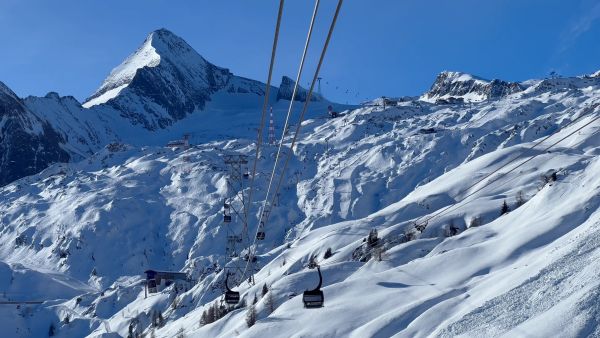
Europe Ski Resorts Open Now: What Is Skiable in Mid-October 2026
Europe’s ski season is open, technically. After a record-warm summer, glaciers in Austria, Switzerland and Italy are running a few pistes apiece, Sölden, Stubai and Kitzsteinhorn started late, Titlis has pushed back to 24 October, and Zermatt reopens a few lifts on 14 October after more than two months shut. Finland’s Levi and Ruka are skiing on stored snow. Here is what is open, and what you actually get at each.
14 Oct 2026

Zermatt Plans World Cup Downhill Return on the Gornergrat for 2028
Zermatt is having another crack at a World Cup downhill, and this time nobody has to cross a border. Around 13 million Swiss francs is going into rebuilding the Gornergrat piste, including a jump fed by a roughly 300-metre in-run across the roof of the Gornergrat Railway gallery, with the Matterhorn lined up behind it for the TV cameras. First men’s race is pencilled in for March 2028, pending FIS homologation.
14 Oct 2026

Mt. Rose Begins Snowmaking for the 2026-27 Season at Lake Tahoe
Lake Tahoe’s highest base elevation is paying off early: Mt. Rose has started making snow for 2026-27 after the first flurries and a cold snap. The Nevada resort is backing it with nearly US$2 million in upgrades, including a replacement snowmaking main line, a new PistenBully groomer and restraint bars on every lift. Opening day is yet to be confirmed, though Heavenly and Northstar are already eyeing 20 November.
13 Oct 2026

Utah Ski Resorts 2026-27: What’s New at Alta, Deer Valley, Powder Mountain and More
Utah is still building flat out. For 2026-27, Powder Mountain opens a steep new Skytrac chair into more than 1,000 acres of advanced terrain, Deer Valley adds 200 acres on Hail Peak, Sundance gets a new quad and Park City adds a gondola from its new parking structure. Snowmaking is expanding almost everywhere, Eagle Point stays closed after the Cottonwood Fire, and the 2034 Games are setting the pace. Here’s what’s new, resort by resort.
13 Oct 2026

Mt Hutt Invests NZ$12 Million in Base Area, Tripling Its Sun Deck
Mt Hutt is getting busier, and its base lodge is about to catch up. NZ$12 million goes into a heated sun deck roughly three times the current size (430 m² to 1,300 m²), plus a new toilet block, heated steps down to snow level, extra storage and a new food and beverage outlet. Building starts after the 2026 season, with everything due for winter 2027.
11 Oct 2026

Vermont Ski Resort Opening Dates 2026-27: Few Dates Set, Killington Waits on the Cold
Vermont's season is slow to take shape. Stratton is tentatively targeting 18 November and Sugarbush 21 November, while Pico has Friday 11 December on the calendar. Killington never sets a date and opens when the snowmaking allows, and Vail Resorts has yet to name days for Stowe, Okemo and Mount Snow. The forecasts disagree about snow, and the main El Niño worry for the Green Mountains is warmth.
9 Oct 2026
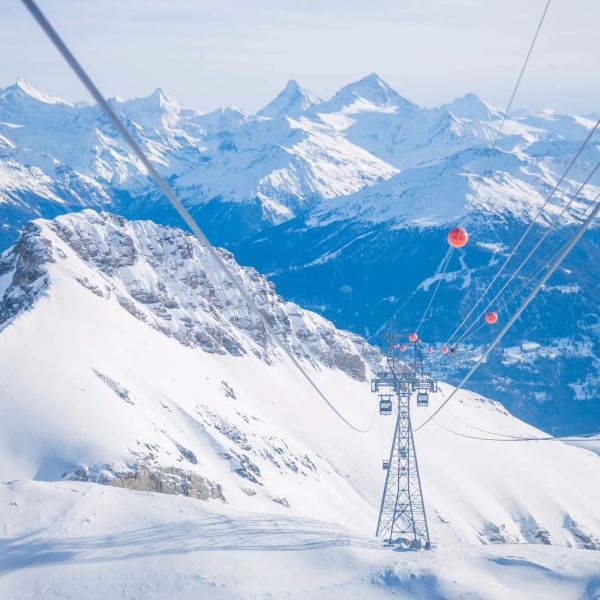
Crans-Montana 2027 World Championships President Resigns Ahead of Fraud Hearing
Less than four months out from the Crans-Montana 2027 World Championships, the man running the organising committee has stepped down. Claude-Alain Schmidhalter resigned as Swiss-Ski vice president and OC president after being indicted over a business dispute unrelated to skiing. He denies the allegations and faces court on October 27. Interim leaders are in place for the February 1-14 event.
9 Oct 2026
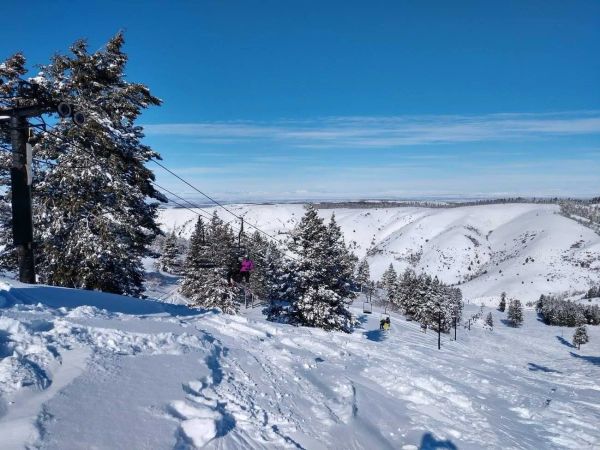
Kelly Canyon, Idaho, Adds Snowmaking, a Bigger Terrain Park and More Parking for 2026-27
Kelly Canyon had a rough 2025-26, and the Idaho resort has spent the summer making sure it doesn’t repeat. Snowmaking now reaches the top of Goldrush, the terrain park is doubling in size with a stereo system, lights and a snack shack, and the car park is getting bigger. Grooming is stepping up too. Target opening is December 4, conditions permitting.
9 Oct 2026