
Whiteface
300 acres, 89 runs at Lake Placid. East's greatest vertical drop, 1980 Olympic venue, ORDA-operated.
Season 2026 - 2027
Opens
21 Nov 2026
Closes
18 Apr 2027
Days open
148
Annual snow
13ft
The Overview
Michael Fulton
Melbourne-based skier and snowboarder with 50+ resorts across 5 continents. Specialises in Australian resorts and international resort comparisons.
Whiteface Mountain's summit reaches 4,649 feet, dropping 3,430 vertical feet to a base at 1,220 feet across 89 runs spread over 300 acres near Lake Placid, New York. Terrain splits 44 per cent intermediate, 25 per cent advanced, 24 per cent beginner and 7 per cent expert, with average annual snowfall of roughly 150 inches. Eleven lifts, including five quad chairs and a gondola, serve the mountain alongside three double chairs, one triple chair and two surface lifts.
Whiteface Mountain holds the distinction of offering the greatest vertical drop of any ski area east of the Rocky Mountains, a defining feature that has anchored its reputation since the mountain's Olympic era. Its Lake Placid setting, steeped in Winter Olympics history, gives Whiteface a genuine international profile among American ski resorts.
Construction of a new, larger ski destination began in 1957, and Whiteface Mountain Ski Center officially opened on 25 January 1958, relocating skiing from the original 1948 Marble Mountain site. A first major expansion in 1966 brought the mountain's vertical drop to over 3,200 feet, and a second expansion costing 14.5 million US dollars further prepared Whiteface to host the alpine skiing events, downhill, giant slalom and slalom, at the 1980 Winter Olympics in Lake Placid.
In 1981, New York State placed responsibility for maintaining, managing and promoting the Lake Placid Olympic venues under a single organisation, the Olympic Regional Development Authority. Under ORDA management, more than 26 million US dollars was invested in expansion and improvements between 1998 and 2008. Adult daily tickets run from 79 to 109 US dollars.
3,428ft
Vertical
89
Runs
300 acres
Skiable
13ft
Annual snow
The Terrain
89 runs across 300 acres skiable
Whiteface offers the biggest vertical in the eastern United States, at 3,430 ft (1,045 m), falling from a 4,650 ft (1,417 m) summit to a base at 1,220 ft (372 m). Its 89 runs cover 300 acres (121 hectares) near Lake Placid in the Adirondacks. Intermediates take 44%, with 25% advanced, 24% beginner and 7% expert. The Cloudsplitter gondola, five quad chairs, three doubles, a triple and two surface lifts spread skiers across the mountain, and the long runs give genuine, leg-burning descents from top to bottom.
Trails from the summit of Little Whiteface, reached by the Cloudsplitter Gondola, are expert only. Skyward is a famously thrilling run, and Cloudsplitter Glades add a challenging line through the trees. Cloudspin was used as the start of the men's downhill at the 1980 Winter Olympics, so you can ski a piece of history. Whiteface suits strong intermediates and advanced skiers who want sustained vertical, and beginners get their own lower mountain terrain. Expect cold and wind on the upper slopes, and dress for it, because the weather can change quickly up high.
Terrain split
89
runs
89 runs across 4 grades
Beginner21 runs · 24%
Intermediate39 runs · 44%
Advanced22 runs · 25%
Expert6 runs · 7%
Time it right
When to visit Whiteface
The 2025-26 season at Whiteface Mountain ran from 28 November 2025 to 19 April 2026, a roughly twenty-week season, among the longest in the Northeast, supported by average annual snowfall of around 150 inches. This substantial season length and snowfall total reflect the mountain's considerable elevation and Adirondack setting.
Midwinter, from December through February, typically brings the most consistent conditions to the mountain's varied terrain across its full 3,430-foot vertical drop. Whiteface's Olympic heritage and Lake Placid setting draw a genuinely international visitor base alongside strong regional Northeast visitation, supported by the SKI3 season pass shared with fellow ORDA-operated Gore Mountain and Belleayre.
As one of three state-run ski centres under the Olympic Regional Development Authority, Whiteface benefits from coordinated investment and marketing alongside its sister mountains. School holiday periods and the broader Lake Placid tourism calendar bring substantial visitation throughout the season, supported by the village's extensive Olympic-era visitor infrastructure.
Specific event programming beyond standard operations and Whiteface's Olympic legacy is not confirmed in available resort information. Since ORDA assumed management in 1981 following the 1980 Winter Olympics, the mountain has continued to build on this international sporting heritage each season. Whiteface's status as the East's greatest vertical drop remains its defining seasonal draw.
Season 2026 - 2027
21 Nov 2026
Opens
18 Apr 2027
Closes
148
Days open
13 ft
Annual snow
Getting there
Getting to Whiteface, and where to stay
Whiteface Mountain sits near Lake Placid, New York, in the Adirondack High Peaks region, with a base elevation of 1,220 feet and a summit at 4,649 feet across a 3,430-foot vertical drop over 300 acres. This setting places the resort within one of the most storied Winter Olympics venues in American history.
Lake Placid, host of the 1932 and 1980 Winter Olympics, provides extensive lodging, dining and Olympic-heritage attractions within a short drive of the mountain, giving Whiteface a uniquely rich base-area visitor experience. The broader Adirondack High Peaks region surrounds the resort with extensive additional outdoor recreation.
New York State Route 86 provides direct access to the resort from Lake Placid village. Winter driving conditions in this high-elevation Adirondack setting can include substantial snow and ice, and the route is well maintained given its role connecting Lake Placid's Olympic venues. There is no direct public transport service to the mountain itself, though Lake Placid offers local transit options.
Adirondack Regional Airport in Lake Clear, and the more distant Albany International Airport, serve the broader region, with Whiteface's Lake Placid setting drawing visitors willing to travel for its combination of Olympic history and the East's greatest vertical drop.
Where to stay
Search all stays →Hotels and lodges near Whiteface, powered by Stay22.
Latest News
From the SnowStash desk
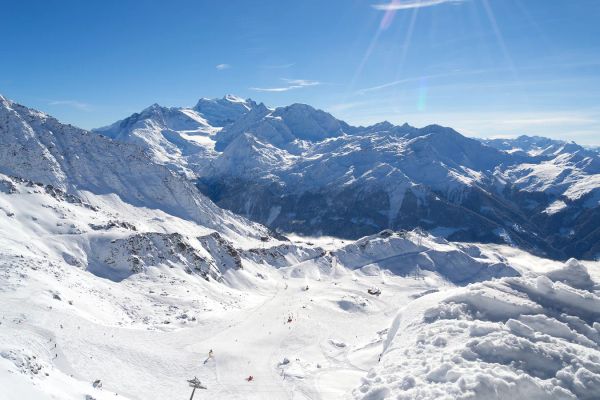
Alps Snow Forecast: Up to 64 cm Headed for the High Glaciers as the Snow Line Drops
The Alps are about to swap mild, sunny October weather for something far more wintry. A cold front arrives Tuesday, and SnowStash forecasts have Monterosa Ski out in front with 64 cm over 14 days, ahead of Blatten Belalp (55 cm) and Verbier (43 cm). The snow line should fall below 2000 metres by Wednesday night, and glaciers across Switzerland, Italy and Austria are in line for the best of it. The wind will have a say too.
20 Oct 2026
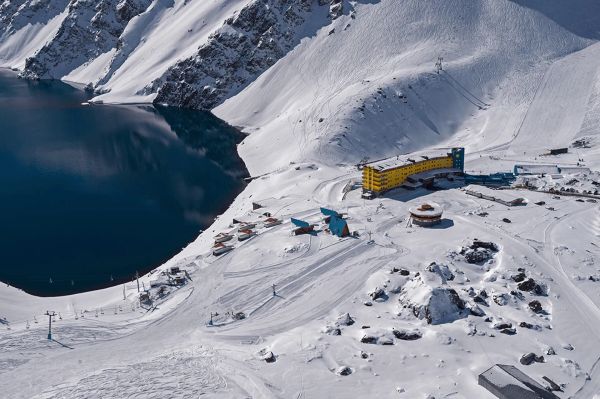
Four Dead After Avalanche Near Ski Portillo in Chile
A large avalanche struck near Laguna del Inca adjacent to Ski Portillo on Saturday afternoon, killing four people and injuring four others. The group were day visitors mountaineering in the backcountry after reportedly being warned about elevated avalanche risk by resort staff.
18 Oct 2026

Europe Ski Resorts Open Now: What Is Skiable in Mid-October 2026
Europe’s ski season is open, technically. After a record-warm summer, glaciers in Austria, Switzerland and Italy are running a few pistes apiece, Sölden, Stubai and Kitzsteinhorn started late, Titlis has pushed back to 24 October, and Zermatt reopens a few lifts on 14 October after more than two months shut. Finland’s Levi and Ruka are skiing on stored snow. Here is what is open, and what you actually get at each.
14 Oct 2026

Zermatt Plans World Cup Downhill Return on the Gornergrat for 2028
Zermatt is having another crack at a World Cup downhill, and this time nobody has to cross a border. Around 13 million Swiss francs is going into rebuilding the Gornergrat piste, including a jump fed by a roughly 300-metre in-run across the roof of the Gornergrat Railway gallery, with the Matterhorn lined up behind it for the TV cameras. First men’s race is pencilled in for March 2028, pending FIS homologation.
14 Oct 2026

Mt. Rose Begins Snowmaking for the 2026-27 Season at Lake Tahoe
Lake Tahoe’s highest base elevation is paying off early: Mt. Rose has started making snow for 2026-27 after the first flurries and a cold snap. The Nevada resort is backing it with nearly US$2 million in upgrades, including a replacement snowmaking main line, a new PistenBully groomer and restraint bars on every lift. Opening day is yet to be confirmed, though Heavenly and Northstar are already eyeing 20 November.
13 Oct 2026

Utah Ski Resorts 2026-27: What’s New at Alta, Deer Valley, Powder Mountain and More
Utah is still building flat out. For 2026-27, Powder Mountain opens a steep new Skytrac chair into more than 1,000 acres of advanced terrain, Deer Valley adds 200 acres on Hail Peak, Sundance gets a new quad and Park City adds a gondola from its new parking structure. Snowmaking is expanding almost everywhere, Eagle Point stays closed after the Cottonwood Fire, and the 2034 Games are setting the pace. Here’s what’s new, resort by resort.
13 Oct 2026

Mt Hutt Invests NZ$12 Million in Base Area, Tripling Its Sun Deck
Mt Hutt is getting busier, and its base lodge is about to catch up. NZ$12 million goes into a heated sun deck roughly three times the current size (430 m² to 1,300 m²), plus a new toilet block, heated steps down to snow level, extra storage and a new food and beverage outlet. Building starts after the 2026 season, with everything due for winter 2027.
11 Oct 2026

Vermont Ski Resort Opening Dates 2026-27: Few Dates Set, Killington Waits on the Cold
Vermont's season is slow to take shape. Stratton is tentatively targeting 18 November and Sugarbush 21 November, while Pico has Friday 11 December on the calendar. Killington never sets a date and opens when the snowmaking allows, and Vail Resorts has yet to name days for Stowe, Okemo and Mount Snow. The forecasts disagree about snow, and the main El Niño worry for the Green Mountains is warmth.
9 Oct 2026
Whiteface Snow Report
Snow Report
Updated 24 Oct 2026
4,649ft
summit
+0in
new snow · last 24 hours
Clear31°F / 48°F · W 17mph
Snowfall
24 hours
0in
48 hours
0in
7 days
0in
Base depth
0in
Season total
0in
Total lifts12
Live open status isn’t available right now.
21 Nov 2026 - 18 Apr 2027
Hour by Hour
Next 47 hours· Updated Oct 25, 2026 at 4:02 AM
Scroll for the full outlook · Open-Meteo
7-Day Outlook
4,649 ftUpdated Oct 25, 2026 at 4:02 AMOpen-Meteo
Days 1–7
0.0"
Days 8–14
0.2"
Sun, Oct 25
Overcast
Temp48° / 31°°F
Snow0.0"
Wind17 mph W
Live snow from the resort feed; forecast from Open-Meteo, via Supabase.
Understanding the Whiteface snow report
Get the latest Whiteface snow report — real-time snowfall, snow depth, and mountain weather for this New York resort, spanning 372m to 1417m in elevation.
Snow measurements
Base depth, summit depth, and recent snowfall are the core numbers to watch. At Whiteface, summit conditions (1417m) can differ noticeably from the base, so we break both out separately rather than showing a single average.
Weather conditions
Snow quality tracks closely with temperature and wind. We surface both alongside the snowfall data so you can judge whether conditions at Whiteface are holding up or starting to soften.
Data sources
We pull Whiteface's conditions from on-the-ground mountain reporting, then layer in forecast data so you get a fuller picture than either source alone. The mountain is served by 12 lifts, including 5 quad chairlifts and a gondola.
When to check
Snow reports are typically updated early morning and late afternoon. For the most current conditions, check back regularly, especially if a winter storm is approaching.