
The Overview
Michael Fulton
Melbourne-based skier and snowboarder with 50+ resorts across 5 continents. Specialises in Australian resorts and international resort comparisons.
Timberline Lodge's terrain rises from a base at 4,000 feet to a summit at 8,540 feet, a vertical drop of 4,540 feet across 41 runs spread over 1,415 acres on Mount Hood, Oregon. Terrain splits 50 per cent intermediate and 25 per cent each for beginner and advanced, with no expert-rated runs, and average annual snowfall of roughly 464 inches, among the highest totals of any resort in the contiguous United States. The resort carries Powder Alliance affiliation and offers the longest ski season in North America, with skiing available all twelve months of the year on the Palmer Snowfield.
Timberline Lodge itself, a National Historic Landmark, is as significant a draw as the skiing, representing one of the finest surviving examples of Works Progress Administration architecture and craftsmanship in the country. The resort's exceptional 4,540-foot vertical drop and near year-round operating window set it apart from every other resort on Mount Hood. Its combination of historic significance and genuine high-elevation skiing makes it a distinctive destination even within Oregon's crowded Mount Hood ski corridor.
The lodge was constructed between 1936 and 1938 as a Works Progress Administration project during the Great Depression, with 80 per cent of its 695,730 US dollar building budget spent on labour. Around a hundred construction workers lived in a nearby tent city while building the lodge, with women weaving draperies, upholstery and bedspreads, hooked rugs made from strips of old Civilian Conservation Corps camp blankets, and discarded cedar utility poles hand-carved into newel-posts shaped as birds, bears and seals. President Franklin D. Roosevelt dedicated the lodge on 28 September 1937, calling it 'a monument to the skill and faithful performance of workers on the rolls of the Works Progress Administration.'
The lodge opened to the public on 4 February 1938, with a portable rope tow installed the following year and the Magic Mile chairlift opening in November 1939, bringing organised skiing to the mountain. Summer skiing and race camps began in 1956, establishing the year-round operating tradition that continues today. Adult daily winter tickets run from 89 to 109 US dollars, with a season pass at 899 dollars.
4,541ft
Vertical
41
Runs
1,415 acres
Skiable
39ft
Annual snow
Powder Alliance
Pass
The Terrain
41 runs across 1,415 acres skiable
Timberline Lodge covers 1,415 acres (573 hectares) on the south side of Mount Hood, with 41 runs and a vertical of 4,540 feet (1,384 m), from a 4,000-foot base to an 8,540-foot summit (2,603 m). Half the terrain is intermediate, with 25% beginner and 25% advanced, and no expert-graded runs. Snowfall averages roughly 464 inches a year, and the Palmer Snowfield keeps skiing going for much of the year. For most visitors the draw is that vertical, together with the historic lodge at the bottom of the mountain, so the numbers are only half of the appeal.
The Magic Mile and Palmer lifts reach the upper mountain above the trees, and they only suit clear, calm days. When wind or cloud closes them, the Jeff Flood Express drops into Still Creek Basin on the lower mountain, and the Pucci chair adds beginner and intermediate cruisers. When Palmer is open, a non-stop run of more than 3.5 miles with about 4,000 feet of elevation change is possible. Timberline suits intermediates and families wanting length and altitude, while expert skiers will find the graded terrain limited, however long the season runs.
Terrain split
41
runs
41 runs across 4 grades
Beginner10 runs · 25%
Intermediate21 runs · 50%
Advanced10 runs · 25%
Expert0 runs · 0%
Time it right
When to visit Timberline Lodge
The 2025-26 winter season at Timberline Lodge ran from 28 November 2025 to 25 May 2026, one of the longest seasons in the country at roughly twenty-six weeks, and the resort's Palmer Snowfield extends skiing beyond this window into genuine year-round operation. Average annual snowfall of around 464 inches, among the highest totals of any resort in the contiguous United States, underpins this exceptional season length.
Midwinter, from December through February, typically brings the most consistent conditions across the resort's terrain. Timberline's status as the site of the longest ski season in North America means spring and even summer visits remain possible on the Palmer Snowfield, a rarity that draws race teams and enthusiasts specifically seeking off-season training conditions. Weekend crowds are generally heavier than weekdays throughout the winter season.
As a Powder Alliance resort and a National Historic Landmark, Timberline draws a mix of skiers and visitors interested purely in the lodge's architecture and history, particularly given its Works Progress Administration origins. School holiday periods and spring break bring particularly strong demand given the resort's reliable late-season snow. Summer race camps, running since 1956, bring a distinct visitor base to the mountain outside the conventional winter season.
Specific event programming beyond standard operations and race camps is not confirmed in available resort information. The lodge's dedication by President Franklin D. Roosevelt in September 1937 remains a significant point of historical pride referenced throughout the resort's identity. Timberline's combination of a working ski area and a preserved architectural landmark continues to shape how the mountain presents itself across all four seasons.
Season 2026 - 2027
26 Dec 2026
Opens
19 July 2027
Closes
205
Days open
39 ft
Annual snow
Getting there
Getting to Timberline Lodge, and where to stay
Timberline Lodge sits on the southern slope of Mount Hood, Oregon's highest peak, with a base elevation of 4,000 feet and a summit at 8,540 feet across a 4,540-foot vertical drop over 1,415 acres. This is one of the highest-elevation ski areas in the Pacific Northwest, with terrain reaching well above the treeline near the Palmer Snowfield.
Government Camp, a small mountain community, lies just below the lodge and offers additional lodging and dining options beyond the historic lodge itself. Portland, Oregon's largest city, lies roughly ninety minutes to the west, supplying much of the resort's weekend and day-trip visitor base. The broader Mt. Hood National Forest surrounds the resort, with several other ski areas operating on the mountain's other flanks.
US Route 26 provides the main route from Portland to Government Camp, with the Timberline Highway then climbing the final distance directly to the historic lodge. Winter driving conditions on this route can include snow and ice, and chains or traction tyres are often required during storms given the elevation gain involved. There is no direct public transport service to the resort, though its historic lodge draws sightseeing visitors alongside skiers.
Portland International Airport is the nearest airport with extensive commercial service, roughly two hours from the resort under normal winter driving conditions. Despite this distance, Timberline's status as a National Historic Landmark and site of the longest ski season in North America continues to draw visitors well beyond the immediate Portland region.
Where to stay
Search all stays →Hotels and lodges near Timberline Lodge, powered by Stay22.
Latest News
From the SnowStash desk

Vermont Ski Resort Opening Dates 2026-27: Few Dates Set, Killington Waits on the Cold
Vermont's season is slow to take shape. Stratton is tentatively targeting 18 November and Sugarbush 21 November, while Pico has Friday 11 December on the calendar. Killington never sets a date and opens when the snowmaking allows, and Vail Resorts has yet to name days for Stowe, Okemo and Mount Snow. The forecasts disagree about snow, and the main El Niño worry for the Green Mountains is warmth.
9 Oct 2026
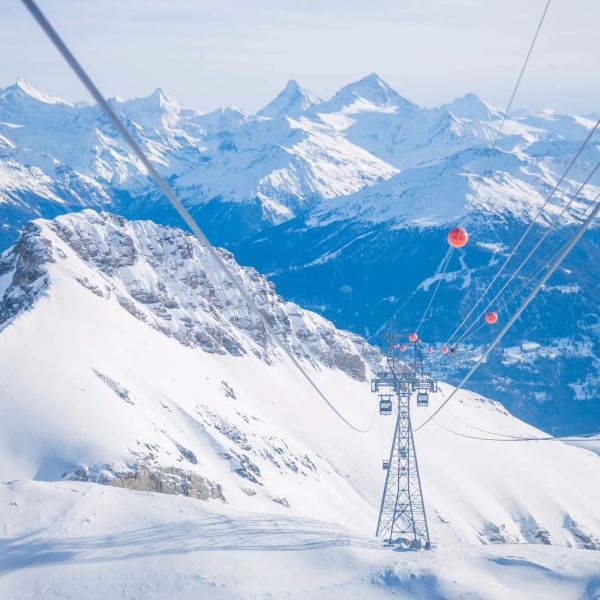
Crans-Montana 2027 World Championships President Resigns Ahead of Fraud Hearing
Less than four months out from the Crans-Montana 2027 World Championships, the man running the organising committee has stepped down. Claude-Alain Schmidhalter resigned as Swiss-Ski vice president and OC president after being indicted over a business dispute unrelated to skiing. He denies the allegations and faces court on October 27. Interim leaders are in place for the February 1-14 event.
9 Oct 2026
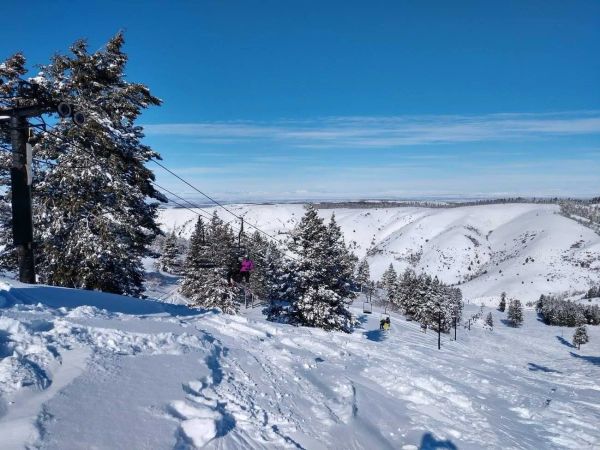
Kelly Canyon, Idaho, Adds Snowmaking, a Bigger Terrain Park and More Parking for 2026-27
Kelly Canyon had a rough 2025-26, and the Idaho resort has spent the summer making sure it doesn’t repeat. Snowmaking now reaches the top of Goldrush, the terrain park is doubling in size with a stereo system, lights and a snack shack, and the car park is getting bigger. Grooming is stepping up too. Target opening is December 4, conditions permitting.
9 Oct 2026
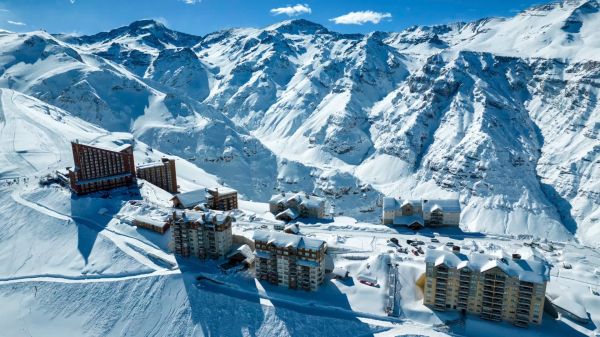
Valle Nevado Extends Season to November 8 After 108 cm in 48 Hours
Winter was meant to be winding down in Chile. Then Valle Nevado took 108 cm in 48 hours in early October, and the resort has pushed its closing date out to November 8 - its latest in 38 years of operation. That makes 143 days of skiing since opening day on June 19, with 690 cm banked for the season. Only part of the mountain is running while the storm settles, so check the mountain report before you plan a trip.
9 Oct 2026
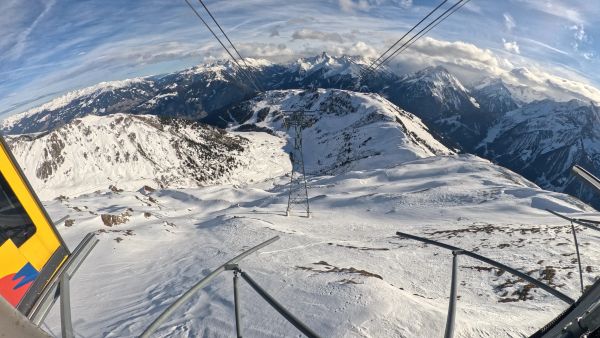
Alps Snow Forecast: Cold Front Brings Thursday Snow to the High Alps
The Alps look a lot more like winter today, for a day or so. A cold front is moving west to east, dropping up to 35 cm on high glaciers and peaks, with snow levels falling to around 1,500-1,800 m at times. Don’t plan a trip around it: mid-elevation snow will be thin and wet, every area is closed bar a limited Sölden glacier opening tomorrow, and warmer weather returns by Monday.
8 Oct 2026
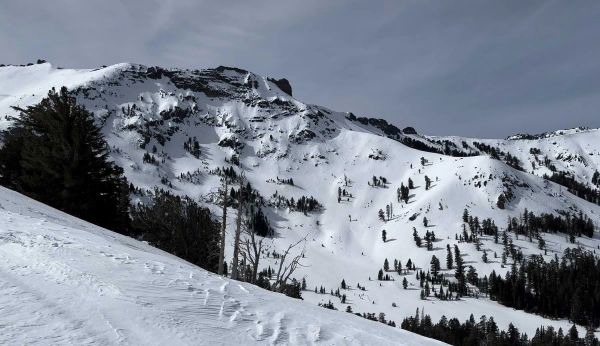
California Ski Resort Opening Dates 2026-27: Mammoth Leads, Tahoe Follows
Mammoth Mountain is first up in California, targeting Friday 13 November after a dusting of September snow. Heavenly and Northstar follow on 20 November, Palisades Tahoe on Wednesday 25 November and Sugar Bowl on 27 November, with Kirkwood on 4 December and June Mountain on 19 December. Plenty of smaller areas have no date yet. A super El Niño favours the Sierra, but a warmer storm track is the catch.
7 Oct 2026
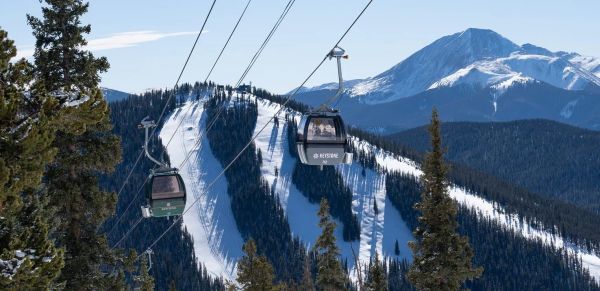
Colorado Ski Resort Opening Dates 2026-27: A-Basin and Keystone Race to Be First
Arapahoe Basin, Keystone and Winter Park are all chasing an October start, though none has a firm date yet. The first dated openers are Breckenridge and Copper on Friday 6 November, then Vail on 13 November, with most of the rest bunched around US Thanksgiving. Hesperus did not open at all last season. A super El Niño offers hope but no guarantee, and forecasters say the southern mountains have the better odds.
5 Oct 2026
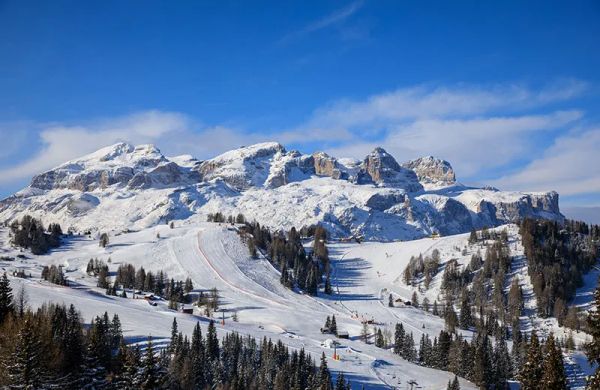
Dolomiti Superski 2026-27: Four New Gondolas, New Reservoirs and an €89 Peak Day Pass
Dolomiti Superski is spending around €100 million across its 12 areas before winter. Kronplatz gets a new 10-passenger gondola with a middle station, 3 Zinnen gets Helmissimo, and Val di Fassa swaps a chairlift for a gondola above Col Valvacin. New water-storage basins and upgraded snowmaking follow, and construction has started on the San Martino to Passo Rolle link. A peak adult day pass is €89.
4 Oct 2026