
Alta
Alta delivers 545 inches annual snowfall across 2,614 acres in Utah's Wasatch Mountains. Skiers-only since 1939.
Season 2026 - 2027
Opens
20 Nov 2026
Closes
25 Apr 2027
Days open
156
Annual snow
45ft
The Overview
Michael Fulton
Melbourne-based skier and snowboarder with 50+ resorts across 5 continents. Specialises in Australian resorts and international resort comparisons.
Alta operates across 2,614 acres between 2,600 and 3,373 metres elevation in Little Cottonwood Canyon, delivering 773 metres of vertical drop across 119 runs. The resort receives an average of 545 inches of snowfall annually, measured at the Collins Study Plot since 1980, with the 2022-23 season recording a record 903 inches. One of three remaining skiers-only areas in the United States alongside Deer Valley and Mad River Glen, Alta first opened its lifts in January 1939 as the second chairlift-served resort in the western United States.
Terrain divides into 15 per cent beginner, 30 per cent intermediate and 55 per cent advanced, with no distinction between single and double black diamond ratings on the trail map. The Albion Basin side centres beginner skiing on the Sunnyside lift with runs like Crooked Mile and Home Run, whilst advanced terrain dominates the Collins Gulch side. Alf's High Rustler drops 1,000 vertical feet at a sustained 45-degree pitch from the High Traverse, and Devil's Castle requires a bootpack from the Supreme lift to access over 500 vertical feet of open, steep terrain. Ballroom bowl spreads across massive open faces below Mount Baldy, and the Spiney Chutes near Supreme Point deliver 40-degree tree skiing.
The mountain operates from two base areas connected by a bi-directional rope tow - Wildcat serving expert terrain via the Collins lift, and Albion supporting beginners and intermediates around Sunnyside. Five independently owned lodges including Alta Lodge and Goldminer's Daughter provide ski-in ski-out accommodation at the base, maintaining a traditional atmosphere focused on skiing rather than resort amenities. Watson Shelter at mid-mountain houses Collins Grill for fine dining and Baldy Brews coffee shop, whilst the Albion Day Lodge anchors services at the second base.
Alta appears on both the Ikon Pass (7 days shared with Snowbird) and Mountain Collective (2 days plus 50 per cent off additional days), with the resort's own season pass priced at $899 for 2025-26. The Alta-Bird combination pass launched in 2002 provides unlimited access to both resorts totalling 5,114 acres via gates connecting through Mineral Basin. Daily lift tickets range from $89 to $125 depending on season, with children six and under skiing free. The resort suits powder-focused skiers willing to traverse and bootpack for terrain, with the local saying 'Alta is for skiers' reflecting both the snowboard ban and the mountain's technical character.
2,536ft
Vertical
119
Runs
2,614 acres
Skiable
45ft
Annual snow
Ikon / Mountain Collective
Pass
The Terrain
119 runs across 2,614 acres skiable
Alta covers 2,614 acres (1,058 hectares) at the top of Little Cottonwood Canyon in Utah, rising from an 8,530 ft (2,600 m) base to 11,070 ft (3,373 m) at the summit for 2,540 ft (773 m) of vertical. Across 119 runs the split is 15% beginner, 30% intermediate, 40% advanced and 15% expert, so the mountain leans towards confident skiers. Snowfall is the real draw, averaging around 545 inches a year. Alta is a skiers-only mountain, with snowboarding not permitted, and its mostly fixed-grip chairs are slow by modern standards, which suits the unhurried, powder-first culture.
Collins Gulch is where the steep skiing starts. The High Traverse, the access road from the Collins lift, leads to Alf's High Rustler, a famous pitch that begins at about 45 degrees, while Ballroom is a wide bowl that collects excellent powder. Devil's Castle needs a bootpack from the Supreme lift for more than 500 vertical feet of open, steep terrain. Albion Basin is the gentler side, where the Sunnyside lift serves beginners on Crooked Mile and Home Run, the longest run at Alta at 1.3 miles. Alta suits powder-minded skiers who are happy to traverse and hike, and the joint Alta-Bird ticket opens up neighbouring Snowbird via Sugarloaf Pass into Mineral Basin.
Terrain split
119
runs
119 runs across 4 grades
Beginner18 runs · 15%
Intermediate36 runs · 30%
Advanced48 runs · 40%
Expert18 runs · 15%
Time it right
When to visit Alta
The 2025-26 season opened 7 December 2025 and runs through 26 April 2026, with lifts operating 9:15am to 4:30pm daily. Typical season length spans mid-November to late April, though opening dates vary based on early-season snowfall and snowmaking coverage. The 88th consecutive winter of operation continues Alta's legacy as one of North America's oldest continuously operating ski areas.
Alta averages 548 inches of snowfall annually at the Collins Study Plot, with measurements ranging from pedestrian seasons around 400 inches to the record 903 inches recorded in 2022-23. Lake-effect snow from the Great Salt Lake combines with orographic lift from Little Cottonwood Canyon's steep walls to produce consistently dry powder averaging 8.5 per cent density. The resort averages 64 snowfall days per season, with February historically the snowiest month receiving over 100 inches, followed closely by January and March. Snowmaking covers approximately 140 hectares of key terrain to ensure coverage across beginner zones and main thoroughfares.
Peak powder conditions arrive late February through early March, though substantial snowfall occurs throughout the December to April window. Spring skiing extends into late April with corn snow conditions developing on south-facing aspects, whilst north-facing terrain retains powder quality due to high elevation and shaded exposure. January through March provides the most consistent deep snow and coldest temperatures, with storm cycles often delivering 10-plus-inch powder days - the 2022-23 season saw 36 such days compared to a typical season's dozen.
Closing Day on 26 April traditionally features the Frank World Championship costume event with DJ entertainment in the Wildcat parking lot. No night skiing operates at Alta, keeping the focus on daytime powder skiing. The resort implemented weekend and holiday parking reservations from 8am to 1pm beginning December 2025, requiring advance booking through April except for passholders who reserve for free. Summer uphill access opens after closing day for backcountry skiers and hikers, with no ski patrol or avalanche mitigation during the off-season months.
Season 2026 - 2027
20 Nov 2026
Opens
25 Apr 2027
Closes
156
Days open
45 ft
Annual snow
Getting there
Getting to Alta, and where to stay
Alta sits at 2,600 metres elevation at the terminus of Little Cottonwood Canyon in the Wasatch Mountains of Utah, within Salt Lake County. The town of Alta occupies Albion Basin and Collins Gulch approximately 48 kilometres from the Great Salt Lake, with the ski area bounded by Snowbird resort to the west and backcountry access to Grizzly Gulch to the east. Mount Baldy rises to 3,374 metres as the highest point, with Sugarloaf Peak at 3,368 metres and Devil's Castle forming the dramatic eastern skyline.
Salt Lake City lies 40 kilometres northwest with a driving time of 45 minutes in normal conditions, whilst Park City sits 72 kilometres distant requiring 90 minutes. Sandy, the closest substantial town, is 34 kilometres away at the canyon mouth. The historic mining town of Alta dates to 1871, reaching a population of 3,000 during the 1872 silver boom before declining to ghost town status by 1930, then reviving as a ski destination from 1938. Five lodges and scattered condominiums comprise current accommodation, with most skiers staying slopeside or commuting from the Salt Lake Valley.
State Highway 210 provides the sole access route into Little Cottonwood Canyon, beginning at the junction with State Route 209 in Sandy and climbing 1,036 metres over 14.5 kilometres of two-lane canyon road. The road passes through Snowbird at 11 kilometres before reaching Alta at the canyon head. Interstate 15 and Interstate 215 serve as primary approach routes from Salt Lake City, with the drive traversing suburban areas before entering the canyon. Winter driving requires 4WD, AWD or chains under Utah's Traction Law, with UDOT frequently implementing restrictions during storms and closing the road for avalanche control work.
Salt Lake City International Airport serves as the primary gateway 51 kilometres from Alta with a 45-minute transfer in good conditions. UTA Ski Bus Route 994 operates daily from Historic Sandy Station to Alta from early December through mid-April, running at 30-minute intervals during peak hours with free ridership for Ikon and Alta passholders. Private shuttle services including Alta Shuttle and Alpine Transportation provide door-to-door transfers. The canyon's 10 per cent grade and exposure to avalanche paths make Little Cottonwood one of North America's most avalanche-prone roadways, with interlodge periods occasionally trapping overnight guests and employees when Highway 210 closes for extended mitigation work.
Where to stay
Search all stays →Hotels and lodges near Alta, powered by Stay22.
Latest News
From the SnowStash desk

Europe Ski Resorts Open Now: What Is Skiable in Mid-October 2026
Europe’s ski season is open, technically. After a record-warm summer, glaciers in Austria, Switzerland and Italy are running a few pistes apiece, Sölden, Stubai and Kitzsteinhorn started late, Titlis has pushed back to 24 October, and Zermatt reopens a few lifts on 14 October after more than two months shut. Finland’s Levi and Ruka are skiing on stored snow. Here is what is open, and what you actually get at each.
14 Oct 2026

Zermatt Plans World Cup Downhill Return on the Gornergrat for 2028
Zermatt is having another crack at a World Cup downhill, and this time nobody has to cross a border. Around 13 million Swiss francs is going into rebuilding the Gornergrat piste, including a jump fed by a roughly 300-metre in-run across the roof of the Gornergrat Railway gallery, with the Matterhorn lined up behind it for the TV cameras. First men’s race is pencilled in for March 2028, pending FIS homologation.
14 Oct 2026

Mt. Rose Begins Snowmaking for the 2026-27 Season at Lake Tahoe
Lake Tahoe’s highest base elevation is paying off early: Mt. Rose has started making snow for 2026-27 after the first flurries and a cold snap. The Nevada resort is backing it with nearly US$2 million in upgrades, including a replacement snowmaking main line, a new PistenBully groomer and restraint bars on every lift. Opening day is yet to be confirmed, though Heavenly and Northstar are already eyeing 20 November.
13 Oct 2026

Utah Ski Resorts 2026-27: What’s New at Alta, Deer Valley, Powder Mountain and More
Utah is still building flat out. For 2026-27, Powder Mountain opens a steep new Skytrac chair into more than 1,000 acres of advanced terrain, Deer Valley adds 200 acres on Hail Peak, Sundance gets a new quad and Park City adds a gondola from its new parking structure. Snowmaking is expanding almost everywhere, Eagle Point stays closed after the Cottonwood Fire, and the 2034 Games are setting the pace. Here’s what’s new, resort by resort.
13 Oct 2026

Mt Hutt Invests NZ$12 Million in Base Area, Tripling Its Sun Deck
Mt Hutt is getting busier, and its base lodge is about to catch up. NZ$12 million goes into a heated sun deck roughly three times the current size (430 m² to 1,300 m²), plus a new toilet block, heated steps down to snow level, extra storage and a new food and beverage outlet. Building starts after the 2026 season, with everything due for winter 2027.
11 Oct 2026

Vermont Ski Resort Opening Dates 2026-27: Few Dates Set, Killington Waits on the Cold
Vermont's season is slow to take shape. Stratton is tentatively targeting 18 November and Sugarbush 21 November, while Pico has Friday 11 December on the calendar. Killington never sets a date and opens when the snowmaking allows, and Vail Resorts has yet to name days for Stowe, Okemo and Mount Snow. The forecasts disagree about snow, and the main El Niño worry for the Green Mountains is warmth.
9 Oct 2026

Crans-Montana 2027 World Championships President Resigns Ahead of Fraud Hearing
Less than four months out from the Crans-Montana 2027 World Championships, the man running the organising committee has stepped down. Claude-Alain Schmidhalter resigned as Swiss-Ski vice president and OC president after being indicted over a business dispute unrelated to skiing. He denies the allegations and faces court on October 27. Interim leaders are in place for the February 1-14 event.
9 Oct 2026
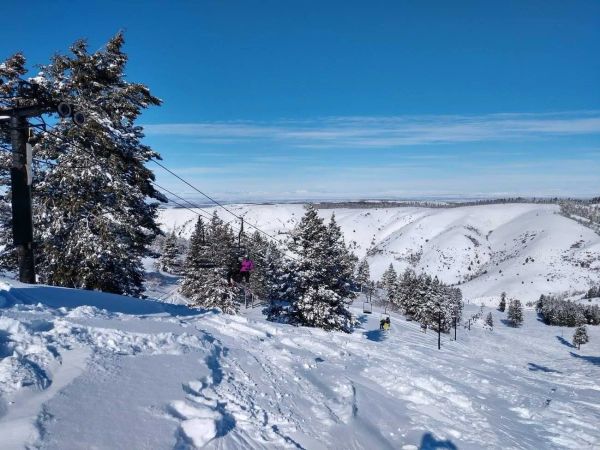
Kelly Canyon, Idaho, Adds Snowmaking, a Bigger Terrain Park and More Parking for 2026-27
Kelly Canyon had a rough 2025-26, and the Idaho resort has spent the summer making sure it doesn’t repeat. Snowmaking now reaches the top of Goldrush, the terrain park is doubling in size with a stereo system, lights and a snack shack, and the car park is getting bigger. Grooming is stepping up too. Target opening is December 4, conditions permitting.
9 Oct 2026