
Park City
341 trails, 43 lifts, 983m vertical. Epic Pass access. 35 mins from Salt Lake City airport.
Season 2026 - 2027
Opens
27 Nov 2026
Closes
4 Apr 2027
Days open
128
Annual snow
30ft
The Overview
Michael Fulton
Melbourne-based skier and snowboarder with 50+ resorts across 5 continents. Specialises in Australian resorts and international resort comparisons.
Park City spans 7,300 acres across a base elevation of 2,073 metres and a summit of 3,056 metres, delivering 983 metres of vertical drop. The resort claims 341 trails served by 43 lifts, making it the largest ski area in the United States following the 2015 merger of Park City Mountain Resort and Canyons Resort via the Quicksilver Gondola. Annual snowfall averages 355 inches, supported by snowmaking coverage across 18 per cent of terrain.
Terrain divides into 8 per cent beginner, 41 per cent intermediate, 28 per cent advanced, and 23 per cent expert runs, with intermediate cruisers dominating the mountain. The longest run stretches 3.5 miles from summit to base. Jupiter Peak provides expert terrain with steep chutes, whilst the Canyons side offers wide-open bowls across Iron Mountain and Tombstone zones. Six terrain parks and a halfpipe serve freestyle skiers.
Two distinct base villages anchor the resort: Park City Mountain Village connects directly to historic Main Street via the Town Lift, whilst Canyons Village offers modern slopeside lodging 6.5 miles away across the ridgeline. The resort hosted snowboarding and alpine events during the 2002 Winter Olympics, with U.S. Ski Team training courses still operating on-mountain. Summit House at 2,804 metres serves as the primary mid-mountain dining hub.
Park City operates on the Epic Pass alongside Vail Resorts' network of North American and international destinations. The season typically runs late November through early April, with January and February delivering peak snow conditions. The resort suits intermediates and mixed-ability groups, though limited beginner terrain requires first-timers to progress quickly or stick to designated learning zones at High Meadow Park and Hay Meadow Park.
3,225ft
Vertical
341
Runs
7,300 acres
Skiable
30ft
Annual snow
Epic
Pass
The Terrain
341 runs across 7,300 acres skiable
Park City is one of the largest ski resorts in the United States, with 7,300 acres (2,954 hectares) of terrain and 341 runs across the Park City Mountain and Canyons sides, joined by the Quicksilver Gondola. Elevations run from 6,800 ft (2,073 m) at the base to 10,030 ft (3,056 m) at the top, giving 3,230 ft (983 m) of vertical. Terrain splits 8% beginner, 41% intermediate, 28% advanced and 23% expert, so intermediates have by far the most room, while beginners have limited choice beyond the dedicated learning areas. Snowfall averages about 360 inches a year.
Jupiter Bowl brings lift-served chutes and McConkey's Bowl adds tree skiing, while the Canyons side spreads wide-open bowls across the Iron Mountain and Tombstone zones. Cruisers will find fast laps on the Payday, Bonanza and Silverlode Express six-packs out of Mountain Village. The Town Lift, installed in 1985, loads straight from historic Main Street, and the 8.5-minute Quicksilver Gondola, installed in 2015, links the two sides. The mountain also holds the Olympic halfpipe and slopestyle courses and six terrain parks for freestyle skiers. Park City suits mixed-ability groups, intermediates after volume and variety, and visitors who want a lively town at the base.
Terrain split
341
runs
341 runs across 4 grades
Beginner27 runs · 8%
Intermediate140 runs · 41%
Advanced95 runs · 28%
Expert78 runs · 23%
Time it right
When to visit Park City
The 2025-26 season opened 22 November 2025 and closes 5 April 2026, spanning 19 weeks of operations. Park City typically opens in late November depending on snowmaking conditions and closes mid-April as spring temperatures thin coverage on lower-elevation runs. Night skiing operates on select evenings throughout winter.
Average annual snowfall reaches 355 inches, with the resort receiving 636 inches during the record-breaking 2022-23 season. January delivers the heaviest accumulation, averaging 63 inches, followed by February's 62 inches. Base elevation at 2,073 metres and summit at 3,056 metres provide a reliable snow climate, with Utah's dry powder benefiting from high-elevation cold air. Snowmaking covers 18 per cent of terrain, concentrated on lower runs and key connector trails between the two village bases.
January and February offer peak powder conditions, with consistent storms and cold temperatures maintaining quality snow across all elevations. March transitions to spring corn snow by month's end, with morning freeze-thaw cycles requiring strategic timing for soft snow between 10am and 2pm. December sees limited terrain as snowmaking crews build base depth, with full mountain access typically achieved by early January. April conditions deteriorate rapidly, with lower runs closing progressively and slushy afternoons dominating.
The Sundance Film Festival runs late January through early February, bringing crowds to Main Street but surprisingly light lift queues as festival-goers focus on screenings. Presidents' Day weekend in February matches Christmas week for congestion. Spring break crowds peak in March, though improved weather and longer days offset wait times. The resort closed select lifts early in recent seasons due to unseasonably warm conditions, making January and February the most reliable months for full terrain access.
Season 2026 - 2027
27 Nov 2026
Opens
4 Apr 2027
Closes
128
Days open
30 ft
Annual snow
Getting there
Getting to Park City, and where to stay
Park City sits on the Wasatch Back, the eastern slope of the Wasatch Mountains in Summit County, Utah, 35 miles east of Salt Lake City. The town occupies a valley at 2,134 metres elevation, surrounded by peaks exceeding 3,000 metres that once fuelled a 19th-century silver mining boom. The resort's two base villages, Park City Mountain Village and Canyons Village, lie 6.5 miles apart along the ridgeline, connected by the Quicksilver Gondola spanning Thaynes Canyon.
Park City's Historic Main Street sits 200 metres below the Park City Mountain Village base, accessible via the Town Lift which deposits skiers directly onto groomed runs. Coalville, the Summit County seat, lies 19 miles north, whilst Heber City in neighbouring Wasatch County sits 21 miles southeast. The Snyderville Basin, an unincorporated area housing roughly 15,000 residents, spreads between Park City and Canyons Village, forming the primary residential corridor for resort workers and commuters to Salt Lake City.
Interstate 80 provides the primary access route, with drivers following the highway 29 miles east from Salt Lake City before exiting onto Utah State Route 224 at Kimball Junction. The final 6-mile stretch along Route 224 climbs into Park City, passing Canyons Village en route to the town centre. Travel time averages 40 to 45 minutes under normal conditions, though winter storms through Parleys Canyon can extend the journey to over an hour. Parleys Summit crests at 2,134 metres, requiring winter tyres or chains during active traction restrictions.
Salt Lake City International Airport lies 37 miles west, offering direct flights from major U.S. cities and international destinations as a Delta Airlines hub. Ground transport options include rental cars, rideshares averaging $60 to $75, and shuttle services ranging from $90 to $170 per person. Utah Transit Authority operates the PC-SLC Connect bus requiring a transfer at Kimball Junction, whilst Park City's free transit system serves all resort base areas, lodging zones, and Main Street year-round.
Where to stay
Search all stays →Hotels and lodges near Park City, powered by Stay22.
Latest News
From the SnowStash desk
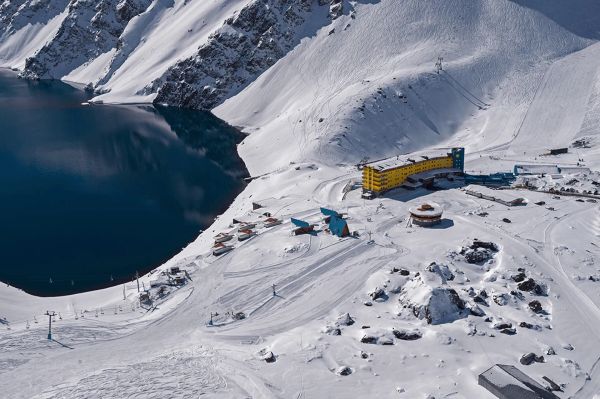
Four Dead After Avalanche Near Ski Portillo in Chile
A large avalanche struck near Laguna del Inca adjacent to Ski Portillo on Saturday afternoon, killing four people and injuring four others. The group were day visitors mountaineering in the backcountry after reportedly being warned about elevated avalanche risk by resort staff.
18 Oct 2026

Europe Ski Resorts Open Now: What Is Skiable in Mid-October 2026
Europe’s ski season is open, technically. After a record-warm summer, glaciers in Austria, Switzerland and Italy are running a few pistes apiece, Sölden, Stubai and Kitzsteinhorn started late, Titlis has pushed back to 24 October, and Zermatt reopens a few lifts on 14 October after more than two months shut. Finland’s Levi and Ruka are skiing on stored snow. Here is what is open, and what you actually get at each.
14 Oct 2026

Zermatt Plans World Cup Downhill Return on the Gornergrat for 2028
Zermatt is having another crack at a World Cup downhill, and this time nobody has to cross a border. Around 13 million Swiss francs is going into rebuilding the Gornergrat piste, including a jump fed by a roughly 300-metre in-run across the roof of the Gornergrat Railway gallery, with the Matterhorn lined up behind it for the TV cameras. First men’s race is pencilled in for March 2028, pending FIS homologation.
14 Oct 2026

Mt. Rose Begins Snowmaking for the 2026-27 Season at Lake Tahoe
Lake Tahoe’s highest base elevation is paying off early: Mt. Rose has started making snow for 2026-27 after the first flurries and a cold snap. The Nevada resort is backing it with nearly US$2 million in upgrades, including a replacement snowmaking main line, a new PistenBully groomer and restraint bars on every lift. Opening day is yet to be confirmed, though Heavenly and Northstar are already eyeing 20 November.
13 Oct 2026

Utah Ski Resorts 2026-27: What’s New at Alta, Deer Valley, Powder Mountain and More
Utah is still building flat out. For 2026-27, Powder Mountain opens a steep new Skytrac chair into more than 1,000 acres of advanced terrain, Deer Valley adds 200 acres on Hail Peak, Sundance gets a new quad and Park City adds a gondola from its new parking structure. Snowmaking is expanding almost everywhere, Eagle Point stays closed after the Cottonwood Fire, and the 2034 Games are setting the pace. Here’s what’s new, resort by resort.
13 Oct 2026

Mt Hutt Invests NZ$12 Million in Base Area, Tripling Its Sun Deck
Mt Hutt is getting busier, and its base lodge is about to catch up. NZ$12 million goes into a heated sun deck roughly three times the current size (430 m² to 1,300 m²), plus a new toilet block, heated steps down to snow level, extra storage and a new food and beverage outlet. Building starts after the 2026 season, with everything due for winter 2027.
11 Oct 2026

Vermont Ski Resort Opening Dates 2026-27: Few Dates Set, Killington Waits on the Cold
Vermont's season is slow to take shape. Stratton is tentatively targeting 18 November and Sugarbush 21 November, while Pico has Friday 11 December on the calendar. Killington never sets a date and opens when the snowmaking allows, and Vail Resorts has yet to name days for Stowe, Okemo and Mount Snow. The forecasts disagree about snow, and the main El Niño worry for the Green Mountains is warmth.
9 Oct 2026
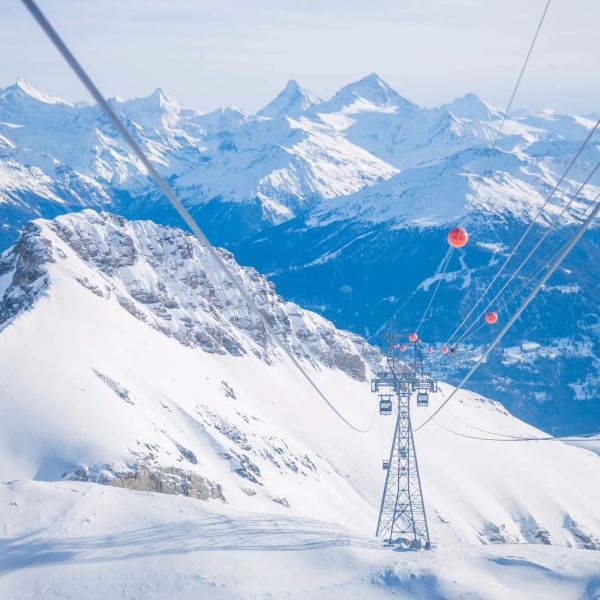
Crans-Montana 2027 World Championships President Resigns Ahead of Fraud Hearing
Less than four months out from the Crans-Montana 2027 World Championships, the man running the organising committee has stepped down. Claude-Alain Schmidhalter resigned as Swiss-Ski vice president and OC president after being indicted over a business dispute unrelated to skiing. He denies the allegations and faces court on October 27. Interim leaders are in place for the February 1-14 event.
9 Oct 2026