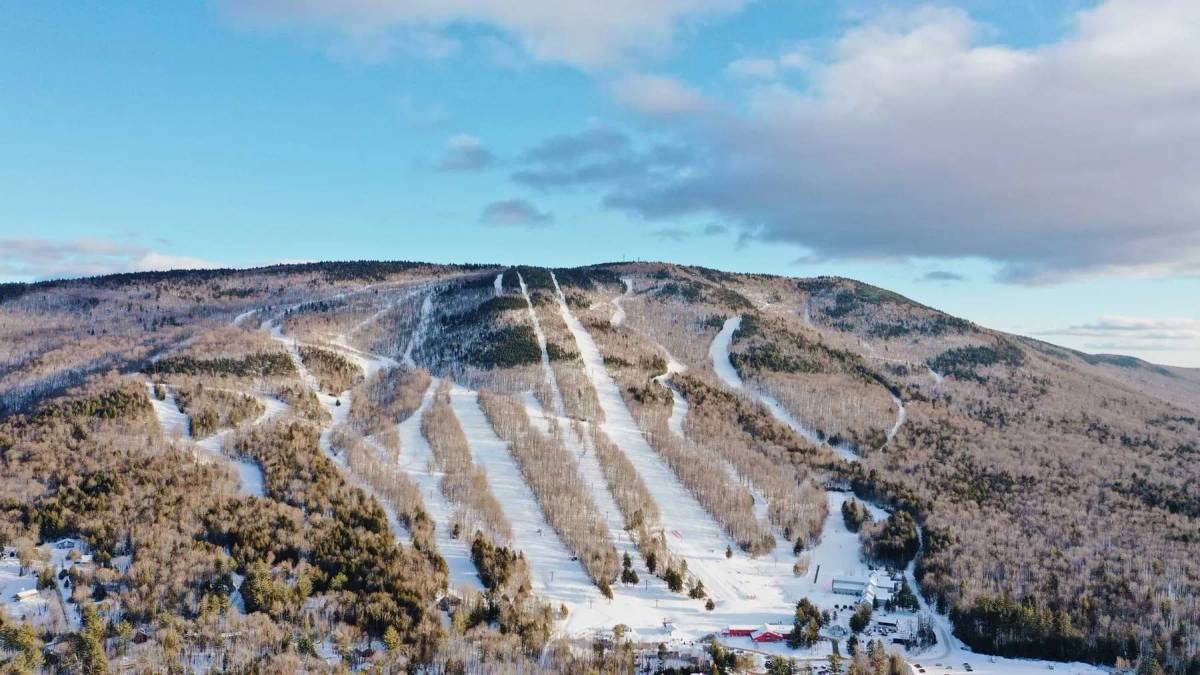
Magic Mountain
127 acres, 50 runs on Glebe Mountain. Authentic, uncrowded southern Vermont skiing, Indy Pass.

Season 2026 - 2027
Opens
5 Dec 2026
Closes
3 Apr 2027
Days open
119
Annual snow
145in
The Overview
Michael Fulton
Melbourne-based skier and snowboarder with 50+ resorts across 5 continents. Specialises in Australian resorts and international resort comparisons.
Magic Mountain's summit reaches 2,850 feet, dropping roughly 1,500 vertical feet to a base at 1,348 feet across 50 runs spread over 127 acres on Glebe Mountain near Londonderry, Vermont. Terrain splits 32 per cent intermediate, 26 per cent expert, 24 per cent beginner and 18 per cent advanced, with average annual snowfall of roughly 145 inches. The resort carries Indy Pass affiliation. Four lifts, including one quad chair and two double chairs, serve the mountain alongside one surface lift and one t-bar.
Magic Mountain markets itself as an authentic, deliberately unpolished throwback to an earlier era of Vermont skiing, prized for its challenging natural terrain and genuinely uncrowded slopes. The resort's substantial expert terrain, at 26 per cent of its trail count, reflects a character shaped by the steep, ridge-lined topography that first drew its founder to the mountain.
Swiss-born ski instructor and filmmaker Hans Thorner, searching Vermont in the late 1950s for a location reminiscent of his native Swiss Alps, found Glebe Mountain's steep ridgelines suited his vision, and opened Magic Mountain in 1960 with a T-bar serving the lower half of the mountain, adding a substantial 7,379-foot double chair in 1962. Magic formed part of Vermont's original 'Golden Triangle' alongside Stratton Mountain and Bromley Mountain, all within 10 miles of each other, and thrived through the 1960s, 1970s and early 1980s.
Boston Concessions, which also owned neighbouring Bromley, purchased Magic in the mid-1980s, but a downturn in the real estate market led Bromley's owners to close Magic entirely in 1991. The resort remained closed for years before reopening to the public in 1997, and in November 2016, following a poor winter and difficult operating results, Magic Mountain Management LLC sold the property to Ski Magic LLC, led by Geoff Hatheway. Adult daily tickets run from 96 to 116 US dollars, with children aged 5 and under skiing free.
1,503ft
Vertical
50
Runs
127 acres
Skiable
145in
Annual snow
Indy
Pass
The Terrain
50 runs across 127 acres skiable
Magic Mountain packs 50 runs into 127 acres (51 hectares) on Glebe Mountain in southern Vermont, running from a base at 1,350 ft (411 m) to a summit of 2,850 ft (869 m), a vertical of 1,500 ft (458 m). The split is steeper than its size suggests: 26% expert, 18% black diamond, 32% blue square and 24% green circle. About 145 inches of snow falls in an average winter. A quad, two double chairs, a T-bar and a surface lift keep the lift system simple, and lines stay short.
Black Line and Redline run side by side as the steep headline pitches, while Wizard is a narrow groomed cruiser down the west side of the mountain with double black terrain dropping away beside it. The gladed network is the standout, with trails such as Disappearing Act, The Hallows, Goniff Glade, Twilight Zone, Voodoo, Pixie Dust and White Tiger, said to be the most extensive tree skiing in southern Vermont. Magic suits advanced skiers who like natural, uncrowded terrain, and beginners have a modest but real share of the trails.
Terrain split
50
runs
50 runs across 4 grades
Beginner12 runs · 24%
Intermediate16 runs · 32%
Advanced9 runs · 18%
Expert13 runs · 26%
Time it right
When to visit Magic Mountain
The 2025-26 season at Magic Mountain ran from 20 December 2025 to 5 April 2026, a roughly fifteen-week season supported by average annual snowfall of around 145 inches. Season dates can shift depending on early and late-season weather on Glebe Mountain's steep terrain.
Midwinter, from December through February, typically brings the most consistent conditions to Magic's genuinely challenging, expert-weighted terrain. As an Indy Pass resort, Magic draws some visiting skiers holding that multi-resort pass alongside dedicated visitors specifically seeking its authentic, deliberately uncrowded character within southern Vermont's Golden Triangle region.
Given Magic's proximity to major metropolitan areas as one of southern Vermont's ski destinations, the resort draws visitors seeking a genuine alternative to the more heavily developed mountains nearby, including former Golden Triangle neighbours Stratton and Bromley. School holiday periods bring some family visitation, though the resort's substantial expert terrain skews its visitor base toward more experienced skiers.
Specific event programming beyond standard operations is not confirmed in available resort information. Since Ski Magic LLC's November 2016 purchase, the resort has continued rebuilding on more than six decades of history since founder Hans Thorner's 1960 opening, including the multi-year closure of the 1990s. Magic's authentic, throwback character and challenging terrain remain central to its seasonal identity.
Season 2026 - 2027
5 Dec 2026
Opens
3 Apr 2027
Closes
119
Days open
145 in
Annual snow
Getting there
Getting to Magic Mountain, and where to stay
Magic Mountain sits on Glebe Mountain near Londonderry, Vermont, with a base elevation of 1,348 feet and a summit at 2,850 feet across a roughly 1,500-foot vertical drop over 127 acres. This southern Vermont setting places the resort within the historic Golden Triangle region alongside Stratton and Bromley mountains.
Londonderry and the broader southern Vermont region offer lodging and dining within a short drive of the resort. Manchester, a larger regional town, lies within a reasonable drive as well, providing additional visitor services and shopping.
Vermont State Route 11 provides access to the resort through southern Vermont. Winter driving conditions on this route can include snow and ice, though the well-travelled road is regularly maintained given the region's status as a significant ski destination cluster. There is no direct public transport service to the mountain.
Manchester's smaller regional airfield offers limited service, while Albany International Airport in New York and Bradley International Airport in Connecticut serve as more practical gateways for visitors flying in from further afield, given Magic's position within a reasonable drive of southern New England's metropolitan areas.
Where to stay
Search all stays →Stays map loads when you scroll here
Hotels and lodges near Magic Mountain, powered by Stay22.
Latest News
From the SnowStash desk

Utah Snow Storm Builds Early-Season Base Ahead of November Openings
Rain down low, snow up high, and a snow report full of zeros that mostly means ‘not updated yet’. Utah’s first proper storm of 2026-27 is rolling through the Wasatch, Snowbird’s snow stake is closing in on 10 inches, and Brian Head is five days from opening day. Early November snow rarely looks like much, but it is the layer every November opening date is built on. Here is where it stands.
1 Nov 2026
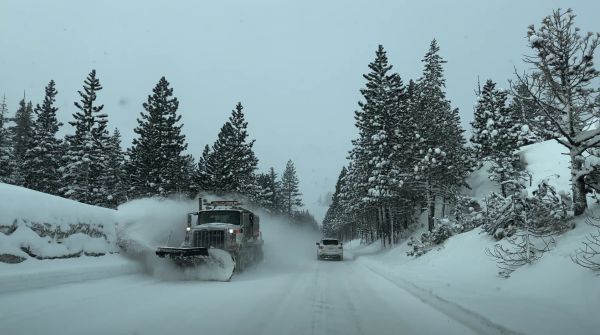
Sierra Nevada Halloween Storm: Dodge Ridge Forecast to Lead With 19 Inches
Halloween weekend brings a wet, windy storm to the Sierra Nevada. Our five-day forecast has Dodge Ridge on top with 19 in, followed by Bear Valley at 15 in and Mammoth Mountain at 12 in, with most of it landing on Saturday. A winter weather advisory covers the Tahoe Basin and Mono County until 7 AM Sunday, gusts could reach 47 mph and the freezing level swings between 4,900 and 8,700 ft, so some bases will see rain. A dry spell follows from Monday.
31 Oct 2026
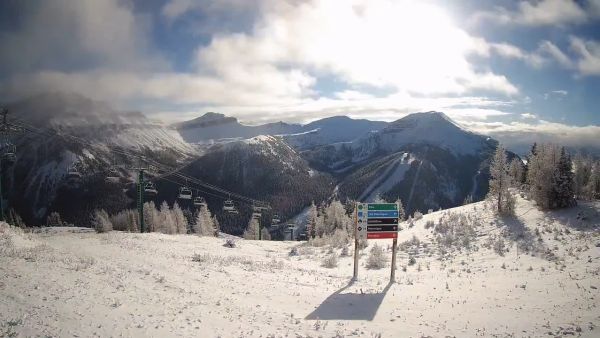
Lake Louise Opens Early on 1 November With Juniper Express and Easy Street
The Rockies get their first lift-served turns of the season early. Lake Louise opens Sunday 1 November, five days ahead of schedule, after a cold October and round-the-clock work from the snowmaking and mountain crews. Terrain is limited to Juniper Express Chair and Easy Street, with two small terrain parks and the beginner area for lessons. Opening-day tickets are over 60% off, with prices rising as more lifts open. First chair is at 9:30 am under the resort’s new lift hours.
31 Oct 2026
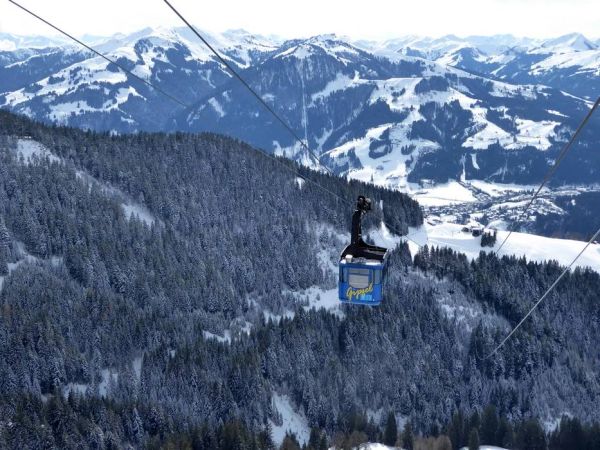
Kitzbüheler Horn Summit Cable Car to Be Replaced After 70 Years
A Tyrolean summit lift that has been carrying guests up the Kitzbüheler Horn since 1955 is on borrowed time. Its licence runs to 2045, but a new inspection rule has made refurbishment uneconomic, so Bergbahn AG Kitzbühel will spend around €15 million on a replacement on the same line. It should hold roughly 100 people and keep running in winds that would stop today’s lift. Building starts in autumn 2027, which makes this winter and next summer the last chances to ride the old one.
30 Oct 2026
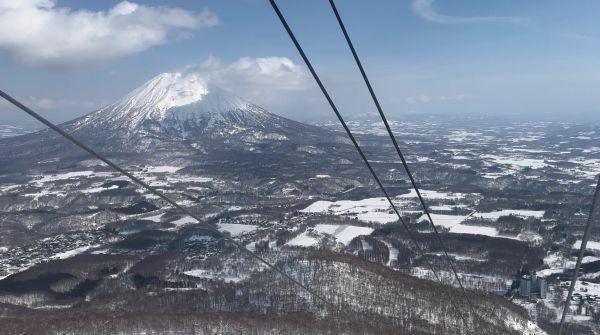
What’s New in Japan Skiing This Winter: Niseko Gondola, a Private Resort and a Bigger Ikon Pass
Niseko Village is replacing a lift from the early 1980s with an eight-person gondola, Tsugaike gets a six-person chairlift, Madarao joins the Ikon Pass and Togari opens Asia’s first private ski resort. Here’s what is actually new in Japan skiing for 2026/27, plus what is still a year or two away.
30 Oct 2026
Wolf Creek Opens on Halloween Weekend as Colorado’s Early Season Gathers Pace
Colorado’s early-season dominoes keep falling. Arapahoe Basin opened on Wednesday, Keystone follows on Friday, and now Wolf Creek is joining in on Saturday 31 October, just in time for Halloween. A storm on 23 and 24 October left 20 inches of natural snow in the San Juans, and three lifts will turn from 9:00 am, covering about 30% of the mountain. Expect rocks, unmarked obstacles and open water, but also Local Appreciation lift tickets at $73 for adults.
30 Oct 2026
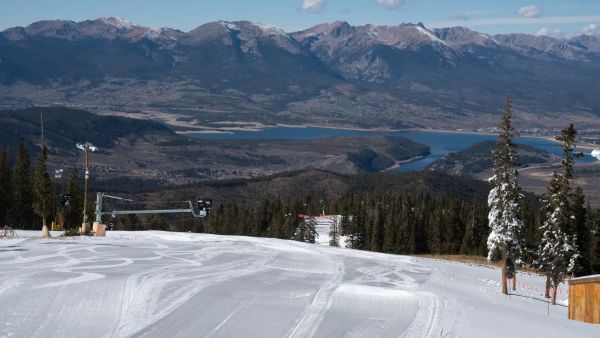
Keystone Resort Opens for 2026/27 With More Than Two Miles of Skiing
Keystone is next. After Arapahoe Basin claimed the first chairlift skiing of the season on Wednesday, Keystone opens on Friday 30 October at 9:00 am with more than two miles of snowmaking-built terrain on Schoolmarm and Silver Spoon, plus free donuts, coffee and a live DJ. Last year the order was reversed, when Keystone squeezed in a three-hour afternoon session to beat A-Basin by a day. Snowmaking has been running since 15 October.
29 Oct 2026
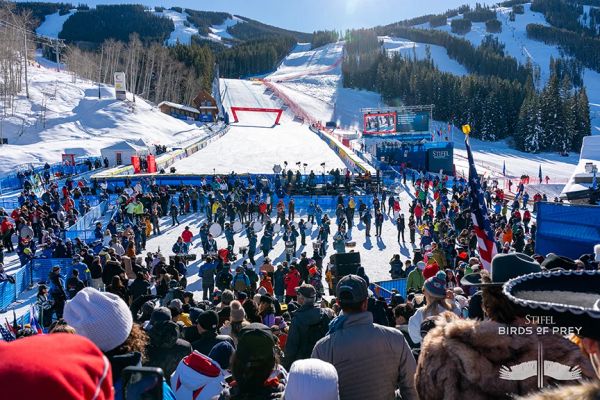
Beaver Creek Installs 16 Automated Snow Guns on Birds of Prey Ahead of Record World Cup
Beaver Creek is getting ready for the biggest Birds of Prey ever, and this time it is not leaving the snow to chance. Crews started making snow on 27 October with 16 newly installed automated guns on the lower third of the course, after last December’s warm spell forced a downhill off the schedule. Seven races across two weekends run from 3 to 13 December, the most the course has hosted since its 1997 debut, and the guns start themselves whenever the weather allows.
29 Oct 2026
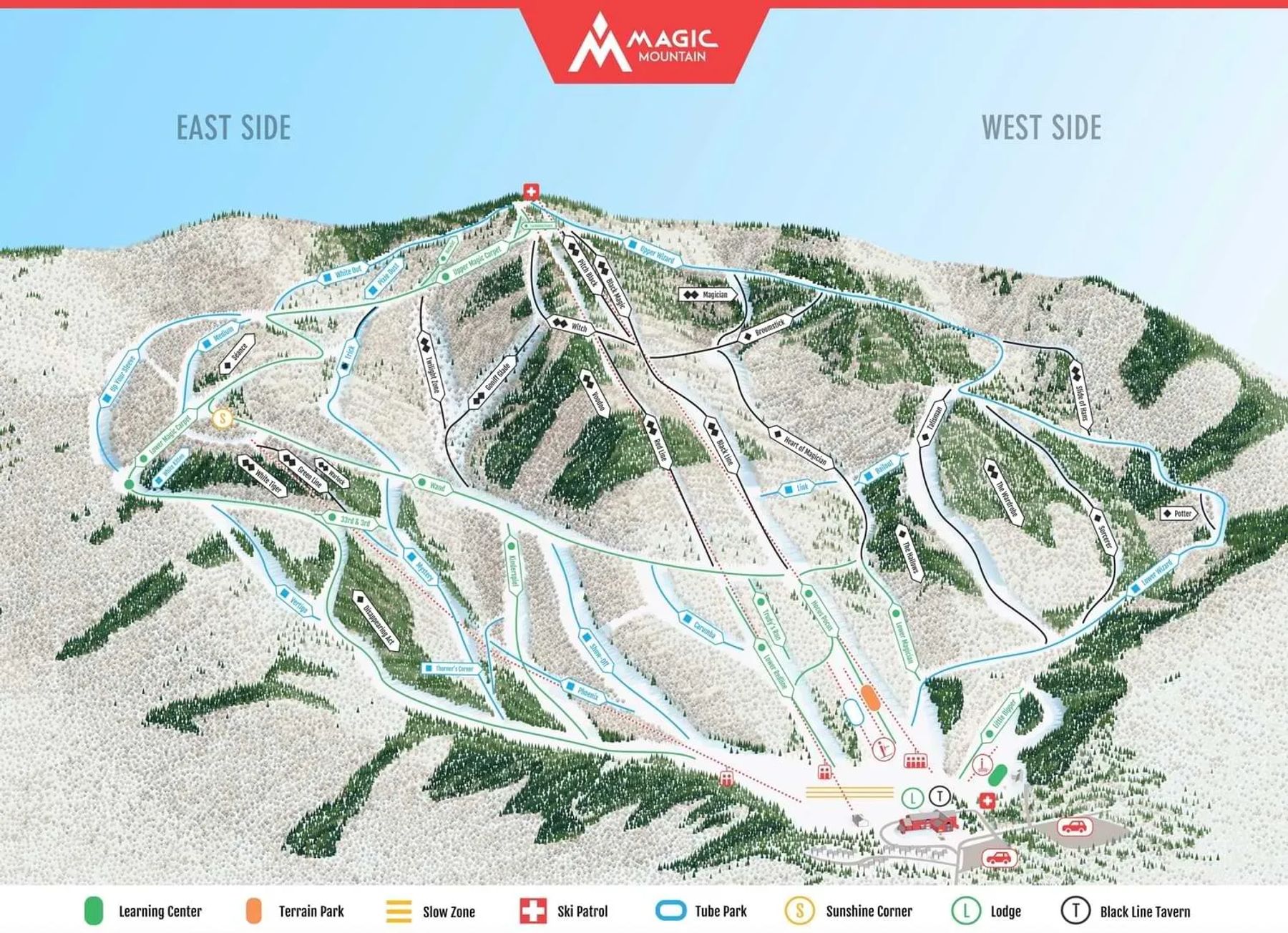
Magic Mountain Trail Map
Downloadable Magic Mountain trail map
Terrain split
50
runs
Beginner24%
Intermediate32%
Advanced18%
Expert26%
127 acres skiable51 hectares
Resort Stats
Elevation
Base1,348ft
Summit2,851ft
Annual snowfall
145in
Season
2026 - 2027
5 Dec 2026 - 3 Apr 2027
Trail coverage
50 runs
127 acres (51 ha)
About Magic Mountain's trail map
Explore Magic Mountain's full trail map with 50 runs across the mountain, colour-coded by difficulty and shown alongside the terrain split. Use it to plan a day that matches your ability, find lift-served pockets of your favourite grade, and see how the resort links together. Download the piste map (PDF) ↗
More Magic Mountain intelligence: snow report, lift system, webcams, resort overview.