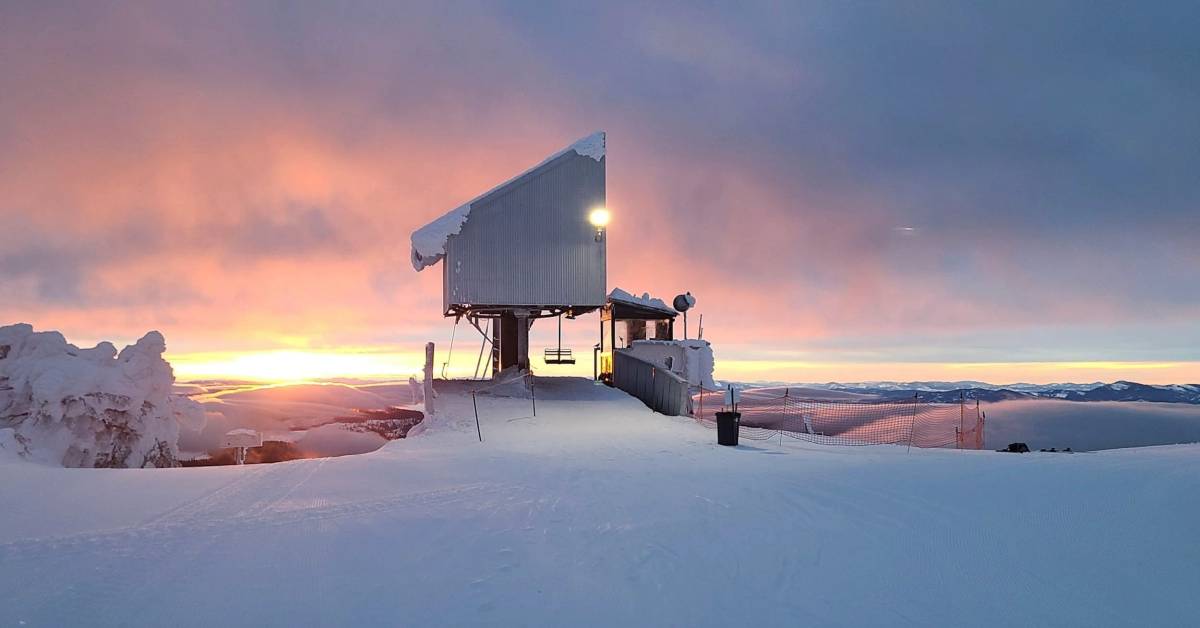
Mt Spokane
1,704 acres, 55 runs inside Mount Spokane State Park. Home of the world's first double chairlift.
Season 2026 - 2027
Opens
26 Dec 2026
Closes
14 Mar 2027
Days open
78
Annual snow
230in
The Overview
Michael Fulton
Melbourne-based skier and snowboarder with 50+ resorts across 5 continents. Specialises in Australian resorts and international resort comparisons.
Mt Spokane's summit reaches 5,889 feet, dropping 1,690 vertical feet to a base at 4,199 feet across 55 runs spread over 1,704 acres within Mount Spokane State Park, Washington. Terrain splits 42 per cent advanced, 33 per cent intermediate, 22 per cent beginner and 3 per cent expert, with average annual snowfall of roughly 230 inches. The resort operates independently without major multi-resort pass affiliation. Seven lifts, including five double chairs and one quad chair, serve the mountain alongside one surface lift.
Mt Spokane sits within Washington's largest state park, a distinction that shapes both its operations and its identity as Spokane's hometown mountain. The ski area carries a genuine claim to lift history: a Riblet Tramway Company installation using a converted mining ore tramway in 1946 is cited as the birthplace of the world's first double chairlift. Extensive night skiing across the mountain's five distinct terrain areas remains central to its appeal for the nearby Spokane population.
The mountain, previously known as Mount Baldy and Mount Carlton, took its current name in 1912 after businessman Francis H. Cook purchased the summit in 1909 and began building a road to the top. Mount Spokane State Park was officially dedicated in 1927 with 1,500 acres, becoming the first state park established east of the Cascades. The Spokane Ski Club formed in December 1931 under the leadership of Cheney Cowles, building a log clubhouse and installing rope tows, jump hills and night-skiing lights.
Through the 1930s, the Spokane Ski Club, the Selkirk Ski Club and the Spokane Mountaineers together purchased more than 500 acres for lodges, tows and jump hills, while a Civilian Conservation Corps camp established in 1934 built trails, shelters and roads. The historic Vista House, built from native granite as an emergency relief project in 1933, still stands at the summit today. Adult daily tickets run from 55 to 75 US dollars, with a season pass at 479 dollars.
1,690ft
Vertical
55
Runs
1,704 acres
Skiable
230in
Annual snow
The Terrain
55 runs across 1,704 acres skiable
Mt Spokane is Spokane's local mountain inside Mount Spokane State Park, and it covers 1,704 acres (690 hectares) across five terrain areas. With 55 runs, it climbs from 4,200 ft (1,280 m) at the base to 5,890 ft (1,795 m) at the summit, a vertical of 1,690 ft (515 m). The terrain skews advanced, with 42% advanced, 33% intermediate, 22% beginner and 3% expert. Five double chairs, a quad and a surface lift serve the area, and annual snowfall averages around 230 inches, enough to build a solid base for the season.
Night skiing is a big part of the appeal, with 16 lit runs on Wednesday to Saturday evenings, so Spokane skiers can fit laps in after work. Two Face is known for steep moguls, and Foggy Bottoms is another named run worth a look. The advanced skew means there is plenty of black diamond terrain without much true expert pitch, and the five distinct areas keep things varied across a long day. It suits Inland Northwest locals, families and intermediates stepping up to harder runs.
Terrain split
55
runs
55 runs across 4 grades
Beginner12 runs · 22%
Intermediate18 runs · 33%
Advanced23 runs · 42%
Expert2 runs · 3%
Time it right
When to visit Mt Spokane
The 2025-26 season at Mt Spokane ran from 6 December 2025 to 5 April 2026, a roughly seventeen-week season supported by average annual snowfall of around 230 inches. This snowfall total supports reliable conditions across the mountain's five distinct terrain areas throughout the season. Season dates can shift depending on early and late-season weather.
Midwinter, from December through February, typically brings the most consistent conditions to the mountain's advanced-weighted terrain. Night skiing is a defining seasonal feature, extending the useful ski day for Spokane-area residents well beyond daylight hours, consistent with the mountain's identity as the city's hometown ski area. Weekday evenings see strong local demand alongside typical weekend patterns.
As an independently operated resort without major pass affiliation, Mt Spokane draws primarily from the Spokane metropolitan area and the broader Inland Northwest rather than national destination traffic. School holiday periods bring increased family visitation given the resort's substantial beginner and intermediate terrain. The mountain's setting within Washington's largest state park adds a distinct four-season recreational dimension beyond winter skiing alone.
Specific event programming beyond standard operations and night skiing is not confirmed in available resort information. The historic Vista House, built in 1933, remains a fixture at the summit throughout the season, connecting today's skiers to the mountain's Depression-era development. Mt Spokane's century-long history as a community-built ski area continues to shape its accessible, locally focused character each winter.
Season 2026 - 2027
26 Dec 2026
Opens
14 Mar 2027
Closes
78
Days open
230 in
Annual snow
The record
Historical snowfall at Mt Spokane
Daily snow reports at Mt Spokane go back to 2025, 2 winters on the books. Open the record to compare winters, lifts and piste.
15 in
Snowiest day
7 Jan 2026
0 in
This winter · 2026-27
so far
26 in
Typical winter
average of complete seasons
Winter totals
in
Past wintersThis winter
Getting there
Getting to Mt Spokane, and where to stay
Mt Spokane sits within Mount Spokane State Park in eastern Washington, with a base elevation of 4,199 feet and a summit at 5,889 feet across a 1,690-foot vertical drop over 1,704 acres of skiable terrain within the park's much larger overall footprint. This makes the resort one of relatively few US ski areas operating inside a state park rather than on Forest Service or private land.
Spokane, Washington's second-largest city, lies a short drive from the mountain and provides the resort's primary lodging, dining and visitor base, with the ski area functioning as the city's genuine local mountain. The broader Selkirk Mountains region offers additional recreation within the state park beyond winter sports, including extensive summer hiking and mountain biking.
Local roads connect Spokane directly to Mount Spokane State Park, with the drive typically taking under an hour depending on the starting point within the metropolitan area. Winter driving conditions on the approach can include snow and ice, though the well-travelled route reflects the mountain's role as Spokane's primary local ski destination. There is no direct public transport service to the resort.
Spokane International Airport is the nearest airport with substantial commercial service, making Mt Spokane one of the more accessible ski areas covered here for fly-in visitors. Most visitors, however, are Spokane-area locals driving up for day trips or evening night-skiing sessions rather than fly-in destination travellers.
Where to stay
Search all stays →Hotels and lodges near Mt Spokane, powered by Stay22.
Latest News
From the SnowStash desk
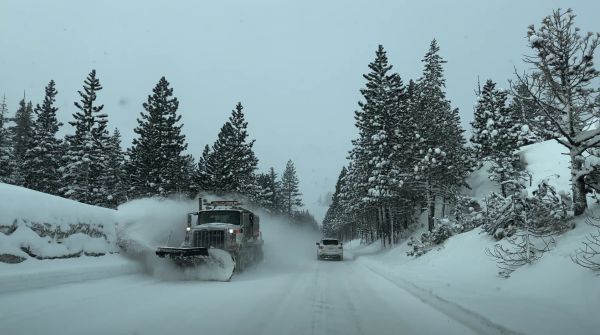
Sierra Nevada Halloween Storm: Dodge Ridge Forecast to Lead With 19 Inches
Halloween weekend brings a wet, windy storm to the Sierra Nevada. Our five-day forecast has Dodge Ridge on top with 19 in, followed by Bear Valley at 15 in and Mammoth Mountain at 12 in, with most of it landing on Saturday. A winter weather advisory covers the Tahoe Basin and Mono County until 7 AM Sunday, gusts could reach 47 mph and the freezing level swings between 4,900 and 8,700 ft, so some bases will see rain. A dry spell follows from Monday.
31 Oct 2026
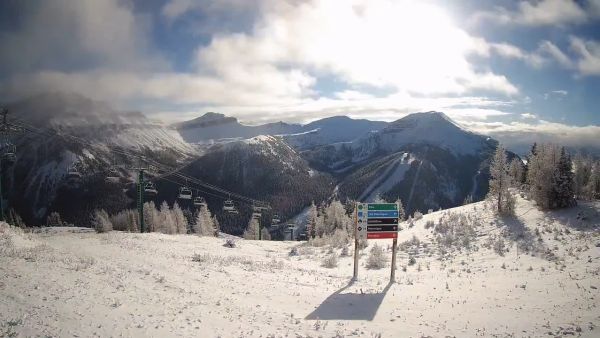
Lake Louise Opens Early on 1 November With Juniper Express and Easy Street
The Rockies get their first lift-served turns of the season early. Lake Louise opens Sunday 1 November, five days ahead of schedule, after a cold October and round-the-clock work from the snowmaking and mountain crews. Terrain is limited to Juniper Express Chair and Easy Street, with two small terrain parks and the beginner area for lessons. Opening-day tickets are over 60% off, with prices rising as more lifts open. First chair is at 9:30 am under the resort’s new lift hours.
31 Oct 2026
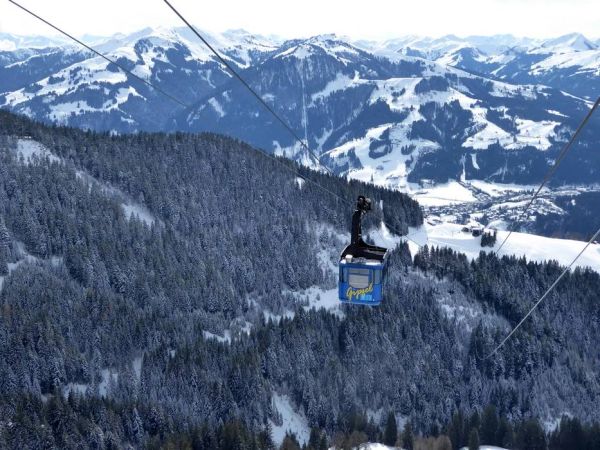
Kitzbüheler Horn Summit Cable Car to Be Replaced After 70 Years
A Tyrolean summit lift that has been carrying guests up the Kitzbüheler Horn since 1955 is on borrowed time. Its licence runs to 2045, but a new inspection rule has made refurbishment uneconomic, so Bergbahn AG Kitzbühel will spend around €15 million on a replacement on the same line. It should hold roughly 100 people and keep running in winds that would stop today’s lift. Building starts in autumn 2027, which makes this winter and next summer the last chances to ride the old one.
30 Oct 2026
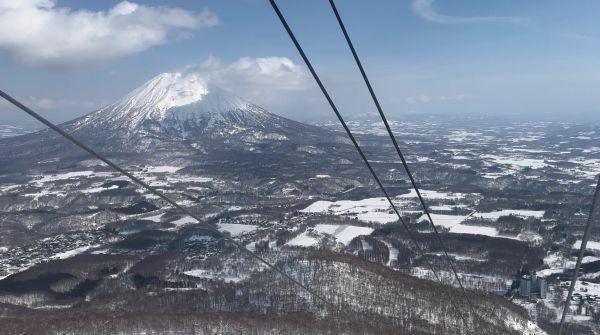
What’s New in Japan Skiing This Winter: Niseko Gondola, a Private Resort and a Bigger Ikon Pass
Niseko Village is replacing a lift from the early 1980s with an eight-person gondola, Tsugaike gets a six-person chairlift, Madarao joins the Ikon Pass and Togari opens Asia’s first private ski resort. Here’s what is actually new in Japan skiing for 2026/27, plus what is still a year or two away.
30 Oct 2026
Wolf Creek Opens on Halloween Weekend as Colorado’s Early Season Gathers Pace
Colorado’s early-season dominoes keep falling. Arapahoe Basin opened on Wednesday, Keystone follows on Friday, and now Wolf Creek is joining in on Saturday 31 October, just in time for Halloween. A storm on 23 and 24 October left 20 inches of natural snow in the San Juans, and three lifts will turn from 9:00 am, covering about 30% of the mountain. Expect rocks, unmarked obstacles and open water, but also Local Appreciation lift tickets at $73 for adults.
30 Oct 2026
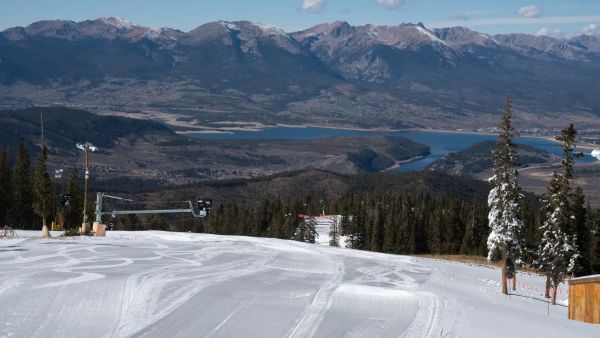
Keystone Resort Opens for 2026/27 With More Than Two Miles of Skiing
Keystone is next. After Arapahoe Basin claimed the first chairlift skiing of the season on Wednesday, Keystone opens on Friday 30 October at 9:00 am with more than two miles of snowmaking-built terrain on Schoolmarm and Silver Spoon, plus free donuts, coffee and a live DJ. Last year the order was reversed, when Keystone squeezed in a three-hour afternoon session to beat A-Basin by a day. Snowmaking has been running since 15 October.
29 Oct 2026
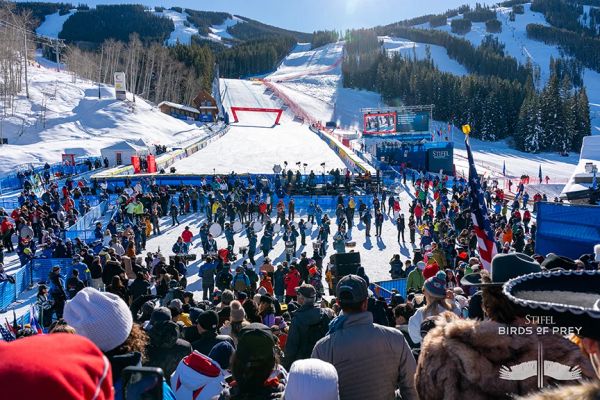
Beaver Creek Installs 16 Automated Snow Guns on Birds of Prey Ahead of Record World Cup
Beaver Creek is getting ready for the biggest Birds of Prey ever, and this time it is not leaving the snow to chance. Crews started making snow on 27 October with 16 newly installed automated guns on the lower third of the course, after last December’s warm spell forced a downhill off the schedule. Seven races across two weekends run from 3 to 13 December, the most the course has hosted since its 1997 debut, and the guns start themselves whenever the weather allows.
29 Oct 2026
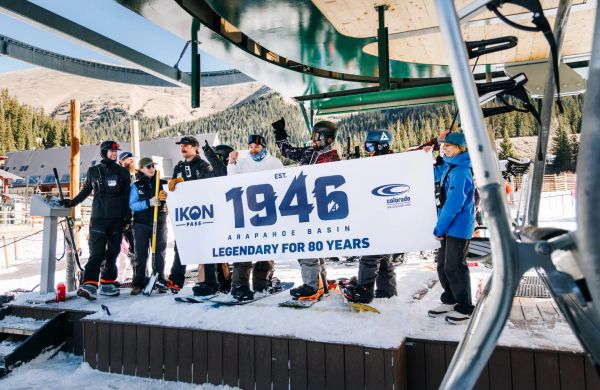
Arapahoe Basin Opens First for North America’s 2026/27 Ski Season
Winter has officially started in North America, and it is one blue run long. On Wednesday 28 October, Arapahoe Basin fired up the Black Mountain Express at around 10:30 am after a surprise announcement just hours earlier, becoming the first major North American resort open for 2026/27. Cold nights, a dusting of natural snow and a lot of snowmaking made it happen in the resort’s 80th winter. More terrain is promised as the snow guns keep running.
28 Oct 2026
Mt Spokane Webcams
6 live angles across the mountain. Tap any camera to go full-screen.
About Mt Spokane's live webcams
Check live conditions across Mt Spokane with 6 real-time webcams showing snow, weather, and lift operations, updated every 10 minutes. Check high-elevation cams for powder visibility and base-area cams for crowd levels before you head up.
Camera guide
- Snow Stake5,299ft
- Track precise snowfall accumulation through this essential Mt Spokane webcam focused on the official snow stake at 1615 meters elevation. This Mt Spokane live snow cam provides real-time snow depth measurements throughout the day, crucial for powder hunters monitoring Eastern Washington's legendary snowfall. Essential for planning your visit to this Inland Northwest skiing destination, this live cam delivers accurate snow data needed to time your approach for optimal conditions, helping skiers track fresh powder at this strategic Mt Spokane web cam location.
- Lodge 24,199ft
- Monitor base area activity through this welcoming Mt Spokane webcam at Lodge 2 at 1280 meters elevation. This Mt Spokane live cam captures guest arrivals, parking conditions, and current weather at one of the main base facilities. Perfect for checking crowd levels before your Eastern Washington mountain adventure, this live snow cam provides real-time visibility into conditions at this family-friendly destination, offering essential updates at this Mt Spokane web cam location where your ski day begins.
- Vista Cruiser Summit5,397ft
- Experience summit perspectives through this commanding Mt Spokane webcam at Vista Cruiser Summit at 1645 meters elevation. This Mt Spokane live cam offers sweeping panoramic views across the Inland Northwest and monitors upper mountain terrain conditions. Perfect for assessing visibility and weather patterns, this live snow cam showcases the diverse terrain and spectacular vistas that define Washington's premier Eastern ski destination, providing crucial real-time updates at this elevated Mt Spokane web cam location.
- Northwood Chair 65,200ft
- Monitor advanced terrain through this strategic Mt Spokane webcam at Northwood Chair 6 at 1585 meters elevation. This Mt Spokane live cam provides real-time views of expert runs and challenging tree skiing areas. Essential for advanced skiers assessing snow conditions in the resort's steeper zones, this live snow cam helps plan your route through Eastern Washington's most varied terrain, offering instant visibility into powder quality at this crucial Mt Spokane web cam location in the Northwood zone.
- Parkway Express Chair 34,800ft
- Discover mid-mountain action through this perfectly positioned Mt Spokane webcam at Parkway Express Chair 3 at 1463 meters elevation. This Mt Spokane live cam captures lift operations and intermediate terrain conditions in the resort's main corridor. Perfect for families assessing trail difficulty and grooming quality, this live snow cam provides essential real-time updates for navigating Washington's most accessible Eastern ski area, helping guests plan their day at this strategic Mt Spokane web cam location.
- Lodge One | Hourglass4,199ft
- Experience the heart of operations through this essential Mt Spokane webcam at Lodge One and the Hourglass area at 1280 meters elevation. This Mt Spokane live cam monitors base facilities and the iconic Hourglass terrain connecting different mountain zones. Ideal for checking conditions and crowd levels, this live snow cam provides comprehensive views of guest services and trail access at this Inland Northwest skiing destination, offering crucial updates at this central Mt Spokane web cam location.
Mt Spokane snow cams FAQ
How often do Mt Spokane snow cams update?
All Mt Spokane snow cams and webcams update every 10 minutes with fresh images showing current mountain conditions. This frequent update schedule ensures you have access to near real-time conditions for planning your ski day at Mt Spokane.
Which Mt Spokane webcam shows the best powder conditions?
The high-elevation Vista Cruiser Summit webcam at 1,645m provides the clearest view of powder conditions and snowfall. These Mt Spokane webcams capture fresh snow accumulation and visibility better than base area cameras.
Can I see Mt Spokane lift queues on the webcams?
Yes. Multiple Mt Spokane snow cams specifically show lift queue areas and chairlift operations, helping you time your arrival and avoid peak queue periods.
When is the best time to check Mt Spokane snow cams?
Check Mt Spokane webcams early morning (7-8am) for overnight snowfall assessment, and mid-afternoon for current crowd levels and weather. The live cams are most useful after storm events to assess fresh powder.
How can I check current conditions before buying Mt Spokane lift tickets?
Use our Mt Spokane webcams alongside the live snow report to assess conditions before purchasing lift tickets. The webcams show real-time visibility, snow quality, and operational status.
Do Mt Spokane webcams work on mobile devices?
Yes. All Mt Spokane snow cams and webcams are optimized for mobile viewing, so you can check live conditions from anywhere using your phone or tablet.
More Mt Spokane intelligence: snow report, lift tickets, trail map, resort overview.