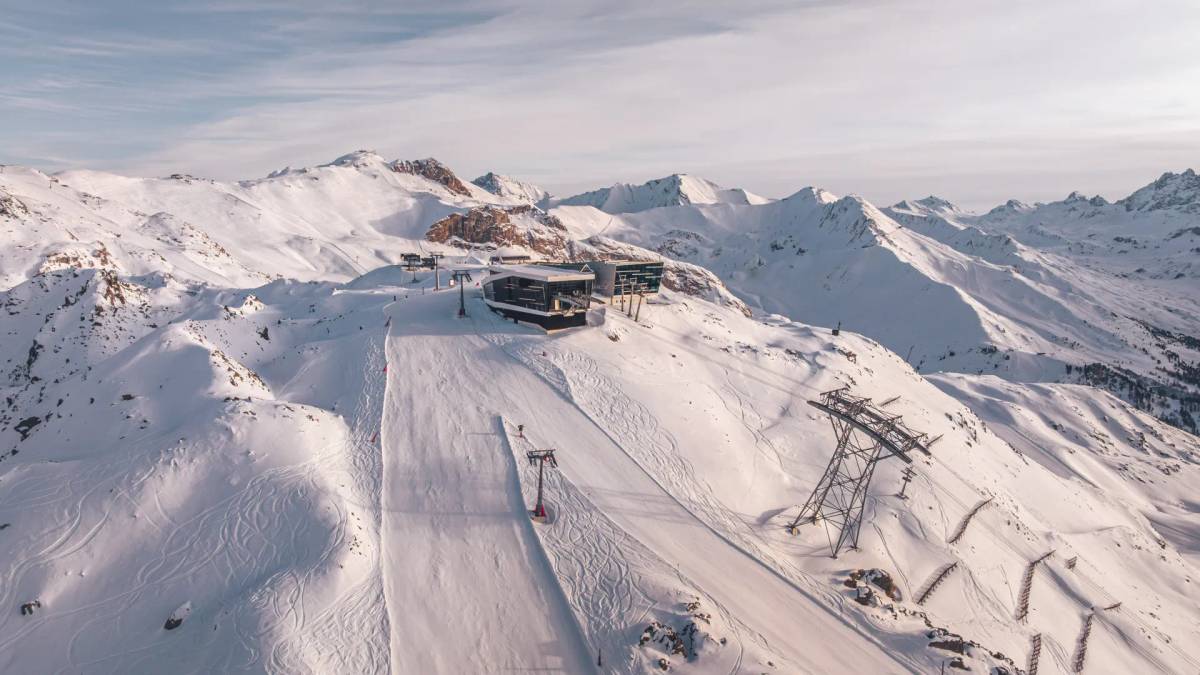
Ischgl
Ski 239km of cross-border terrain from 1,360–2,872m in Austria's Silvretta Arena, with 46 lifts and snow guaranteed November to May.

Season 2026 - 2027
Opens
26 Nov 2026
Closes
2 May 2027
Days open
157
Annual snow
5.7m
The Overview
Michael Fulton
Melbourne-based skier and snowboarder with 50+ resorts across 5 continents. Specialises in Australian resorts and international resort comparisons.
Ischgl forms one half of the Silvretta Arena, a cross-border ski area shared with Samnaun in Switzerland that ranks among the largest interconnected resorts in the Alps. The combined terrain spans 239km of pistes and 15km of ski routes across 88 runs, rising from 1,360m at the valley floor to the 2,872m Greitspitze on the Austrian-Swiss border.
The longest descent — aptly named "Eleven" — drops 11km from the summit to the village, while the steepest pitches exceed 70% gradient in the Höllboden bowl. Ninety per cent of the terrain sits above 2,000m, and the resort backs its natural snowfall with more than 1,100 snow cannons covering virtually every run in the network.
The piste mix skews heavily toward intermediate skiing, with 58% of runs graded red and a further 21% blue, though the 15% advanced and 6% expert terrain — including the Piz Val Gronda freeride zone and dedicated mogul slopes — gives strong skiers plenty to work with.
The Smugglers' Trail, a themed cross-border route available in Gold, Silver and Bronze variants, traces the old contraband paths between Austria and the duty-free Swiss village of Samnaun. A single lift pass covers the entire Silvretta Arena, and the wider Silvretta regional pass extends access to the neighbouring ski areas of Galtür, Kappl and See in the Paznaun valley.
1512m
Vertical
88
Runs
239 km
Piste
5.7m
Annual snow
The Terrain
88 runs across 239 km of piste
Ischgl's 239 kilometres of piste across 88 runs are shared with Samnaun in Switzerland, and the terrain skews firmly to the middle: 58% intermediate, 21% beginner, 15% advanced and 6% expert. The vertical runs from the village at 1,360 metres to the 2,872-metre summit, a drop of 1,512 metres, with 90% of the terrain above 2,000 metres. Most skiers start at Idalp, at the top of the Silvrettabahn and Fimbabahn gondolas, and fan out from there towards Palinkopf, Greitspitze and the Swiss side.
Expert terrain is concentrated rather than widespread. The Piz Val Gronda cable car opens a large freeride zone, Lange Wand (route 14a) is a steep and often icy black, and the Höllboden bowl carries pitches steeper than 70%. The longest descent, Eleven, covers 11 kilometres from the summit to the village. Long runs such as the red Route 80 from Greitspitze to Samnaun and the black Duty-Free Run cross into Switzerland, so a day over the border is part of the skiing rather than a detour.
Terrain split
88
runs
88 runs across 4 grades
Beginner18 runs · 21%
Intermediate51 runs · 58%
Advanced13 runs · 15%
Expert5 runs · 6%
Time it right
When to visit Ischgl
Ischgl operates from late November through to early May, with the 2025–26 season running from 27 November 2025 to 3 May 2026. The resort's high-altitude terrain — 90% of slopes above 2,000m — delivers reliable coverage across the full five-month window without relying on glacier ice.
Average annual snowfall sits at around 4 metres, and the extensive snowmaking network of over 1,100 cannons and lances ensures piste quality holds from opening day through to the spring close.
The season is bookended by the resort's signature Top of the Mountain concerts, a tradition dating back to 1995 when Elton John headlined the first closing show. In 2025–26, Rita Ora opened proceedings on 29 November, with Robin Schulz performing at Easter and Christina Aguilera closing the season on 2 May at the open-air stage on Idalp at 2,320m.
The Spring Blanc event series runs through April and into the final week, combining firn skiing with a programme of culinary and lifestyle events. From winter 2025–26, Ischgl is also included on the Ikon Pass, with seven free days for full pass holders.
Season 2026 - 2027
26 Nov 2026
Opens
2 May 2027
Closes
157
Days open
5.7 m
Annual snow
The record
Historical snowfall at Ischgl
Daily snow reports at Ischgl go back to 1996, 31 winters on the books. Open the record to compare winters, lifts and piste.
42 cm
Snowiest day
22 Dec 2023
29 cm
This winter · 2026-27
so far
566 cm
Typical winter
average of complete seasons
Winter totals
cm
Past wintersThis winter
Getting there
Getting to Ischgl, and where to stay
Ischgl sits in the upper Paznaun valley in the Landeck district of western Tyrol, a 40km high-alpine valley that also encompasses the villages of Galtür, Kappl and See. The village lies at 1,377m between the Silvretta and Verwall mountain ranges, with the ski area accessed directly from the village centre via three base lifts.
Despite a resident population of around 1,600, Ischgl functions as a fully developed resort town with a compact layout connected by escalators and a pedestrianised core.
Innsbruck Airport is the nearest international gateway, approximately 100km to the east. The drive takes around 90 minutes via the A12 Inntal motorway to the Pians junction, then the B188 into the Paznaun valley. Zurich and Munich airports are both roughly 230–235km away.
The nearest rail connection is Landeck-Zams station, 30km down the valley, served by regular ÖBB services from Innsbruck; bus line 260 runs from the station to Ischgl every half hour. Note that the Silvretta High Alpine Road linking the Paznaun to Vorarlberg via the Bielerhöhe is closed throughout winter — all access is via the single valley road from Pians.
Where to stay
Search all stays →Stays map loads when you scroll here
Hotels and lodges near Ischgl, powered by Stay22.
Latest News
From the SnowStash desk

Mt Rose Aims to Open First in Tahoe on November 6
Mt Rose is going for the first-in-Tahoe title, with the Lakeview Express due to spin at 9 a.m. on Friday, November 6. One main lift, three runs and plenty of snowmaking, sitting on the highest base elevation in the region at 8,260 ft. Here is what is open, what is not (sorry, tubing fans), and how the early North American openings are stacking up.
4 Nov 2026

Europe Snow Forecast: Serre Chevalier Leads With 82 cm Over the Next 10 Days
Europe has had a quiet start to November, but our 10-day forecast has Serre Chevalier on 82 cm and Les 2 Alpes on 71 cm. Two pushes are lined up: a western Alps top-up from Friday, then a bigger, wider system on Thursday, November 12 and Friday, November 13 that reaches Italy and Switzerland. Full leaderboard inside.
4 Nov 2026

Mammoth Mountain Opens Early on November 5 With Up to 33 Inches of Snow in the Forecast
Mammoth just moved opening day forward to Thursday, November 5, eight days ahead of schedule. A snowy weekend and cold snowmaking nights did the work, and our forecast shows up to 33 inches more landing on November 13 and 14. Here is what opens, what the weather looks like and where Mammoth sits among the early Ikon Pass openers.
3 Nov 2026

Utah Snow Storm Builds Early-Season Base Ahead of November Openings
Rain down low, snow up high, and a snow report full of zeros that mostly means ‘not updated yet’. Utah’s first proper storm of 2026-27 is rolling through the Wasatch, Snowbird’s snow stake is closing in on 10 inches, and Brian Head is five days from opening day. Early November snow rarely looks like much, but it is the layer every November opening date is built on. Here is where it stands.
1 Nov 2026
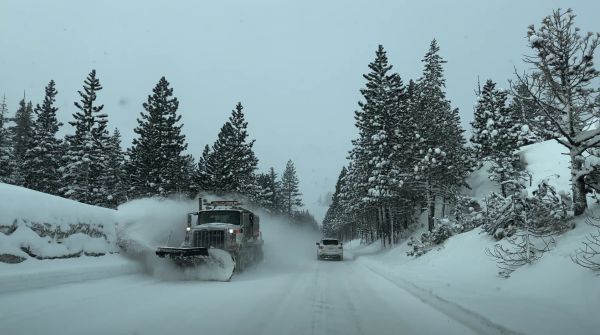
Sierra Nevada Halloween Storm: Dodge Ridge Forecast to Lead With 19 Inches
Halloween weekend brings a wet, windy storm to the Sierra Nevada. Our five-day forecast has Dodge Ridge on top with 19 in, followed by Bear Valley at 15 in and Mammoth Mountain at 12 in, with most of it landing on Saturday. A winter weather advisory covers the Tahoe Basin and Mono County until 7 AM Sunday, gusts could reach 47 mph and the freezing level swings between 4,900 and 8,700 ft, so some bases will see rain. A dry spell follows from Monday.
31 Oct 2026
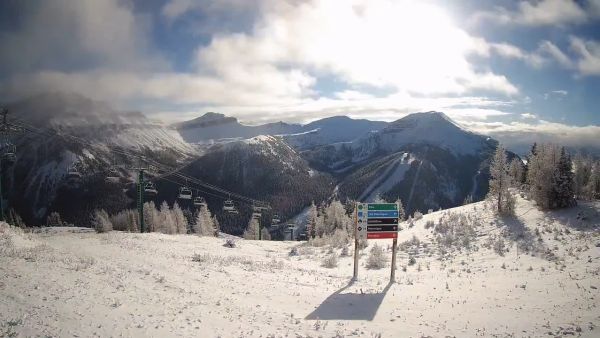
Lake Louise Opens Early on 1 November With Juniper Express and Easy Street
The Rockies get their first lift-served turns of the season early. Lake Louise opens Sunday 1 November, five days ahead of schedule, after a cold October and round-the-clock work from the snowmaking and mountain crews. Terrain is limited to Juniper Express Chair and Easy Street, with two small terrain parks and the beginner area for lessons. Opening-day tickets are over 60% off, with prices rising as more lifts open. First chair is at 9:30 am under the resort’s new lift hours.
31 Oct 2026
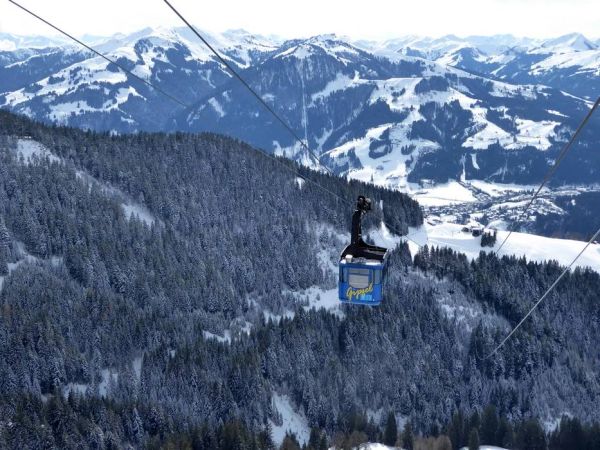
Kitzbüheler Horn Summit Cable Car to Be Replaced After 70 Years
A Tyrolean summit lift that has been carrying guests up the Kitzbüheler Horn since 1955 is on borrowed time. Its licence runs to 2045, but a new inspection rule has made refurbishment uneconomic, so Bergbahn AG Kitzbühel will spend around €15 million on a replacement on the same line. It should hold roughly 100 people and keep running in winds that would stop today’s lift. Building starts in autumn 2027, which makes this winter and next summer the last chances to ride the old one.
30 Oct 2026
What’s New in Japan Skiing This Winter: Niseko Gondola, a Private Resort and a Bigger Ikon Pass
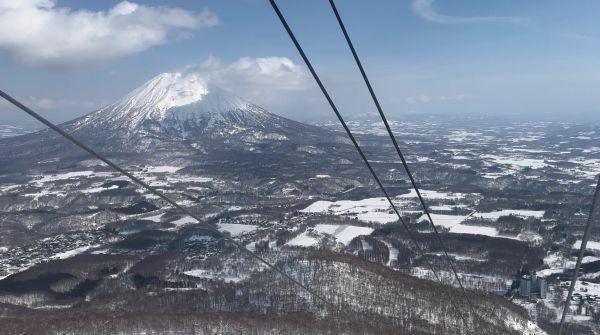
Niseko Village is replacing a lift from the early 1980s with an eight-person gondola, Tsugaike gets a six-person chairlift, Madarao joins the Ikon Pass and Togari opens Asia’s first private ski resort. Here’s what is actually new in Japan skiing for 2026/27, plus what is still a year or two away.
30 Oct 2026
Ischgl Lift Tickets
Ischgl lift tickets & passes
Opening day for the winter 2026 - 2027 season is scheduled for Nov 26, 2026 (subject to change). Lift tickets at Ischgl typically go on sale well before the start of the ski season.
Day passes start from €15, with peak rates up to €69.
12 pass options
Single-day passes
Adult 17–64
Adult Full Day (Silvretta)
€59up to €69 peak
Full day skiing at Ischgl Silvretta Arena with 239 kilometers of slopes. Cross-border Austrian-Swiss ski area with modern lifts and snow guarantee until spring.
Buy passAdult 17–64
Adult VIP Pass (Guest Card Required)
€52up to €62 peak
VIP day pass for Ischgl guests with accommodation guest card. Discounted access to 46 lifts in Ischgl-Samnaun area with premium Austrian ski experience.
Buy passYouth 10–16
Youth Full Day
€47up to €55 peak
Youth skiing at Ischgl Silvretta Arena in Austrian Tyrol. Experience world-class terrain with access to Samnaun duty-free zone and challenging slopes.
Buy passChild 0–9
Child (9 & Under)
Free
Free skiing for children 9 and under at Ischgl when accompanied by adult. Complimentary access to Austria's premiere ski destination with family terrain.
Buy passSenior 65–79
Senior Full Day
€47up to €55 peak
Senior lift ticket for Ischgl Silvretta Arena. Discounted access to Austrian Alps skiing with comfortable modern lifts and mountain dining from 65 years.
Buy passSenior 80–99
Senior (80+)
€30up to €35 peak
Senior 80+ skiing at Ischgl at children's rate. Special pricing for seniors 80 and older with full access to Silvretta Arena and Austrian ski terrain.
Buy passHalf-day passes
Adult 17–64
Half Day (from 12:30pm)
€49up to €57 peak
Afternoon skiing at Ischgl starting after lunch. Perfect for shorter visits to Austria's premier ski destination with access to Swiss Samnaun area.
Buy passAdult 17–64
Single Samnaun Trip
€15up to €18 peak
One-way ticket from Ischgl to Samnaun duty-free zone. Cross-border experience combining Austrian skiing with Swiss shopping and dining opportunities.
Buy passMulti-day passes
Adult 17–64
Multi-Day (6-Day Silvretta)
€295up to €345 peak
Six-day Ischgl Silvretta Arena pass with savings over daily rates. Extended Austrian Alps vacation with access to 75 lifts across four ski areas.
Buy passAdult 17–64
Flexi Pass (6 from 8 Days)
€315up to €365 peak
Flexible six-day pass from eight-day period at Ischgl. Choose your ski days with VIP benefits including spa discounts and Austrian mountain dining perks.
Buy passAdult 17–64
Ikon Pass Access
Free
Ischgl joins Ikon Pass starting winter 2025/26. International ski pass access to Austria's party capital with world-class terrain and après-ski scene.
Buy passSeason passes
Adult 17–64
Paznaun-Samnaun Season Pass
€759
Unlimited access to Ischgl, Galtür, Kappl, and See ski areas. Austria's comprehensive regional pass with 75 lifts and extensive Austrian Alpine terrain.
Buy passLift tickets FAQ
How much does a Ischgl day pass cost?
Ischgl day passes range from €15 to €69 depending on the date and advance booking.
Can I buy Ischgl lift tickets online?
Yes, you can purchase tickets directly from the resort website or at the resort ticket office.
Are there discounts for multi-day passes?
Yes, multi-day packages typically offer significant savings compared to individual day passes. The per-day cost decreases with longer stays.
What is included with a Ischgl lift ticket?
Full access to all lifts and trails at Ischgl, including mountain safety and patrol services.
What is the difference between Ischgl lift tickets and ski passes?
"Lift tickets" and "ski passes" refer to the same thing at Ischgl - your access to the mountain's lifts and trails for your chosen duration.
When should I buy Ischgl lift tickets for the best price?
Purchase tickets at least 7 days in advance for the best rates, and consider weekday visits for further savings over weekend rates.
Does Ischgl offer group discounts on lift tickets?
Group discounts are typically available for parties of 10 or more. Contact Ischgl directly for group booking information and rates.
How can I check current conditions before buying tickets?
Before purchasing, check the live snow report and mountain webcams to see current weather, snow conditions, and lift operations at Ischgl.
More Ischgl intelligence: snow report, webcams, resort overview.