
The Overview
Michael Fulton
Melbourne-based skier and snowboarder with 50+ resorts across 5 continents. Specialises in Australian resorts and international resort comparisons.
Ischgl forms one half of the Silvretta Arena, a cross-border ski area shared with Samnaun in Switzerland that ranks among the largest interconnected resorts in the Alps. The combined terrain spans 239km of pistes and 15km of ski routes across 88 runs, rising from 1,360m at the valley floor to the 2,872m Greitspitze on the Austrian-Swiss border.
The longest descent — aptly named "Eleven" — drops 11km from the summit to the village, while the steepest pitches exceed 70% gradient in the Höllboden bowl. Ninety per cent of the terrain sits above 2,000m, and the resort backs its natural snowfall with more than 1,100 snow cannons covering virtually every run in the network.
The piste mix skews heavily toward intermediate skiing, with 58% of runs graded red and a further 21% blue, though the 15% advanced and 6% expert terrain — including the Piz Val Gronda freeride zone and dedicated mogul slopes — gives strong skiers plenty to work with.
The Smugglers' Trail, a themed cross-border route available in Gold, Silver and Bronze variants, traces the old contraband paths between Austria and the duty-free Swiss village of Samnaun. A single lift pass covers the entire Silvretta Arena, and the wider Silvretta regional pass extends access to the neighbouring ski areas of Galtür, Kappl and See in the Paznaun valley.
1512m
Vertical
88
Runs
239 km
Piste
4m
Annual snow
The Terrain
88 runs across 239 km of piste
Ischgl's 239 kilometres of piste across 88 runs are shared with Samnaun in Switzerland, and the terrain skews firmly to the middle: 58% intermediate, 21% beginner, 15% advanced and 6% expert. The vertical runs from the village at 1,360 metres to the 2,872-metre summit, a drop of 1,512 metres, with 90% of the terrain above 2,000 metres. Most skiers start at Idalp, at the top of the Silvrettabahn and Fimbabahn gondolas, and fan out from there towards Palinkopf, Greitspitze and the Swiss side.
Expert terrain is concentrated rather than widespread. The Piz Val Gronda cable car opens a large freeride zone, Lange Wand (route 14a) is a steep and often icy black, and the Höllboden bowl carries pitches steeper than 70%. The longest descent, Eleven, covers 11 kilometres from the summit to the village. Long runs such as the red Route 80 from Greitspitze to Samnaun and the black Duty-Free Run cross into Switzerland, so a day over the border is part of the skiing rather than a detour.
Terrain split
88
runs
88 runs across 4 grades
Beginner18 runs · 21%
Intermediate51 runs · 58%
Advanced13 runs · 15%
Expert5 runs · 6%
Time it right
When to visit Ischgl
Ischgl operates from late November through to early May, with the 2025–26 season running from 27 November 2025 to 3 May 2026. The resort's high-altitude terrain — 90% of slopes above 2,000m — delivers reliable coverage across the full five-month window without relying on glacier ice.
Average annual snowfall sits at around 4 metres, and the extensive snowmaking network of over 1,100 cannons and lances ensures piste quality holds from opening day through to the spring close.
The season is bookended by the resort's signature Top of the Mountain concerts, a tradition dating back to 1995 when Elton John headlined the first closing show. In 2025–26, Rita Ora opened proceedings on 29 November, with Robin Schulz performing at Easter and Christina Aguilera closing the season on 2 May at the open-air stage on Idalp at 2,320m.
The Spring Blanc event series runs through April and into the final week, combining firn skiing with a programme of culinary and lifestyle events. From winter 2025–26, Ischgl is also included on the Ikon Pass, with seven free days for full pass holders.
Season 2026 - 2027
26 Nov 2026
Opens
2 May 2027
Closes
157
Days open
4 m
Annual snow
Getting there
Getting to Ischgl, and where to stay
Ischgl sits in the upper Paznaun valley in the Landeck district of western Tyrol, a 40km high-alpine valley that also encompasses the villages of Galtür, Kappl and See. The village lies at 1,377m between the Silvretta and Verwall mountain ranges, with the ski area accessed directly from the village centre via three base lifts.
Despite a resident population of around 1,600, Ischgl functions as a fully developed resort town with a compact layout connected by escalators and a pedestrianised core.
Innsbruck Airport is the nearest international gateway, approximately 100km to the east. The drive takes around 90 minutes via the A12 Inntal motorway to the Pians junction, then the B188 into the Paznaun valley. Zurich and Munich airports are both roughly 230–235km away.
The nearest rail connection is Landeck-Zams station, 30km down the valley, served by regular ÖBB services from Innsbruck; bus line 260 runs from the station to Ischgl every half hour. Note that the Silvretta High Alpine Road linking the Paznaun to Vorarlberg via the Bielerhöhe is closed throughout winter — all access is via the single valley road from Pians.
Where to stay
Search all stays →Hotels and lodges near Ischgl, powered by Stay22.
Latest News
From the SnowStash desk
California Ski Resort Opening Dates 2026-27: Mammoth Leads, Tahoe Follows
Mammoth Mountain is first up in California, targeting Friday 13 November after a dusting of September snow. Heavenly and Northstar follow on 20 November, Palisades Tahoe on Wednesday 25 November and Sugar Bowl on 27 November, with Kirkwood on 4 December and June Mountain on 19 December. Plenty of smaller areas have no date yet. A super El Niño favours the Sierra, but a warmer storm track is the catch.
7 Oct 2026
Colorado Ski Resort Opening Dates 2026-27: A-Basin and Keystone Race to Be First
Arapahoe Basin, Keystone and Winter Park are all chasing an October start, though none has a firm date yet. The first dated openers are Breckenridge and Copper on Friday 6 November, then Vail on 13 November, with most of the rest bunched around US Thanksgiving. Hesperus did not open at all last season. A super El Niño offers hope but no guarantee, and forecasters say the southern mountains have the better odds.
5 Oct 2026
Dolomiti Superski 2026-27: Four New Gondolas, New Reservoirs and an €89 Peak Day Pass
Dolomiti Superski is spending around €100 million across its 12 areas before winter. Kronplatz gets a new 10-passenger gondola with a middle station, 3 Zinnen gets Helmissimo, and Val di Fassa swaps a chairlift for a gondola above Col Valvacin. New water-storage basins and upgraded snowmaking follow, and construction has started on the San Martino to Passo Rolle link. A peak adult day pass is €89.
4 Oct 2026
Utah Ski Resort Opening Dates 2026-27: Brian Head First, Eagle Point Out
Brian Head is targeting 6 November, though last year it aimed for 7 November and did not open until the 25th. Park City, Alta and Solitude are pencilled in for 20 November, Snowbird and Snowbasin for 27 November, and Deer Valley for 5 December. Eagle Point will stay closed after the Cottonwood Fire. A super El Niño is forecast, but the big snow is not expected until January.
4 Oct 2026
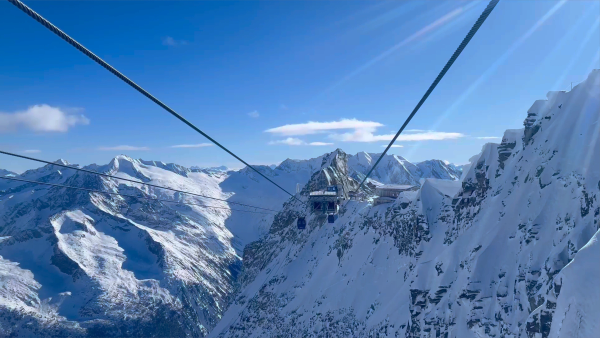
Hintertux Glacier Opens for 2026-27 With 12 Kilometres of Piste
Hintertux became Austria's second glacier to open for 2026-27 on Friday 2 October, after the Pitztal Glacier. Twelve kilometres of piste are running around the Olperer and Gefrorene Wand, served by one gondola and two drag lifts, with the Betterpark also open. Lifts officially run 8:15 am to 4:30 pm, but skiing stops at 2 pm for now.
4 Oct 2026
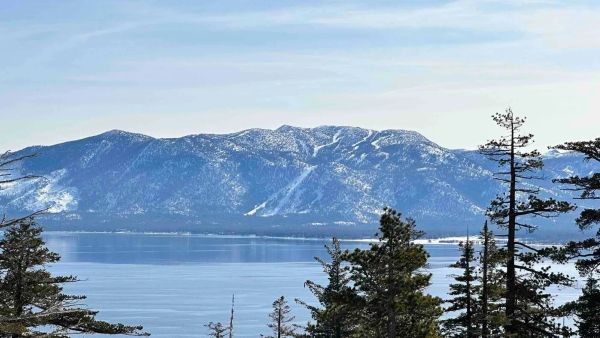
Vail Resorts Counts the Cost of a Thin Winter as Pass Sales Slide Further
A historically poor western winter cut Vail Resorts' annual net income from $280 million to $147.5 million and skier visits by 13.4 per cent. Now 2026-27 pass units are down 12 per cent as of 18 September, worse than the 10 per cent flagged in spring. Vail blames the weather and thinks some buyers are simply waiting, and it forecasts a rebound if the snow behaves.
3 Oct 2026
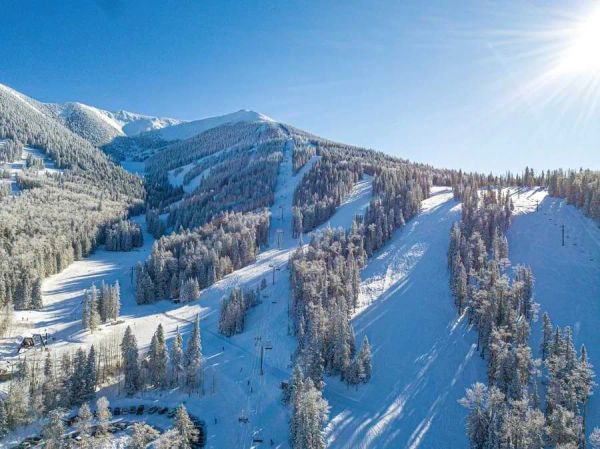
Arizona Snowbowl's $1 Lift Tickets Are Hard to Find, but $9 Days Are Not
Arizona Snowbowl advertised eight $1 lift ticket days this winter. Go looking and only three are showing - 10 March, 1 April and 10 April - so the rest may already have gone. The consolation is a calendar full of $9 days, including all but one day in April. Opening day is 20 November, weather permitting, and opening weekend is $19.
2 Oct 2026
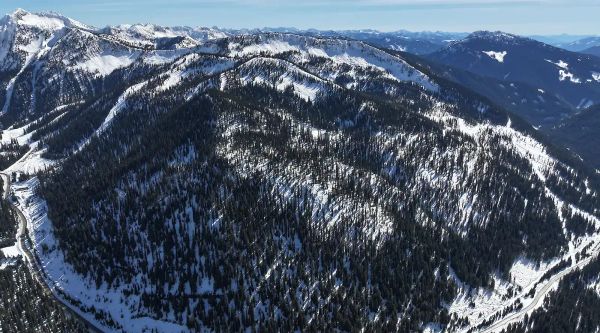
Whitewater Brings Its Short Side Inbounds, With Six New Runs for 2026-27
For years, Whitewater's Short Side was where you ducked a rope and hoped for the best: unmapped, ungroomed and unpatrolled. This winter it's inbounds. Six new runs of glades and fall-line skiing add 190 acres (about 77 hectares), taking the resort past 1,400 acres in total. F2 Logging spent a month in the trees to make it happen, and opening day is pencilled in for 4 December. Bonanza now needs less snow to groom, too.
1 Oct 2026