
The Overview
Michael Fulton
Melbourne-based skier and snowboarder with 50+ resorts across 5 continents. Specialises in Australian resorts and international resort comparisons.
Skicircus Saalbach-Hinterglemm spans 270 kilometres of piste across four interconnected villages - Saalbach, Hinterglemm, Leogang and Fieberbrunn - ranking as one of Austria's largest lift-linked ski domains. The vertical drop measures 1,266 metres from the 830-metre base to the 2,096-metre summit at Schattberg West. Terrain splits approximately 50% beginner, 40% intermediate and 10% advanced, with 140 kilometres of blue runs, 112 kilometres of red and 18 kilometres of black. The area covers 800 hectares with 90% snowmaking coverage across the piste network.
The signature 65-kilometre Skicircus Challenge route links 32 lifts with 12,400 metres of vertical descent, designed for completion in six to seven hours without breaks. Intermediates dominate the sun-drenched south-facing slopes of Kohlmais and Schönleiten, whilst the north-facing Schattberg sector holds better snow cover into spring. Fieberbrunn's steep terrain hosts annual Freeride World Tour events, attracting riders seeking lift-accessed backcountry lines. Four terrain parks cater to freestylers, with the Leogang Nitro Snowpark featuring competition-standard features.
Saalbach village centres on a pedestrianised main street lined with traditional Tyrolean architecture, hotels and restaurants. The après-ski scene ranks among Austria's most active, with slope-side venues like Goaßstall and Hinterhag Alm drawing crowds from mid-afternoon. Mountain huts number over 60 across the ski area, serving regional Pinzgau specialities between runs. Despite its party reputation, Hinterglemm offers quieter family-focused accommodation away from the main bar strip.
The ALPIN CARD pass extends coverage beyond the Skicircus to include Zell am See's Schmittenhöhe and the Kitzsteinhorn glacier at Kaprun, totalling 408 kilometres of terrain across 121 lifts. Adult day tickets range from €56 to €79 depending on season, with six-day passes from €280 to €330. Children under nine ski free, and a Saturday youth special prices under-19s at €15. The resort suits confident intermediates seeking high-mileage cruising, freeriders exploring Fieberbrunn's sidecountry, and groups mixing skiing with nightlife.
1266m
Vertical
156
Runs
270 km
Piste
3m
Annual snow
Ski Alpin
Pass
Watch
See Saalbach-Hinterglemm in motion
The Terrain
156 runs across 270 km of piste
Saalbach-Hinterglemm is built around volume: 156 runs and 270 kilometres of piste between 830 and 2,096 metres, with 1,266 metres of vertical. Beginners take 52% of the terrain and intermediates 41%, while advanced and expert pistes together add up to just 7%, so the skiing is overwhelmingly broad, groomed and easy to link. Intermediates favour the sunny south-facing slopes of Kohlmais and Schönleiten, the north-facing Schattberg sector holds snow better into spring, and Leogang has gentle learning slopes at the base of the Asitz gondola.
Steeper terrain is limited and mostly off the groomed network. Fieberbrunn, the fourth village in the circuit, hosts a Freeride World Tour stop on the Wildseeloder (2,118 metres), where the north-facing powder bowls are the steepest in the Skicircus. Dedicated freeride zones sit at Lärchfilzkogel and the Asitzmuldenbahn in Leogang. The 65-kilometre Skicircus Challenge links 32 lifts and about 12,400 metres of descent, a full day for strong intermediates who want to cover every sector rather than chase a single steep run.
Terrain split
156
runs
156 runs across 4 grades
Beginner81 runs · 52%
Intermediate64 runs · 41%
Advanced8 runs · 5%
Expert3 runs · 2%
Time it right
When to visit Saalbach-Hinterglemm
The 2025-26 winter season runs from 28 November 2025 to 6 April 2026, spanning 130 days of operation across the full Skicircus network. Early season coverage depends on snowmaking capacity, with the Schattberg and Zwölferkogel sectors typically opening first above 1,800 metres. Full resort opening occurs by mid-December when snow depth allows valley runs to open. Late season extends into early April on higher north-facing slopes, though lower runs may close by late March in warmer years.
Annual snowfall averages approximately three metres at summit elevations, with the first week of February historically recording the season's heaviest accumulation at 37 centimetres across 4.1 snowy days. Base depths typically reach 80 to 100 centimetres during peak winter, though the 830-metre valley floor elevation makes the resort vulnerable to warm spells. The 90% snowmaking coverage compensates for inconsistent natural snowfall, with over 1,100 snow cannons deployed across the piste network ensuring reliable conditions from December through March.
January and February deliver the most consistent snow quality, with colder temperatures preserving cover on all aspects. March brings longer days and softer afternoon snow, ideal for intermediate cruising on sun-drenched south-facing slopes. The north-facing Schattberg runs retain powder stashes longer after storms, making them prime territory for off-piste exploration. Late-season visitors should prioritise morning sessions before snow softens significantly.
The BERGFESTival rock concert launches the season in early December, followed by Rave on Snow, a three-day electronic music festival attracting 70 DJs across 12 indoor and outdoor stages. The Mountain Attack ski touring marathon runs in January across six peaks with 3,000 metres of climbing. Dutch Week brings thousands of international visitors for on-slope parties in March, whilst the White Pearl Mountain Days close the season from 20 to 29 March with mountain yoga, live music and extended sunshine sessions.
Season 2026 - 2027
27 Nov 2026
Opens
4 Apr 2027
Closes
128
Days open
3 m
Annual snow
Getting there
Getting to Saalbach-Hinterglemm, and where to stay
Saalbach-Hinterglemm occupies the Glemmtal, an east-west oriented valley within the Kitzbühel Alps of Austria's Salzburg province. The twin villages sit at 1,003 metres elevation in the Pinzgau region, framed by the Pinzgauer Grasberge to the south and the Leogang Mountains to the north. The Schattberg (2,097m) rises as the local summit directly above Saalbach, whilst Hochkogel (2,249m) marks the highest point in the southern ridge. The Saalach river flows through the upper ten kilometres of the valley before draining north toward Zell am See.
Zell am See lies 20 kilometres southeast, serving as the nearest major town with supermarkets, medical facilities and rail connections. Saalfelden sits nine kilometres north via the valley entrance at Viehhofen, whilst the Tyrolean resort of Fieberbrunn lies across the ridge in the neighbouring Pillersee valley. The historic market town of Saalbach received its trading rights in 1489, and the municipality officially merged with Hinterglemm in 1987. A population of approximately 3,000 permanent residents supports an economy almost entirely dependent on tourism.
Driving from Salzburg follows the B311 Pinzgau road westward through the Saalach Valley, turning south at Maishofen for the final 15-kilometre climb into the Glemmtal. The journey covers 90 kilometres and takes approximately 90 minutes in normal conditions. From Munich, the route passes Bad Reichenhall and Lofer via the A8 motorway and B21, totalling 217 kilometres and around two hours 45 minutes. Winter tyres or chains are mandatory on Austrian roads from November to April.
Salzburg Airport (Wolfgang Amadeus Mozart) offers the shortest transfer at 85 kilometres, with shuttle services reaching the resort in 90 minutes. Innsbruck Airport lies 157 kilometres southwest via the Inn Valley, with transfer times of approximately two hours 20 minutes. Munich Airport provides the widest international connections at 217 kilometres north, reachable in under three hours. The nearest railway station at Zell am See connects to hourly bus services covering the 19-kilometre final leg, whilst Leogang and Fieberbrunn maintain their own stations on the Saalfelden-St Johann line.
Where to stay
Search all stays →Hotels and lodges near Saalbach-Hinterglemm, powered by Stay22.
Latest News
From the SnowStash desk
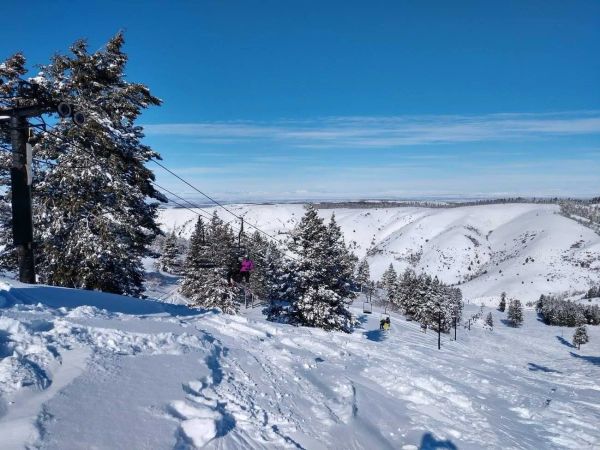
Kelly Canyon, Idaho, Adds Snowmaking, a Bigger Terrain Park and More Parking for 2026-27
Kelly Canyon had a rough 2025-26, and the Idaho resort has spent the summer making sure it doesn’t repeat. Snowmaking now reaches the top of Goldrush, the terrain park is doubling in size with a stereo system, lights and a snack shack, and the car park is getting bigger. Grooming is stepping up too. Target opening is December 4, conditions permitting.
9 Oct 2026
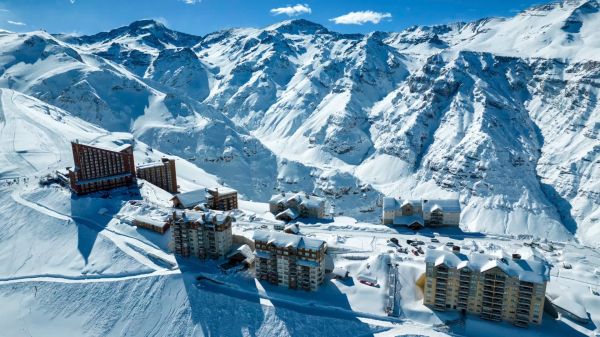
Valle Nevado Extends Season to November 8 After 108 cm in 48 Hours
Winter was meant to be winding down in Chile. Then Valle Nevado took 108 cm in 48 hours in early October, and the resort has pushed its closing date out to November 8 - its latest in 38 years of operation. That makes 143 days of skiing since opening day on June 19, with 690 cm banked for the season. Only part of the mountain is running while the storm settles, so check the mountain report before you plan a trip.
9 Oct 2026
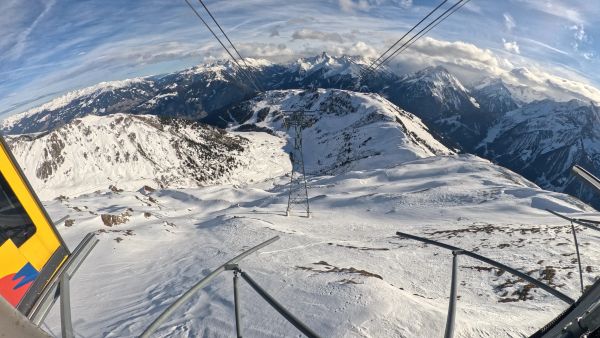
Alps Snow Forecast: Cold Front Brings Thursday Snow to the High Alps
The Alps look a lot more like winter today, for a day or so. A cold front is moving west to east, dropping up to 35 cm on high glaciers and peaks, with snow levels falling to around 1,500-1,800 m at times. Don’t plan a trip around it: mid-elevation snow will be thin and wet, every area is closed bar a limited Sölden glacier opening tomorrow, and warmer weather returns by Monday.
8 Oct 2026
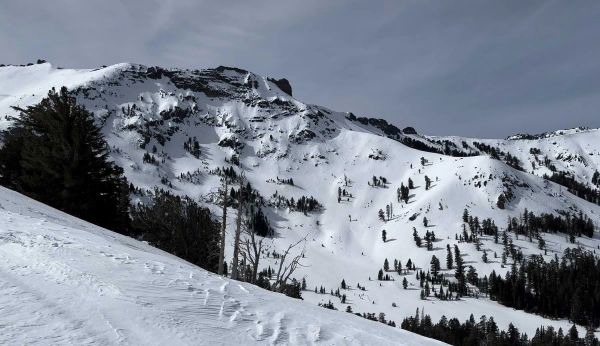
California Ski Resort Opening Dates 2026-27: Mammoth Leads, Tahoe Follows
Mammoth Mountain is first up in California, targeting Friday 13 November after a dusting of September snow. Heavenly and Northstar follow on 20 November, Palisades Tahoe on Wednesday 25 November and Sugar Bowl on 27 November, with Kirkwood on 4 December and June Mountain on 19 December. Plenty of smaller areas have no date yet. A super El Niño favours the Sierra, but a warmer storm track is the catch.
7 Oct 2026
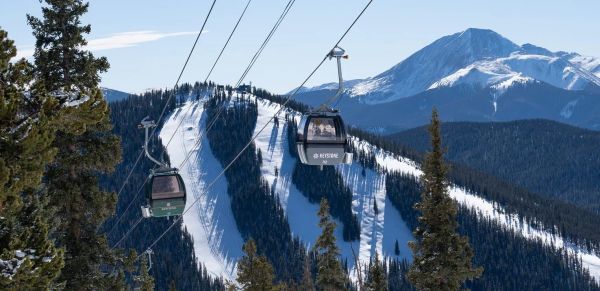
Colorado Ski Resort Opening Dates 2026-27: A-Basin and Keystone Race to Be First
Arapahoe Basin, Keystone and Winter Park are all chasing an October start, though none has a firm date yet. The first dated openers are Breckenridge and Copper on Friday 6 November, then Vail on 13 November, with most of the rest bunched around US Thanksgiving. Hesperus did not open at all last season. A super El Niño offers hope but no guarantee, and forecasters say the southern mountains have the better odds.
5 Oct 2026
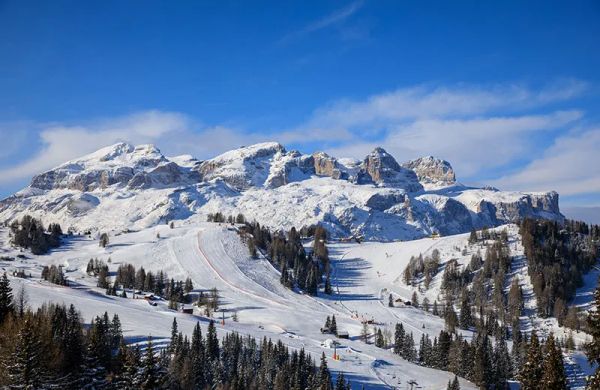
Dolomiti Superski 2026-27: Four New Gondolas, New Reservoirs and an €89 Peak Day Pass
Dolomiti Superski is spending around €100 million across its 12 areas before winter. Kronplatz gets a new 10-passenger gondola with a middle station, 3 Zinnen gets Helmissimo, and Val di Fassa swaps a chairlift for a gondola above Col Valvacin. New water-storage basins and upgraded snowmaking follow, and construction has started on the San Martino to Passo Rolle link. A peak adult day pass is €89.
4 Oct 2026
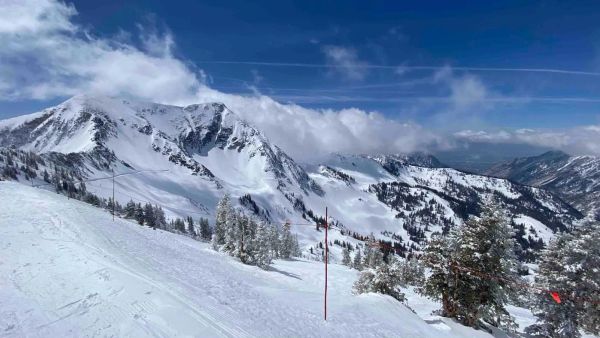
Utah Ski Resort Opening Dates 2026-27: Brian Head First, Eagle Point Out
Brian Head is targeting 6 November, though last year it aimed for 7 November and did not open until the 25th. Park City, Alta and Solitude are pencilled in for 20 November, Snowbird and Snowbasin for 27 November, and Deer Valley for 5 December. Eagle Point will stay closed after the Cottonwood Fire. A super El Niño is forecast, but the big snow is not expected until January.
4 Oct 2026
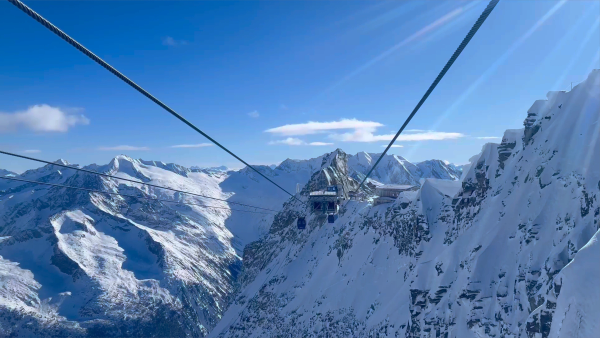
Hintertux Glacier Opens for 2026-27 With 12 Kilometres of Piste
Hintertux became Austria's second glacier to open for 2026-27 on Friday 2 October, after the Pitztal Glacier. Twelve kilometres of piste are running around the Olperer and Gefrorene Wand, served by one gondola and two drag lifts, with the Betterpark also open. Lifts officially run 8:15 am to 4:30 pm, but skiing stops at 2 pm for now.
4 Oct 2026
Saalbach-Hinterglemm Snow Report
Snow Report
Updated 9 Oct 2026
2096m
summit
+1cm
new snow · last 24 hours
Foggy1°C / 6°C · NW 8km/h
Snowfall
24 hours
1cm
48 hours
1cm
7 days
1cm
Base depth
0cm
Season total
2cm
Total lifts70
Live open status isn’t available right now.
27 Nov 2026 - 4 Apr 2027
Hour by Hour
Next 48 hours· Updated Oct 9, 2026 at 6:02 PM
Scroll for the full outlook · Open-Meteo
7-Day Outlook
2,096 mUpdated Oct 9, 2026 at 6:02 PMOpen-Meteo
Days 1–7
0.0cm
Days 8–14
14cm
Fri, Oct 9
Slight Rain Showers
Temp6° / 1°°C
Snow0.0cm(100%)
Wind8 km/h NW
Live snow from the resort feed; forecast from Open-Meteo, via Supabase.
Understanding the Saalbach-Hinterglemm snow report
Planning a day at Saalbach-Hinterglemm? Our snow report combines official mountain data with live weather so you know exactly what conditions look like right now, from the 830m base to the 2096m summit.
Snow measurements
Base depth, summit depth, and recent snowfall are the core numbers to watch. At Saalbach-Hinterglemm, summit conditions (2096m) can differ noticeably from the base, so we break both out separately rather than showing a single average.
Weather conditions
Wind and temperature swings matter as much as fresh snowfall. Cold, calm conditions hold snow quality well, while wind-loading or a warm-up can change things quickly — especially given the elevation spread between Saalbach-Hinterglemm's base and summit.
Data sources
We pull Saalbach-Hinterglemm's conditions from on-the-ground mountain reporting, then layer in forecast data so you get a fuller picture than either source alone. The mountain is served by 70 lifts, including 6 8-person chairlifts and 4 quad chairlifts.
When to check
Conditions can change overnight, so mornings and late afternoons are the best times to check back on Saalbach-Hinterglemm.