
The Overview
Michael Fulton
Melbourne-based skier and snowboarder with 50+ resorts across 5 continents. Specialises in Australian resorts and international resort comparisons.
The Schmittenhöhe rises directly above Lake Zell, offering 77 kilometres of piste terrain served by 27 lifts between 760 and 2,000 metres elevation. The 1,240-metre vertical drop delivers five distinct valley runs, including the challenging Trass descent with gradients reaching 70 percent over its four-kilometre length. Annual snowfall averages around three metres at summit level, whilst 100 percent snowmaking coverage across all 499 snow cannons ensures reliable conditions from early December through mid-April.
Terrain splits across 30 kilometres of blue runs, 28 kilometres of red runs, and 19 kilometres of black runs - a balance that suits intermediate cruisers while offering genuine challenge for advanced skiers. The Trass and Standard descents rank among Salzburg's most demanding black runs, dropping over 900 vertical metres through steep pitches and forest glades. Seven marked freeride routes extend the offering for powder seekers, whilst Schmidolin's Dragon Park and the Kidsslope at Glocknerwiese provide dedicated learning terrain for families.
The ski area wraps around three sides of the Schmittenhöhe peak, with 23 mountain restaurants and après-ski bars distributed across the slopes. Night skiing operates twice weekly on the 1.5-kilometre floodlit Ebenbergbahn sector above Zell am See town centre. Views from the summit platform extend across more than 30 peaks exceeding 3,000 metres in the Hohe Tauern range, including the Grossglockner and Kitzsteinhorn.
The Ski ALPIN CARD links Schmittenhöhe with the Kitzsteinhorn glacier and Skicircus Saalbach Hinterglemm Leogang Fieberbrunn, creating a combined network of 408 kilometres and 121 lifts. Epic Pass holders receive five days access across the alliance. Adult day tickets cost €56 during regular season and €66 at peak periods, with season passes priced at €889. The resort suits intermediate skiers seeking varied piste terrain with glacier-skiing options nearby.
1240m
Vertical
41
Runs
77 km
Piste
3m
Annual snow
Ski Alpin
Pass
The Terrain
41 runs across 77 km of piste
Zell am See's Schmittenhöhe rises above the lake with 41 runs and 77 kilometres of piste between 760 and 2,000 metres, a 1,240-metre vertical. Beginners take 39% of the terrain and intermediates 36%, but the 20% advanced and 5% expert share is higher than most resorts of this size. Except at the very top, the front side of the mountain is wooded and mostly wide, and a hooded six-seater on Sonnkogel opened 500 metres of good skiable vertical, so intermediates have plenty of room to cruise.
The Trass, piste 14, is the classic expert run, a descent of more than four kilometres with gradients up to 70%, and the Standard descent is another demanding black that drops over 900 vertical metres through steep pitches and forest. Seven marked freeride routes give powder skiers more options, and a gondola on the back of the mountain links to Saalbach-Hinterglemm for variety. Schmittenhöhe is a compact mountain that works well for a mixed group, though advanced skiers will want to add the Saalbach link for variety.
Terrain split
41
runs
41 runs across 4 grades
Beginner16 runs · 39%
Intermediate15 runs · 36%
Advanced8 runs · 20%
Expert2 runs · 5%
Time it right
When to visit Zell Am See
The 2025-26 winter season on the Schmittenhöhe runs from 5 December 2025 to 6 April 2026, spanning approximately four months of operation. The Ski ALPIN CARD alliance extends the skiing period considerably through the Kitzsteinhorn glacier, which operates from mid-October through late May. Main lifts typically open at 8:30am, with early-bird hours from 7:30am during peak weeks in March.
Annual snowfall averages around three metres at summit elevation, with February typically recording the deepest base at approximately 135 centimetres on upper slopes. The 100 percent snowmaking coverage across all 77 kilometres of piste ensures valley runs remain skiable throughout the season, compensating for the relatively low 760-metre base elevation. January averages 16 sunny days, making it the clearest month for views across the Hohe Tauern peaks.
January and February deliver the most reliable snow conditions, with snowfall occurring approximately three days per week during these months. Mid-week skiing from Tuesday to Thursday offers quieter slopes compared to weekend crowds when family groups concentrate on the mountain. Spring conditions emerge from mid-March, with morning groomers softening by early afternoon - ideal for those preferring softer snow on the south-facing aspects.
Ski'n'Brunch events run Thursday mornings from January through March, offering early access to freshly groomed slopes followed by breakfast at summit restaurants. The Schmitten Sound music festival brings live acts and DJs to mountain venues throughout winter. Culinary Ski Days from 5-8 March 2026 feature live cooking demonstrations and regional wine tastings at on-mountain locations.
Season 2026 - 2027
4 Dec 2026
Opens
18 Apr 2027
Closes
135
Days open
3 m
Annual snow
Getting there
Getting to Zell Am See, and where to stay
Zell am See occupies a peninsula extending into Lake Zell at 750 metres elevation in the Pinzgau region of Salzburgerland, Austria. The town sits at the junction of the Kitzbühel Alps to the north and the Hohe Tauern range to the south, with the Schmittenhöhe (1,965 metres) rising directly from the lakeside. Lake Zell stretches 3.8 kilometres long and 1.5 kilometres wide, reaching depths of 69 metres - one of Europe's cleanest alpine bathing lakes.
The district capital lies 80 kilometres south of Salzburg, 100 kilometres east of Innsbruck, and just 30 kilometres north of Austria's highest peak, the Grossglockner (3,798 metres). The neighbouring village of Kaprun sits 10 kilometres south, providing access to the Kitzsteinhorn glacier. Saalfelden, the region's largest town with 20,000 residents, lies 15 kilometres north along the Salzach valley corridor.
Road access follows the A10 Tauern motorway south from Salzburg, exiting at Bischofshofen and continuing via the B311 through St Johann im Pongau. An alternative route crosses Germany via Bad Reichenhall to Lofer, then south through Saalfelden - often faster during peak season traffic. Drive time from Salzburg is approximately 90 minutes; from Munich approximately 2.5 hours; from Innsbruck around two hours via Wörgl.
Salzburg W.A. Mozart Airport lies 76 kilometres north, with direct bus service (line 260) taking approximately 1 hour 45 minutes to Zell am See via Bad Reichenhall and Saalfelden. Zell am See's train station sits in the town centre, with hourly ÖBB services from Salzburg Hauptbahnhof taking 90 minutes. Overnight guests receive the Guest Mobility Ticket providing free public transport throughout Salzburgerland, including ski buses between Zell am See and Kaprun.
Where to stay
Search all stays →Hotels and lodges near Zell Am See, powered by Stay22.
Latest News
From the SnowStash desk

Vermont Ski Resort Opening Dates 2026-27: Few Dates Set, Killington Waits on the Cold
Vermont's season is slow to take shape. Stratton is tentatively targeting 18 November and Sugarbush 21 November, while Pico has Friday 11 December on the calendar. Killington never sets a date and opens when the snowmaking allows, and Vail Resorts has yet to name days for Stowe, Okemo and Mount Snow. The forecasts disagree about snow, and the main El Niño worry for the Green Mountains is warmth.
9 Oct 2026

Crans-Montana 2027 World Championships President Resigns Ahead of Fraud Hearing
Less than four months out from the Crans-Montana 2027 World Championships, the man running the organising committee has stepped down. Claude-Alain Schmidhalter resigned as Swiss-Ski vice president and OC president after being indicted over a business dispute unrelated to skiing. He denies the allegations and faces court on October 27. Interim leaders are in place for the February 1-14 event.
9 Oct 2026
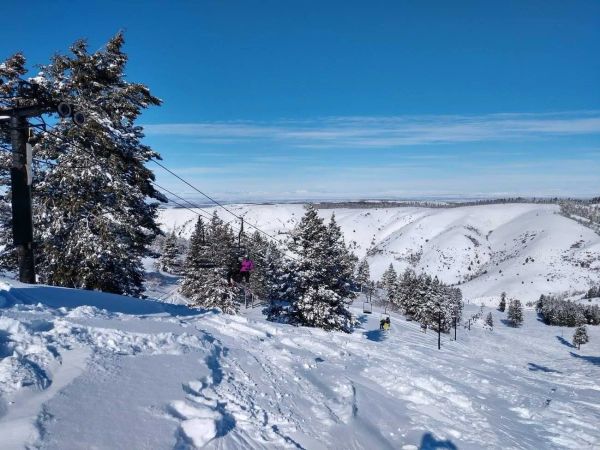
Kelly Canyon, Idaho, Adds Snowmaking, a Bigger Terrain Park and More Parking for 2026-27
Kelly Canyon had a rough 2025-26, and the Idaho resort has spent the summer making sure it doesn’t repeat. Snowmaking now reaches the top of Goldrush, the terrain park is doubling in size with a stereo system, lights and a snack shack, and the car park is getting bigger. Grooming is stepping up too. Target opening is December 4, conditions permitting.
9 Oct 2026
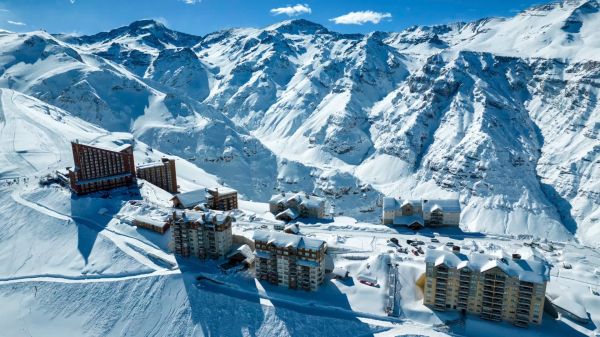
Valle Nevado Extends Season to November 8 After 108 cm in 48 Hours
Winter was meant to be winding down in Chile. Then Valle Nevado took 108 cm in 48 hours in early October, and the resort has pushed its closing date out to November 8 - its latest in 38 years of operation. That makes 143 days of skiing since opening day on June 19, with 690 cm banked for the season. Only part of the mountain is running while the storm settles, so check the mountain report before you plan a trip.
9 Oct 2026
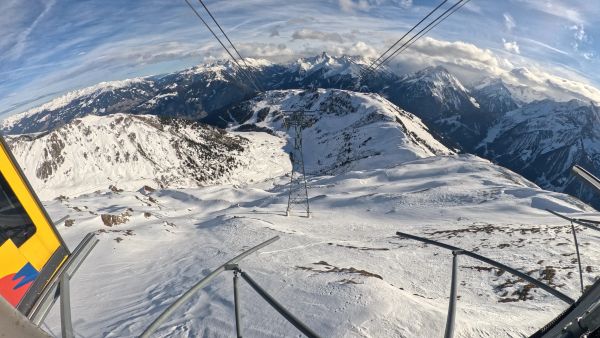
Alps Snow Forecast: Cold Front Brings Thursday Snow to the High Alps
The Alps look a lot more like winter today, for a day or so. A cold front is moving west to east, dropping up to 35 cm on high glaciers and peaks, with snow levels falling to around 1,500-1,800 m at times. Don’t plan a trip around it: mid-elevation snow will be thin and wet, every area is closed bar a limited Sölden glacier opening tomorrow, and warmer weather returns by Monday.
8 Oct 2026
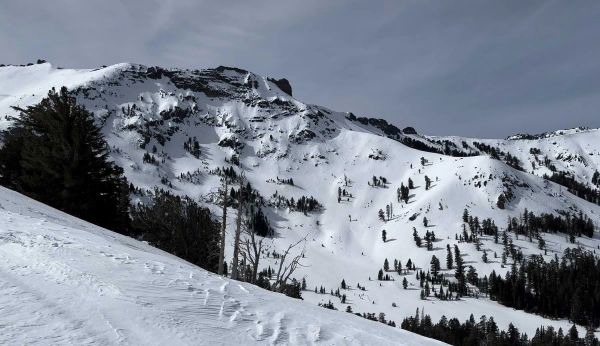
California Ski Resort Opening Dates 2026-27: Mammoth Leads, Tahoe Follows
Mammoth Mountain is first up in California, targeting Friday 13 November after a dusting of September snow. Heavenly and Northstar follow on 20 November, Palisades Tahoe on Wednesday 25 November and Sugar Bowl on 27 November, with Kirkwood on 4 December and June Mountain on 19 December. Plenty of smaller areas have no date yet. A super El Niño favours the Sierra, but a warmer storm track is the catch.
7 Oct 2026
Colorado Ski Resort Opening Dates 2026-27: A-Basin and Keystone Race to Be First
Arapahoe Basin, Keystone and Winter Park are all chasing an October start, though none has a firm date yet. The first dated openers are Breckenridge and Copper on Friday 6 November, then Vail on 13 November, with most of the rest bunched around US Thanksgiving. Hesperus did not open at all last season. A super El Niño offers hope but no guarantee, and forecasters say the southern mountains have the better odds.
5 Oct 2026
Dolomiti Superski 2026-27: Four New Gondolas, New Reservoirs and an €89 Peak Day Pass
Dolomiti Superski is spending around €100 million across its 12 areas before winter. Kronplatz gets a new 10-passenger gondola with a middle station, 3 Zinnen gets Helmissimo, and Val di Fassa swaps a chairlift for a gondola above Col Valvacin. New water-storage basins and upgraded snowmaking follow, and construction has started on the San Martino to Passo Rolle link. A peak adult day pass is €89.
4 Oct 2026
Zell Am See Lift System
Twenty-seven lift installations serve the Schmittenhöhe ski area, comprising seven gondolas, two aerial tramways, ten chairlifts (including one eight-seater, four six-seaters, and three quad chairs), four T-bars, and two covered conveyor belts for beginners. Combined hourly capacity moves approximately 35,000 skiers uphill across the mountain's multiple access points. The system underwent substantial modernisation between 2017 and 2020 with three major gondola projects.
The flagship Schmittenhöhebahn aerial tramway climbs directly from the town centre to the 2,000-metre summit in cabins designed by Porsche Design Studio. The areitXpress, a 10-person gondola installed in 2017, replaced the ageing Areitbahn I and serves as the primary Schüttdorf access point. The trassXpress eight-seater gondola with heated seats rises 2,847 metres to access the Trass descent, while the cityXpress provides direct uplift from central Zell am See.
Base-to-summit flow operates through six main feeder lifts: the areitXpress from Schüttdorf, cityXpress and trassXpress from Zell am See town, Schmittenhöhebahn and Sonnenalmbahn from the Schmittenstraße, and the zellamseeXpress from Viehhofen. The Glocknerbahn and Hirschkogel-Express chairlifts connect mid-mountain sectors, whilst the Sonnkogelbahn six-seater with bubble covers and seat heating links the Sonnkogel area.
The zellamseeXpress I and II opened in 2019-2020, establishing the first lift connection between the Glemmtal valley and Schmittenhöhe. This 10-person gondola system features the Jukeboxx cabins with smartphone-controlled speaker systems - a world first in ski lift technology. The Kapellenbahn was upgraded from a quad to an eight-seater chairlift, improving capacity to the western ski sectors.
28lifts across 8 types
2
Aerial Trams
7
Gondolas
1
8-Person Chair
4
6-Person Chairs
3
Quad Chairs
2
Double Chairs
4
T-Bars
5
Surface Lifts
Zell Am See lift system
Zell Am See is served by 28 lifts, listed here by type. Check which lifts are turning against the live conditions before you plan your first laps - early lifts and high-speed chairs get you to the best snow fastest.
More Zell Am See intelligence: trail map, snow report, webcams, resort overview.