Auron
Ski 135km across four sectors in France's Maritime Alps — just 95km from Nice with north-facing slopes and snowmaking on 95km of terrain.
Season 2026 - 2027
Opens
5 Dec 2026
Closes
18 Apr 2027
Days open
134
Annual snow
3.6m
The Overview
Michael Fulton
Melbourne-based skier and snowboarder with 50+ resorts across 5 continents. Specialises in Australian resorts and international resort comparisons.
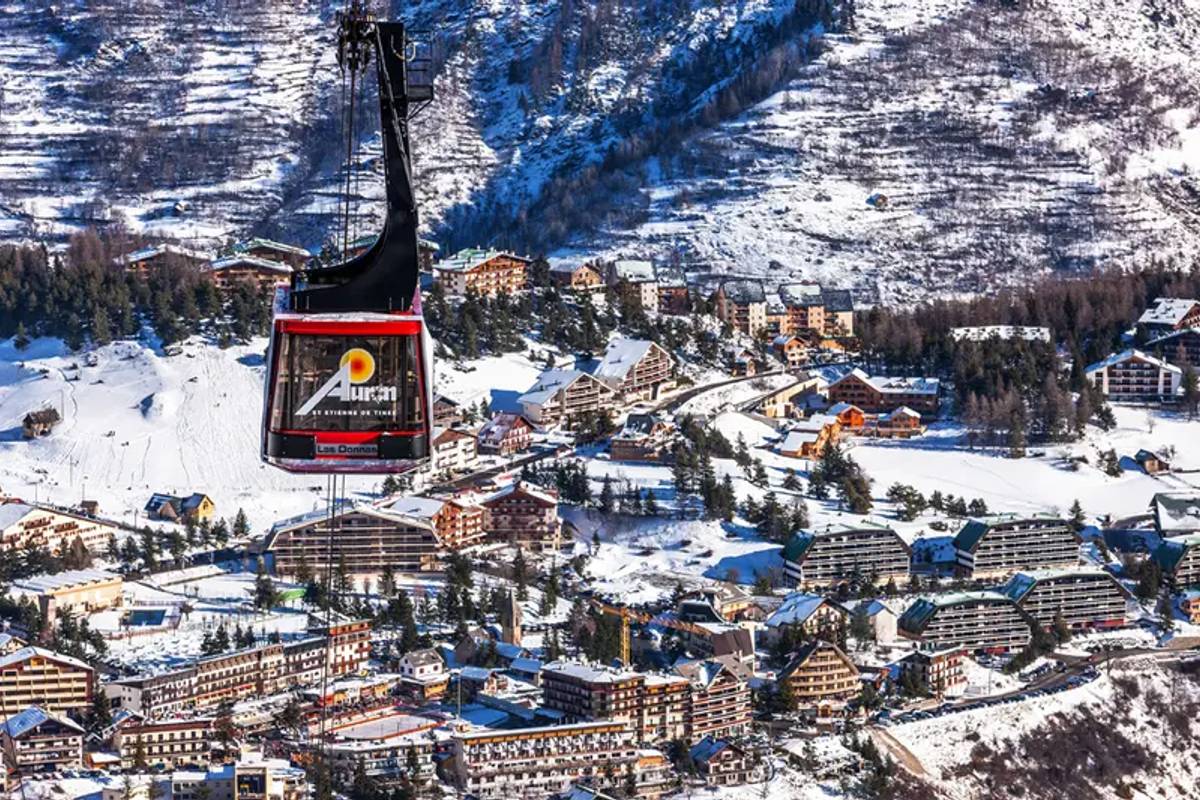
Auron is the largest ski domain in the Alpes-Maritimes department, spreading 135km of pistes across four distinct sectors — Les Donnas, Sauma Longue, Demandols and Lieuson — at elevations between 1,600m and 2,450m in the Tinée Valley of the French Maritime Alps. The 43 runs break down as 43% beginner, 33% intermediate and 24% advanced across an 850m vertical, with the terrain distributed across open, wide slopes on the upper mountain and more sheltered, forested runs lower down.
A north and north-westerly aspect across the majority of the ski area plays a significant role in preserving snow quality throughout the season, and with 95km of snowmaking coverage across the full domain, reliable conditions are maintained from December through to mid-April.
Auron has been the focal point of skiing in the Maritime Alps since it opened its first lift in 1937, establishing itself as a pioneer of downhill skiing in the department and developing steadily into the substantial resort it is today. The terrain around the high-altitude Demandols sector provides the most challenging skiing on the mountain, with black runs accessible from the upper lifts that attract experienced skiers looking for steeper and less-trafficked terrain.
The resort has historically drawn a well-heeled crowd from the nearby Côte d'Azur — former French president Jacques Chirac, artist Marc Chagall and musician Sacha Distel among its noted past visitors — giving Auron a reputation that sits somewhere between genuine mountain resort and glamorous coastal escape, without quite being either.
850m
Vertical
43
Runs
135 km
Piste
3.6m
Annual snow
The Terrain
43 runs across 135 km of piste
Auron sits in the Alpes-Maritimes, where 135 kilometres of piste across 43 runs fall 850 metres from 2,450 metres to the village at 1,600 metres. The grading is a little unusual for a family resort: 43% beginner, 33% intermediate and 24% advanced, with no expert runs. Beginners get plenty of room, yet roughly a quarter of the terrain is graded advanced, which gives stronger skiers something to chase. A mix of six-seaters, quads, T-bars and a gondola and two trams links the sectors in a compact, easy-to-read layout.
The Las Donnas sector holds the steepest, most testing descents, with firm pitches coming off the Col du Bouchiet. Sauma Longue and Demandols offer long, open cruising, and the Chastellares mid-station area is a good spot for first turns. Because the resort looks toward the Mediterranean, the snow can be good when storms roll in, and quiet mid-week slopes are common. Off-piste is possible after fresh falls, though a local guide is wise. Auron suits families and progressing skiers best, and strong intermediates will still find enough variety for several days.
Terrain split
43
runs
43 runs across 4 grades
Beginner18 runs · 43%
Intermediate14 runs · 33%
Advanced10 runs · 24%
Expert0 runs · 0%
Time it right
When to visit Auron
Auron operates from early December through to mid-April, with the 2025/26 season running 6 December to 12 April. The resort averages 4 metres of annual snowfall, and the combination of north and north-westerly aspect across most of the ski area and the comprehensive snowmaking network provides the consistent cover the terrain requires across its 850m vertical.
The Tinée Valley's position in the Maritime Alps creates a distinct snowfall pattern: early-season cold air pushed north from the Mediterranean frequently produces snowfall at altitude ahead of resorts further inland, giving Auron a reputation for reliable early-season coverage that the bigger name French Alpine resorts to the north sometimes miss. The snowiest period historically falls in late February and early March.
Spring conditions at Auron are well regarded, with the combination of high sunshine hours, the north-facing aspect that slows snow degradation and the resort's elevation keeping the upper sectors in good shape well into April.
The resort's proximity to the Mercantour National Park means the wider landscape surrounding the ski area is at its most spectacular in late season, with clear visibility across the Maritime Alps and into the high peaks above the Col de la Bonette — at 2,802m, one of the highest paved mountain passes in Europe — providing a visual backdrop that distinguishes Auron from resorts in more heavily built-up Alpine valleys.
Season 2026 - 2027
5 Dec 2026
Opens
18 Apr 2027
Closes
134
Days open
3.6 m
Annual snow
The record
Historical snowfall at Auron
Daily snow reports at Auron go back to 1996, 31 winters on the books. Open the record to compare winters, lifts and piste.
60 cm
Snowiest day
27 Jan 2026
19 cm
This winter · 2026-27
so far
363 cm
Typical winter
average of complete seasons
Winter totals
cm
Past wintersThis winter
Getting there
Getting to Auron, and where to stay
Auron sits in the commune of Saint-Étienne-de-Tinée in the Alpes-Maritimes department of the Provence-Alpes-Côte d'Azur region, 95km north of Nice in the Tinée Valley at the gateway to Mercantour National Park. The drive from Nice takes approximately 90 minutes via the RN202 through the Var Valley before turning north on the D39 through the Haute Tinée.
Nice Côte d'Azur Airport is the principal international gateway, with direct connections from across Europe and the UK, making Auron one of the more easily accessible ski resorts in the French Alps for visitors flying in — the transfer is direct, straightforward and entirely without the mountain pass complications that affect approaches to higher-altitude resorts. Two daily bus shuttles operate between Nice and Auron during the ski season for those without a vehicle.
The resort village of Auron sits at 1,600m and retains considerable character from its origins as a mountain hamlet — a 13th-century chapel with classified Romanesque frescoes stands at its centre, and the pedestrianised village core around the ice rink has a more authentic feel than many purpose-built stations of comparable size.
Saint-Étienne-de-Tinée at 1,140m, linked directly to the ski area by the Pinatelle gondola, adds further cultural substance — a traditional village of around 1,300 residents with religious buildings dating from the 13th and 17th centuries, Provençal restaurants and a heritage that reflects the long history of the Haute Tinée. Isola 2000, the other major ski resort in the Alpes-Maritimes, is reachable by road and sits at a significantly higher base elevation of 2,000m for those looking to extend their visit across both domains.
Where to stay
Search all stays →Hotels and lodges near Auron, powered by Stay22.
Latest News
From the SnowStash desk
Sierra Nevada Halloween Storm: Dodge Ridge Forecast to Lead With 19 Inches
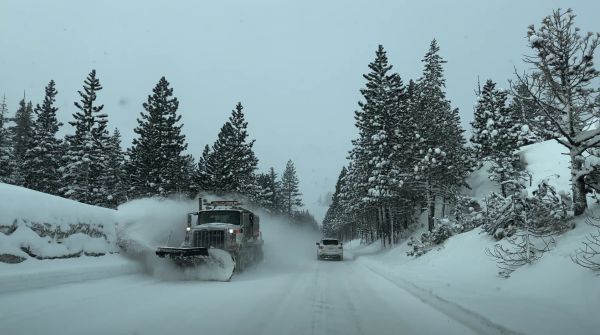
Halloween weekend brings a wet, windy storm to the Sierra Nevada. Our five-day forecast has Dodge Ridge on top with 19 in, followed by Bear Valley at 15 in and Mammoth Mountain at 12 in, with most of it landing on Saturday. A winter weather advisory covers the Tahoe Basin and Mono County until 7 AM Sunday, gusts could reach 47 mph and the freezing level swings between 4,900 and 8,700 ft, so some bases will see rain. A dry spell follows from Monday.
31 Oct 2026
Lake Louise Opens Early on 1 November With Juniper Express and Easy Street
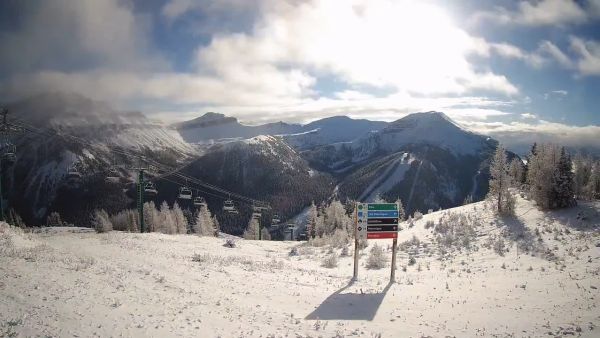
The Rockies get their first lift-served turns of the season early. Lake Louise opens Sunday 1 November, five days ahead of schedule, after a cold October and round-the-clock work from the snowmaking and mountain crews. Terrain is limited to Juniper Express Chair and Easy Street, with two small terrain parks and the beginner area for lessons. Opening-day tickets are over 60% off, with prices rising as more lifts open. First chair is at 9:30 am under the resort’s new lift hours.
31 Oct 2026
Kitzbüheler Horn Summit Cable Car to Be Replaced After 70 Years
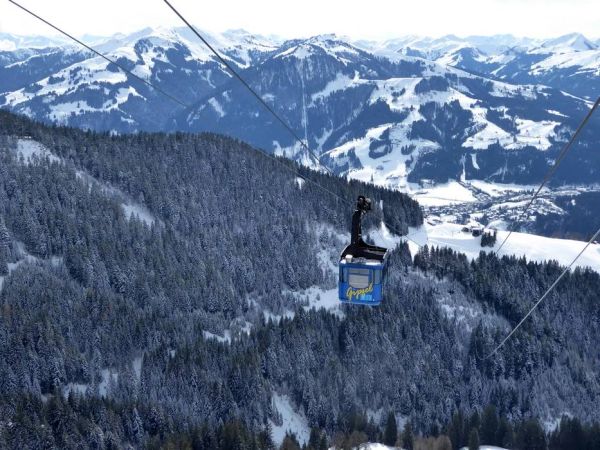
A Tyrolean summit lift that has been carrying guests up the Kitzbüheler Horn since 1955 is on borrowed time. Its licence runs to 2045, but a new inspection rule has made refurbishment uneconomic, so Bergbahn AG Kitzbühel will spend around €15 million on a replacement on the same line. It should hold roughly 100 people and keep running in winds that would stop today’s lift. Building starts in autumn 2027, which makes this winter and next summer the last chances to ride the old one.
30 Oct 2026
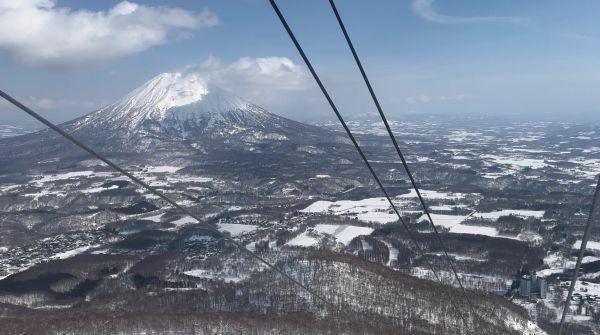
What’s New in Japan Skiing This Winter: Niseko Gondola, a Private Resort and a Bigger Ikon Pass
Niseko Village is replacing a lift from the early 1980s with an eight-person gondola, Tsugaike gets a six-person chairlift, Madarao joins the Ikon Pass and Togari opens Asia’s first private ski resort. Here’s what is actually new in Japan skiing for 2026/27, plus what is still a year or two away.
30 Oct 2026
Wolf Creek Opens on Halloween Weekend as Colorado’s Early Season Gathers Pace
Colorado’s early-season dominoes keep falling. Arapahoe Basin opened on Wednesday, Keystone follows on Friday, and now Wolf Creek is joining in on Saturday 31 October, just in time for Halloween. A storm on 23 and 24 October left 20 inches of natural snow in the San Juans, and three lifts will turn from 9:00 am, covering about 30% of the mountain. Expect rocks, unmarked obstacles and open water, but also Local Appreciation lift tickets at $73 for adults.
30 Oct 2026
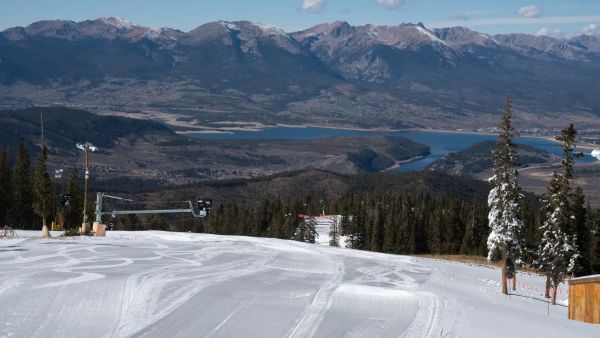
Keystone Resort Opens for 2026/27 With More Than Two Miles of Skiing
Keystone is next. After Arapahoe Basin claimed the first chairlift skiing of the season on Wednesday, Keystone opens on Friday 30 October at 9:00 am with more than two miles of snowmaking-built terrain on Schoolmarm and Silver Spoon, plus free donuts, coffee and a live DJ. Last year the order was reversed, when Keystone squeezed in a three-hour afternoon session to beat A-Basin by a day. Snowmaking has been running since 15 October.
29 Oct 2026
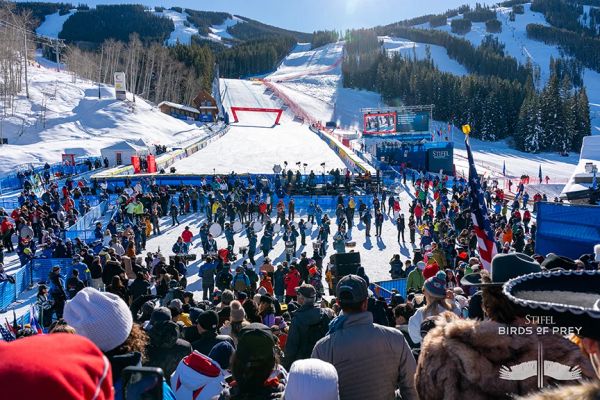
Beaver Creek Installs 16 Automated Snow Guns on Birds of Prey Ahead of Record World Cup
Beaver Creek is getting ready for the biggest Birds of Prey ever, and this time it is not leaving the snow to chance. Crews started making snow on 27 October with 16 newly installed automated guns on the lower third of the course, after last December’s warm spell forced a downhill off the schedule. Seven races across two weekends run from 3 to 13 December, the most the course has hosted since its 1997 debut, and the guns start themselves whenever the weather allows.
29 Oct 2026
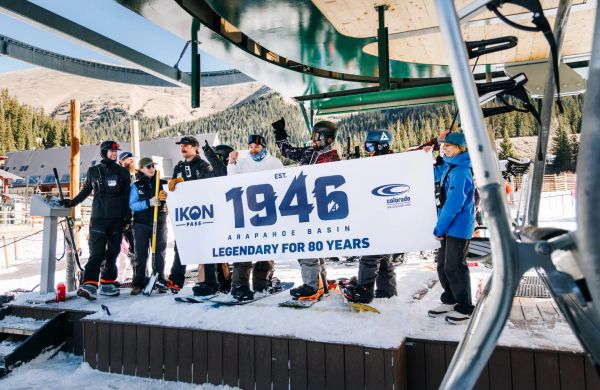
Arapahoe Basin Opens First for North America’s 2026/27 Ski Season
Winter has officially started in North America, and it is one blue run long. On Wednesday 28 October, Arapahoe Basin fired up the Black Mountain Express at around 10:30 am after a surprise announcement just hours earlier, becoming the first major North American resort open for 2026/27. Cold nights, a dusting of natural snow and a lot of snowmaking made it happen in the resort’s 80th winter. More terrain is promised as the snow guns keep running.
28 Oct 2026
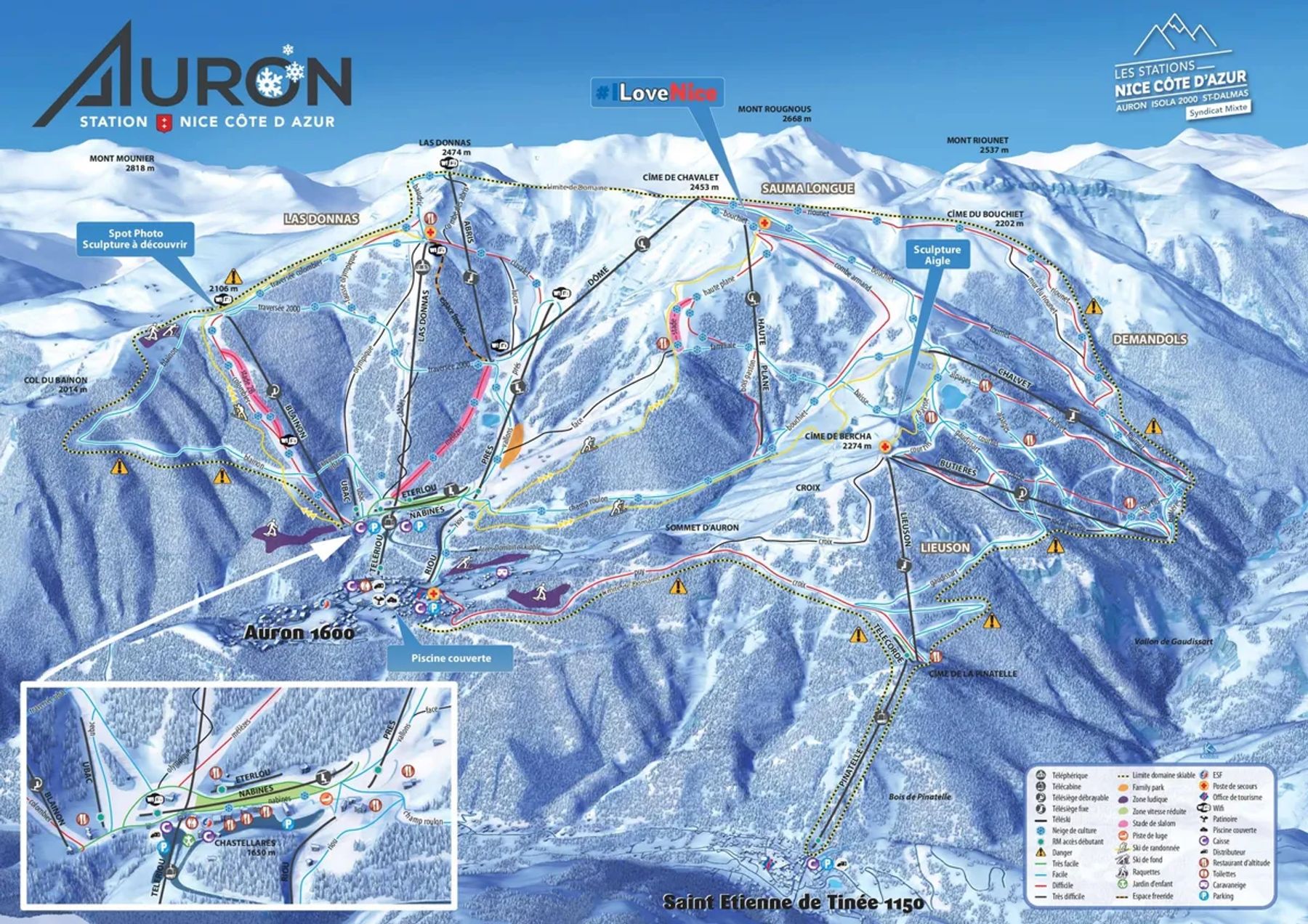
Auron Trail Map
Downloadable Auron trail map
Terrain split
43
runs
Beginner43%
Intermediate33%
Advanced24%
Expert0%
135 km of piste
Resort Stats
Elevation
Base1600m
Summit2450m
Annual snowfall
3.6m
Season
2026 - 2027
5 Dec 2026 - 18 Apr 2027
Trail coverage
43 runs
135 km
About Auron's trail map
Explore Auron's full trail map with 43 runs across the mountain, colour-coded by difficulty and shown alongside the terrain split. Use it to plan a day that matches your ability, find lift-served pockets of your favourite grade, and see how the resort links together.
More Auron intelligence: snow report, lift system, webcams, resort overview.