
Auron
Ski 135km across four sectors in France's Maritime Alps — just 95km from Nice with north-facing slopes and snowmaking on 95km of terrain.
Season 2026 - 2027
Opens
5 Dec 2026
Closes
18 Apr 2027
Days open
134
Annual snow
4m
The Overview
Michael Fulton
Melbourne-based skier and snowboarder with 50+ resorts across 5 continents. Specialises in Australian resorts and international resort comparisons.
Auron is the largest ski domain in the Alpes-Maritimes department, spreading 135km of pistes across four distinct sectors — Les Donnas, Sauma Longue, Demandols and Lieuson — at elevations between 1,600m and 2,450m in the Tinée Valley of the French Maritime Alps. The 43 runs break down as 43% beginner, 33% intermediate and 24% advanced across an 850m vertical, with the terrain distributed across open, wide slopes on the upper mountain and more sheltered, forested runs lower down.
A north and north-westerly aspect across the majority of the ski area plays a significant role in preserving snow quality throughout the season, and with 95km of snowmaking coverage across the full domain, reliable conditions are maintained from December through to mid-April.
Auron has been the focal point of skiing in the Maritime Alps since it opened its first lift in 1937, establishing itself as a pioneer of downhill skiing in the department and developing steadily into the substantial resort it is today. The terrain around the high-altitude Demandols sector provides the most challenging skiing on the mountain, with black runs accessible from the upper lifts that attract experienced skiers looking for steeper and less-trafficked terrain.
The resort has historically drawn a well-heeled crowd from the nearby Côte d'Azur — former French president Jacques Chirac, artist Marc Chagall and musician Sacha Distel among its noted past visitors — giving Auron a reputation that sits somewhere between genuine mountain resort and glamorous coastal escape, without quite being either.
850m
Vertical
43
Runs
135 km
Piste
4m
Annual snow
The Terrain
43 runs across 135 km of piste
Auron sits in the Alpes-Maritimes, where 135 kilometres of piste across 43 runs fall 850 metres from 2,450 metres to the village at 1,600 metres. The grading is a little unusual for a family resort: 43% beginner, 33% intermediate and 24% advanced, with no expert runs. Beginners get plenty of room, yet roughly a quarter of the terrain is graded advanced, which gives stronger skiers something to chase. A mix of six-seaters, quads, T-bars and a gondola and two trams links the sectors in a compact, easy-to-read layout.
The Las Donnas sector holds the steepest, most testing descents, with firm pitches coming off the Col du Bouchiet. Sauma Longue and Demandols offer long, open cruising, and the Chastellares mid-station area is a good spot for first turns. Because the resort looks toward the Mediterranean, the snow can be good when storms roll in, and quiet mid-week slopes are common. Off-piste is possible after fresh falls, though a local guide is wise. Auron suits families and progressing skiers best, and strong intermediates will still find enough variety for several days.
Terrain split
43
runs
43 runs across 4 grades
Beginner18 runs · 43%
Intermediate14 runs · 33%
Advanced10 runs · 24%
Expert0 runs · 0%
Time it right
When to visit Auron
Auron operates from early December through to mid-April, with the 2025/26 season running 6 December to 12 April. The resort averages 4 metres of annual snowfall, and the combination of north and north-westerly aspect across most of the ski area and the comprehensive snowmaking network provides the consistent cover the terrain requires across its 850m vertical.
The Tinée Valley's position in the Maritime Alps creates a distinct snowfall pattern: early-season cold air pushed north from the Mediterranean frequently produces snowfall at altitude ahead of resorts further inland, giving Auron a reputation for reliable early-season coverage that the bigger name French Alpine resorts to the north sometimes miss. The snowiest period historically falls in late February and early March.
Spring conditions at Auron are well regarded, with the combination of high sunshine hours, the north-facing aspect that slows snow degradation and the resort's elevation keeping the upper sectors in good shape well into April.
The resort's proximity to the Mercantour National Park means the wider landscape surrounding the ski area is at its most spectacular in late season, with clear visibility across the Maritime Alps and into the high peaks above the Col de la Bonette — at 2,802m, one of the highest paved mountain passes in Europe — providing a visual backdrop that distinguishes Auron from resorts in more heavily built-up Alpine valleys.
Season 2026 - 2027
5 Dec 2026
Opens
18 Apr 2027
Closes
134
Days open
4 m
Annual snow
Getting there
Getting to Auron, and where to stay
Auron sits in the commune of Saint-Étienne-de-Tinée in the Alpes-Maritimes department of the Provence-Alpes-Côte d'Azur region, 95km north of Nice in the Tinée Valley at the gateway to Mercantour National Park. The drive from Nice takes approximately 90 minutes via the RN202 through the Var Valley before turning north on the D39 through the Haute Tinée.
Nice Côte d'Azur Airport is the principal international gateway, with direct connections from across Europe and the UK, making Auron one of the more easily accessible ski resorts in the French Alps for visitors flying in — the transfer is direct, straightforward and entirely without the mountain pass complications that affect approaches to higher-altitude resorts. Two daily bus shuttles operate between Nice and Auron during the ski season for those without a vehicle.
The resort village of Auron sits at 1,600m and retains considerable character from its origins as a mountain hamlet — a 13th-century chapel with classified Romanesque frescoes stands at its centre, and the pedestrianised village core around the ice rink has a more authentic feel than many purpose-built stations of comparable size.
Saint-Étienne-de-Tinée at 1,140m, linked directly to the ski area by the Pinatelle gondola, adds further cultural substance — a traditional village of around 1,300 residents with religious buildings dating from the 13th and 17th centuries, Provençal restaurants and a heritage that reflects the long history of the Haute Tinée. Isola 2000, the other major ski resort in the Alpes-Maritimes, is reachable by road and sits at a significantly higher base elevation of 2,000m for those looking to extend their visit across both domains.
Where to stay
Search all stays →Hotels and lodges near Auron, powered by Stay22.
Latest News
From the SnowStash desk
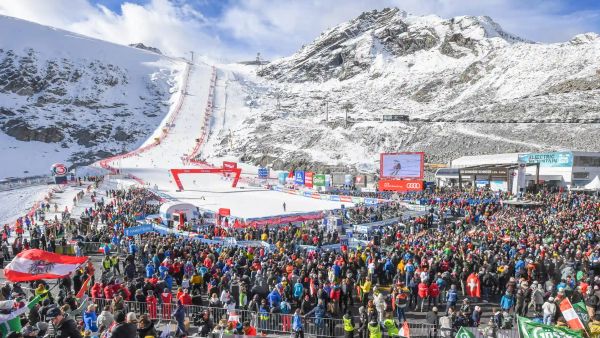
Pinheiro Braathen Wins Sölden Giant Slalom Opener by 0.48 Seconds
Two days at Sölden, two races decided by a hundredth somewhere on the podium, and one very quick Brazilian. Lucas Pinheiro Braathen led from the first run to win the men’s World Cup opener by 0.48 seconds, with Loïc Meillard second and Marco Odermatt third. River Radamus charged from 15th to fourth on a rutted course, and Britain’s Freddy Carrick-Smith banked his first World Cup points. Braathen still hasn’t lost a giant slalom since Olympic gold.
25 Oct 2026
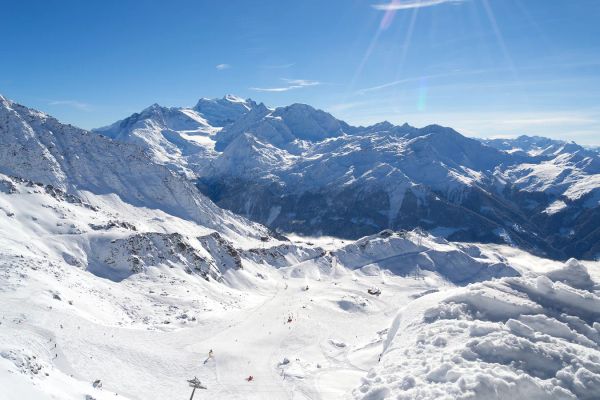
Alps Snow Forecast: Up to 64 cm Headed for the High Glaciers as the Snow Line Drops
The Alps are about to swap mild, sunny October weather for something far more wintry. A cold front arrives Tuesday, and SnowStash forecasts have Monterosa Ski out in front with 64 cm over 14 days, ahead of Blatten Belalp (55 cm) and Verbier (43 cm). The snow line should fall below 2000 metres by Wednesday night, and glaciers across Switzerland, Italy and Austria are in line for the best of it. The wind will have a say too.
20 Oct 2026
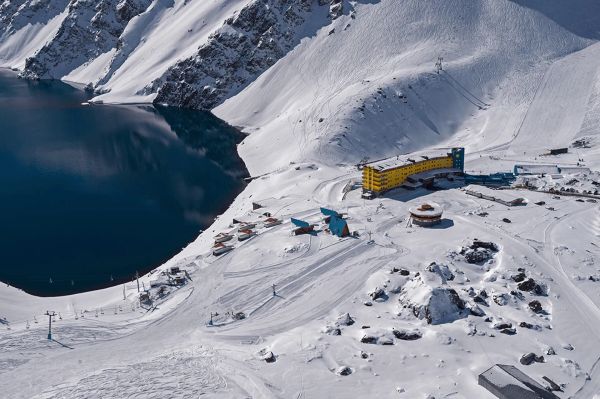
Four Dead After Avalanche Near Ski Portillo in Chile
A large avalanche struck near Laguna del Inca adjacent to Ski Portillo on Saturday afternoon, killing four people and injuring four others. The group were day visitors mountaineering in the backcountry after reportedly being warned about elevated avalanche risk by resort staff.
18 Oct 2026
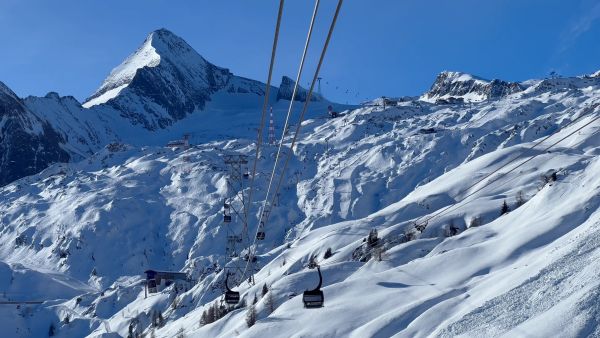
Europe Ski Resorts Open Now: What Is Skiable in Mid-October 2026
Europe’s ski season is open, technically. After a record-warm summer, glaciers in Austria, Switzerland and Italy are running a few pistes apiece, Sölden, Stubai and Kitzsteinhorn started late, Titlis has pushed back to 24 October, and Zermatt reopens a few lifts on 14 October after more than two months shut. Finland’s Levi and Ruka are skiing on stored snow. Here is what is open, and what you actually get at each.
14 Oct 2026
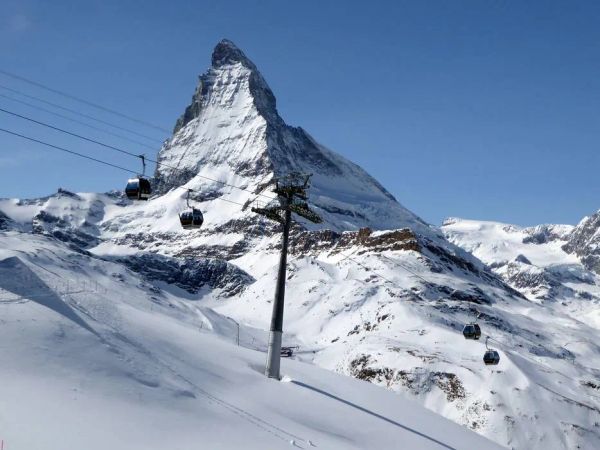
Zermatt Plans World Cup Downhill Return on the Gornergrat for 2028
Zermatt is having another crack at a World Cup downhill, and this time nobody has to cross a border. Around 13 million Swiss francs is going into rebuilding the Gornergrat piste, including a jump fed by a roughly 300-metre in-run across the roof of the Gornergrat Railway gallery, with the Matterhorn lined up behind it for the TV cameras. First men’s race is pencilled in for March 2028, pending FIS homologation.
14 Oct 2026
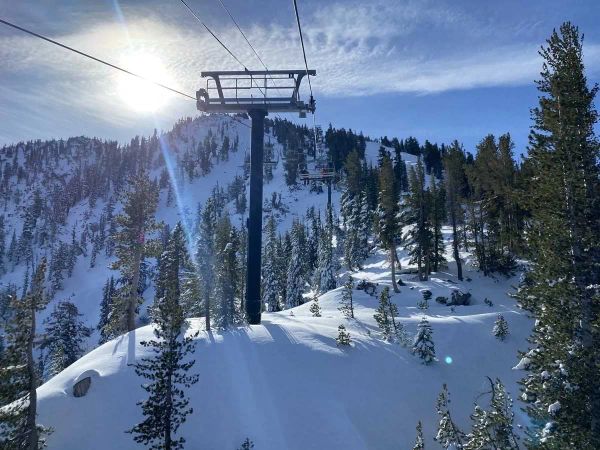
Mt. Rose Begins Snowmaking for the 2026-27 Season at Lake Tahoe
Lake Tahoe’s highest base elevation is paying off early: Mt. Rose has started making snow for 2026-27 after the first flurries and a cold snap. The Nevada resort is backing it with nearly US$2 million in upgrades, including a replacement snowmaking main line, a new PistenBully groomer and restraint bars on every lift. Opening day is yet to be confirmed, though Heavenly and Northstar are already eyeing 20 November.
13 Oct 2026
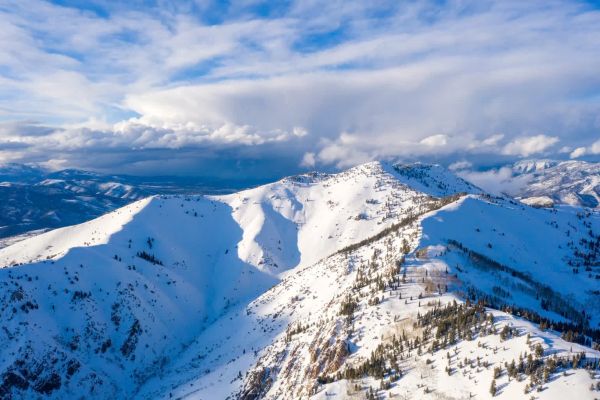
Utah Ski Resorts 2026-27: What’s New at Alta, Deer Valley, Powder Mountain and More
Utah is still building flat out. For 2026-27, Powder Mountain opens a steep new Skytrac chair into more than 1,000 acres of advanced terrain, Deer Valley adds 200 acres on Hail Peak, Sundance gets a new quad and Park City adds a gondola from its new parking structure. Snowmaking is expanding almost everywhere, Eagle Point stays closed after the Cottonwood Fire, and the 2034 Games are setting the pace. Here’s what’s new, resort by resort.
13 Oct 2026
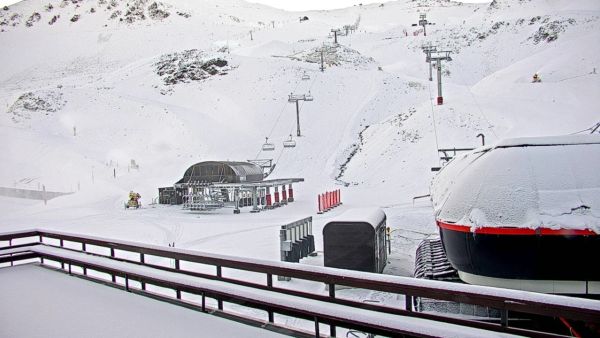
Mt Hutt Invests NZ$12 Million in Base Area, Tripling Its Sun Deck
Mt Hutt is getting busier, and its base lodge is about to catch up. NZ$12 million goes into a heated sun deck roughly three times the current size (430 m² to 1,300 m²), plus a new toilet block, heated steps down to snow level, extra storage and a new food and beverage outlet. Building starts after the 2026 season, with everything due for winter 2027.
11 Oct 2026
Auron Webcams
3 live angles across the mountain. Tap any camera to go full-screen.
About Auron's live webcams
Check live conditions across Auron with 3 real-time webcams showing snow, weather, and lift operations, updated every 10 minutes. Check high-elevation cams for powder visibility and base-area cams for crowd levels before you head up.
Camera guide
- Berchia Live Cam2274m
- Webcam auron at its highest fixed point — the Berchia summit at 2274 meters where the Buttieres and Lieuson lifts converge and the full sweep of the Tinée Valley opens out below. This auron webcam delivers real-time upper-mountain visibility from the top of the largest ski domain in the Alpes-Maritimes, giving advanced skiers an accurate read on snow quality and wind exposure across the Sauma Longue and Lieuson sectors before heading up. The essential pre-session check for anyone targeting the more demanding terrain on this north-facing mountain just 95km from Nice — check this webcam auron aujourd'hui before planning any upper-mountain session.
- Village Live Cam1589m
- Webcam auron at the heart of the resort village at 1589 meters — the pedestrianised base where a 13th-century Romanesque chapel stands alongside the ice rink and the main lift departure points that connect to all four sectors of the 135km domain. This auron webcam gives day visitors and overnight guests a real-time look at resort-level conditions, morning crowd build-up and base snow coverage before heading out from accommodation or beginning the 90-minute drive from Nice. The most-checked webcam auron saint-etienne de tinée reference for local visitors from the Alpes-Maritimes coast planning their approach to the Maritime Alps' largest ski area.
- Chastellares Live Cam1665m
- Webcam auron at the Las Donnas base area at 1665 meters, surveying the main departure zone where multiple lifts load and the primary piste network fans out across the lower mountain toward the Les Donnas and Demandols sectors above. This auron webcam monitors operational conditions, lift activity and snow coverage at the busiest point in the resort, making it the most practical tool for gauging crowd levels and morning snow quality before joining the flow up the mountain. A key webcam auron 06 reference for Côte d'Azur visitors making the most of their 90-minute transfer from Nice Côte d'Azur Airport to this under-the-radar Mercantour National Park ski destination.
Auron snow cams FAQ
How often do Auron snow cams update?
All Auron snow cams and webcams update every 10 minutes with fresh images showing current mountain conditions. This frequent update schedule ensures you have access to near real-time conditions for planning your ski day at Auron.
Which Auron webcam shows the best powder conditions?
The high-elevation Berchia Live Cam webcam at 2,274m provides the clearest view of powder conditions and snowfall. These Auron webcams capture fresh snow accumulation and visibility better than base area cameras.
Can I see Auron lift queues on the webcams?
Yes. Multiple Auron snow cams specifically show lift queue areas and chairlift operations, helping you time your arrival and avoid peak queue periods.
When is the best time to check Auron snow cams?
Check Auron webcams early morning (7-8am) for overnight snowfall assessment, and mid-afternoon for current crowd levels and weather. The live cams are most useful after storm events to assess fresh powder.
How can I check current conditions before buying Auron lift tickets?
Use our Auron webcams alongside the live snow report to assess conditions before purchasing lift tickets. The webcams show real-time visibility, snow quality, and operational status.
Do Auron webcams work on mobile devices?
Yes. All Auron snow cams and webcams are optimized for mobile viewing, so you can check live conditions from anywhere using your phone or tablet.
More Auron intelligence: snow report, lift tickets, trail map, resort overview.