TL;DR
The International Ski and Snowboard Federation is looking at a major shake-up to its title events calendar. From 2032, World Championships could run not just in odd-numbered years but in every non-Olympic winter too, effectively putting a global title event on the calendar almost every season. The FIS Council has approved the concept following a feasibility study, though an accelerated rollout as early as 2028 is also under consideration.
The International Ski and Snowboard Federation is considering a fundamental change to how often World Championships are held, with a shift toward holding them in nearly every winter from 2032 onwards
Under the current system, World Championships across the major FIS disciplines, alpine skiing, cross-country skiing, ski jumping, freestyle skiing and snowboarding, run every two years, in odd-numbered years. Even-numbered years alternate between hosting the Winter Olympics every four years, and otherwise leaving a gap in the global title calendar entirely, with those seasons built around the World Cup and the fight for crystal globes instead.
The FIS wants to close that gap. From 2032, the federation is looking to hold World Championships not only in odd years but in every even, non-Olympic year as well, meaning a major global title event would land on the calendar in almost every winter, Olympic or otherwise.
FIS Council approves the concept in Thun
The FIS Council discussed the plan during a two-day meeting and strategy session in Thun, Switzerland, in early September, where members were presented with a preliminary feasibility study covering sporting value, calendar impact and commercial and media-rights potential. Based on that study, the Council formally agreed to the concept of increasing the frequency of World Championships along these lines, according to an official FIS statement.
The approval covers the broad concept rather than a finished plan. Details including the competition calendar, which regions and organisers would be able to host additional editions, and the knock-on effects for athletes and the World Cup schedule still need further work.


A possible early start in 2028
The new frequency could arrive sooner than 2032. The FIS says it's open to exploring the feasibility of an additional World Championship edition as early as 2028, though this isn't yet confirmed and would follow a more detailed assessment. The federation has provisionally set 2032 as the year the increased frequency is expected to take full effect regardless of what happens with a possible 2028 edition.
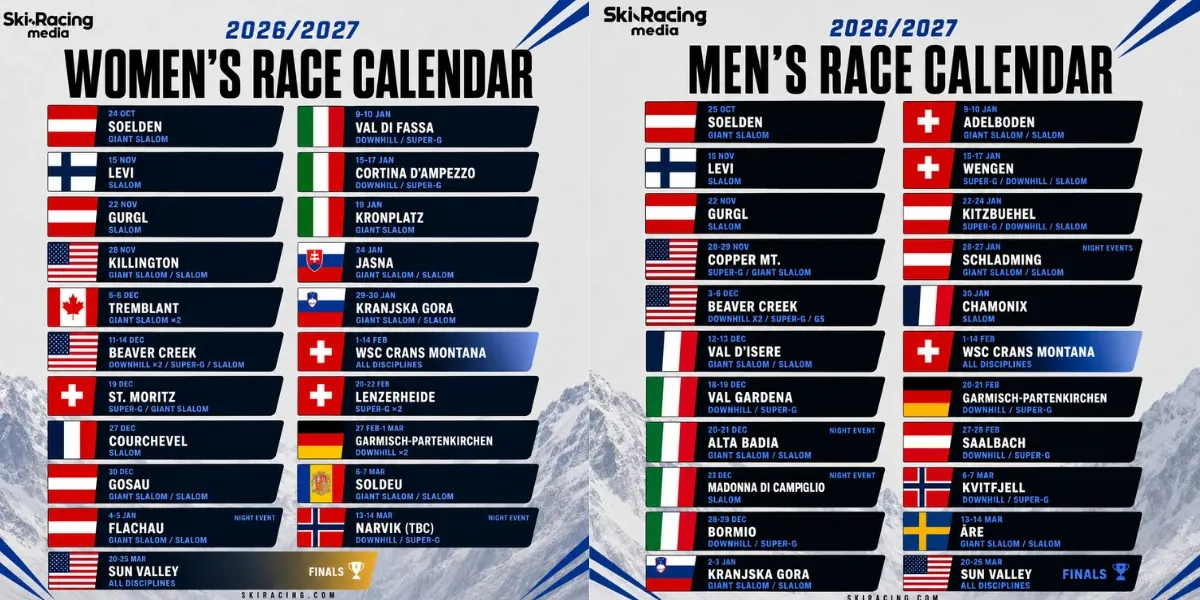
Championships already locked in for coming seasons remain unaffected. The Alpine World Championships are set for Crans-Montana in 2027, with the Nordic World Ski Championships in Falun the same year, and the next edition of the Snowboard, Freestyle and Freeski World Championships scheduled for Montafon and Kühtai in Austria, running from 6 to 21 March 2027.
What a near-annual title calendar would look like
From 2032, the international ski calendar would take on a different shape. In Olympic years, the Winter Olympics would remain the marquee event. In every other year, World Championships would fill that role instead, run separately by discipline rather than as one combined event, meaning alpine skiing, Nordic disciplines, snowboarding and freestyle skiing would each continue to hold their own standalone championships.
For fans and broadcasters, that means more frequent marquee events to tune into. It would also come at a cost to the relative exclusivity World Championships currently carry, given how rare they are under the current two-year cycle. The added frequency and expense could also reshape how much weight the World Cup itself carries within the calendar.
The commercial case behind the plan
According to the FIS, the feasibility study behind the proposal examined three main areas: sporting value, calendar impact, and the commercial opportunities tied to media rights. World Championships typically draw significantly more attention than a standard World Cup race, and more frequent editions would create more marquee broadcast moments and additional opportunities to sell media and marketing rights. The FIS hasn't specified any figures around expected revenue or how it might be distributed, nor has it detailed what financial requirements future host regions would need to meet.

A broader calendar rethink is underway too
The frequency change is being developed alongside a separate, longer-term overhaul of the FIS World Cup calendar. The federation is looking to cluster races more often within specific regions, allowing several events to run consecutively in neighbouring countries, partly to cut down on travel between competitions. The stated aim is to balance developing newer ski markets against protecting more traditional venues, with a "Calendar Impact Score" reportedly part of the framework being developed to assess events.
Any additional World Championships would ultimately need to be folded into this broader calendar. The proposal will next go to FIS management and the federation's media-rights decision-makers, before a final version returns to the Council for approval.
Plenty left to work out
While the Council has approved the underlying concept, a lot remains unresolved. It isn't yet clear how many regions would be willing or able to host additional championships, or how the extra events would fit into an already crowded winter sports calendar. How athletes, national federations and organisers respond to the added workload, more races, more preparation and higher costs, also remains to be seen.
The direction, though, is clear: the FIS wants World Championships on the calendar in almost every year from 2032. Whether that shift begins as early as 2028 depends on the outcome of the federation's further feasibility work.
About the author

Michael Fulton
Melbourne-based skier and snowboarder with 50+ resorts across 5 continents. Specialises in Australian resorts and international resort comparisons.