
Silvretta Montafon
141km of pistes, 1,730m vertical drop, 35 lifts across two linked sectors. 2027 FIS World Championships host in Austria's Montafon valley.
Season 2026 - 2027
Opens
27 Nov 2026
Closes
11 Apr 2027
Days open
135
Annual snow
7m
The Overview
Michael Fulton
Melbourne-based skier and snowboarder with 50+ resorts across 5 continents. Specialises in Australian resorts and international resort comparisons.
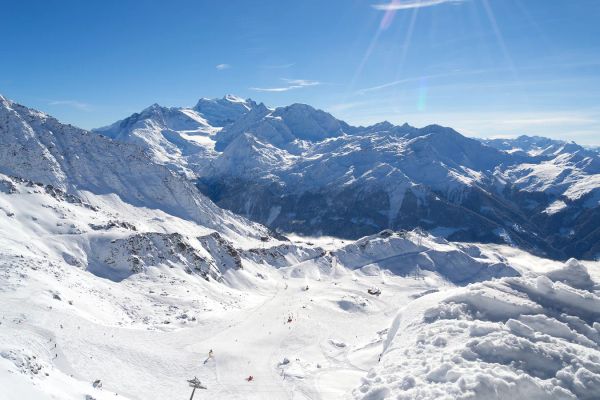
Silvretta Montafon spans 141 kilometres of piste across an elevation range of 700 to 2,430 metres, delivering a vertical drop of 1,730 metres in Austria's Vorarlberg province. The ski area ranks among Austria's ten largest and features over 50 per cent of terrain above 2,000 metres, contributing to reliable snow cover averaging 430 centimetres annually. Snowmaking covers 83 kilometres of pistes, and the resort's longest run stretches approximately 12 kilometres from the Hochalpila summit to Schruns. The terrain hosts four dedicated freeride areas with 26 marked routes, plus the 300,000 square metre Snowpark Montafon at Grasjoch.
Terrain splits across 60 kilometres of easy pistes, 45 kilometres of intermediate runs, and 8 kilometres of difficult descents alongside 28 kilometres of freeride routes. The Black Scorpions - seven of the steepest descents - challenge advanced skiers, while the Open Faces freeride venue at Kleine Heimspitze reaches gradients up to 60 degrees over 350 metres vertical. Beginners benefit from dedicated learning areas at Kapell and Garfrescha, both served by gentle slopes and ski school infrastructure. The Snowpark Montafon features 40 obstacles including kicker lines, rails, boxes, and a boardercross course.
The ski area operates across two connected sectors - Hochjoch above Schruns and Silbertal, and Nova above St. Gallenkirch and Gaschurn - linked via gondolas through the valley at St. Gallenkirch. Twelve mountain restaurants dot the slopes, ranging from traditional huts like Valisera Hüsli to contemporary venues. The valley villages of Schruns, St. Gallenkirch, and Gaschurn maintain authentic Austrian character without purpose-built resort architecture. Silvretta Park Montafon at the Valisera base station opened in 2021 with a 600-space underground car park, market hall, and ski school centre.
Epic Pass holders receive limited days at Silvretta Montafon, and regional passes cover neighbouring Montafon Brandnertal areas including Gargellen and Golm. The resort hosts the FIS Snowboard Cross World Cup annually in December, and will stage the 2027 FIS Snowboard, Freestyle and Freeski World Championships - the largest winter sports event in Vorarlberg's history. The combination of extensive intermediate terrain, accessible freeride routes, and modern infrastructure suits athletic skiers, families, and freestyle riders seeking an alternative to the nearby Arlberg crowds.
1730m
Vertical
80
Runs
142 km
Piste
7m
Annual snow
The Terrain
80 runs across 142 km of piste
Silvretta Montafon is two mountains rather than one. Nova and Hochjoch are joined by gondolas through the valley at St Gallenkirch, and across 80 runs with 142 kilometres of piste they drop 1,730 metres from 2,430 metres to the valley at 700 metres. Beginner terrain makes up 43% of the network, intermediate 35% and advanced 22%, and over half the network sitting higher than 2,000 metres. The Grasjochbahn links the Grasjoch and Nova sectors, and the HochjochTotale is the longest valley run in Vorarlberg, falling 1,700 metres.
Advanced skiers are well served for a mid-size Austrian area. The seven Black Scorpions are the steepest groomed descents, and four freeride areas offer 26 marked routes, including the Open Faces venue at Kleine Heimspitze, where gradients reach 60 degrees over 350 vertical metres. Snowpark Montafon at Grasjoch covers 300,000 square metres, and a Freeride Infocenter there offers information and guided tours. It suits strong skiers and confident intermediates who want both long cruising descents and real off-piste terrain.
Terrain split
80
runs
80 runs across 4 grades
Beginner34 runs · 43%
Intermediate28 runs · 35%
Advanced18 runs · 22%
Expert0 runs · 0%
Time it right
When to visit Silvretta Montafon
Silvretta Montafon's 2025-26 season runs from 28 November 2025 to 12 April 2026, spanning approximately 20 weeks of operation. Weekend operation typically commences mid-November depending on snow conditions before daily service begins. The resort's position between the Silvretta, Verwall, and Rätikon ranges channels reliable snowfall into the valley throughout winter. Season closures coincide with Easter holidays, after which summer operations begin on selected gondolas from mid-June.
Annual snowfall averages 430 centimetres, with January recording the heaviest accumulations around 127 centimetres followed by March at 92 centimetres and February at 89 centimetres. Nearly 90 per cent of terrain sits above 1,500 metres, and the 83-kilometre snowmaking network secures lower runs during lean periods. Base depths at summit level regularly exceed 180 centimetres by mid-season, though valley runs below 1,000 metres depend on sustained cold temperatures. The resort reports snow conditions with high reliability through daily monitoring.
Powder conditions peak from late January through early February when snow depths reach seasonal maximums across upper slopes. March delivers stable spring skiing with consolidated bases and extended daylight hours. Mid-week visits from January through mid-March avoid school holiday crowds, particularly Austrian Semesterferien in February. Early December and late March offer quieter slopes with generally adequate cover on upper terrain.
The FIS Snowboard Cross World Cup runs annually in December at Grasjoch, with the 2026 edition adding Ski Cross races from 11-15 March as a rehearsal for the 2027 World Championships. Long Nights of the Cable Cars events see Valisera and Versettla stations open evenings with free uplift, live music, and torchlight processions. Night tobogganing operates on the floodlit 5.5-kilometre Garfrescha run accessible by gondola from St. Gallenkirch. Sunrise skiing sessions with mountain breakfast offer first tracks on empty pistes.
Season 2026 - 2027
27 Nov 2026
Opens
11 Apr 2027
Closes
135
Days open
7 m
Annual snow
Getting there
Getting to Silvretta Montafon, and where to stay
Silvretta Montafon occupies the Montafon valley in southern Vorarlberg, Austria's westernmost province, framed by the Rätikon, Silvretta, and Verwall mountain ranges. The valley stretches 17 kilometres from Schruns at 700 metres elevation through St. Gallenkirch and Gaschurn to Partenen, covering 562 square kilometres - larger than Vienna. Piz Buin at 3,312 metres stands as Vorarlberg's highest peak to the south. The ski area lies 15 kilometres south of the regional town of Bludenz and approximately 40 minutes by car from Feldkirch in the Rhine Valley.
Schruns serves as the valley's main town with the widest accommodation selection, train station access, and direct cable car to Hochjoch. Ernest Hemingway spent time writing in Schruns during the 1920s, documenting the town in his memoir A Moveable Feast. St. Gallenkirch sits centrally with gondola access to both Hochjoch and Nova sectors from the Silvretta Park Montafon base. Gaschurn at 980 metres offers the highest base village and most reliable village-level snow alongside concentrated hotel options.
Road access follows the A14 Rheintal motorway to exit 61 Bludenz-Montafon, continuing 10 kilometres on the L188 Silvretta Bundesstrasse through the valley. From Innsbruck, the S16 Arlberg Schnellstrasse and tunnel connect to the A14 at Bludenz. Swiss drivers approach via the A13 through Liechtenstein to Feldkirch, joining the A14 southbound. No mountain passes require crossing to reach the valley, keeping access straightforward through winter conditions.
Friedrichshafen Airport sits closest at 106 kilometres, approximately 75 minutes by road via the A96 and A14 through Lindau. Innsbruck Airport lies 145 kilometres distant at under two hours driving through the Arlberg tunnel. Zurich Airport connects at 176 kilometres in approximately two hours via the A3 and A13 through Switzerland and Liechtenstein. Rail connections run to Schruns via the Montafonerbahn from Bludenz, which links to main line services from Zurich, Innsbruck, and Munich; local ski buses connect stations to lift bases throughout the valley.
Where to stay
Search all stays →Hotels and lodges near Silvretta Montafon, powered by Stay22.
Latest News
From the SnowStash desk
Alps Snow Forecast: Up to 64 cm Headed for the High Glaciers as the Snow Line Drops
The Alps are about to swap mild, sunny October weather for something far more wintry. A cold front arrives Tuesday, and SnowStash forecasts have Monterosa Ski out in front with 64 cm over 14 days, ahead of Blatten Belalp (55 cm) and Verbier (43 cm). The snow line should fall below 2000 metres by Wednesday night, and glaciers across Switzerland, Italy and Austria are in line for the best of it. The wind will have a say too.
20 Oct 2026

Four Dead After Avalanche Near Ski Portillo in Chile
A large avalanche struck near Laguna del Inca adjacent to Ski Portillo on Saturday afternoon, killing four people and injuring four others. The group were day visitors mountaineering in the backcountry after reportedly being warned about elevated avalanche risk by resort staff.
18 Oct 2026

Europe Ski Resorts Open Now: What Is Skiable in Mid-October 2026
Europe’s ski season is open, technically. After a record-warm summer, glaciers in Austria, Switzerland and Italy are running a few pistes apiece, Sölden, Stubai and Kitzsteinhorn started late, Titlis has pushed back to 24 October, and Zermatt reopens a few lifts on 14 October after more than two months shut. Finland’s Levi and Ruka are skiing on stored snow. Here is what is open, and what you actually get at each.
14 Oct 2026

Zermatt Plans World Cup Downhill Return on the Gornergrat for 2028
Zermatt is having another crack at a World Cup downhill, and this time nobody has to cross a border. Around 13 million Swiss francs is going into rebuilding the Gornergrat piste, including a jump fed by a roughly 300-metre in-run across the roof of the Gornergrat Railway gallery, with the Matterhorn lined up behind it for the TV cameras. First men’s race is pencilled in for March 2028, pending FIS homologation.
14 Oct 2026

Mt. Rose Begins Snowmaking for the 2026-27 Season at Lake Tahoe
Lake Tahoe’s highest base elevation is paying off early: Mt. Rose has started making snow for 2026-27 after the first flurries and a cold snap. The Nevada resort is backing it with nearly US$2 million in upgrades, including a replacement snowmaking main line, a new PistenBully groomer and restraint bars on every lift. Opening day is yet to be confirmed, though Heavenly and Northstar are already eyeing 20 November.
13 Oct 2026

Utah Ski Resorts 2026-27: What’s New at Alta, Deer Valley, Powder Mountain and More
Utah is still building flat out. For 2026-27, Powder Mountain opens a steep new Skytrac chair into more than 1,000 acres of advanced terrain, Deer Valley adds 200 acres on Hail Peak, Sundance gets a new quad and Park City adds a gondola from its new parking structure. Snowmaking is expanding almost everywhere, Eagle Point stays closed after the Cottonwood Fire, and the 2034 Games are setting the pace. Here’s what’s new, resort by resort.
13 Oct 2026

Mt Hutt Invests NZ$12 Million in Base Area, Tripling Its Sun Deck
Mt Hutt is getting busier, and its base lodge is about to catch up. NZ$12 million goes into a heated sun deck roughly three times the current size (430 m² to 1,300 m²), plus a new toilet block, heated steps down to snow level, extra storage and a new food and beverage outlet. Building starts after the 2026 season, with everything due for winter 2027.
11 Oct 2026

Vermont Ski Resort Opening Dates 2026-27: Few Dates Set, Killington Waits on the Cold
Vermont's season is slow to take shape. Stratton is tentatively targeting 18 November and Sugarbush 21 November, while Pico has Friday 11 December on the calendar. Killington never sets a date and opens when the snowmaking allows, and Vail Resorts has yet to name days for Stowe, Okemo and Mount Snow. The forecasts disagree about snow, and the main El Niño worry for the Green Mountains is warmth.
9 Oct 2026