
Les 2 Alpes
2,243m vertical, 200km piste, glacier to 3,568m. France's longest top-to-bottom descent. Isère, French Alps.
Season 2026 - 2027
Opens
28 Nov 2026
Closes
5 July 2027
Days open
219
Annual snow
4m
The Overview
Michael Fulton
Melbourne-based skier and snowboarder with 50+ resorts across 5 continents. Specialises in Australian resorts and international resort comparisons.
Les 2 Alpes spans 1,280 to 3,568 metres across 200 kilometres of piste, delivering 2,243 metres of vertical drop and access to France's highest skiing at the Dôme de la Lauze glacier. The ski area comprises 88 runs distributed as 55% beginner, 28% intermediate, 12% advanced and 5% expert terrain, with 75% of skiing above 2,000 metres ensuring reliable conditions from late November through early May. The resort holds Europe's largest skiable glacier and France's second-oldest ski history behind Chamonix, whilst the continuous top-to-bottom descent from 3,600 to 1,300 metres ranks among the world's longest pisted verticals. Grand Domaine lift passes start at €42 off-peak and €65 peak-season, with a Supernova season pass priced at €899.
The inverted terrain layout places wide glacier runs at altitude and steeper pistes below, with beginners finding forgiving slopes on the Mont de Lans glacier whilst lower sectors like La Fée and Bellecombes challenge advanced skiers. The Vallée Blanche sector to the west delivers sunny intermediate cruising from Pied Moutet at 2,339 metres, and the resort's substantial snowpark ranks among France's largest with halfpipe, kickers and boardercross. Off-piste access extends across both marked terrain and vast untracked zones, particularly quiet on weekdays due to the resort's dispersed geography. A continuous blue run now links the glacier to the village following a €10 million construction project that moved 550,000 cubic metres of earth.
The purpose-built village stretches along a 2-kilometre plateau at 1,650 metres, built atop mountain pastures belonging to Mont-de-Lans and Vénosc communes in the valleys below. A free shuttle runs every 15 minutes connecting accommodation clusters, and the resort maintains a young, sporty atmosphere with year-round operations drawing training camps, freestylers and party crowds. Eight gondolas and numerous high-speed chairs serve a combined uphill capacity of 66,000 per hour across 44 lifts, though queues can extend during French school holidays. On-mountain dining spans affordable self-service to white-tablecloth options, with Le 3200 panoramic restaurant at the Jandri top station offering views across the Écrins massif.
Six-day passes include two days in Alpe d'Huez and one in Serre Chevalier as part of the Grande Galaxie regional arrangement, though resorts remain unlinked by lifts. The 2025-26 winter season runs 29 November to 3 May, extending to early July on the glacier for athlete training camps. Beginners benefit from extensive high-altitude learning terrain and village-level nursery slopes, intermediates enjoy wide cruising runs, and experts access La Grave's legendary off-piste via a short walk or occasional snowcat tow from the Dôme de la Lauze summit. The resort suits skiers prioritising vertical, glacier reliability and value pricing over traditional Alpine village charm.
2243m
Vertical
88
Runs
200 km
Piste
4m
Annual snow
The Terrain
88 runs across 200 km of piste
Les 2 Alpes stretches 200 kilometres across 88 runs, climbing from 1,280 metres in town to 3,523 metres on the glacier, a vertical of 2,243 metres. Sanity grades it at 55% beginner, 28% intermediate, 12% advanced and 5% expert, so there is far more gentle terrain than the glacier altitude suggests. The lift system includes eight gondolas, 15 T-bars, seven quads and two trains, and the Jandri gondola takes riders from the village toward the high slopes. With altitude and a long season, it is a dependable choice early and late.
The glacier is the main attraction, with open, high-altitude slopes that stay in good shape when lower runs struggle. Down in the middle of the mountain, long red and blue runs wind back to the village, and the Vallee Blanche on the west side offers quieter, gentler skiing between 2,100 and 1,650 metres. Les 2 Alpes also has a strong freeride scene, with off-piste lines reached from the glacier, though these need a guide and good avalanche awareness. Beginners, progressing skiers and snowboarders will feel at home, and experts will find steeper options if they look beyond the pistes.
Terrain split
88
runs
88 runs across 4 grades
Beginner48 runs · 55%
Intermediate25 runs · 28%
Advanced11 runs · 12%
Expert4 runs · 5%
Time it right
When to visit Les 2 Alpes
The 2025-26 winter season operates 29 November 2025 to 3 May 2026, delivering 156 days of lift-served skiing across the main domain. Spring skiing continues on the glacier through May with reduced operations, and the area partially reopens from mid-June to late August for summer skiing, training camps and mountain biking. October half-term openings occasionally occur on the glacier when snow cover permits, whilst ski touring extends access during closure periods. The resort's high-altitude profile and glacier reach support one of France's longest operational calendars.
Historical snowfall averages 334 centimetres annually, with the heaviest accumulations in December through February when the second week of December typically receives 54 centimetres. Elevation advantage keeps 75% of terrain above 2,000 metres, where natural snow remains reliable from early winter through late spring. The glacier holds 180 to 300 centimetres of base depth through March whilst lower slopes carry 80 to 120 centimetres, and snowmaking infrastructure supplements natural coverage on key runs including the new blue home piste. Temperatures range from minus 8 to minus 3 degrees Celsius on the glacier, with village-level daytime highs reaching 5 to 10 degrees during spring months.
January and February deliver peak powder conditions with consistent cold temperatures, whilst March and April offer spring corn snow and longer daylight for high-altitude sessions. December provides early-season access often limited to upper sectors until mid-month snowfall builds lower-elevation bases. Weekdays outside French school holidays see notably lighter crowds, and the glacier's north-facing exposure preserves snow quality through April and May when lower slopes soften by afternoon. Mornings offer firmed overnight refreeze during spring, with skiing best before midday as temperatures climb.
The Rise Festival precedes Christmas with music performances and DJ sets on-mountain and in the village, combining six-day lift tickets with concert access. January's Mad Snow Race and March's SnowZone and Snow Fest events mix skiing with entertainment, whilst night skiing on Vallée Blanche operates throughout the season. Summer glacier operations from 13 June to 30 August run 07:00 to 12:30 daily, hosting national team training, freestyle camps and the Mountain of Hell downhill mountain bike race in late June. Les Lumières de la Muzelle night trail race features 11, 16, 21 and 42-kilometre distances through winter darkness.
Season 2026 - 2027
28 Nov 2026
Opens
5 July 2027
Closes
219
Days open
4 m
Annual snow
Getting there
Getting to Les 2 Alpes, and where to stay
Les 2 Alpes sits in the Isère department within the Oisans valley of the Écrins massif, built on a high plateau where mountain pastures from Mont-de-Lans and Vénosc communes meet. The purpose-built resort lies 75 kilometres southeast of Grenoble at 1,650 metres elevation, surrounded by peaks exceeding 3,000 metres including the Muzelle which dominates the skyline. The Écrins National Park borders the ski area, and the freeride destination of La Grave lies accessible via a short walk from the Dôme de la Lauze summit. Mont-de-Lans village sits in the valley to the north at 1,260 metres, whilst Vénosc at 960 metres occupies the southern valley linked by gondola but not by piste.
Grenoble serves as the nearest major city 70 kilometres northwest, with TGV high-speed rail connecting to Paris in 3 hours and Lyon in 1 hour 15 minutes. Bourg d'Oisans lies 20 kilometres below the resort along the valley floor, where the D213 road begins its ascent through a dozen switchbacks cleared daily during winter. The drive from Grenoble to Les 2 Alpes takes approximately 1 hour 15 minutes in clear conditions, though the final climbing section requires winter tyres or chains from November through March. Regular bus services operate between Grenoble bus station and the resort, with transfers coordinated around TGV arrivals.
Road access follows the A48 and A480 motorways to Grenoble, then the RD1091 towards Briançon via Bourg d'Oisans before turning onto the D213 at Chambon dam. From the south and Italy, the RD1091 runs north from Briançon, though the Lautaret and Galibier passes close seasonally. Lyon sits 160 kilometres west via motorway, Geneva 220 kilometres north, and Marseille connects via Grenoble on a longer southern approach. The resort provides covered and outdoor parking across multiple districts, though spaces fill rapidly during peak periods.
Grenoble Alpes Isère Airport lies closest at 90 minutes by road, serving seasonal flights from major European cities with shuttle buses coordinating around arrivals. Lyon-Saint Exupéry International Airport sits 160 kilometres distant with broader year-round connections, whilst Geneva-Cointrin at 220 kilometres offers another international gateway. Shuttle operators run from all three airports directly to resort, and private transfers arrange door-to-door service. Train passengers arriving at Grenoble SNCF station connect via bus, taxi or shared shuttle for the final 70-kilometre leg, typically adding 1 to 1.5 hours to overall journey time.
Where to stay
Search all stays →Hotels and lodges near Les 2 Alpes, powered by Stay22.
Latest News
From the SnowStash desk
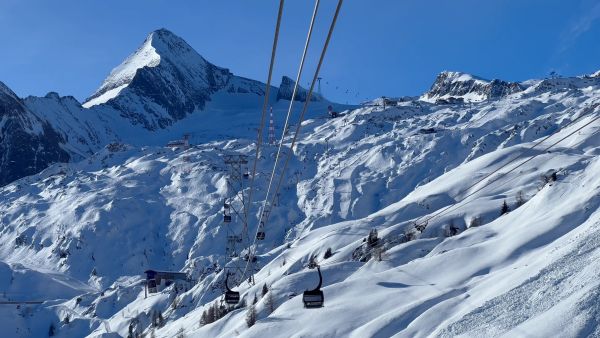
Europe Ski Resorts Open Now: What Is Skiable in Mid-October 2026
Europe’s ski season is open, technically. After a record-warm summer, glaciers in Austria, Switzerland and Italy are running a few pistes apiece, Sölden, Stubai and Kitzsteinhorn started late, Titlis has pushed back to 24 October, and Zermatt reopens a few lifts on 14 October after more than two months shut. Finland’s Levi and Ruka are skiing on stored snow. Here is what is open, and what you actually get at each.
14 Oct 2026
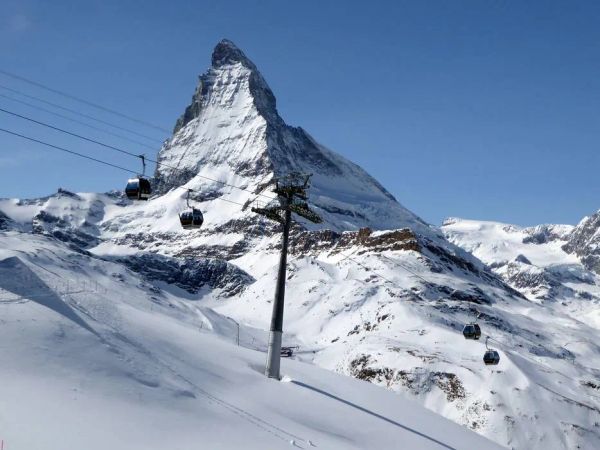
Zermatt Plans World Cup Downhill Return on the Gornergrat for 2028
Zermatt is having another crack at a World Cup downhill, and this time nobody has to cross a border. Around 13 million Swiss francs is going into rebuilding the Gornergrat piste, including a jump fed by a roughly 300-metre in-run across the roof of the Gornergrat Railway gallery, with the Matterhorn lined up behind it for the TV cameras. First men’s race is pencilled in for March 2028, pending FIS homologation.
14 Oct 2026
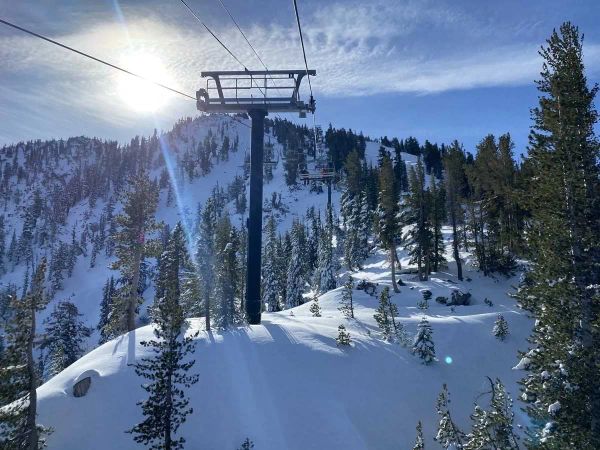
Mt. Rose Begins Snowmaking for the 2026-27 Season at Lake Tahoe
Lake Tahoe’s highest base elevation is paying off early: Mt. Rose has started making snow for 2026-27 after the first flurries and a cold snap. The Nevada resort is backing it with nearly US$2 million in upgrades, including a replacement snowmaking main line, a new PistenBully groomer and restraint bars on every lift. Opening day is yet to be confirmed, though Heavenly and Northstar are already eyeing 20 November.
13 Oct 2026
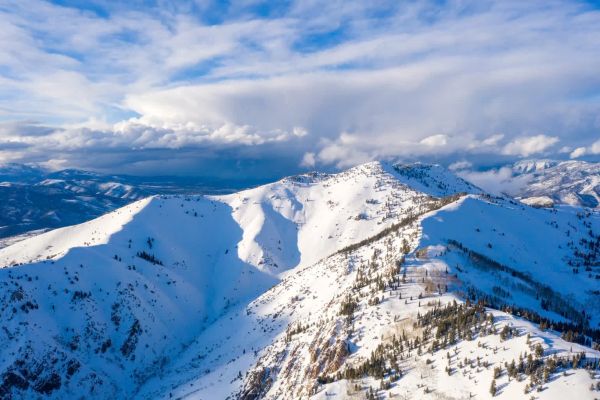
Utah Ski Resorts 2026-27: What’s New at Alta, Deer Valley, Powder Mountain and More
Utah is still building flat out. For 2026-27, Powder Mountain opens a steep new Skytrac chair into more than 1,000 acres of advanced terrain, Deer Valley adds 200 acres on Hail Peak, Sundance gets a new quad and Park City adds a gondola from its new parking structure. Snowmaking is expanding almost everywhere, Eagle Point stays closed after the Cottonwood Fire, and the 2034 Games are setting the pace. Here’s what’s new, resort by resort.
13 Oct 2026
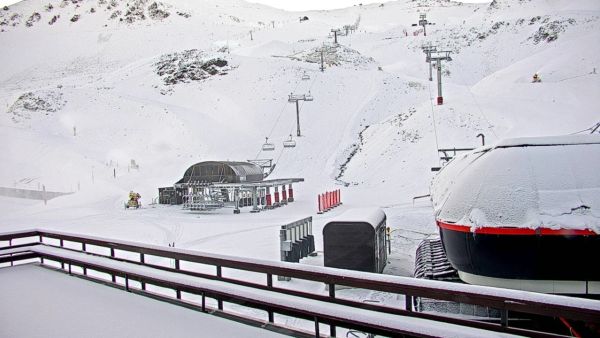
Mt Hutt Invests NZ$12 Million in Base Area, Tripling Its Sun Deck
Mt Hutt is getting busier, and its base lodge is about to catch up. NZ$12 million goes into a heated sun deck roughly three times the current size (430 m² to 1,300 m²), plus a new toilet block, heated steps down to snow level, extra storage and a new food and beverage outlet. Building starts after the 2026 season, with everything due for winter 2027.
11 Oct 2026

Vermont Ski Resort Opening Dates 2026-27: Few Dates Set, Killington Waits on the Cold
Vermont's season is slow to take shape. Stratton is tentatively targeting 18 November and Sugarbush 21 November, while Pico has Friday 11 December on the calendar. Killington never sets a date and opens when the snowmaking allows, and Vail Resorts has yet to name days for Stowe, Okemo and Mount Snow. The forecasts disagree about snow, and the main El Niño worry for the Green Mountains is warmth.
9 Oct 2026
Crans-Montana 2027 World Championships President Resigns Ahead of Fraud Hearing
Less than four months out from the Crans-Montana 2027 World Championships, the man running the organising committee has stepped down. Claude-Alain Schmidhalter resigned as Swiss-Ski vice president and OC president after being indicted over a business dispute unrelated to skiing. He denies the allegations and faces court on October 27. Interim leaders are in place for the February 1-14 event.
9 Oct 2026
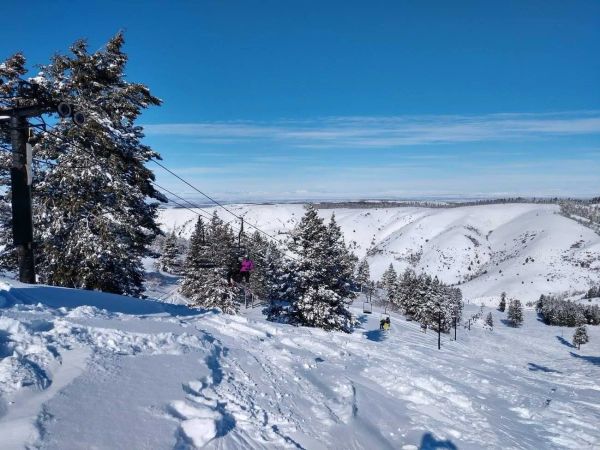
Kelly Canyon, Idaho, Adds Snowmaking, a Bigger Terrain Park and More Parking for 2026-27
Kelly Canyon had a rough 2025-26, and the Idaho resort has spent the summer making sure it doesn’t repeat. Snowmaking now reaches the top of Goldrush, the terrain park is doubling in size with a stereo system, lights and a snack shack, and the car park is getting bigger. Grooming is stepping up too. Target opening is December 4, conditions permitting.
9 Oct 2026
Les 2 Alpes Lift System
Les 2 Alpes operates 44 lifts comprising 8 gondolas, 2 funicular trains, 2 eight-seat chairs, 2 six-packs, 7 quad chairs, 1 triple chair, 2 double chairs, 15 T-bars and 5 surface lifts. The two-stage Jandri 3S cable car, inaugurated December 2024, forms the backbone, transporting 3,000 people per hour from the 1,650-metre village to 3,200 metres in 17 minutes using Poma's tri-cable technology. The €135 million installation replaced a 1985 gondola that required 40 minutes for the same ascent, cutting journey time by more than half whilst doubling uphill capacity.
The Jandri system ascends in two sections, stopping at 2,600 metres before continuing to 3,200 metres where skiers connect to the Dôme Express funicular tunnelled beneath the glacier. This underground railway climbs from 3,100 to 3,400 metres, providing access to the Belvédère des Écrins skywalk and the Lauze drag lift reaching 3,568 metres. Each Jandri cabin holds 32 passengers including 25 seated, travels at 8 metres per second, and operates in winds up to 100 kilometres per hour thanks to the three-cable configuration. The system reduced pylon count from 17 to 7, minimising environmental impact whilst improving stability.
West of the village, the Vallée Blanche sector opens via gondola and chairlift access from multiple base points including the Village 1800 and Diable stations. The Venosc gondola links the resort to Venosc village in the valley below, though no pisted descent exists between them. Pierre Grosse, Super Diable and Bellecombe chairlifts serve mid-mountain zones between 2,300 and 2,700 metres, whilst glacier access beyond the Jandri relies on T-bars including Puy-Salié and surface lifts reaching the highest terrain. Seven magic carpets operate at base level, with three free beginner lifts at Champamé, Coolidges and Vikings.
SATA Group assumed lift operations from CDA in recent years, investing in modernisation following a period of neglected infrastructure. The Jandri represents the centrepiece of a wider transformation plan across SATA-operated resorts scheduled for completion by 2026-27. Night skiing operates on Vallée Blanche with a 400-metre vertical red run and new green option added for winter 2026, floodlit sessions expanding access for all abilities. Lift-serviced skiing from December through April extends to weekend openings in November and partial glacier operations through summer, with the system designed for nearly 10 months of annual service.
44lifts across 9 types
2
Trains
8
Gondolas
2
8-Person Chairs
2
6-Person Chairs
7
Quad Chairs
1
Triple Chair
2
Double Chairs
15
T-Bars
5
Surface Lifts
Les 2 Alpes lift system
Les 2 Alpes is served by 44 lifts, listed here by type. Check which lifts are turning against the live conditions before you plan your first laps - early lifts and high-speed chairs get you to the best snow fastest.
More Les 2 Alpes intelligence: trail map, snow report, webcams, resort overview.