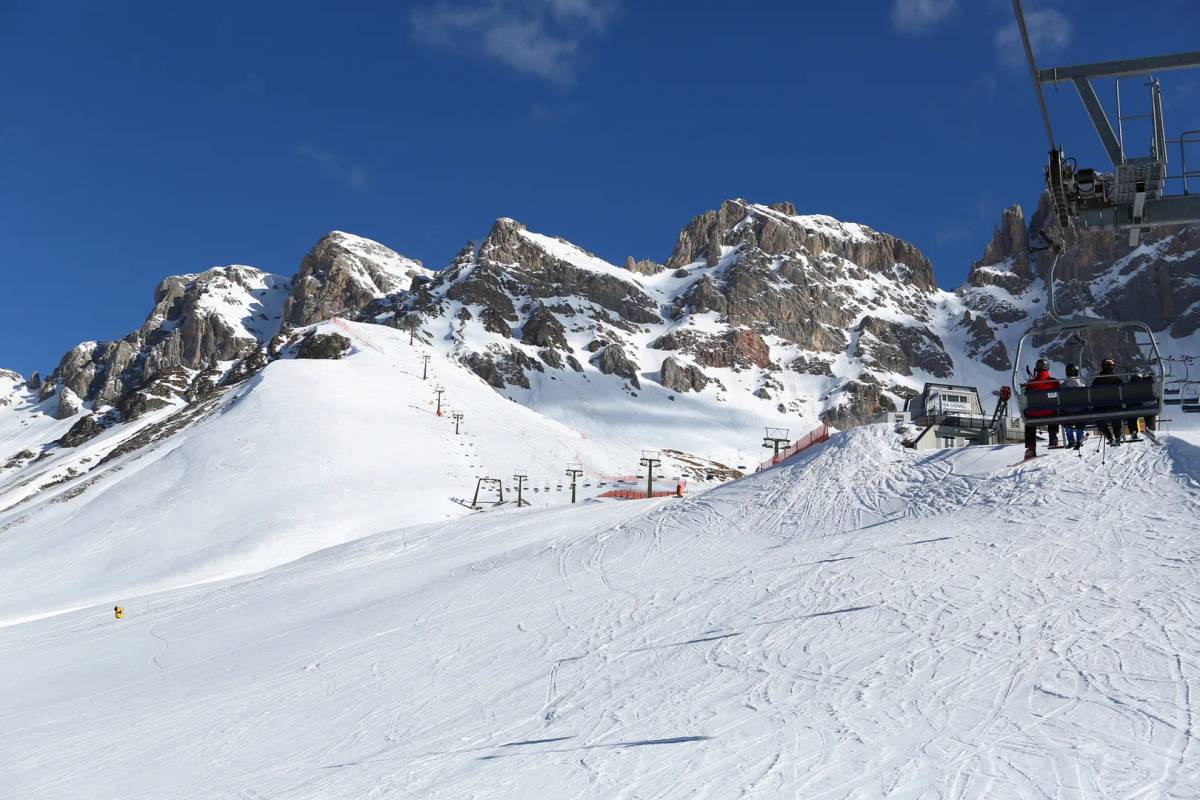
Passo San Pellegrino
Ski 67.5km on the Trentino-Veneto border including La VolatA, a Women's World Cup downhill course descending from 2,513m.

Season 2026 - 2027
Opens
28 Nov 2026
Closes
4 Apr 2027
Days open
127
Annual snow
3.2m
The Overview
Michael Fulton
Melbourne-based skier and snowboarder with 50+ resorts across 5 continents. Specialises in Australian resorts and international resort comparisons.
Passo San Pellegrino sits at 1,918m on the border between Trentino and Veneto, linking the Val di Fassa to the Falcade valley in a ski area that spans 1,190m to 2,513m across 67.5km of pistes. The terrain is split between the wide, sunny slopes of the pass itself - set against the Monzoni mountain range and framed by views to the Marmolada, Civetta, Pelmo and the Pale di San Martino group - and the demanding north-facing terrain dropping from Col Margherita above.
The area's defining feature is La Volata, a 2,500m black run inaugurated in 2017 and built to meet FIS Alpine World Cup standards. Starting at 2,510m just below the Col Margherita cable car arrival station, it drops 600m vertical with gradients of up to 47% on a north-facing line that maintains compact, grippy snow through the speed events season. La Volata hosted the 2019 FIS Alpine Skiing Junior World Championships and the 2021 Women's World Cup, and returned to the World Cup calendar in March 2026 with a women's downhill and super-G double event.
The ski area is part of the Dolomiti Superski network, and a combined pass covering both San Pellegrino and the adjacent Alpe Lusia area gives access to 100km of pistes across 23 lifts. The two areas are linked by a high-frequency ski bus running every few minutes between the two base stations, with Falcade on the Veneto side also integrated into the same pass.
Two snowparks - the Sanpe Snowpark at San Pellegrino and a second at Alpe Lusia - serve freestylers alongside a dedicated Freeride Park for off-piste touring. A 37km cross-country trail network at the pass and a further 10-12km circuit near Falcade village are covered under the same area infrastructure.
1323m
Vertical
59
Runs
67.5 km
Piste
3.2m
Annual snow
The Terrain
59 runs across 67.5 km of piste
Passo San Pellegrino straddles the Trentino and Veneto border, with 67.5 kilometres of piste across 59 runs between 1,190 and 2,513 metres. The 1,323-metre vertical splits into two personalities: sunny, open slopes around the pass and tougher, north-facing terrain beneath Col Margherita. Grading runs 30% beginner, 57% intermediate and 13% advanced, with no expert category. Chairs and T-bars do most of the work, and a 100-person cable car carries skiers from the pass up to the summit. That mix means a varied day without much repetition, and it links with Falcade across the border on the Veneto side.
The big name is La Volata, a black run built to World Cup standard that hosted junior world championships, and it is worth a go for strong skiers wanting a genuine test. Col Margherita, a long red, drops towards the pass from the same summit. A dedicated Freeride Park caters for those wanting a taste of ungroomed snow, and the Sanpe Snowpark covers freestyle. The cable car cabins were designed by Pininfarina. Advanced intermediates and racing fans will enjoy it most, with Alpe Lusia nearby for more variety.
Terrain split
59
runs
59 runs across 4 grades
Beginner18 runs · 30%
Intermediate34 runs · 57%
Advanced8 runs · 13%
Expert0 runs · 0%
Time it right
When to visit Passo San Pellegrino
Passo San Pellegrino operates from late November through to early April, with the 2025-26 season running from 30 November 2025 to 6 April 2026. The season extends into early spring with reliable conditions supported by full snowmaking coverage across the pisted area and the high-altitude terrain above 2,000m holding natural snow well into March.
Annual snowfall averages 3.5 metres across the ski area. The north-facing Col Margherita sector performs particularly well through the core winter months, with the compact snow surface that makes La La Volata suitable for FIS speed racing also delivering excellent piste conditions for recreational skiers. The sunnier slopes on the Trentino side of the pass benefit from good morning light and afternoon warmth that makes late-season skiing from late February onward particularly appealing.
The 2025-26 season included the Women's Alpine Ski World Cup downhill and super-G at La Volata in early March 2026, following previous World Cup hosting in 2021. The area is part of the Val di Fassa Piste Azzurre racing programme and has hosted the Italian national alpine team for training over multiple seasons, reflecting the quality and consistency of the race terrain.
The extended pass network under the Dolomiti Superski umbrella gives season visitors significant range - a Dolomiti Superski pass opens up 1,200km of pistes across 12 interconnected areas, making Passo San Pellegrino a practical base for exploring the broader Dolomites network without returning to the same terrain each day.
Season 2026 - 2027
28 Nov 2026
Opens
4 Apr 2027
Closes
127
Days open
3.2 m
Annual snow
The record
Historical snowfall at Passo San Pellegrino
Daily snow reports at Passo San Pellegrino go back to 1996, 31 winters on the books. Open the record to compare winters, lifts and piste.
65 cm
Snowiest day
15 Nov 2019
16 cm
This winter · 2026-27
so far
315 cm
Typical winter
average of complete seasons
Winter totals
cm
Past wintersThis winter
Getting there
Getting to Passo San Pellegrino, and where to stay
Passo San Pellegrino sits 13km from Moena in the Val di Fassa, reached via State Road 346 from the Ronchi junction in the valley. From Moena the drive takes around 15 minutes in normal conditions. Falcade, on the Veneto side, is accessed on the same road descending from the pass through the Biois valley. The pass sits at the boundary between the provinces of Trento and Belluno, making it one of the few ski areas in the region that straddles two administrative regions.
The primary motorway approach from the north is via the A22 Brenner motorway, exiting at Egna-Ora and following the SS48 through Val di Fiemme and Val di Fassa to Moena - approximately 45km from the motorway exit. From the south, the Belluno approach via the A27 motorway connects through the Agordo valley and Falcade on the Veneto side of the pass.
Nearest airports are Bolzano to the north-west, around 60km, and Verona Villafranca to the south, around 160km via the A22. Innsbruck Airport in Austria is around 120km north across the Brenner. Rail access runs to Trento or Bolzano, from where the Trentino Trasporti and SAD bus services provide daily direct connections to Moena. From Falcade, connections run via Belluno on the Veneto rail network.
Moena is the main services hub for the area on the Trentino side, with a full range of accommodation, restaurants and shops within the Val di Fassa. Falcade provides a quieter, more self-contained base on the Veneto side with direct gondola access to the ski area from the village centre.
Where to stay
Search all stays →Stays map loads when you scroll here
Hotels and lodges near Passo San Pellegrino, powered by Stay22.
Latest News
From the SnowStash desk

Utah Snow Storm Builds Early-Season Base Ahead of November Openings
Rain down low, snow up high, and a snow report full of zeros that mostly means ‘not updated yet’. Utah’s first proper storm of 2026-27 is rolling through the Wasatch, Snowbird’s snow stake is closing in on 10 inches, and Brian Head is five days from opening day. Early November snow rarely looks like much, but it is the layer every November opening date is built on. Here is where it stands.
1 Nov 2026
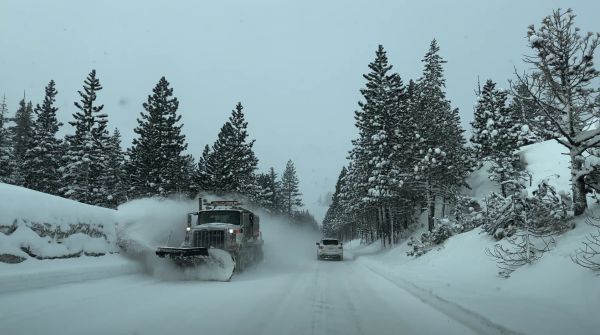
Sierra Nevada Halloween Storm: Dodge Ridge Forecast to Lead With 19 Inches
Halloween weekend brings a wet, windy storm to the Sierra Nevada. Our five-day forecast has Dodge Ridge on top with 19 in, followed by Bear Valley at 15 in and Mammoth Mountain at 12 in, with most of it landing on Saturday. A winter weather advisory covers the Tahoe Basin and Mono County until 7 AM Sunday, gusts could reach 47 mph and the freezing level swings between 4,900 and 8,700 ft, so some bases will see rain. A dry spell follows from Monday.
31 Oct 2026
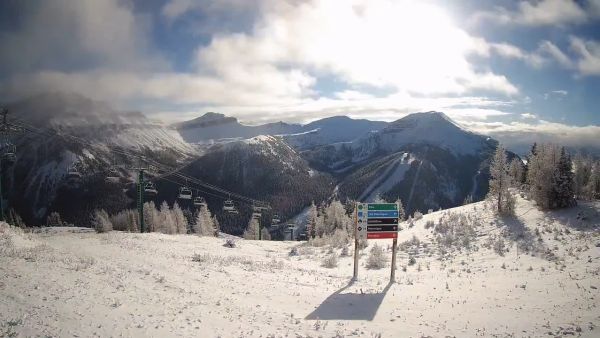
Lake Louise Opens Early on 1 November With Juniper Express and Easy Street
The Rockies get their first lift-served turns of the season early. Lake Louise opens Sunday 1 November, five days ahead of schedule, after a cold October and round-the-clock work from the snowmaking and mountain crews. Terrain is limited to Juniper Express Chair and Easy Street, with two small terrain parks and the beginner area for lessons. Opening-day tickets are over 60% off, with prices rising as more lifts open. First chair is at 9:30 am under the resort’s new lift hours.
31 Oct 2026
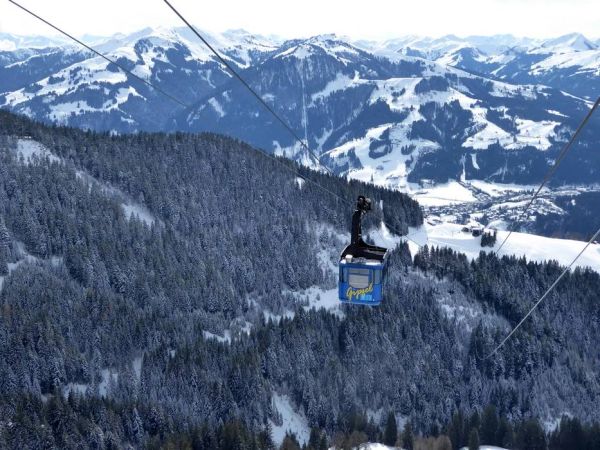
Kitzbüheler Horn Summit Cable Car to Be Replaced After 70 Years
A Tyrolean summit lift that has been carrying guests up the Kitzbüheler Horn since 1955 is on borrowed time. Its licence runs to 2045, but a new inspection rule has made refurbishment uneconomic, so Bergbahn AG Kitzbühel will spend around €15 million on a replacement on the same line. It should hold roughly 100 people and keep running in winds that would stop today’s lift. Building starts in autumn 2027, which makes this winter and next summer the last chances to ride the old one.
30 Oct 2026
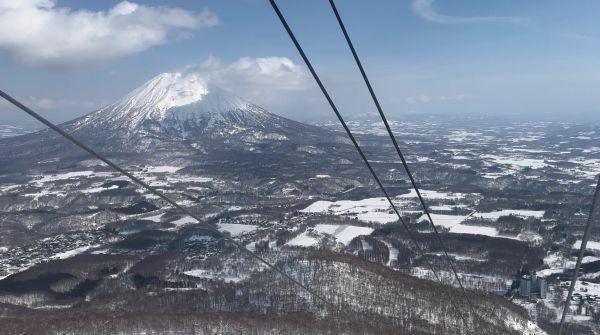
What’s New in Japan Skiing This Winter: Niseko Gondola, a Private Resort and a Bigger Ikon Pass
Niseko Village is replacing a lift from the early 1980s with an eight-person gondola, Tsugaike gets a six-person chairlift, Madarao joins the Ikon Pass and Togari opens Asia’s first private ski resort. Here’s what is actually new in Japan skiing for 2026/27, plus what is still a year or two away.
30 Oct 2026
Wolf Creek Opens on Halloween Weekend as Colorado’s Early Season Gathers Pace
Colorado’s early-season dominoes keep falling. Arapahoe Basin opened on Wednesday, Keystone follows on Friday, and now Wolf Creek is joining in on Saturday 31 October, just in time for Halloween. A storm on 23 and 24 October left 20 inches of natural snow in the San Juans, and three lifts will turn from 9:00 am, covering about 30% of the mountain. Expect rocks, unmarked obstacles and open water, but also Local Appreciation lift tickets at $73 for adults.
30 Oct 2026
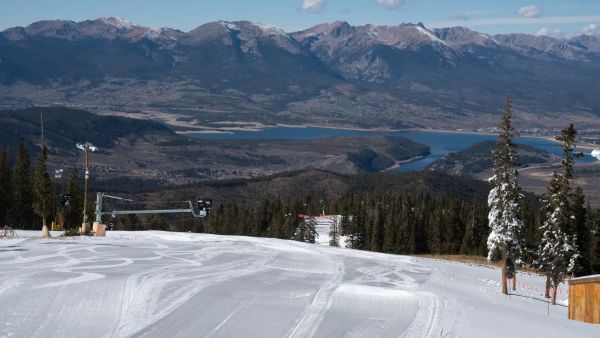
Keystone Resort Opens for 2026/27 With More Than Two Miles of Skiing
Keystone is next. After Arapahoe Basin claimed the first chairlift skiing of the season on Wednesday, Keystone opens on Friday 30 October at 9:00 am with more than two miles of snowmaking-built terrain on Schoolmarm and Silver Spoon, plus free donuts, coffee and a live DJ. Last year the order was reversed, when Keystone squeezed in a three-hour afternoon session to beat A-Basin by a day. Snowmaking has been running since 15 October.
29 Oct 2026
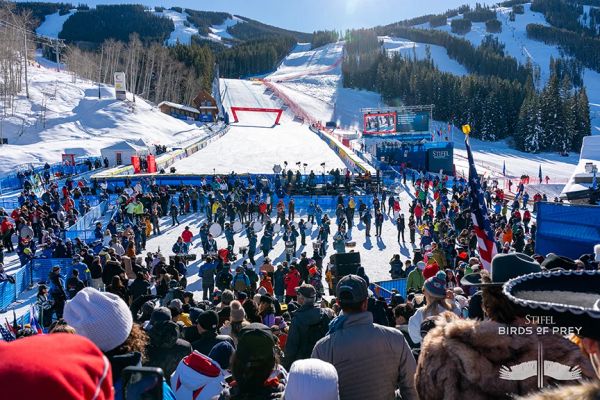
Beaver Creek Installs 16 Automated Snow Guns on Birds of Prey Ahead of Record World Cup
Beaver Creek is getting ready for the biggest Birds of Prey ever, and this time it is not leaving the snow to chance. Crews started making snow on 27 October with 16 newly installed automated guns on the lower third of the course, after last December’s warm spell forced a downhill off the schedule. Seven races across two weekends run from 3 to 13 December, the most the course has hosted since its 1997 debut, and the guns start themselves whenever the weather allows.
29 Oct 2026
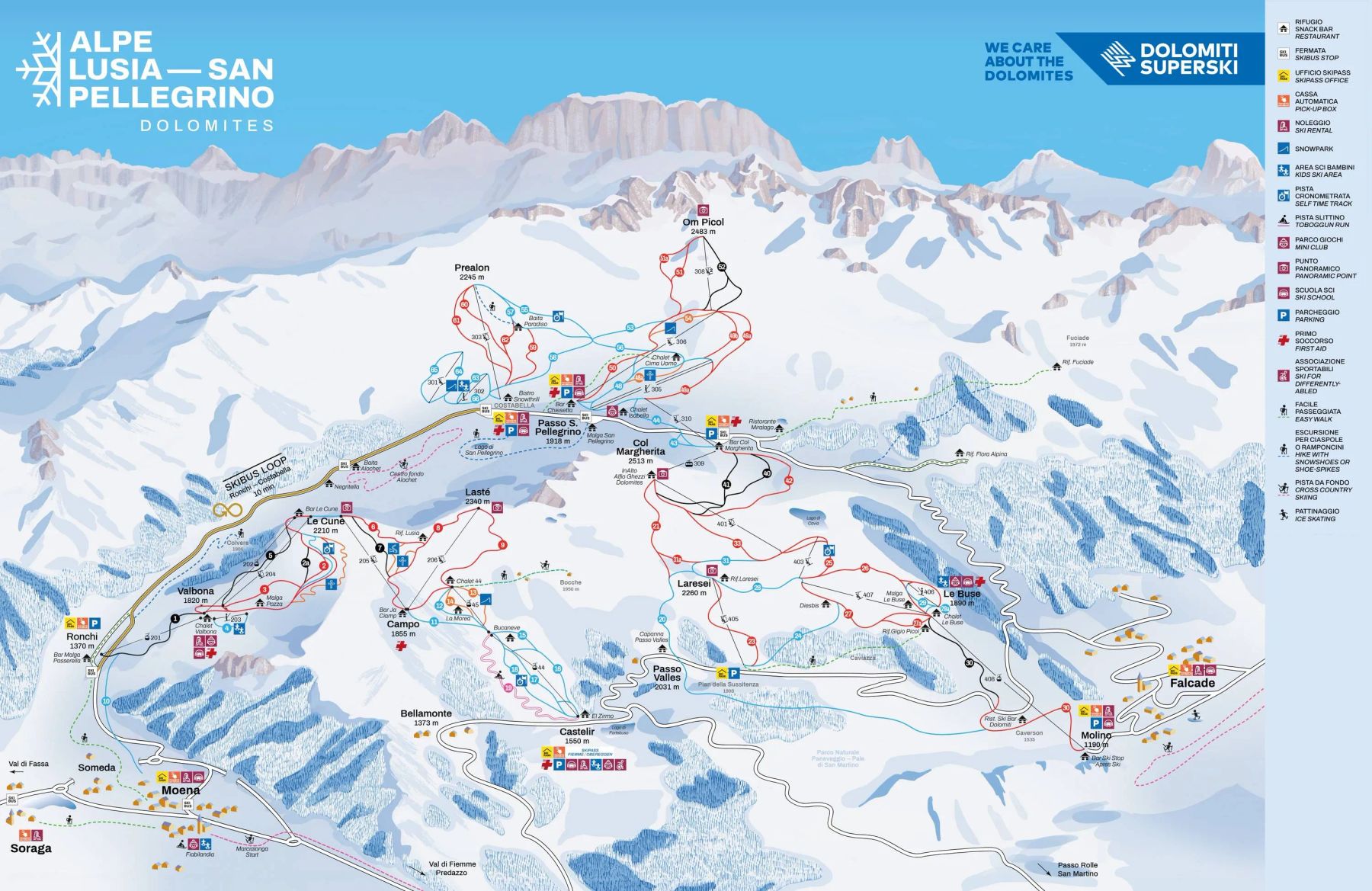
Passo San Pellegrino Trail Map
Downloadable Passo San Pellegrino trail map
Terrain split
59
runs
Beginner30%
Intermediate57%
Advanced13%
Expert0%
67.5 km of piste
Resort Stats
Elevation
Base1190m
Summit2513m
Annual snowfall
3.2m
Season
2026 - 2027
28 Nov 2026 - 4 Apr 2027
Trail coverage
59 runs
67.5 km
About Passo San Pellegrino's trail map
Explore Passo San Pellegrino's full trail map with 59 runs across the mountain, colour-coded by difficulty and shown alongside the terrain split. Use it to plan a day that matches your ability, find lift-served pockets of your favourite grade, and see how the resort links together. Download the piste map (PDF) ↗
More Passo San Pellegrino intelligence: snow report, lift system, webcams, resort overview.