
The Overview
Michael Fulton
Melbourne-based skier and snowboarder with 50+ resorts across 5 continents. Specialises in Australian resorts and international resort comparisons.
Passo San Pellegrino sits at 1,918m on the border between Trentino and Veneto, linking the Val di Fassa to the Falcade valley in a ski area that spans 1,190m to 2,513m across 67.5km of pistes. The terrain is split between the wide, sunny slopes of the pass itself - set against the Monzoni mountain range and framed by views to the Marmolada, Civetta, Pelmo and the Pale di San Martino group - and the demanding north-facing terrain dropping from Col Margherita above.
The area's defining feature is La Volata, a 2,500m black run inaugurated in 2017 and built to meet FIS Alpine World Cup standards. Starting at 2,510m just below the Col Margherita cable car arrival station, it drops 600m vertical with gradients of up to 47% on a north-facing line that maintains compact, grippy snow through the speed events season. La Volata hosted the 2019 FIS Alpine Skiing Junior World Championships and the 2021 Women's World Cup, and returned to the World Cup calendar in March 2026 with a women's downhill and super-G double event.
The ski area is part of the Dolomiti Superski network, and a combined pass covering both San Pellegrino and the adjacent Alpe Lusia area gives access to 100km of pistes across 23 lifts. The two areas are linked by a high-frequency ski bus running every few minutes between the two base stations, with Falcade on the Veneto side also integrated into the same pass.
Two snowparks - the Sanpe Snowpark at San Pellegrino and a second at Alpe Lusia - serve freestylers alongside a dedicated Freeride Park for off-piste touring. A 37km cross-country trail network at the pass and a further 10-12km circuit near Falcade village are covered under the same area infrastructure.
1323m
Vertical
59
Runs
67.5 km
Piste
4m
Annual snow
The Terrain
59 runs across 67.5 km of piste
Passo San Pellegrino straddles the Trentino and Veneto border, with 67.5 kilometres of piste across 59 runs between 1,190 and 2,513 metres. The 1,323-metre vertical splits into two personalities: sunny, open slopes around the pass and tougher, north-facing terrain beneath Col Margherita. Grading runs 30% beginner, 57% intermediate and 13% advanced, with no expert category. Chairs and T-bars do most of the work, and a 100-person cable car carries skiers from the pass up to the summit. That mix means a varied day without much repetition, and it links with Falcade across the border on the Veneto side.
The big name is La Volata, a black run built to World Cup standard that hosted junior world championships, and it is worth a go for strong skiers wanting a genuine test. Col Margherita, a long red, drops towards the pass from the same summit. A dedicated Freeride Park caters for those wanting a taste of ungroomed snow, and the Sanpe Snowpark covers freestyle. The cable car cabins were designed by Pininfarina. Advanced intermediates and racing fans will enjoy it most, with Alpe Lusia nearby for more variety.
Terrain split
59
runs
59 runs across 4 grades
Beginner18 runs · 30%
Intermediate34 runs · 57%
Advanced8 runs · 13%
Expert0 runs · 0%
Time it right
When to visit Passo San Pellegrino
Passo San Pellegrino operates from late November through to early April, with the 2025-26 season running from 30 November 2025 to 6 April 2026. The season extends into early spring with reliable conditions supported by full snowmaking coverage across the pisted area and the high-altitude terrain above 2,000m holding natural snow well into March.
Annual snowfall averages 3.5 metres across the ski area. The north-facing Col Margherita sector performs particularly well through the core winter months, with the compact snow surface that makes La La Volata suitable for FIS speed racing also delivering excellent piste conditions for recreational skiers. The sunnier slopes on the Trentino side of the pass benefit from good morning light and afternoon warmth that makes late-season skiing from late February onward particularly appealing.
The 2025-26 season included the Women's Alpine Ski World Cup downhill and super-G at La Volata in early March 2026, following previous World Cup hosting in 2021. The area is part of the Val di Fassa Piste Azzurre racing programme and has hosted the Italian national alpine team for training over multiple seasons, reflecting the quality and consistency of the race terrain.
The extended pass network under the Dolomiti Superski umbrella gives season visitors significant range - a Dolomiti Superski pass opens up 1,200km of pistes across 12 interconnected areas, making Passo San Pellegrino a practical base for exploring the broader Dolomites network without returning to the same terrain each day.
Season 2026 - 2027
28 Nov 2026
Opens
4 Apr 2027
Closes
127
Days open
4 m
Annual snow
Getting there
Getting to Passo San Pellegrino, and where to stay
Passo San Pellegrino sits 13km from Moena in the Val di Fassa, reached via State Road 346 from the Ronchi junction in the valley. From Moena the drive takes around 15 minutes in normal conditions. Falcade, on the Veneto side, is accessed on the same road descending from the pass through the Biois valley. The pass sits at the boundary between the provinces of Trento and Belluno, making it one of the few ski areas in the region that straddles two administrative regions.
The primary motorway approach from the north is via the A22 Brenner motorway, exiting at Egna-Ora and following the SS48 through Val di Fiemme and Val di Fassa to Moena - approximately 45km from the motorway exit. From the south, the Belluno approach via the A27 motorway connects through the Agordo valley and Falcade on the Veneto side of the pass.
Nearest airports are Bolzano to the north-west, around 60km, and Verona Villafranca to the south, around 160km via the A22. Innsbruck Airport in Austria is around 120km north across the Brenner. Rail access runs to Trento or Bolzano, from where the Trentino Trasporti and SAD bus services provide daily direct connections to Moena. From Falcade, connections run via Belluno on the Veneto rail network.
Moena is the main services hub for the area on the Trentino side, with a full range of accommodation, restaurants and shops within the Val di Fassa. Falcade provides a quieter, more self-contained base on the Veneto side with direct gondola access to the ski area from the village centre.
Where to stay
Search all stays →Hotels and lodges near Passo San Pellegrino, powered by Stay22.
Latest News
From the SnowStash desk

Zermatt Plans World Cup Downhill Return on the Gornergrat for 2028
Zermatt is having another crack at a World Cup downhill, and this time nobody has to cross a border. Around 13 million Swiss francs is going into rebuilding the Gornergrat piste, including a jump fed by a roughly 300-metre in-run across the roof of the Gornergrat Railway gallery, with the Matterhorn lined up behind it for the TV cameras. First men’s race is pencilled in for March 2028, pending FIS homologation.
14 Oct 2026

Mt. Rose Begins Snowmaking for the 2026-27 Season at Lake Tahoe
Lake Tahoe’s highest base elevation is paying off early: Mt. Rose has started making snow for 2026-27 after the first flurries and a cold snap. The Nevada resort is backing it with nearly US$2 million in upgrades, including a replacement snowmaking main line, a new PistenBully groomer and restraint bars on every lift. Opening day is yet to be confirmed, though Heavenly and Northstar are already eyeing 20 November.
13 Oct 2026

Utah Ski Resorts 2026-27: What’s New at Alta, Deer Valley, Powder Mountain and More
Utah is still building flat out. For 2026-27, Powder Mountain opens a steep new Skytrac chair into more than 1,000 acres of advanced terrain, Deer Valley adds 200 acres on Hail Peak, Sundance gets a new quad and Park City adds a gondola from its new parking structure. Snowmaking is expanding almost everywhere, Eagle Point stays closed after the Cottonwood Fire, and the 2034 Games are setting the pace. Here’s what’s new, resort by resort.
13 Oct 2026

Mt Hutt Invests NZ$12 Million in Base Area, Tripling Its Sun Deck
Mt Hutt is getting busier, and its base lodge is about to catch up. NZ$12 million goes into a heated sun deck roughly three times the current size (430 m² to 1,300 m²), plus a new toilet block, heated steps down to snow level, extra storage and a new food and beverage outlet. Building starts after the 2026 season, with everything due for winter 2027.
11 Oct 2026

Vermont Ski Resort Opening Dates 2026-27: Few Dates Set, Killington Waits on the Cold
Vermont's season is slow to take shape. Stratton is tentatively targeting 18 November and Sugarbush 21 November, while Pico has Friday 11 December on the calendar. Killington never sets a date and opens when the snowmaking allows, and Vail Resorts has yet to name days for Stowe, Okemo and Mount Snow. The forecasts disagree about snow, and the main El Niño worry for the Green Mountains is warmth.
9 Oct 2026
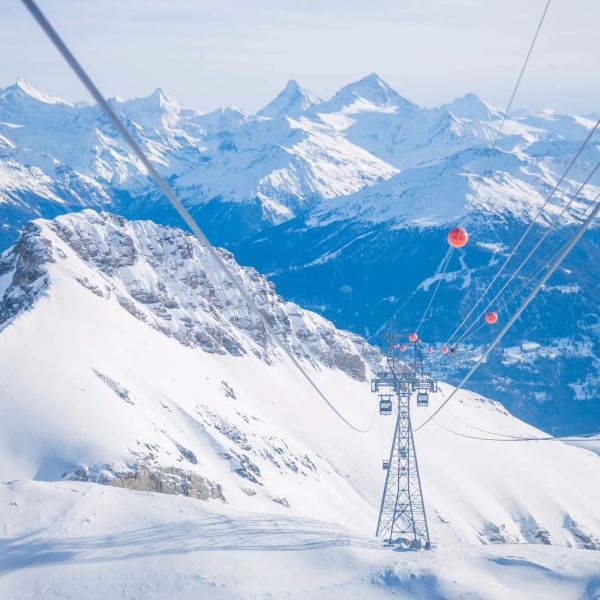
Crans-Montana 2027 World Championships President Resigns Ahead of Fraud Hearing
Less than four months out from the Crans-Montana 2027 World Championships, the man running the organising committee has stepped down. Claude-Alain Schmidhalter resigned as Swiss-Ski vice president and OC president after being indicted over a business dispute unrelated to skiing. He denies the allegations and faces court on October 27. Interim leaders are in place for the February 1-14 event.
9 Oct 2026
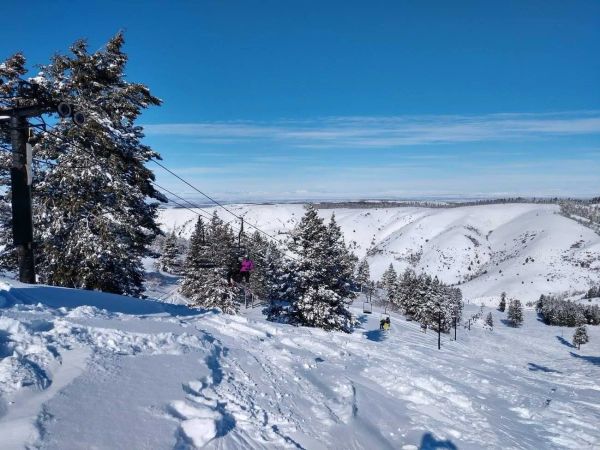
Kelly Canyon, Idaho, Adds Snowmaking, a Bigger Terrain Park and More Parking for 2026-27
Kelly Canyon had a rough 2025-26, and the Idaho resort has spent the summer making sure it doesn’t repeat. Snowmaking now reaches the top of Goldrush, the terrain park is doubling in size with a stereo system, lights and a snack shack, and the car park is getting bigger. Grooming is stepping up too. Target opening is December 4, conditions permitting.
9 Oct 2026
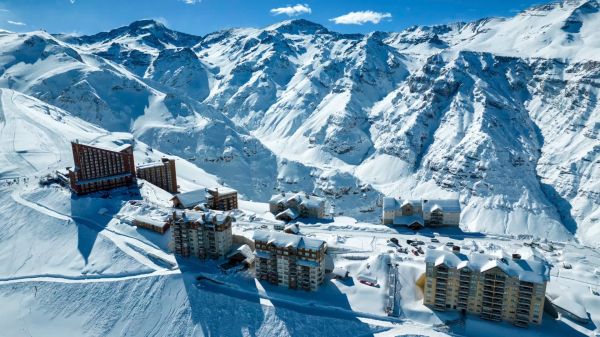
Valle Nevado Extends Season to November 8 After 108 cm in 48 Hours
Winter was meant to be winding down in Chile. Then Valle Nevado took 108 cm in 48 hours in early October, and the resort has pushed its closing date out to November 8 - its latest in 38 years of operation. That makes 143 days of skiing since opening day on June 19, with 690 cm banked for the season. Only part of the mountain is running while the storm settles, so check the mountain report before you plan a trip.
9 Oct 2026