
Baqueira Beret
Ski Spain's best resort — 165km of Pyrenean terrain, Atlantic snowfall and 36 lifts across four sectors in the Val d'Aran.
Season 2026 - 2027
Opens
28 Nov 2026
Closes
4 Apr 2027
Days open
127
Annual snow
2m
The Overview
Michael Fulton
Melbourne-based skier and snowboarder with 50+ resorts across 5 continents. Specialises in Australian resorts and international resort comparisons.
Baqueira Beret is Spain's best ski resort and the undisputed benchmark for Pyrenean skiing, spreading across four interconnected sectors — Baqueira, Beret, Bonaigua and Baciver — with 165km of marked pistes and 114 runs spanning a vertical drop of 1,110m. Set in Catalonia's Val d'Aran at elevations between 1,500m and 2,610m, the majority of terrain sits above 2,000m, a key factor in the resort's consistently strong snow record across a season that runs from December through to late April. The terrain breakdown is weighted firmly toward intermediate and advanced skiers, with 38% blue, 43% red and 15% black, alongside dedicated beginner slopes and 7km of groomed Nordic trails at the Pla de Beret.
What sets Baqueira Beret apart from most ski resorts on the Iberian Peninsula is its Atlantic-facing position on the northern side of the Pyrenees — a geographic quirk that draws in moisture-laden storm systems from the Atlantic and Arctic, producing both reliable snowfall and snow depths that frequently exceed those of comparable French and Spanish resorts. The resort celebrated its 60th anniversary in 2024, having grown from a single chairlift in 1964 into a modern mountain operation with 36 lifts and a lift capacity exceeding 61,000 skiers per hour. Baqueira has long been the winter destination of the Spanish royal family, who maintain a private residence in the Val d'Aran — a fact that speaks to both the quality of the skiing and the character of the surrounding valley.
1110m
Vertical
114
Runs
165 km
Piste
2m
Annual snow
The Terrain
114 runs across 165 km of piste
Baqueira Beret spreads 165 kilometres of piste over 114 runs through the Val d'Aran, falling 1,110 metres from the 2,610-metre top to the village of Baqueira at 1,500 metres. It is a resort for skiers who like gradient: 43% of the terrain is advanced and 15% expert, against 38% intermediate and just 4% beginner. Four sectors, Baqueira, Beret, Bonaigua and Baciver, share the mountain, so there is plenty of variety without repeating a lap. First-timers will find the nursery slopes limited, while strong intermediates stepping up to harder pistes have a lot to work through.
Escornacrabes is the headline descent, a long, flowing line from the top of the Baqueira sector that delivers more than 1,000 metres of vertical in one go. Bonaigua adds steeper pitches, and Baciver, reached by lifts to 2,610 metres, opens an east-facing zone aimed at confident intermediates and experts. Lift-served freeride is a real draw, with off-piste lines off Baciver and around Tuc de Dossau, and a local guide is wise on any of them. Beret is gentler and good for warming up. This suits advanced skiers and riders who want Alpine-style steeps in the Pyrenees.
Terrain split
114
runs
114 runs across 4 grades
Beginner5 runs · 4%
Intermediate43 runs · 38%
Advanced49 runs · 43%
Expert17 runs · 15%
Time it right
When to visit Baqueira Beret
Baqueira Beret operates from December through to late April, with the 2025/26 season scheduled to close on 21 April. The resort records an average annual snowfall of around 5.2 metres, driven by its unique position on the Atlantic-facing northern slopes of the Pyrenees, which channel weather systems directly onto the mountain from the northwest. The snowiest period typically falls in late January and early February, with February historically delivering the most consistent powder conditions. High-altitude terrain above 2,000m — which accounts for the majority of the ski area — maintains snow quality well into spring, while the north-facing Cara Nord slopes at Baciver and Beret are renowned for preserving cold, dry snow long after lower-elevation areas in the range have softened.
The resort's southern latitude in Spain means skiers benefit from an average of one extra hour of daylight compared to equivalent-elevation resorts in the Alps, extending productive skiing time on clear days. The Beret sector's broad, sheltered plateau is particularly well suited to spring skiing, offering open blues and reds on terrain that basks in morning sun. Baqueira's season total snowfall for 2025/26 has already reached 489cm by early March, reflecting the kind of deep-winter accumulation the resort is known for in strong years. For those chasing optimal conditions, January through March delivers the most reliable combination of snow depth, temperature and trail coverage.
Season 2026 - 2027
28 Nov 2026
Opens
4 Apr 2027
Closes
127
Days open
2 m
Annual snow
The record
Historical snowfall at Baqueira Beret
Daily snow reports at Baqueira Beret go back to 2017, 10 winters on the books. Open the record to compare winters, lifts and piste.
100 cm
Snowiest day
13 Dec 2021
7.1 cm
This winter · 2026-27
so far
196 cm
Typical winter
average of complete seasons
Winter totals
cm
Past wintersThis winter
Getting there
Getting to Baqueira Beret, and where to stay
Baqueira Beret sits at the head of the Val d'Aran in the Lleida Pyrenees of Catalonia, positioned uniquely on the northern side of the Pyrenean watershed — geographically oriented toward France rather than the Spanish interior. This orientation places the resort within an Atlantic-influenced climatic zone that is distinct from most Spanish mountain destinations and more comparable to the snowier northern faces of the French Alps. The nearest major international airport is Toulouse-Blagnac in France, approximately two hours by road, making Baqueira one of the more accessible high-quality ski resorts in Spain for travellers arriving from northern Europe. Barcelona El Prat Airport is around three to four hours by car via the C-28 and N-230 routes.
The Val d'Aran retains a strong cultural identity built around Aranese — a Gascon dialect spoken nowhere else in Spain — along with Catalan and Castilian, giving the valley a character that feels markedly different from other Spanish ski regions. The main resort base at Baqueira 1500 is purpose-built in timber and stone, designed to blend with the valley's traditional architecture rather than replicate the concrete-block aesthetic of many European ski stations. The surrounding valley towns of Vielha, Arties and Salardú are within 15–20 minutes of the lifts and offer a strong selection of accommodation, restaurants and après-ski drawing heavily on Catalan and Aranese culinary traditions. The resort is also home to Spain's only commercial heliski operation, based out of Vielha.
Where to stay
Search all stays →Hotels and lodges near Baqueira Beret, powered by Stay22.
Latest News
From the SnowStash desk
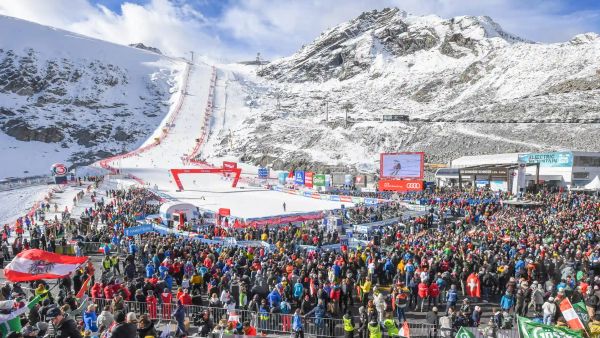
Pinheiro Braathen Wins Sölden Giant Slalom Opener by 0.48 Seconds
Two days at Sölden, two races decided by a hundredth somewhere on the podium, and one very quick Brazilian. Lucas Pinheiro Braathen led from the first run to win the men’s World Cup opener by 0.48 seconds, with Loïc Meillard second and Marco Odermatt third. River Radamus charged from 15th to fourth on a rutted course, and Britain’s Freddy Carrick-Smith banked his first World Cup points. Braathen still hasn’t lost a giant slalom since Olympic gold.
25 Oct 2026
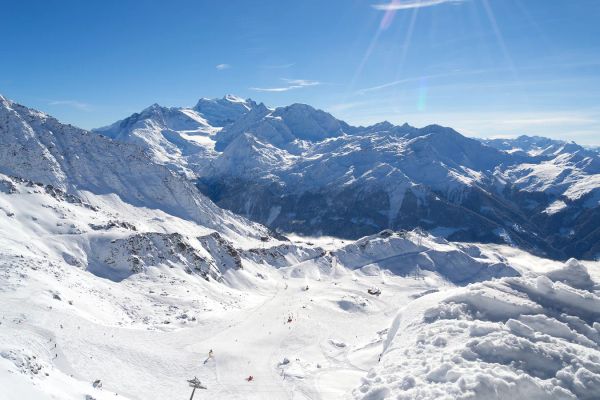
Alps Snow Forecast: Up to 64 cm Headed for the High Glaciers as the Snow Line Drops
The Alps are about to swap mild, sunny October weather for something far more wintry. A cold front arrives Tuesday, and SnowStash forecasts have Monterosa Ski out in front with 64 cm over 14 days, ahead of Blatten Belalp (55 cm) and Verbier (43 cm). The snow line should fall below 2000 metres by Wednesday night, and glaciers across Switzerland, Italy and Austria are in line for the best of it. The wind will have a say too.
20 Oct 2026
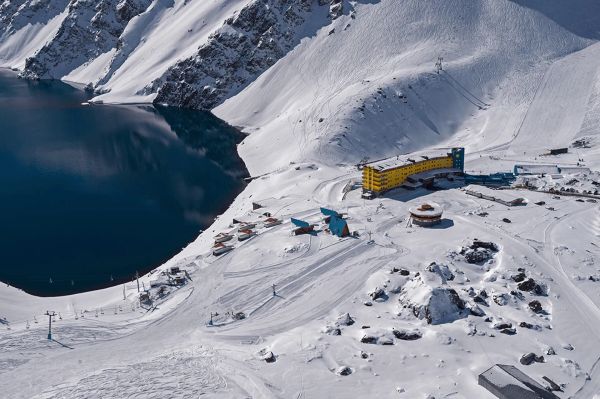
Four Dead After Avalanche Near Ski Portillo in Chile
A large avalanche struck near Laguna del Inca adjacent to Ski Portillo on Saturday afternoon, killing four people and injuring four others. The group were day visitors mountaineering in the backcountry after reportedly being warned about elevated avalanche risk by resort staff.
18 Oct 2026

Europe Ski Resorts Open Now: What Is Skiable in Mid-October 2026
Europe’s ski season is open, technically. After a record-warm summer, glaciers in Austria, Switzerland and Italy are running a few pistes apiece, Sölden, Stubai and Kitzsteinhorn started late, Titlis has pushed back to 24 October, and Zermatt reopens a few lifts on 14 October after more than two months shut. Finland’s Levi and Ruka are skiing on stored snow. Here is what is open, and what you actually get at each.
14 Oct 2026

Zermatt Plans World Cup Downhill Return on the Gornergrat for 2028
Zermatt is having another crack at a World Cup downhill, and this time nobody has to cross a border. Around 13 million Swiss francs is going into rebuilding the Gornergrat piste, including a jump fed by a roughly 300-metre in-run across the roof of the Gornergrat Railway gallery, with the Matterhorn lined up behind it for the TV cameras. First men’s race is pencilled in for March 2028, pending FIS homologation.
14 Oct 2026

Mt. Rose Begins Snowmaking for the 2026-27 Season at Lake Tahoe
Lake Tahoe’s highest base elevation is paying off early: Mt. Rose has started making snow for 2026-27 after the first flurries and a cold snap. The Nevada resort is backing it with nearly US$2 million in upgrades, including a replacement snowmaking main line, a new PistenBully groomer and restraint bars on every lift. Opening day is yet to be confirmed, though Heavenly and Northstar are already eyeing 20 November.
13 Oct 2026

Utah Ski Resorts 2026-27: What’s New at Alta, Deer Valley, Powder Mountain and More
Utah is still building flat out. For 2026-27, Powder Mountain opens a steep new Skytrac chair into more than 1,000 acres of advanced terrain, Deer Valley adds 200 acres on Hail Peak, Sundance gets a new quad and Park City adds a gondola from its new parking structure. Snowmaking is expanding almost everywhere, Eagle Point stays closed after the Cottonwood Fire, and the 2034 Games are setting the pace. Here’s what’s new, resort by resort.
13 Oct 2026

Mt Hutt Invests NZ$12 Million in Base Area, Tripling Its Sun Deck
Mt Hutt is getting busier, and its base lodge is about to catch up. NZ$12 million goes into a heated sun deck roughly three times the current size (430 m² to 1,300 m²), plus a new toilet block, heated steps down to snow level, extra storage and a new food and beverage outlet. Building starts after the 2026 season, with everything due for winter 2027.
11 Oct 2026
Baqueira Beret Lift System
The lift infrastructure at Baqueira Beret comprises 36 installations serving all four mountain sectors, including two gondolas, five six-seat chairlifts, seven quad chairs, four triple chairs and two doubles, supported by eight surface lifts and eight T-bars across the higher reaches of the domain. The system delivers a combined uphill capacity of more than 61,000 skiers per hour, enabling efficient movement across a ski area covering over 2,270 hectares. The gondola from Baqueira 1500 provides the main gateway into the network, lifting skiers quickly to the central Bosque plateau, from which connections extend in every direction across the four sectors.
Recent infrastructure investment has focused on strengthening inter-sector connectivity, reducing transit times between Baqueira, Beret, Bonaigua and the high-alpine Baciver zone. The Baciver sector, reached via consecutive drag lifts to 2,610m at Cap de Baciver, represents the resort's highest-elevation skiing and was formerly accessible only to ski tourers. From the upper mountain, the resort's longest descent drops 1,100m of vertical over 5km back to the gondola base — a run that tests the legs of even experienced skiers. The lift network also connects to 5km of dedicated nursery terrain and provides access to some of the most extensive lift-accessible off-piste terrain in the Pyrenees.
36lifts across 7 types
2
Gondolas
5
6-Person Chairs
7
Quad Chairs
4
Triple Chairs
2
Double Chairs
8
T-Bars
8
Surface Lifts
Baqueira Beret lift system
Baqueira Beret is served by 36 lifts, listed here by type. Check which lifts are turning against the live conditions before you plan your first laps - early lifts and high-speed chairs get you to the best snow fastest.
More Baqueira Beret intelligence: trail map, snow report, webcams, resort overview.