
Adelboden/Lenk
940m vertical, 86km pistes, hosts FIS World Cup annually. Bernese Oberland, Switzerland. AlpsPass included.
Season 2026 - 2027
Opens
28 Nov 2026
Closes
11 Apr 2027
Days open
134
Annual snow
4m
The Overview
Michael Fulton
Melbourne-based skier and snowboarder with 50+ resorts across 5 continents. Specialises in Australian resorts and international resort comparisons.
The main Adelboden-Lenk sector spans 86 kilometres of piste across 940 metres of vertical drop, operating between 1,260 and 2,200 metres elevation in the Bernese Oberland. This shared ski area links the Engstligen and Simmen valleys via the Hahnenmoos pass, with 53 per cent beginner terrain, 40 per cent intermediate and 7 per cent advanced across its documented eight runs. The Chuenisbärgli slope hosts the FIS Alpine Ski World Cup each January, drawing crowds exceeding 30,000 to watch giant slalom and slalom races that have run without interruption since 1967. Average annual snowfall reaches 4.3 metres, with north-facing slopes holding coverage well whilst south-facing sectors deliver sunshine.
Terrain character favours progression, with long cruising runs dominating the Metschstand and Hahnenmoos sectors above Lenk. The Gran Masta Park at Hahnenmoos provides freestyle features for multiple skill levels, whilst Chuenisbärgli delivers technical challenge on its World Cup-certified gradient. Off-piste opportunities exist around Engstligenalp plateau at 2,000 metres and below Lavey at 2,200 metres, though steep black runs remain limited. Lift-served vertical approaches 940 metres on continuous descents from Sillerenbühl to valley stations.
Adelboden village sits at 1,350 metres with traditional chalet architecture and direct road access from Frutigen, whilst Lenk occupies the Simmental at 1,068 metres with a quieter family atmosphere. On-mountain infrastructure includes 18 restaurants across the main sector, with farm buildings converted to rustic huts serving traditional dishes. The separate Engstligenalp, Tschentenalp, Elsigen-Metsch and Betelberg sectors add breadth to the regional lift pass, though connections between areas require downloads or bus transfers.
The AlpsPass season ticket, priced at 949 Swiss francs for 2025-26, grants unlimited access across Adelboden-Lenk, Aletsch Arena, Engelberg-Titlis and Jungfrau Ski Region, plus three days each at five partner resorts including Davos Klosters and Verbier. Day tickets use dynamic pricing, with adult passes ranging from 75 to 120 francs depending on demand. Kids under six ski free, whilst Saturdays offer two children aged 6-15 free per adult pass purchased. The terrain suits intermediates and families, with novice-friendly sectors balancing World Cup legacy and accessible progression.
940m
Vertical
8
Runs
86 km
Piste
4m
Annual snow
The Terrain
8 runs across 86 km of piste
Adelboden-Lenk is built for easy mileage in the Bernese Oberland. Long, forgiving runs link the two valleys over the Hahnenmoos pass, adding up to 86 kilometres of piste across 8 marked runs and 940 metres of vertical, from 1,260 to 2,200 metres. Grading is 53% beginner, 40% intermediate and 7% advanced, with no expert pistes, so a mixed-ability group can stay together all day without anyone being stretched. The emphasis is on cruising and variety rather than sustained steeps, which suits families and newer skiers happy to rack up kilometres at a relaxed pace.
The Chuenisbärgli, the steep World Cup slope that hosts giant slalom and slalom races each January, is the stand-out test for strong skiers, and the Luegli-Gleis piste adds another steeper pitch. Freestylers gather at the Gran Masta Park at Hahnenmoos. Off-piste options are modest but real: the Engstligenalp plateau holds its snow well and has open ground between the marked runs, while the slopes below Lavey also draw riders after fresh falls. Overall it rewards relaxed intermediates and families, with a few steeper options for the keener members of the group.
Terrain split
8
runs
8 runs across 4 grades
Beginner4 runs · 53%
Intermediate3 runs · 40%
Advanced1 run · 7%
Expert0 runs · 0%
Time it right
When to visit Adelboden/Lenk
The 2025-26 winter season opened 12 December 2025 and closes 30 March 2026 in the main Adelboden-Lenk sector, with Engstligenalp extending operations until 3 May 2026. Weekend skiing begins 28 November 2026 for the following season, transitioning to daily operations from 5 December 2026 through 4 April 2027. Betelberg near Lenk operates from 19 December through early April. The core season spans mid-December to late March, with lift hours running 8:00 to 16:30 December through mid-January, extending to 17:00 from mid-January until closure.
Annual snowfall averages 4.3 metres across the ski area, with January's second week typically delivering peak accumulation of 46 centimetres. Summit elevations maintain base depths averaging 104 centimetres mid-season, whilst lower stations around 1,260 metres rely more heavily on snowmaking infrastructure. North-facing slopes above Hahnenmoos and sectors approaching Metschstand preserve coverage longest, benefiting from limited sun exposure. The region records 84 sunny days per season on average, seven days above the Swiss mean, with April delivering 21 clear days statistically.
January through March offers optimal conditions, with the World Cup weekend 10-11 January 2026 drawing crowds but guaranteeing exceptional piste preparation on Chuenisbärgli. February mid-weeks provide uncrowded skiing with established base depths, whilst March balances reliable snow against increasing temperatures at lower elevations. Late-season visitors target Engstligenalp's north-facing plateau, which holds spring snow quality into May. Early December remains variable pending natural accumulation, with comprehensive snowmaking compensating across key connectors.
The Audi FIS Ski World Cup on Chuenisbärgli represents the season's signature event, with 70th edition races scheduled 10-11 January 2026 featuring giant slalom and slalom. Adelboden ranks among only three resorts hosting World Cup races annually since the circuit's 1967 inception. The World Cup slope opens to recreational skiers the week following competition for experienced skiers seeking technical challenge. Night skiing operations are absent, though floodlit tobogganing runs operate in specific valleys. No major music festivals or closing-day celebrations dominate the calendar beyond standard World Cup festivities.
Season 2026 - 2027
28 Nov 2026
Opens
11 Apr 2027
Closes
134
Days open
4 m
Annual snow
Getting there
Getting to Adelboden/Lenk, and where to stay
Adelboden occupies the head of the Engstligental valley in the western Bernese Oberland, 70 kilometres from Bern and 186 kilometres from Zurich. The village spreads across a south-facing terrace at 1,350 metres elevation, overlooking the 375-metre Engstligen Falls where multiple streams plunge toward the Kander River confluence at Frutigen. Lenk sits 2.1 kilometres distant by ski connection but 47 kilometres by road, positioned in the Simmental valley at 1,068 metres where the Simme River flows north toward Lake Thun. Both valleys terminate at high Alpine passes blocked to road traffic: Hahnenmoos linking the resorts at 1,957 metres and Bunderchrinde connecting east to Kandersteg.
Frutigen, 14 kilometres north of Adelboden at 780 metres elevation, serves as the regional transport hub with mainline rail connections on the Lötschberg route between Bern and Brig. The AFA bus route 230 runs 30 minutes from Frutigen station directly to Adelboden village centre, whilst Lenk receives RegioExpress Lötschberger trains via Zweisimmen junction with 90-minute connections from Bern. The Montreux-Oberland Bernois railway links Lenk to Lake Geneva via the GoldenPass panoramic route through Saanen and Gstaad. Both villages maintain year-round road access, though winter chains or four-wheel drive become necessary during snowfall.
From Bern, the A6 motorway reaches Spiez in 45 minutes, continuing to the Wimmis exit for Simmental access or the Kandersteg exit for the Frutigen-Adelboden valley. Route 11 follows the Simme through Zweisimmen before climbing to Lenk, whilst a single winding road ascends the Engstlige gorge from Frutigen to Adelboden's dead-end position. Zurich lies 180 kilometres and 2.5 hours northeast via the A1 and A6 motorways. Geneva sits 230 kilometres and three hours west via Lausanne and the A12, threading Lake Geneva's north shore before turning toward the Alps.
Bern-Belp Airport operates 62 kilometres and 58 minutes north, serving limited European destinations with hourly bus-train connections via Bern Hauptbahnhof. Zurich Airport, Switzerland's primary international gateway, lies 186 kilometres distant with two-hour rail journeys requiring changes at Bern or Spiez, then bus transfer from Frutigen. Geneva Airport sits 224 kilometres away with 3.5-hour train-bus combinations via Lausanne, Montreux and Zweisimmen to Lenk, or via Bern and Frutigen to Adelboden. Private transfer services operate from all three airports, with Zurich providing the most reliable public transport frequency. The Simmental Card grants free local bus travel to overnight guests paying tourist tax.
Where to stay
Search all stays →Hotels and lodges near Adelboden/Lenk, powered by Stay22.
Latest News
From the SnowStash desk
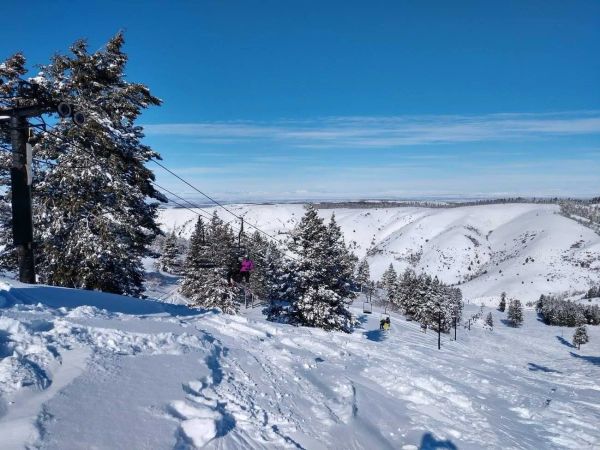
Kelly Canyon, Idaho, Adds Snowmaking, a Bigger Terrain Park and More Parking for 2026-27
Kelly Canyon had a rough 2025-26, and the Idaho resort has spent the summer making sure it doesn’t repeat. Snowmaking now reaches the top of Goldrush, the terrain park is doubling in size with a stereo system, lights and a snack shack, and the car park is getting bigger. Grooming is stepping up too. Target opening is December 4, conditions permitting.
9 Oct 2026
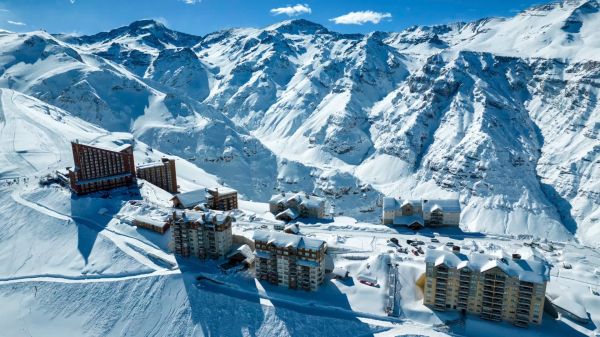
Valle Nevado Extends Season to November 8 After 108 cm in 48 Hours
Winter was meant to be winding down in Chile. Then Valle Nevado took 108 cm in 48 hours in early October, and the resort has pushed its closing date out to November 8 - its latest in 38 years of operation. That makes 143 days of skiing since opening day on June 19, with 690 cm banked for the season. Only part of the mountain is running while the storm settles, so check the mountain report before you plan a trip.
9 Oct 2026
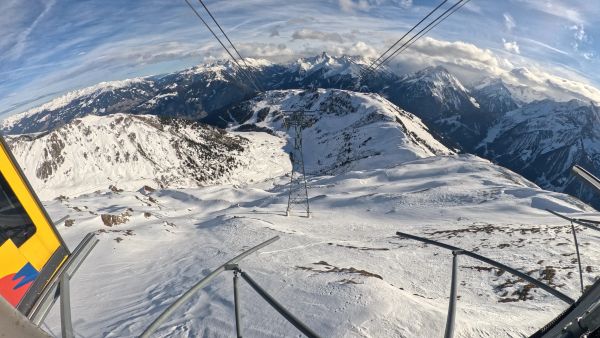
Alps Snow Forecast: Cold Front Brings Thursday Snow to the High Alps
The Alps look a lot more like winter today, for a day or so. A cold front is moving west to east, dropping up to 35 cm on high glaciers and peaks, with snow levels falling to around 1,500-1,800 m at times. Don’t plan a trip around it: mid-elevation snow will be thin and wet, every area is closed bar a limited Sölden glacier opening tomorrow, and warmer weather returns by Monday.
8 Oct 2026
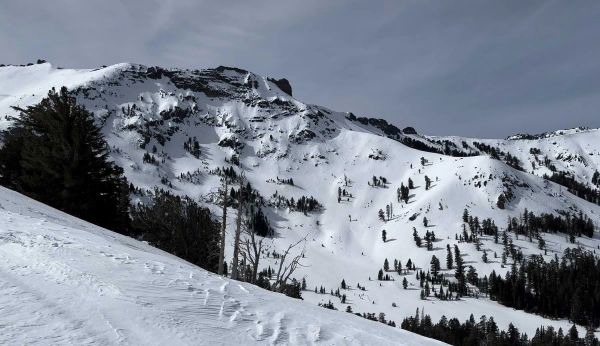
California Ski Resort Opening Dates 2026-27: Mammoth Leads, Tahoe Follows
Mammoth Mountain is first up in California, targeting Friday 13 November after a dusting of September snow. Heavenly and Northstar follow on 20 November, Palisades Tahoe on Wednesday 25 November and Sugar Bowl on 27 November, with Kirkwood on 4 December and June Mountain on 19 December. Plenty of smaller areas have no date yet. A super El Niño favours the Sierra, but a warmer storm track is the catch.
7 Oct 2026
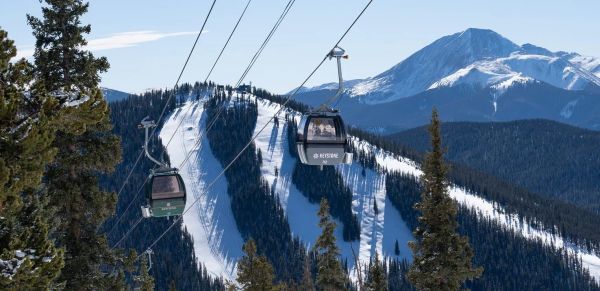
Colorado Ski Resort Opening Dates 2026-27: A-Basin and Keystone Race to Be First
Arapahoe Basin, Keystone and Winter Park are all chasing an October start, though none has a firm date yet. The first dated openers are Breckenridge and Copper on Friday 6 November, then Vail on 13 November, with most of the rest bunched around US Thanksgiving. Hesperus did not open at all last season. A super El Niño offers hope but no guarantee, and forecasters say the southern mountains have the better odds.
5 Oct 2026
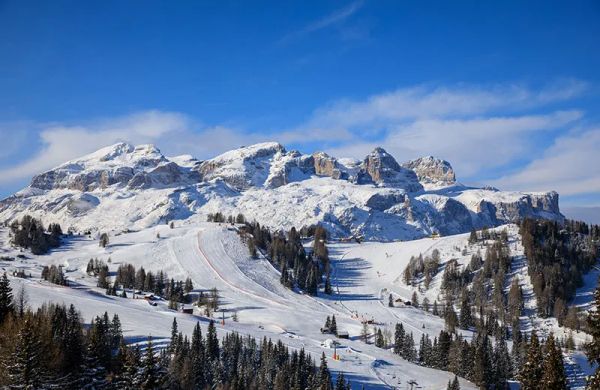
Dolomiti Superski 2026-27: Four New Gondolas, New Reservoirs and an €89 Peak Day Pass
Dolomiti Superski is spending around €100 million across its 12 areas before winter. Kronplatz gets a new 10-passenger gondola with a middle station, 3 Zinnen gets Helmissimo, and Val di Fassa swaps a chairlift for a gondola above Col Valvacin. New water-storage basins and upgraded snowmaking follow, and construction has started on the San Martino to Passo Rolle link. A peak adult day pass is €89.
4 Oct 2026
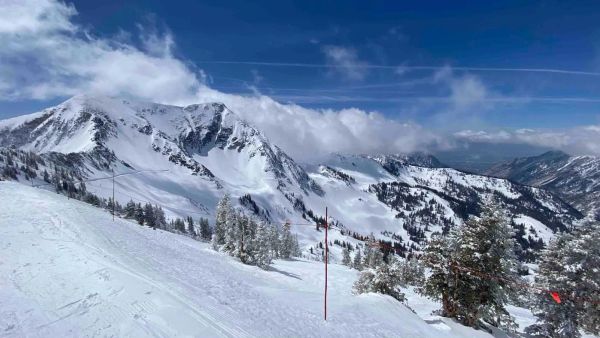
Utah Ski Resort Opening Dates 2026-27: Brian Head First, Eagle Point Out
Brian Head is targeting 6 November, though last year it aimed for 7 November and did not open until the 25th. Park City, Alta and Solitude are pencilled in for 20 November, Snowbird and Snowbasin for 27 November, and Deer Valley for 5 December. Eagle Point will stay closed after the Cottonwood Fire. A super El Niño is forecast, but the big snow is not expected until January.
4 Oct 2026
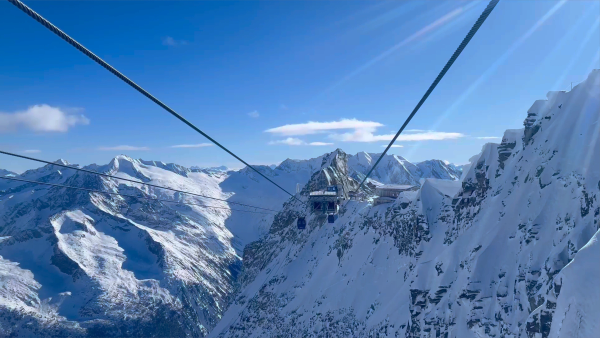
Hintertux Glacier Opens for 2026-27 With 12 Kilometres of Piste
Hintertux became Austria's second glacier to open for 2026-27 on Friday 2 October, after the Pitztal Glacier. Twelve kilometres of piste are running around the Olperer and Gefrorene Wand, served by one gondola and two drag lifts, with the Betterpark also open. Lifts officially run 8:15 am to 4:30 pm, but skiing stops at 2 pm for now.
4 Oct 2026
Adelboden/Lenk Lift System
The main Adelboden-Lenk sector operates 16 lifts comprising one gondola, five six-seat chairs, four quad chairs, one double chair, three T-bars and two surface lifts. Access from Adelboden village requires three sequential gondola sections: Adelboden to Oey, Oey to Bergläger, then Bergläger to Sillerenbühl at 1,974 metres, with the journey consuming roughly 30 minutes. From Lenk, a 10-person gondola installed in 2014-15 represents the first such installation in the Bernese Oberland, ascending from Rothenbach at 1,072 metres into the main ski network. A free ski bus runs from Adelboden centre to Geils at 1,707 metres, bypassing the gondola sequence for mid-mountain access.
The Laveybahn six-seat chairlift delivers heated seats and weather protection covers, serving terrain up to 2,200 metres elevation. Stand-Xpress I and II, 10-person gondolas operational since 2014, provide rapid ascent on the Lenk side between Metsch and Metschstand at 2,103 metres. Most modern chairlifts incorporate detachable grips and weather protection, whilst older surface lifts persist in beginner zones and outlying sectors. Uphill capacity reaches 33,120 persons per hour across the broader regional network, though official statistics counting 72 lifts include distant Kandersteg installations with limited practical connection.
From Sillerenbühl, chairlifts radiate to Luegli at 2,138 metres, Lavey at 2,200 metres and across to Hahnenmoos at 1,957 metres, where the terrain opens toward Lenk. The Aebi chairlift and connecting gondola to Hahnenmoos create circulation loops through varied aspects. Geils mid-station functions as a hub with children's facilities and three major lifts, accessible by gondola or road. Surface lifts concentrate at beginner zones near Geils and scattered practice areas, with T-bars handling training terrain gradients.
Infrastructure investment replaced the antiquated Oey gondola sections, though these gondolas approaching 35 years of service still operate as of 2025-26. The Engstligenalp cable car, separate from the main network, extends operations into early May at 2,000 metres elevation. Bottlenecks occur during peak periods on the Adelboden access gondolas, with queues forming at Oey base station. High-speed chairlifts on the Lenk side contrast with slower installations around Adelboden, reflecting staged development across different ownership entities operating the five ski areas within the regional pass zone.
16lifts across 6 types
1
Gondola
5
6-Person Chairs
4
Quad Chairs
1
Double Chair
3
T-Bars
2
Surface Lifts
Adelboden/Lenk lift system
Adelboden/Lenk is served by 16 lifts, listed here by type. Check which lifts are turning against the live conditions before you plan your first laps - early lifts and high-speed chairs get you to the best snow fastest.
More Adelboden/Lenk intelligence: trail map, snow report, webcams, resort overview.