
Crans Montana
140km of south-facing pistes from 1,510-2,927m. Epic Pass access, Plaine Morte glacier, 2027 World Championships host.
Season 2026 - 2027
Opens
28 Nov 2026
Closes
4 Apr 2027
Days open
127
Annual snow
5m
The Overview
Michael Fulton
Melbourne-based skier and snowboarder with 50+ resorts across 5 continents. Specialises in Australian resorts and international resort comparisons.
Crans-Montana operates across 1,417 vertical metres, from a plateau base at 1,510 metres to the Pointe de la Plaine Morte at 2,927 metres. The ski area covers 140 kilometres of pistes across 41 marked runs, with 39 per cent beginner terrain, 50 per cent intermediate, 7 per cent advanced and 4 per cent expert. The resort sits in the Valais region on a south-facing plateau above the town of Sierre, with unobstructed views from the Matterhorn to Mont Blanc. Crans-Montana joined the Epic Pass network in March 2024 when Vail Resorts acquired the lift operations, and the 2025-26 season runs from 6 December to 20 April.
Terrain tilts decisively towards beginners and intermediates, with wide groomed cruisers dominating the ski area. The Plaine Morte glacier, a flat expanse at nearly 3,000 metres, offers 6 kilometres of cross-country trails and summer skiing access. Intermediate runs fan out from mid-mountain hubs at Cry d'Er and Les Violettes, whilst advanced skiers find steeper pitches on the Nationale piste, which hosts Women's World Cup races and will feature at the 2027 Alpine World Ski Championships from 1 to 14 February. The resort's snowpark at Cry d'Er includes an Olympic half-pipe with 7-metre walls, the only one in French-speaking Switzerland.
The twin villages of Crans and Montana merge across the plateau, with Crans offering the more upscale boutiques and hotels. Free shuttle buses link the villages and lift bases throughout the day. The plateau's southern exposure delivers exceptional sunshine hours, though lower slopes can soften in warm spells. On-mountain facilities include 90 restaurants ranging from mountain huts to fine dining, with Cry d'Er serving as the main meeting point where lifts from both villages converge.
Crans-Montana earned the title of best ski area in Western Switzerland in 2023. Epic Pass holders receive unlimited access throughout the season, whilst regional pass holders can access the resort through dynamic pricing that drops lift tickets as low as CHF 69 when booked in advance. The resort suits families and intermediate skiers seeking reliable conditions and long cruising runs, whilst advanced skiers and freeriders will find the terrain less extensive than neighbouring Verbier. Crans-Montana hosted the 1987 World Championships and regularly features on the World Cup calendar for women's speed events.
1417m
Vertical
41
Runs
140 km
Piste
5m
Annual snow
Epic Pass
Pass
The Terrain
41 runs across 140 km of piste
Crans-Montana stretches 140 kilometres of piste across 41 runs on a broad, sunny Valais plateau, with 1,417 metres of vertical between 1,510 and 2,927 metres. The terrain is gentle on the whole: 39% beginner, 50% intermediate, 7% advanced and 4% expert, and the area receives about 4.8 metres of snow a year. Wide, groomed runs fan out from several mid-mountain bases, leaving plenty of space for skiers of mixed ability to share the day. Aspect matters here, because the south-facing slopes soak up the sun, which makes the lower runs softer on warm afternoons.
The Plaine Morte glacier is the high point, with a long red run dropping about 1,400 vertical metres to Les Barzettes. The Piste Nationale, the steep World Cup course, is the main challenge for advanced skiers and is due to host the 2027 Alpine World Ski Championships. Cry d'Er is a busy meeting point with a snowpark, Les Violettes offers steeper reds, and Aminona is quieter with trees and some off-piste potential after storms. Strong freeriders will find the terrain less extensive than at larger neighbours. It is well suited to families, cruisers and intermediates looking for reliable sunshine.
Terrain split
41
runs
41 runs across 4 grades
Beginner16 runs · 39%
Intermediate21 runs · 50%
Advanced3 runs · 7%
Expert2 runs · 4%
Time it right
When to visit Crans Montana
The 2025-26 season opened on 6 December 2025 and runs until 20 April 2026, though the full ski area typically opens progressively through December depending on snowfall. Usual opening falls in late November, with closure in late April giving a season length of approximately five months. The resort opened slightly ahead of schedule in 2025-26 after early snowfall, with progressive lift and piste openings through to full operations by late December. Historical season dates show consistency, with mid-November to mid-April representing the typical operational window.
Annual snowfall averages 4.8 metres across the ski area, supplemented by 200 snow cannons covering 17 kilometres of piste. The Plaine Morte glacier at 2,927 metres provides snow security at altitude, with skiing possible year-round on limited terrain. Valais sits in the rain shadow of major Alpine peaks, resulting in lower precipitation than many Swiss resorts but higher sunshine hours. Lower slopes at 1,500 metres can struggle in warm periods due to the southern exposure, though altitude variation allows skiers to chase better conditions higher up.
January through March delivers optimal conditions, with February historically the snowiest month and mid-December seeing peak weekly snowfall of approximately 43 centimetres. Spring skiing extends into April with firm morning snow and softer afternoon conditions. Quieter periods fall outside school holidays, particularly in early December and March. The resort introduced dynamic pricing that rewards advance bookings and off-peak visits, with adult day tickets ranging from CHF 69 to CHF 89 depending on demand.
The resort calendar includes Women's World Cup races most seasons, typically in February or March on the Nationale and Mont Lachaux pistes. The 2027 FIS Alpine World Ski Championships from 1 to 14 February will bring speed and technical events to Crans-Montana for the first time since the 1987 championships. The Grand Prix Migros finale closes the 2026 season in April. Special programmes include Sunrise First Tracks on Sundays, early-morning glacier breakfasts at Plaine Morte, and Silver Head Days offering discounted skiing and lunch for over-65s on Tuesdays through Thursdays.
Season 2026 - 2027
28 Nov 2026
Opens
4 Apr 2027
Closes
127
Days open
5 m
Annual snow
Getting there
Getting to Crans Montana, and where to stay
Crans-Montana occupies a south-facing plateau at 1,500 metres in the Valais canton of French-speaking Switzerland, directly above the town of Sierre in the Rhône Valley. The resort formed through the merger of neighbouring villages Crans, Montana, Aminona, Chermignon, Mollens and Randogne, spreading across six municipalities. The Wildstrubel massif rises to the north, whilst the Plaine Morte glacier forms the ski area's high point at 2,927 metres. The plateau offers unobstructed views south across the Rhône Valley to the Valais Alps, with the Matterhorn, Weisshorn, Mont Blanc and Grand Combin visible on clear days.
Sierre sits 15 kilometres downhill from the resort plateau, serving as the main valley gateway with rail connections and funicular access. The twin resort villages of Crans and Montana lie 1 to 2 kilometres apart, connected by free shuttle buses. Geneva sits 171 kilometres west, Lausanne approximately 110 kilometres, whilst Brig lies to the east along the main Rhône Valley route. The resort sits in the Sierre district of Valais, a predominantly French-speaking canton known for terraced vineyards and Alpine tourism.
Road access follows the A9 motorway through the Rhône Valley to Sierre, then a winding 14-kilometre mountain road climbs to the plateau. Drive times from Geneva average 2 hours 30 minutes covering 185 kilometres, whilst Zürich lies 3 hours 45 minutes distant via 315 kilometres of mostly motorway. The Lötschberg car-carrying rail tunnel from Kandersteg to Goppenstein provides an alternative route from the Bernese Oberland. Swiss motorway use requires a vignette valid for one calendar year. The final climb from Sierre features hairpin bends unsuitable for inexperienced mountain drivers, though the road remains open year-round with winter tyres or chains required in snow.
Geneva Airport (GVA) sits 185 kilometres away with direct InterRegio trains to Sierre departing every 30 minutes, taking 2 hours 30 minutes. Zürich Airport lies 315 kilometres distant with journey times near 3 hours via rail through Visp. Milan Malpensa sits 206 kilometres south with 3 hour 30 minute transfer times. Sion Airport, 37 kilometres east, handles private flights only. The SMC funicular climbs from Sierre railway station to Montana Gare in 12 minutes, with a 5-minute walk or shuttle connecting the station to the funicular base. Buses run from Sierre to the plateau in 45 minutes for those avoiding the funicular.
Where to stay
Search all stays →Hotels and lodges near Crans Montana, powered by Stay22.
Latest News
From the SnowStash desk
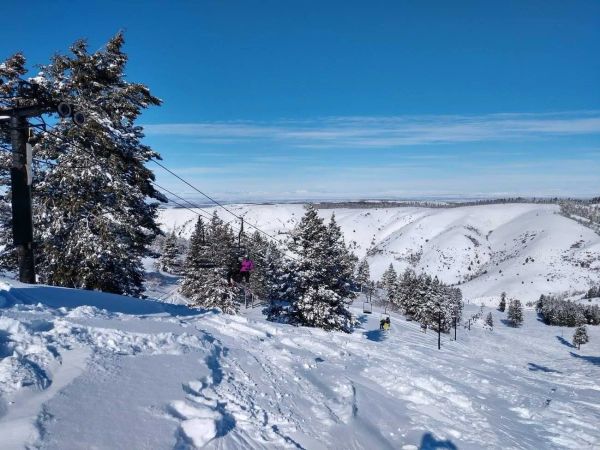
Kelly Canyon, Idaho, Adds Snowmaking, a Bigger Terrain Park and More Parking for 2026-27
Kelly Canyon had a rough 2025-26, and the Idaho resort has spent the summer making sure it doesn’t repeat. Snowmaking now reaches the top of Goldrush, the terrain park is doubling in size with a stereo system, lights and a snack shack, and the car park is getting bigger. Grooming is stepping up too. Target opening is December 4, conditions permitting.
9 Oct 2026
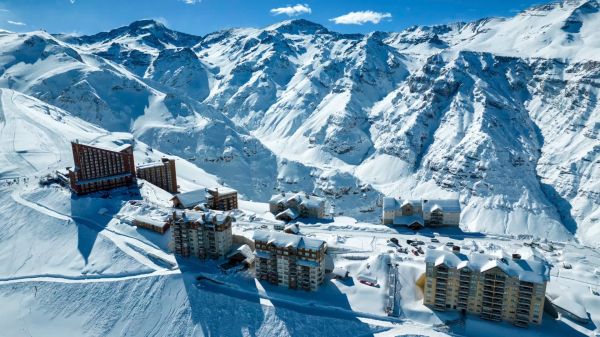
Valle Nevado Extends Season to November 8 After 108 cm in 48 Hours
Winter was meant to be winding down in Chile. Then Valle Nevado took 108 cm in 48 hours in early October, and the resort has pushed its closing date out to November 8 - its latest in 38 years of operation. That makes 143 days of skiing since opening day on June 19, with 690 cm banked for the season. Only part of the mountain is running while the storm settles, so check the mountain report before you plan a trip.
9 Oct 2026
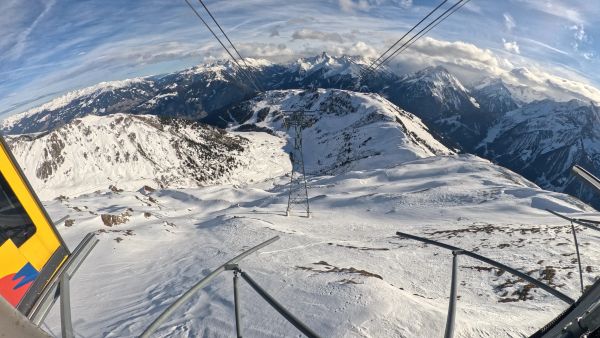
Alps Snow Forecast: Cold Front Brings Thursday Snow to the High Alps
The Alps look a lot more like winter today, for a day or so. A cold front is moving west to east, dropping up to 35 cm on high glaciers and peaks, with snow levels falling to around 1,500-1,800 m at times. Don’t plan a trip around it: mid-elevation snow will be thin and wet, every area is closed bar a limited Sölden glacier opening tomorrow, and warmer weather returns by Monday.
8 Oct 2026
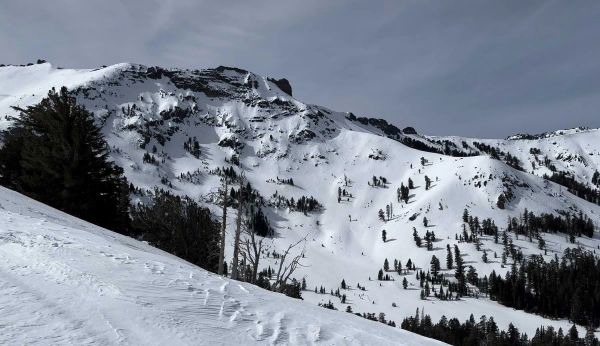
California Ski Resort Opening Dates 2026-27: Mammoth Leads, Tahoe Follows
Mammoth Mountain is first up in California, targeting Friday 13 November after a dusting of September snow. Heavenly and Northstar follow on 20 November, Palisades Tahoe on Wednesday 25 November and Sugar Bowl on 27 November, with Kirkwood on 4 December and June Mountain on 19 December. Plenty of smaller areas have no date yet. A super El Niño favours the Sierra, but a warmer storm track is the catch.
7 Oct 2026
Colorado Ski Resort Opening Dates 2026-27: A-Basin and Keystone Race to Be First
Arapahoe Basin, Keystone and Winter Park are all chasing an October start, though none has a firm date yet. The first dated openers are Breckenridge and Copper on Friday 6 November, then Vail on 13 November, with most of the rest bunched around US Thanksgiving. Hesperus did not open at all last season. A super El Niño offers hope but no guarantee, and forecasters say the southern mountains have the better odds.
5 Oct 2026
Dolomiti Superski 2026-27: Four New Gondolas, New Reservoirs and an €89 Peak Day Pass
Dolomiti Superski is spending around €100 million across its 12 areas before winter. Kronplatz gets a new 10-passenger gondola with a middle station, 3 Zinnen gets Helmissimo, and Val di Fassa swaps a chairlift for a gondola above Col Valvacin. New water-storage basins and upgraded snowmaking follow, and construction has started on the San Martino to Passo Rolle link. A peak adult day pass is €89.
4 Oct 2026
Utah Ski Resort Opening Dates 2026-27: Brian Head First, Eagle Point Out
Brian Head is targeting 6 November, though last year it aimed for 7 November and did not open until the 25th. Park City, Alta and Solitude are pencilled in for 20 November, Snowbird and Snowbasin for 27 November, and Deer Valley for 5 December. Eagle Point will stay closed after the Cottonwood Fire. A super El Niño is forecast, but the big snow is not expected until January.
4 Oct 2026
Hintertux Glacier Opens for 2026-27 With 12 Kilometres of Piste
Hintertux became Austria's second glacier to open for 2026-27 on Friday 2 October, after the Pitztal Glacier. Twelve kilometres of piste are running around the Olperer and Gefrorene Wand, served by one gondola and two drag lifts, with the Betterpark also open. Lifts officially run 8:15 am to 4:30 pm, but skiing stops at 2 pm for now.
4 Oct 2026
Crans Montana Lift System
The resort operates 23 lifts comprising four gondolas, three six-seat chairlifts, three quad chairlifts, one funicular, eight T-bars and four surface lifts. A wind-stable funitel with two parallel haul ropes transports skiers from Les Violettes to the Plaine Morte glacier at 2,927 metres, climbing up to 150 metres above the ground in exposed sections. The funicular from Sierre to Montana village provides valley access in 12 minutes, connecting directly to the Swiss rail network. Three main gondolas at Crans, Montana and Barzettes provide plateau access, with the 8-seat Crans-Merbé-Cry d'Er gondola and 10-seat Montana-Arnouva gondola serving as the primary uphill arteries.
The Nationale Express six-seat chairlift, installed in 2007-08, serves the steep World Cup piste and halved journey times to the top of the Nationale run. The Bellalui quad chairlift replaced an older cable car and runs beside the mountain restaurant below Pic Bellalui, moving 2,400 skiers per hour over nearly a mile of distance. High-speed detachable chairlifts at Toula, Tsa and Arnouva-Cry d'Er distribute skiers across intermediate zones. Surface lifts and magic carpets concentrate in beginner areas near the golf course and at Cry d'Er's snow gardens.
Three entry points spread across the plateau mean skiers can access different sectors without bottlenecks. The Violettes Express gondola from Les Barzettes provides direct glacier access, whilst the Montana side connects through Arnouva. Lifts operate from approximately 8:30am to 4:30pm, with uphill capacity rated at 36,520 skiers per hour across the system. The resort invested CHF 4 million in modernising the Nationale piste infrastructure, and new energy-efficient snowmaking equipment was installed in the Verdets area for 2025-26.
A planned 8-seat gondola from Aminona to Colombire and Grangettes would unlock 1,000 metres of off-piste vertical, though construction timelines remain uncertain after years of delays. The existing lift network efficiently serves the prepared piste network, with modern installations replacing older equipment over the past decade. Most chairlifts lack weather protection hoods, a design choice reflecting the resort's high sunshine hours. Priority lane passes cost CHF 100 per day for those seeking faster lift access during peak periods.
23lifts across 6 types
1
Train
4
Gondolas
3
6-Person Chairs
3
Quad Chairs
8
T-Bars
4
Surface Lifts
Crans Montana lift system
Crans Montana is served by 23 lifts, listed here by type. Check which lifts are turning against the live conditions before you plan your first laps - early lifts and high-speed chairs get you to the best snow fastest.
More Crans Montana intelligence: trail map, snow report, webcams, resort overview.