
Davos
266km of piste, 2034m vertical, 6 ski areas from Parsenn to Pischa freeride terrain in Switzerland's highest town.
Season 2026 - 2027
Opens
13 Nov 2026
Closes
4 Apr 2027
Days open
142
Annual snow
7m
The Overview
Michael Fulton
Melbourne-based skier and snowboarder with 50+ resorts across 5 continents. Specialises in Australian resorts and international resort comparisons.
Davos sprawls across 266 kilometres of piste between 810 and 2844 metres in the Prättigau/Davos Region of Graubünden, Switzerland. The resort comprises six distinct ski areas - Parsenn, Jakobshorn, Rinerhorn, Pischa, Madrisa and Schatzalp - spread across both sides of the Landwasser valley, connected by 53 lifts and free regional buses. 2034 metres of vertical drop delivers everything from the 12-kilometre Parsenn descent to Küblis, one of Europe's longest pistes, to the dedicated freeride terrain of Pischa where no runs are groomed.
The terrain splits 31 per cent beginner, 49 per cent intermediate, 15 per cent advanced and 5 per cent expert across 70 marked runs, with vast off-piste zones adding depth for strong skiers. Parsenn anchors the system as the largest sector with 97 kilometres of runs and direct connections to neighbouring Klosters via the Gotschnabahn. Jakobshorn on the valley's south side hosts a 120-metre superpipe and the JatzPark terrain park at 2300 metres, drawing snowboarders since the 1980s. Rinerhorn offers quiet intermediate cruising, whilst family-friendly Madrisa near Klosters provides sunny slopes and a 1478-metre vertical descent.
Davos operates as Switzerland's highest town at 1560 metres rather than a purpose-built ski village, with two main centres - Davos Dorf and Davos Platz - offering urban infrastructure, the Kirchner Museum, indoor pools and conference facilities. The resort hosts the World Economic Forum each January and the Spengler Cup ice hockey tournament every December. Lift bases scatter across the valley floor requiring trains and buses to move between sectors, though all transport runs free with a valid lift pass.
The Davos Klosters Mountains regional pass covers five of six sectors for CHF 80 peak-day adult tickets, with separate single-mountain options from CHF 45 for Parsenn or Jakobshorn alone. An annual TopCard season pass costs CHF 1550. The resort receives 423 centimetres of snow annually with reliable coverage from mid-November through mid-April at elevations reaching 2844 metres at Weissfluhgipfel. Davos suits intermediates seeking mileage, freeriders chasing untracked powder on Pischa, and families wanting comprehensive facilities beyond skiing.
2034m
Vertical
70
Runs
266 km
Piste
7m
Annual snow
The Terrain
70 runs across 266 km of piste
Davos is not one mountain but six, spread across the Landwasser valley with 266 kilometres of piste and 70 runs. Vertical reaches an impressive 2,034 metres, from 810 up to 2,844 metres. Terrain is balanced: 31% beginner, 49% intermediate, 15% advanced and 5% expert, with about 7 metres of snow in a typical year. Parsenn, Jakobshorn, Rinerhorn, Pischa, Madrisa and Schatzalp-Strela each have their own feel, so a week here is like skiing a few different resorts. Free buses and trains connect the sectors, though getting around does take planning and time on the road.
Parsenn is the largest sector, and its 12-kilometre run from Weissfluhgipfel to Küblis is among the longest descents in the Alps. Jakobshorn leans towards freestyle, with the JatzPark and a superpipe, while Pischa is a dedicated freeride mountain where the pistes are left ungroomed. Rinerhorn and Schatzalp-Strela suit families and relaxed intermediates, and Madrisa, on the Klosters side, is gentle and sunny. Strong skiers and freeriders should hire a guide for the off-piste on Parsenn and Pischa. A sound pick for groups of mixed abilities who want variety over several days.
Terrain split
70
runs
70 runs across 4 grades
Beginner22 runs · 31%
Intermediate34 runs · 49%
Advanced11 runs · 15%
Expert4 runs · 5%
Time it right
When to visit Davos
The 2025-26 season runs 14 November 2025 through 20 April 2026, delivering a 157-day operating window. Davos typically opens earlier and closes later than many European resorts due to its high base elevation of 1560 metres and summit reaching 2844 metres. Season length averages five months with snow reliability particularly strong from December through March, when over 80 per cent of terrain sits above the 2000-metre snow-sure threshold.
Davos receives 423 centimetres of average annual snowfall, with January historically the snowiest month delivering 101 centimetres, followed by February's 74 centimetres and March's 75 centimetres. November brings 41 centimetres to build early-season coverage, whilst December adds 83 centimetres. Snowmaking covers 75 kilometres of piste - roughly 28 per cent of the network - concentrated on lower elevation runs and key links to ensure valley access throughout the season. Base depths typically range 100 to 300 centimetres at mid-mountain through peak winter.
Optimal timing centres on January through early March for deep powder and full terrain access, including the long valley descents to Küblis and Serneus that require sustained cold temperatures. December offers quieter slopes post-Christmas once the Spengler Cup crowds depart, whilst late March and April deliver spring corn snow conditions with extended daylight and terrace weather. Early season in November provides uncrowded skiing on upper Parsenn and Jakobshorn before Christmas crowds arrive.
Night skiing operates on a 2.5-kilometre section at Davos from 18:30 to 20:30 Monday through Friday, with Klosters adding 3.2 kilometres on Tuesday and Thursday evenings. The World Economic Forum occupies Davos each January, raising accommodation prices and crowds. The Parsenn Derby - Switzerland's oldest downhill race - runs annually, whilst Jakobshorn hosts international freestyle competitions. Parsenn offers sunrise first-tracks sessions before official opening for early risers seeking fresh corduroy.
Season 2026 - 2027
13 Nov 2026
Opens
4 Apr 2027
Closes
142
Days open
7 m
Annual snow
Getting there
Getting to Davos, and where to stay
Davos sits at 1560 metres in the Landwasser valley within the Prättigau/Davos Region of Graubünden canton in eastern Switzerland, making it the country's highest town. The municipality sprawls along the valley floor between the Plessur and Albula mountain ranges, with ski terrain rising on both north and south-facing slopes. The town divides into six districts - Davos Dorf, Davos Platz, Davos Frauenkirch, Davos Glaris, Davos Monstein and Davos Wiesen - with a permanent population of 10,832 residents. Neighbouring Klosters lies 10 kilometres north down the valley, connected via the Wolfgang Pass and forming the extended Davos Klosters ski area.
Chur, Graubünden's capital, sits 50 kilometres northwest as the nearest major city. Landquart marks the valley junction point 35 kilometres north where the Prättigau meets the Rhine valley road network. The resort lies 154 kilometres southeast of Zürich, 239 kilometres from Basel and 175 kilometres from Innsbruck across the Austrian border. The Flüela Pass road east leads to the Engadin valley and St Moritz when open, whilst the Vereina rail tunnel through the mountains provides year-round car transport to the Lower Engadine.
Road access follows the A13 motorway from Zürich direction Chur, exiting at Landquart onto Cantonal Road 28 through the Prättigau valley to Davos - approximately two hours driving time covering 154 kilometres. Swiss motorway vignettes cost CHF 40 and must be displayed. Snow chains may be necessary from Klosters upward during heavy snowfall for two-wheel-drive vehicles. Parking concentrates in paid garages throughout Davos Dorf and Platz, with some hotels offering dedicated spaces.
Zürich Airport sits 154 kilometres northwest as the primary international gateway. Trains depart hourly from beneath the terminal, requiring two changes at Zürich Hauptbahnhof and Landquart to reach Davos Platz via the Rhaetian Railway in approximately 2 hours 40 minutes to 3 hours 11 minutes. Friedrichshafen Airport across the German border lies 153 kilometres distant, whilst St Gallen-Altenrhein sits 89 minutes away. The scenic Rhaetian Railway journey passes through mountain terrain with regular service to Davos Dorf and Davos Platz stations, with onward connections to Klosters.
Where to stay
Search all stays →Hotels and lodges near Davos, powered by Stay22.
Latest News
From the SnowStash desk
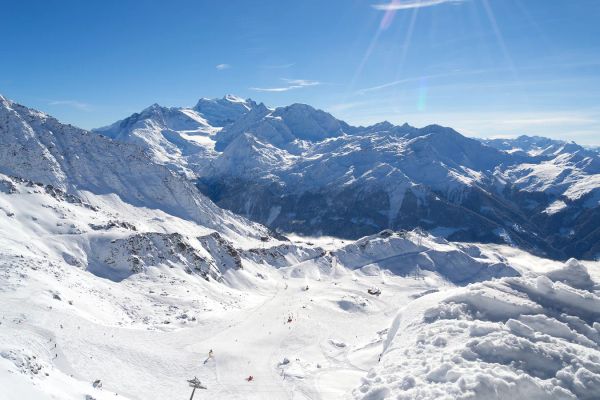
Alps Snow Forecast: Up to 64 cm Headed for the High Glaciers as the Snow Line Drops
The Alps are about to swap mild, sunny October weather for something far more wintry. A cold front arrives Tuesday, and SnowStash forecasts have Monterosa Ski out in front with 64 cm over 14 days, ahead of Blatten Belalp (55 cm) and Verbier (43 cm). The snow line should fall below 2000 metres by Wednesday night, and glaciers across Switzerland, Italy and Austria are in line for the best of it. The wind will have a say too.
20 Oct 2026
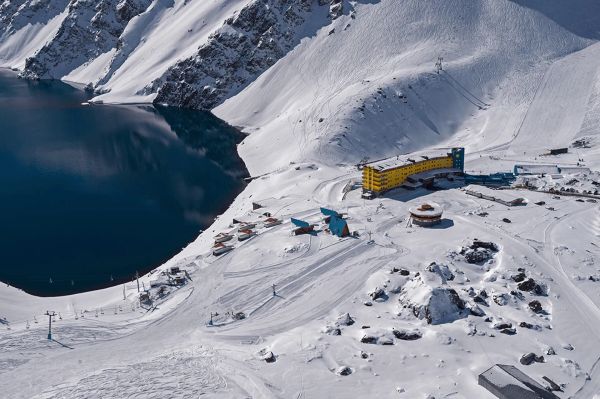
Four Dead After Avalanche Near Ski Portillo in Chile
A large avalanche struck near Laguna del Inca adjacent to Ski Portillo on Saturday afternoon, killing four people and injuring four others. The group were day visitors mountaineering in the backcountry after reportedly being warned about elevated avalanche risk by resort staff.
18 Oct 2026
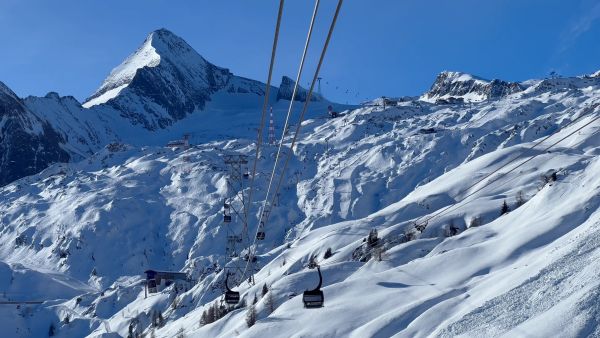
Europe Ski Resorts Open Now: What Is Skiable in Mid-October 2026
Europe’s ski season is open, technically. After a record-warm summer, glaciers in Austria, Switzerland and Italy are running a few pistes apiece, Sölden, Stubai and Kitzsteinhorn started late, Titlis has pushed back to 24 October, and Zermatt reopens a few lifts on 14 October after more than two months shut. Finland’s Levi and Ruka are skiing on stored snow. Here is what is open, and what you actually get at each.
14 Oct 2026
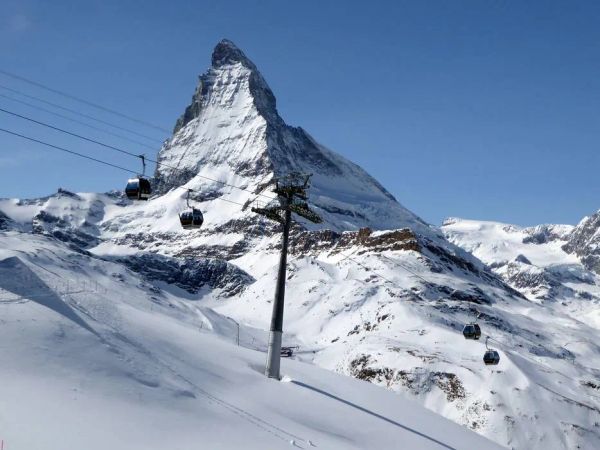
Zermatt Plans World Cup Downhill Return on the Gornergrat for 2028
Zermatt is having another crack at a World Cup downhill, and this time nobody has to cross a border. Around 13 million Swiss francs is going into rebuilding the Gornergrat piste, including a jump fed by a roughly 300-metre in-run across the roof of the Gornergrat Railway gallery, with the Matterhorn lined up behind it for the TV cameras. First men’s race is pencilled in for March 2028, pending FIS homologation.
14 Oct 2026
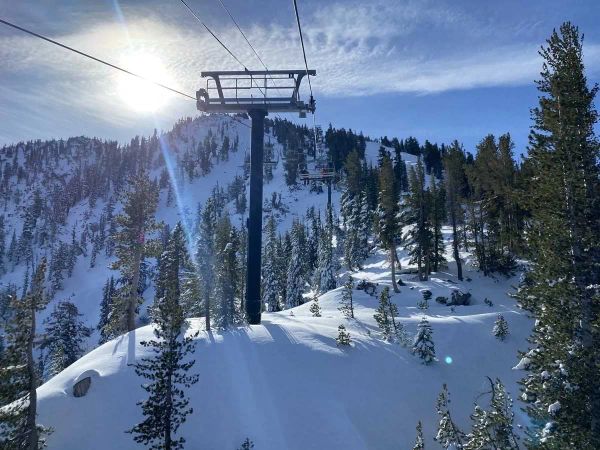
Mt. Rose Begins Snowmaking for the 2026-27 Season at Lake Tahoe
Lake Tahoe’s highest base elevation is paying off early: Mt. Rose has started making snow for 2026-27 after the first flurries and a cold snap. The Nevada resort is backing it with nearly US$2 million in upgrades, including a replacement snowmaking main line, a new PistenBully groomer and restraint bars on every lift. Opening day is yet to be confirmed, though Heavenly and Northstar are already eyeing 20 November.
13 Oct 2026
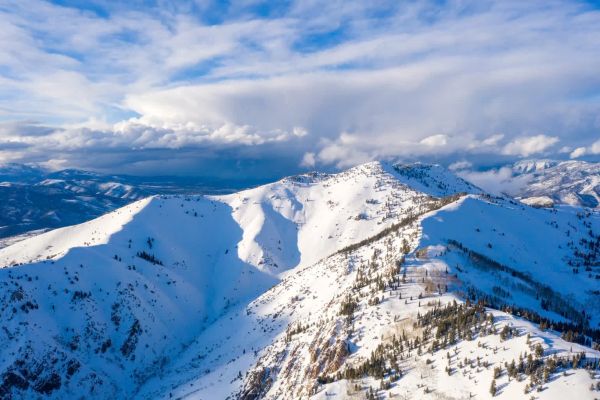
Utah Ski Resorts 2026-27: What’s New at Alta, Deer Valley, Powder Mountain and More
Utah is still building flat out. For 2026-27, Powder Mountain opens a steep new Skytrac chair into more than 1,000 acres of advanced terrain, Deer Valley adds 200 acres on Hail Peak, Sundance gets a new quad and Park City adds a gondola from its new parking structure. Snowmaking is expanding almost everywhere, Eagle Point stays closed after the Cottonwood Fire, and the 2034 Games are setting the pace. Here’s what’s new, resort by resort.
13 Oct 2026
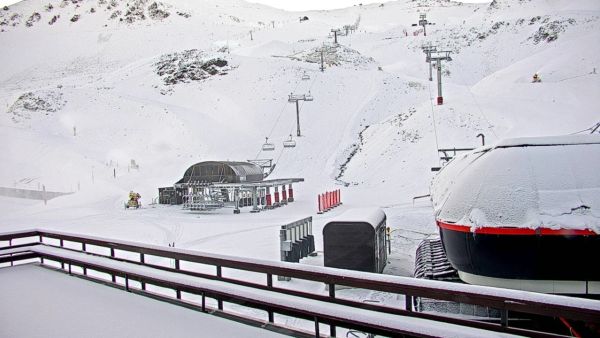
Mt Hutt Invests NZ$12 Million in Base Area, Tripling Its Sun Deck
Mt Hutt is getting busier, and its base lodge is about to catch up. NZ$12 million goes into a heated sun deck roughly three times the current size (430 m² to 1,300 m²), plus a new toilet block, heated steps down to snow level, extra storage and a new food and beverage outlet. Building starts after the 2026 season, with everything due for winter 2027.
11 Oct 2026

Vermont Ski Resort Opening Dates 2026-27: Few Dates Set, Killington Waits on the Cold
Vermont's season is slow to take shape. Stratton is tentatively targeting 18 November and Sugarbush 21 November, while Pico has Friday 11 December on the calendar. Killington never sets a date and opens when the snowmaking allows, and Vail Resorts has yet to name days for Stowe, Okemo and Mount Snow. The forecasts disagree about snow, and the main El Niño worry for the Green Mountains is warmth.
9 Oct 2026
Davos Lift Tickets
Davos lift tickets & passes
Opening day for the winter 2026 - 2027 season is scheduled for Nov 13, 2026 (subject to change). Lift tickets at Davos typically go on sale well before the start of the ski season.
Day passes start from CHF 24, with peak rates up to CHF 200.
9 pass options
Single-day passes
Adult 18–99
Adult Regional Pass
CHF 60up to CHF 80 peak
Full day regional pass for Davos Klosters Mountains including Gotschna, Jakobshorn, Rinerhorn and Madrisa. Access to 300km of slopes in world's largest alpine ski area.
Buy passYouth 13–17
Teenager Regional Pass
CHF 42up to CHF 56 peak
Teen daily ticket for Davos Klosters region covering ages 13-17. Experience varied terrain from Parsenn to Jakobshorn with excellent snowparks and freeriding.
Buy passChild 6–12
Child Regional Pass
CHF 24up to CHF 32 peak
Children's regional pass for Davos Klosters covering ages 6-12. Family-friendly skiing across multiple mountains with excellent ski schools and beginner areas.
Buy passChild 0–5
Child (5 & Under)
Free
Free skiing for children 5 and under at Davos Klosters when accompanied by parents. Kids enjoy complimentary access to world's largest alpine ski area.
Buy passAdult 18–99
Family Regional Pass
CHF 150up to CHF 200 peak
Family pass for Davos Klosters covering parents and children up to 18. Excellent value for families exploring World Economic Forum host town and surrounding mountains.
Buy passAdult 18–99
Parsenn Day Ticket
CHF 45up to CHF 58 peak
Single mountain access to Parsenn and Gotschna areas from Davos and Klosters. Perfect for classic skiing on legendary runs with historic cable car access.
Buy passAdult 18–99
Jakobshorn Day Ticket
CHF 45up to CHF 58 peak
Access to Jakobshorn and Rinerhorn areas from Davos. Popular with freeriders and snowboarders with excellent off-piste terrain and terrain parks.
Buy passSenior 64–99
Senior Discount (10%)
CHF 54up to CHF 72 peak
10% senior discount for men 65+ and women 64+ on regional passes 3+ days and weekday single/2-day passes at Davos Klosters Mountains.
Buy passSeason passes
Adult 18–99
TopCard Annual Pass
CHF 1,550
Annual TopCard providing access to Davos Klosters, Arosa Lenzerheide, and Laax - 700km of slopes with 116 transport systems plus Engelberg-Titlis benefits.
Buy passLift tickets FAQ
How much does a Davos day pass cost?
Davos day passes range from CHF 24 to CHF 200 depending on the date and advance booking.
Can I buy Davos lift tickets online?
Yes, you can purchase tickets directly from the resort website or at the resort ticket office.
Are there discounts for multi-day passes?
Yes, multi-day packages typically offer significant savings compared to individual day passes. The per-day cost decreases with longer stays.
What is included with a Davos lift ticket?
Full access to all lifts and trails at Davos, including mountain safety and patrol services.
What is the difference between Davos lift tickets and ski passes?
"Lift tickets" and "ski passes" refer to the same thing at Davos - your access to the mountain's lifts and trails for your chosen duration.
When should I buy Davos lift tickets for the best price?
Purchase tickets at least 7 days in advance for the best rates, and consider weekday visits for further savings over weekend rates.
Does Davos offer group discounts on lift tickets?
Group discounts are typically available for parties of 10 or more. Contact Davos directly for group booking information and rates.
How can I check current conditions before buying tickets?
Before purchasing, check the live snow report and mountain webcams to see current weather, snow conditions, and lift operations at Davos.
More Davos intelligence: snow report, webcams, resort overview.