
Grimentz/Zinal
1,330m vertical, 115km piste, 22 lifts linking Grimentz and Zinal. Northeast-facing terrain, Magic Pass access. Val d'Anniviers.
Season 2026 - 2027
Opens
28 Nov 2026
Closes
18 Apr 2027
Days open
141
Annual snow
4m
The Overview
Michael Fulton
Melbourne-based skier and snowboarder with 50+ resorts across 5 continents. Specialises in Australian resorts and international resort comparisons.
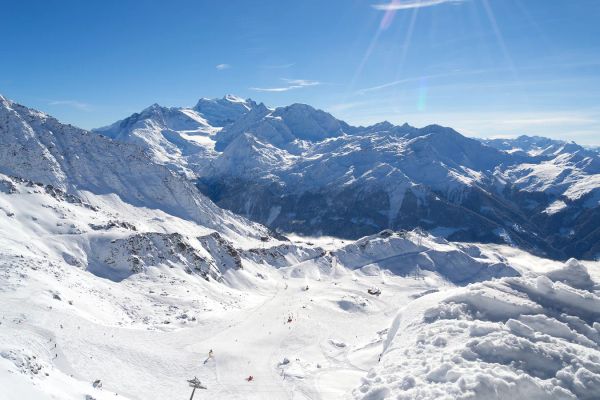
Grimentz/Zinal spans 1,570 to 2,900 metres across 115 kilometres of piste served by 22 lifts, with a vertical drop of 1,330 metres linking two authentic Valais villages 8 kilometres apart. The ski area opened in its current form in winter 2013/14 when a 3-kilometre aerial tramway connected the formerly separate sectors of Grimentz and Zinal. Terrain splits 23% beginner, 51% intermediate and 26% advanced across 40 runs, with northeast-facing slopes ensuring reliable snow coverage from early December through late April. Five 4,000-metre peaks form the Imperial Crown backdrop - Weisshorn at 4,505 metres, Zinalrothorn, Obergabelhorn, Dent Blanche and Bishorn.
Beginner slopes cluster around Bendolla on the Grimentz side and Sorebois at Zinal, whilst intermediates spread across both sectors on wide, groomed bowls between 2,000 and 2,900 metres. Advanced terrain includes the 1,300-metre Lona black run at Grimentz and the 7-kilometre Chamois descent linking Zinal to Grimentz village. The Gardes de Bordon freeride zone at Zinal covers 100 hectares and includes Switzerland's first avalanche training centre, opened in 2014. Off-piste routes into Vallon d'Orzival drop 1,500 vertical metres to the hamlet of St Jean.
Grimentz village sits at 1,572 metres with dark timber chalets dating from the 15th century, whilst Zinal at 1,675 metres retains a quieter mountain character beneath the Imperial Crown cirque. Lift queues remain rare even during February half-term, and seven mountain restaurants serve the ski area including Espace Weisshorn at 2,700 metres. Snowmaking covers 30% of terrain with 250 cannons ensuring coverage on lower sections. The area attracts freeride skiers seeking untracked powder days after storms.
Daily lift passes cost CHF 72, rising to CHF 82 at peak periods, with the Val d'Anniviers pass adding St-Luc-Chandolin and Vercorin for CHF 89. Magic Pass holders access the resort as part of a CHF 459 season ticket covering 80 Swiss areas. Free ski buses link Grimentz, Zinal and neighbouring valleys throughout winter. The resort suits confident intermediates, advanced skiers and powder seekers, though limited mellow terrain restricts absolute beginners.
1330m
Vertical
40
Runs
115 km
Piste
4m
Annual snow
The Terrain
40 runs across 115 km of piste
Grimentz-Zinal joins two Val d'Anniviers villages into 40 runs and 115 kilometres of piste, dropping 1,330 metres from 2,900 metres down to 1,570 metres. Intermediates account for 51%, with 26% advanced and 23% beginner, and no expert grading. Most of the skiing sits above the treeline on wide, rocky slopes. The two sectors were linked in 2014 by a 3-kilometre cable car, and gondolas, chairs and nine T-bars now connect the bowls beneath the Weisshorn and Zinalrothorn. Northeast-facing slopes help hold snow from early December.
The Lona black run is the main on-piste test at Grimentz, and the 7-kilometre Chamois descent links Zinal back to Grimentz village. Freeriders head for the Gardes de Bordon zone above Zinal, around 100 hectares that includes an avalanche training centre, and for routes towards Vallon d'Orzival and St Jean. Beginner slopes cluster around Bendolla and Sorebois. Confident intermediates and advanced skiers get the most from it, while those wanting only gentle slopes will find the beginner share limited. Free ski buses connect the neighbouring valleys.
Terrain split
40
runs
40 runs across 4 grades
Beginner9 runs · 23%
Intermediate20 runs · 51%
Advanced10 runs · 26%
Expert0 runs · 0%
Time it right
When to visit Grimentz/Zinal
The 2025/26 season runs 7 December 2025 through 21 April 2026, with weekend operations potentially starting mid-November in favourable snow conditions. Bendolla and Sorebois sectors typically open weekends from 15 November, transitioning to daily operations by early December. The season extends 19-20 weeks depending on snowpack, closing in mid-to-late April as spring temperatures rise. Altitude between 1,570 and 2,900 metres provides a 5-month operating window, longer than many mid-sized Swiss resorts.
Annual snowfall averages 430 centimetres across the ski area, with the resort recording 150-200 centimetres base depth each winter according to 10-year records. February delivers the heaviest precipitation with 30-plus centimetre storms occurring 3-4 times monthly from December through April. Northeast-facing terrain holds snow quality through spring, whilst 250 snowmaking units cover lower runs to Grimentz and Zinal villages. Base depths fluctuate from 20 centimetres early season to 60-165 centimetres by mid-winter, with summit zones retaining coverage into late April.
Optimal timing spans mid-January through mid-March when base depths exceed 100 centimetres and powder remains untracked for days after storms. February offers peak conditions but attracts school holiday crowds, whilst March balances snow quality with longer daylight and warmer temperatures. December and early January suit early-season enthusiasts, though coverage remains variable below 2,000 metres. April delivers spring corn snow on sunny slopes, with softer afternoon conditions. Quieter periods include early December, January outside holidays, and post-Easter April.
No major events disrupt normal operations, though the Sierre-Zinal mountain race passes through the valley each August. Night skiing does not operate at Grimentz/Zinal. The resort maintains a low-key calendar focused on daily operations rather than special programming. Avalanche training sessions run regularly at the Gardes de Bordon centre throughout winter for groups and ski schools.
Season 2026 - 2027
28 Nov 2026
Opens
18 Apr 2027
Closes
141
Days open
4 m
Annual snow
Getting there
Getting to Grimentz/Zinal, and where to stay
Grimentz/Zinal occupies the upper Val d'Anniviers, a side valley branching south from the Rhône near Sierre in canton Valais, southwest Switzerland. Grimentz sits at 1,572 metres on the western fork, whilst Zinal at 1,675 metres lies 11 kilometres southeast up the main valley beneath the Imperial Crown massif. The valley extends 30 kilometres from the Rhône, narrowing as it climbs through traditional Valaisan hamlets including Vissoie at 1,200 metres, where the road splits toward both resort villages. Surrounding peaks include five 4,000-metre summits forming an alpine amphitheatre above Zinal.
Sierre lies 27 kilometres north via winding mountain roads, serving as the valley's transport hub at 533 metres in the Rhône corridor. From Sierre, the route climbs 16 kilometres to Vissoie through switchbacks and narrow sections carved into steep valley walls. Beyond Vissoie, roads diverge - 7 kilometres west to Grimentz or 11 kilometres south to Zinal. The journey from Sierre takes 35-45 minutes by car or PostBus, with road conditions requiring winter tyres November through April. Other Val d'Anniviers villages include St-Luc, Chandolin and Vercorin, accessible via separate forks from the main valley road.
Road access from Geneva follows the A9 motorway east through the Rhône valley to the Sierre-Ouest exit, then Route 9 into Val d'Anniviers. The 185-kilometre drive takes 2 hours to Vissoie under normal conditions, adding 15-20 minutes to reach either village. From Zurich, the 260-kilometre route via Bern and the Lötschberg takes 3.5-4 hours. Roads narrow considerably above Sierre, with buses using both lanes on tight switchbacks. Parking exists at both village lift stations, with Zinal charging daily fees whilst Grimentz offers free spaces near the Bendolla gondola.
Geneva Airport sits 185 kilometres west, with hourly direct trains to Sierre/Siders taking 2 hours 15 minutes. Zurich Airport lies 260 kilometres northeast, requiring train changes via Bern for a 3.5-hour journey. From Sierre station, PostBus route 451 serves Vissoie every hour, requiring a change to routes toward Grimentz or Zinal with journey times totalling 45-60 minutes. Free ski buses circulate between Val d'Anniviers resorts during winter, though services to outer villages run infrequently. Private transfer operators including Taxi Anniviers serve both airports, whilst car rental desks operate at Geneva and Zurich terminals.
Where to stay
Search all stays →Hotels and lodges near Grimentz/Zinal, powered by Stay22.
Latest News
From the SnowStash desk
Alps Snow Forecast: Up to 64 cm Headed for the High Glaciers as the Snow Line Drops
The Alps are about to swap mild, sunny October weather for something far more wintry. A cold front arrives Tuesday, and SnowStash forecasts have Monterosa Ski out in front with 64 cm over 14 days, ahead of Blatten Belalp (55 cm) and Verbier (43 cm). The snow line should fall below 2000 metres by Wednesday night, and glaciers across Switzerland, Italy and Austria are in line for the best of it. The wind will have a say too.
20 Oct 2026

Four Dead After Avalanche Near Ski Portillo in Chile
A large avalanche struck near Laguna del Inca adjacent to Ski Portillo on Saturday afternoon, killing four people and injuring four others. The group were day visitors mountaineering in the backcountry after reportedly being warned about elevated avalanche risk by resort staff.
18 Oct 2026

Europe Ski Resorts Open Now: What Is Skiable in Mid-October 2026
Europe’s ski season is open, technically. After a record-warm summer, glaciers in Austria, Switzerland and Italy are running a few pistes apiece, Sölden, Stubai and Kitzsteinhorn started late, Titlis has pushed back to 24 October, and Zermatt reopens a few lifts on 14 October after more than two months shut. Finland’s Levi and Ruka are skiing on stored snow. Here is what is open, and what you actually get at each.
14 Oct 2026

Zermatt Plans World Cup Downhill Return on the Gornergrat for 2028
Zermatt is having another crack at a World Cup downhill, and this time nobody has to cross a border. Around 13 million Swiss francs is going into rebuilding the Gornergrat piste, including a jump fed by a roughly 300-metre in-run across the roof of the Gornergrat Railway gallery, with the Matterhorn lined up behind it for the TV cameras. First men’s race is pencilled in for March 2028, pending FIS homologation.
14 Oct 2026

Mt. Rose Begins Snowmaking for the 2026-27 Season at Lake Tahoe
Lake Tahoe’s highest base elevation is paying off early: Mt. Rose has started making snow for 2026-27 after the first flurries and a cold snap. The Nevada resort is backing it with nearly US$2 million in upgrades, including a replacement snowmaking main line, a new PistenBully groomer and restraint bars on every lift. Opening day is yet to be confirmed, though Heavenly and Northstar are already eyeing 20 November.
13 Oct 2026

Utah Ski Resorts 2026-27: What’s New at Alta, Deer Valley, Powder Mountain and More
Utah is still building flat out. For 2026-27, Powder Mountain opens a steep new Skytrac chair into more than 1,000 acres of advanced terrain, Deer Valley adds 200 acres on Hail Peak, Sundance gets a new quad and Park City adds a gondola from its new parking structure. Snowmaking is expanding almost everywhere, Eagle Point stays closed after the Cottonwood Fire, and the 2034 Games are setting the pace. Here’s what’s new, resort by resort.
13 Oct 2026

Mt Hutt Invests NZ$12 Million in Base Area, Tripling Its Sun Deck
Mt Hutt is getting busier, and its base lodge is about to catch up. NZ$12 million goes into a heated sun deck roughly three times the current size (430 m² to 1,300 m²), plus a new toilet block, heated steps down to snow level, extra storage and a new food and beverage outlet. Building starts after the 2026 season, with everything due for winter 2027.
11 Oct 2026

Vermont Ski Resort Opening Dates 2026-27: Few Dates Set, Killington Waits on the Cold
Vermont's season is slow to take shape. Stratton is tentatively targeting 18 November and Sugarbush 21 November, while Pico has Friday 11 December on the calendar. Killington never sets a date and opens when the snowmaking allows, and Vail Resorts has yet to name days for Stowe, Okemo and Mount Snow. The forecasts disagree about snow, and the main El Niño worry for the Green Mountains is warmth.
9 Oct 2026