
Gstaad
Gstaad: 200km across 6 sectors, 73% beginner terrain, 34 lifts. Bernese Oberland skiing from CHF 69/day. Magic Pass valid.
Season 2026 - 2027
Opens
12 Dec 2026
Closes
14 Mar 2027
Days open
92
Annual snow
5m
The Overview
Michael Fulton
Melbourne-based skier and snowboarder with 50+ resorts across 5 continents. Specialises in Australian resorts and international resort comparisons.
Gstaad spreads across 200 kilometres of pistes spanning six sectors in the Bernese Oberland, with 75 runs ranging from 948 to 2,011 metres elevation and 1,063 metres of vertical drop. The terrain caters predominantly to beginners and intermediates with 73 per cent beginner runs, 23 per cent intermediate and just 4 per cent advanced. Multi-day passes include access to Glacier 3000, reaching 3,000 metres and extending the skiable domain substantially. Annual snowfall averages 385 to 450 centimetres, with extensive snowmaking coverage across 87 kilometres of piste.
The ski area divides into two primary sectors east and west of Gstaad village, accessed via Eggli and Wispile gondolas plus the Rinderberg-Saanerslochgrat-Horneggli interconnected zone from Zweisimmen, Saanenmöser and Schönried. Signature runs include the 10-kilometre descent from La Videmanette to Rougemont with 1,150 metres vertical, and the steep Tiger Run on Wasserngrat. Wide cruising terrain dominates Eggli with nearly 60 kilometres of gentle blues, whilst tree-lined slopes on Rinderberg provide definition in poor visibility.
Gstaad operates as a quiet, refined ski destination rather than a high-adrenaline resort, attracting families and leisurely skiers to car-free village centres lined with traditional wooden chalets. On-mountain dining emphasises quality over quantity, with mountain restaurants at La Videmanette, Eggli and throughout the Rinderberg sector. The resort enforces strict architectural regulations preserving three-storey Simmentaler chalet style throughout all ten valley villages.
The TOP4 season pass at CHF 899 covers Gstaad plus Adelboden-Lenk, Jungfrau Region and Meiringen-Hasliberg, whilst the Magic Pass (CHF 559) includes 80-plus Swiss resorts. Day tickets range from CHF 69 to CHF 77 depending on date, with children under nine skiing free. The 2025-26 season runs 14 December to 30 March, suiting beginners, intermediates and families seeking varied terrain without extreme difficulty.
1063m
Vertical
75
Runs
88.9 km
Piste
5m
Annual snow
The Terrain
75 runs across 88.9 km of piste
Gstaad links a string of small mountains into 75 runs and 88.9 kilometres of piste between 948 and 2,011 metres, a vertical of 1,063 metres. The classification skews strongly towards easier skiing, with 73% beginner, 23% intermediate and just 4% advanced. Four gondolas, a spread of chairs and several T-bars serve the Saanenland valley, and about 5 metres of annual snowfall falls on terrain that is largely tree-lined and softly contoured, which helps in poor visibility. This is a destination for relaxed skiing, not for chasing steeps.
Eggli, reached by a 2019-20 gondola with Porsche Design Studio cabins, is the local mountain, while Wispile is the family and learner choice above the village. Wasserngrat carries the black Tiger Run, the steepest piste in the area. The descent from La Videmanette to Rougemont is the longest run in the region at around 10 kilometres, and a separate sector runs through Zweisimmen, Saanenmöser and Schönried. The MOB railway links the sectors. Beginners, families and cruisers will feel at home, though strong skiers will find limited challenge.
Terrain split
75
runs
75 runs across 4 grades
Beginner55 runs · 73%
Intermediate17 runs · 23%
Advanced3 runs · 4%
Expert0 runs · 0%
Time it right
When to visit Gstaad
The 2025-26 winter season opens 14 December 2025 and closes 30 March 2026, with Glacier 3000 extending operations from early November through late April. Some lifts begin as early as 22 November subject to snow conditions. The season spans approximately 107 days at the main resort elevation, shorter than high-altitude Swiss destinations but reliable given substantial snowmaking infrastructure.
Average annual snowfall totals 385 to 450 centimetres depending on sector and elevation, with December averaging 97 centimetres, January 100 centimetres and February 67 centimetres at mid-mountain. Historic data shows peak accumulation in February and March when upper elevations average 238 to 269 centimetres base depth. The second week of January typically delivers the snowiest conditions with 57 centimetres falling over 3.4 snowy days. Lower elevations at 948 metres can suffer in warm spells, particularly at season fringes.
January through mid-March offers optimal conditions with cold temperatures preserving powder on north-facing slopes and in shaded tree runs beneath Rinderberg and Saanerslochgrat. March brings spring corn snow and longer daylight for high-alpine touring. Quieter periods fall in January outside school holidays, whilst Christmas through New Year and February half-term draw peak crowds to this affluent destination.
The Gstaad Menuhin Festival anchors summer cultural programming, whilst winter events remain understated compared to party-focused resorts. Night skiing operates on Wispile and Rinderberg sectors with floodlighting. Heli-skiing launches from Gstaad and Zweisimmen bases accessing six surrounding peaks, and the Rinderberg Ronda Skisafari circuit links three mountains without repeating slopes or lifts over two hours.
Season 2026 - 2027
12 Dec 2026
Opens
14 Mar 2027
Closes
92
Days open
5 m
Annual snow
Getting there
Getting to Gstaad, and where to stay
Gstaad sits at 1,050 metres elevation in the Saanen valley (Saanenland) of the Bernese Oberland in southwestern Canton Bern, near the language border with French-speaking Vaud. The village forms part of Saanen municipality alongside nine other traditional chalet settlements including Saanen (1,010 metres), Schönried (1,230 metres), Saanenmöser (1,270 metres) and Zweisimmen (945 metres). The Simme river drains the valley floor, flanked by peaks reaching 2,000 to 3,000 metres.
Saanen lies just 2 kilometres north, serving as the protected historical heart of the region with 15th to 18th century chalets. Zweisimmen anchors the eastern valley entrance 15 kilometres away, whilst Château-d'Oex (30 minutes by train) and Rougemont mark the French-speaking transition towards Montreux. The ten villages collectively house around 9,200 permanent residents, swelling significantly during winter and summer high seasons.
Road access follows the well-maintained Route 11 threading the valley, connecting to major motorways via Spiez (north towards Bern and Zurich) or via Aigle towards Lausanne and Geneva. Driving from Geneva takes approximately 2 hours 11 minutes covering 128 kilometres, from Bern 1 hour 20 minutes, and from Zurich approximately 2.5 hours. The Jaun Pass provides seasonal access from Fribourg when open.
Bern-Belp Airport lies 78 kilometres distant with 1 hour 20 minutes driving or 2.5 hours by train. Geneva Airport sits 127 kilometres away requiring 2 hours driving or 3 hours 17 minutes by train via Montreux with one change. Zurich Airport is 3 hours by car or 3.5 hours by train. The scenic MOB railway (Montreux-Oberland Bernois) connects Gstaad directly to Montreux in 1 hour 35 minutes and Zweisimmen-Spiez towards Interlaken.
Where to stay
Search all stays →Hotels and lodges near Gstaad, powered by Stay22.
Latest News
From the SnowStash desk
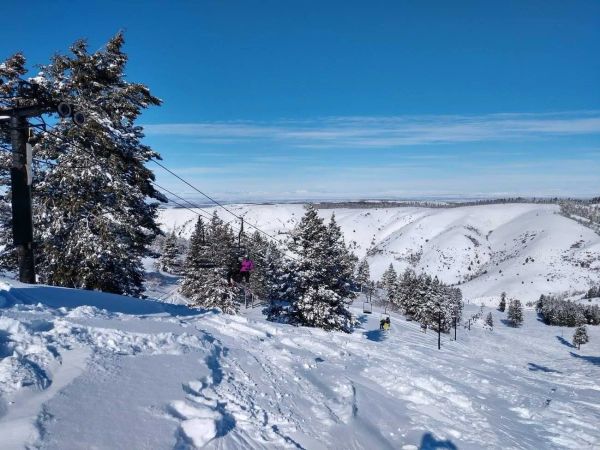
Kelly Canyon, Idaho, Adds Snowmaking, a Bigger Terrain Park and More Parking for 2026-27
Kelly Canyon had a rough 2025-26, and the Idaho resort has spent the summer making sure it doesn’t repeat. Snowmaking now reaches the top of Goldrush, the terrain park is doubling in size with a stereo system, lights and a snack shack, and the car park is getting bigger. Grooming is stepping up too. Target opening is December 4, conditions permitting.
9 Oct 2026
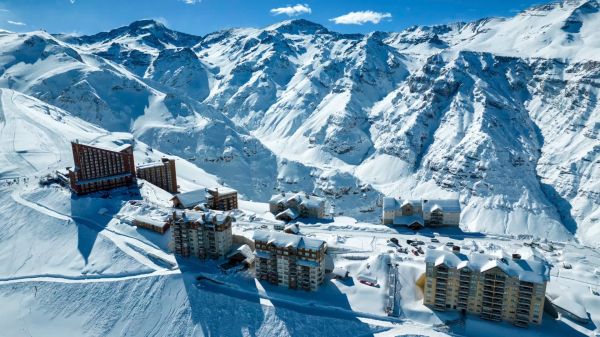
Valle Nevado Extends Season to November 8 After 108 cm in 48 Hours
Winter was meant to be winding down in Chile. Then Valle Nevado took 108 cm in 48 hours in early October, and the resort has pushed its closing date out to November 8 - its latest in 38 years of operation. That makes 143 days of skiing since opening day on June 19, with 690 cm banked for the season. Only part of the mountain is running while the storm settles, so check the mountain report before you plan a trip.
9 Oct 2026
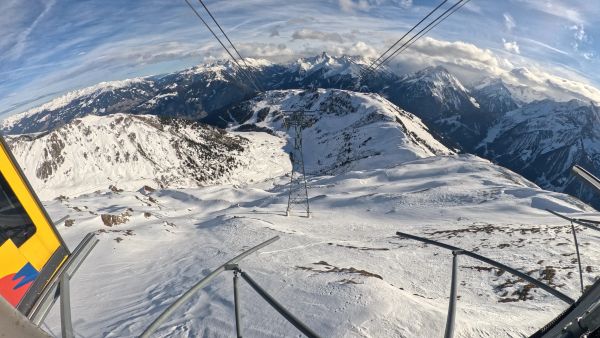
Alps Snow Forecast: Cold Front Brings Thursday Snow to the High Alps
The Alps look a lot more like winter today, for a day or so. A cold front is moving west to east, dropping up to 35 cm on high glaciers and peaks, with snow levels falling to around 1,500-1,800 m at times. Don’t plan a trip around it: mid-elevation snow will be thin and wet, every area is closed bar a limited Sölden glacier opening tomorrow, and warmer weather returns by Monday.
8 Oct 2026
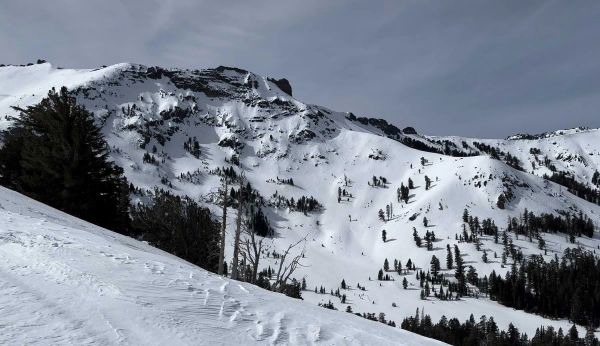
California Ski Resort Opening Dates 2026-27: Mammoth Leads, Tahoe Follows
Mammoth Mountain is first up in California, targeting Friday 13 November after a dusting of September snow. Heavenly and Northstar follow on 20 November, Palisades Tahoe on Wednesday 25 November and Sugar Bowl on 27 November, with Kirkwood on 4 December and June Mountain on 19 December. Plenty of smaller areas have no date yet. A super El Niño favours the Sierra, but a warmer storm track is the catch.
7 Oct 2026
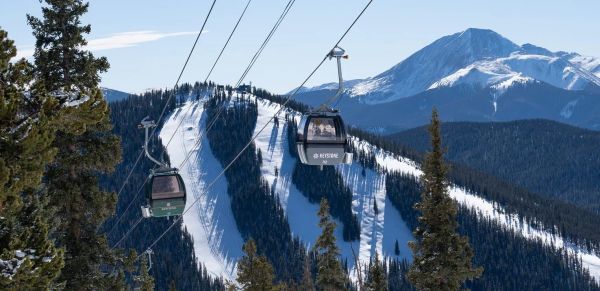
Colorado Ski Resort Opening Dates 2026-27: A-Basin and Keystone Race to Be First
Arapahoe Basin, Keystone and Winter Park are all chasing an October start, though none has a firm date yet. The first dated openers are Breckenridge and Copper on Friday 6 November, then Vail on 13 November, with most of the rest bunched around US Thanksgiving. Hesperus did not open at all last season. A super El Niño offers hope but no guarantee, and forecasters say the southern mountains have the better odds.
5 Oct 2026
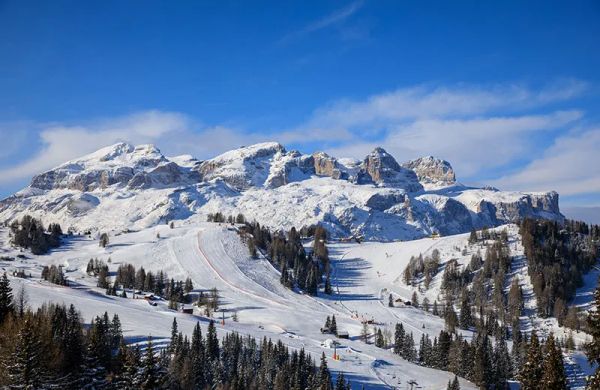
Dolomiti Superski 2026-27: Four New Gondolas, New Reservoirs and an €89 Peak Day Pass
Dolomiti Superski is spending around €100 million across its 12 areas before winter. Kronplatz gets a new 10-passenger gondola with a middle station, 3 Zinnen gets Helmissimo, and Val di Fassa swaps a chairlift for a gondola above Col Valvacin. New water-storage basins and upgraded snowmaking follow, and construction has started on the San Martino to Passo Rolle link. A peak adult day pass is €89.
4 Oct 2026
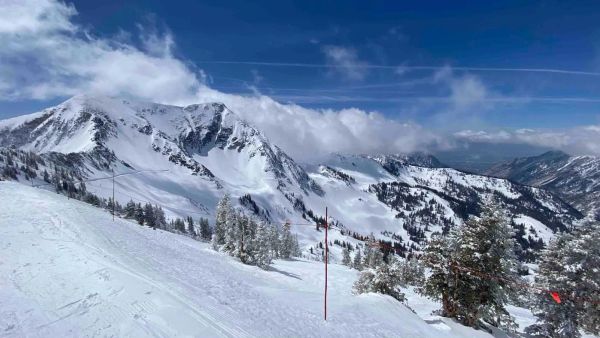
Utah Ski Resort Opening Dates 2026-27: Brian Head First, Eagle Point Out
Brian Head is targeting 6 November, though last year it aimed for 7 November and did not open until the 25th. Park City, Alta and Solitude are pencilled in for 20 November, Snowbird and Snowbasin for 27 November, and Deer Valley for 5 December. Eagle Point will stay closed after the Cottonwood Fire. A super El Niño is forecast, but the big snow is not expected until January.
4 Oct 2026
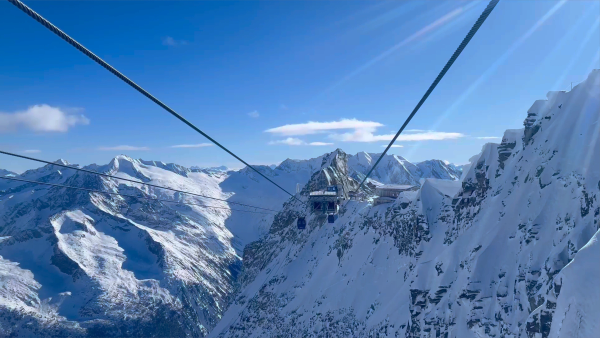
Hintertux Glacier Opens for 2026-27 With 12 Kilometres of Piste
Hintertux became Austria's second glacier to open for 2026-27 on Friday 2 October, after the Pitztal Glacier. Twelve kilometres of piste are running around the Olperer and Gefrorene Wand, served by one gondola and two drag lifts, with the Betterpark also open. Lifts officially run 8:15 am to 4:30 pm, but skiing stops at 2 pm for now.
4 Oct 2026
Gstaad Lift System
Bergbahnen Destination Gstaad operates 34 lifts across the main ski area, comprising four gondolas, seven chairlifts (three quads, two triples, two doubles) and assorted surface lifts including five T-bars. The broader Gstaad Mountain Rides region totals 47 to 53 lifts when including all satellite areas and Glacier 3000. Uphill capacity reaches 53,000 skiers per hour across the network, with eight separate valley entry points reducing congestion.
The Eggli gondola, rebuilt in 2019-20 with 10-person Porsche Design Studio cabins, whisks skiers from Gstaad at 1,050 metres to 1,557 metres in minutes, providing immediate access to wide beginner terrain. The Saanenmöser-Saanersloch gondola, installed in 2018-19, serves as the primary artery into the Rinderberg sector. A new Schönried-Horneggli-Hornberg 10-seater gondola with Pininfarina-designed cabins is planned alongside two six-seat chairlifts at Saanenwald-Horeflue and Gfell-Horeflue.
The Wispile gondola departs directly from Gstaad village in two stages, ascending to 1,939 metres and serving a compact 9-kilometre zone with dedicated learning areas. Wasserngrat operates a single covered chairlift accessing family-friendly reds and the challenging Tiger Run black. Multiple sectors connect via ski bus and the MOB railway line running between Zweisimmen and Montreux, with multi-day pass holders riding free.
Gstaad claims several infrastructure firsts including Switzerland's first cable cars in the early 1900s, the longest four-seat chairlift at 2,764 metres, and the first curved gondola route. Solar panels now top mountain restaurants at La Videmanette and Eggli plus valley stations at Saanersloch and Eggli. GPS-equipped groomers use eco-friendly fuel, whilst lift pass recycling boxes encourage sustainability.
19lifts across 6 types
4
Gondolas
3
Quad Chairs
2
Triple Chairs
2
Double Chairs
5
T-Bars
3
Surface Lifts
Gstaad lift system
Gstaad is served by 19 lifts, listed here by type. Check which lifts are turning against the live conditions before you plan your first laps - early lifts and high-speed chairs get you to the best snow fastest.
More Gstaad intelligence: trail map, snow report, webcams, resort overview.