
Leysin
60km of pistes, 948m vertical, 72% beginner terrain. South-facing slopes in Canton Vaud with Magic Pass access.
Season 2026 - 2027
Opens
28 Nov 2026
Closes
11 Apr 2027
Days open
134
Annual snow
4m
The Overview
Michael Fulton
Melbourne-based skier and snowboarder with 50+ resorts across 5 continents. Specialises in Australian resorts and international resort comparisons.
Leysin operates from 1,250 to 2,198 metres across 60 kilometres of pistes and 948 metres of vertical drop in the Vaud Alps. The resort combines with Les Mosses and La Lécherette via shuttle bus to form a 100-kilometre ski area. Snowmaking covers a portion of the terrain, whilst the south-facing slopes deliver 1,900 hours of annual sunshine. Magic Pass holders access the full network without additional day tickets.
Beginner terrain dominates with 72 per cent of marked runs, leaving 25 per cent for intermediates and three per cent rated advanced. The ski area fans across two main sectors accessed from Leysin village: the Berneuse gondola serves wide upper slopes and tree-lined descents, whilst the Tête d'Aï chairlift opens terrain towards the 2,331-metre Tour d'Aï peak. Les Chaux and La Berneuse rank among the most frequented descents. Off-piste routes from La Berneuse at 2,048 metres attract experienced riders.
Leysin hosts several international boarding schools and maintains a youthful, diverse atmosphere on the mountain. The Kuklos revolving restaurant at 2,048 metres completes a 360-degree rotation in 90 minutes with views across Lake Geneva, Mont Blanc, the Matterhorn and the Eiger. Terrain parks traditionally featured half-pipes and jump lines, though conditions vary seasonally. The village sprawls across a sunny plateau at 1,260 metres above the Rhone Valley.
The Alpes Vaudoises regional pass extends access to Villars, Gryon, Les Diablerets and Glacier 3000, covering more than 225 kilometres of terrain within a 30-minute radius. The 2025-26 season runs from 7 December to 6 April. Leysin suits learners, families and intermediates seeking accessible Swiss skiing without the scale or price point of larger resorts. Limited expert pistes and moderate elevation require attention to snow forecasts in marginal conditions.
948m
Vertical
0
Runs
60 km
Piste
4m
Annual snow
The Terrain
0 runs across 60 km of piste
Leysin offers 60 kilometres of piste above the Rhône valley, dropping 948 metres from 2,198 metres to a village base at 1,250 metres. The terrain is gentle, at 72% beginner, 25% intermediate and 3% advanced, with no expert runs. One gondola, a six-seat chair, four quads and two double chairs carry the traffic, and the south-facing slopes soak up plenty of sun. It is a straightforward area to read, with few surprises for anyone arriving from a flatter ski background, and a handy base for learners who want views and space.
The area splits into the Berneuse and Tête d'Aï sectors, both reached from the village, and the Berneuse summit looks across the Rhône valley, with the revolving Kuklos restaurant a handy lunch stop. A shuttle bus connects to Les Mosses and La Lécherette, and the Alpes Vaudoises passes stretch the range further for those who buy them. Steep skiing is scarce, though some off-piste leaves the Berneuse ridge for experienced riders. Families, beginners and intermediates after relaxed cruising in the Vaud Alps will get the most from a stay.
Terrain split
0
runs
0 runs across 4 grades
Beginner0 runs · 72%
Intermediate0 runs · 25%
Advanced0 runs · 3%
Expert0 runs · 0%
Time it right
When to visit Leysin
The 2025-26 season operates from 7 December 2025 to 6 April 2026, spanning four months. Typical opening lands in early December, with closures extending into mid-April depending on snow cover. Historical records show opening dates as early as late November in strong snow years. Late and early season quality suffers due to the 1,250-metre base elevation and south-facing exposure.
Annual snowfall averages 4.3 metres, with week two of December historically the snowiest period, delivering 40 centimetres across 3.4 snowy days. February provides the deepest mid-season base, averaging 145 centimetres at summit elevation and 40 centimetres at the base. Snowmaking equipment covers five kilometres of priority runs with 68 snow cannons, focusing on lower slopes and high-traffic zones. Natural accumulation remains the primary source, with elevation and aspect influencing reliability.
January through March offer the most consistent conditions, with February delivering peak depth and cold temperatures. December suits early-season visitors willing to accept limited terrain, whilst March combines longer daylight and spring snow with the resort's famed sunshine. Weekday skiing avoids the school groups and weekend crowds that frequent Leysin due to its proximity to international schools. Midweek visits in January and February provide the best balance of snow quality and empty pistes.
Night skiing operates on floodlit slopes near the village, with tobogganing open from 10:00 to 20:00. The Giant X Tour snowboard and ski event finals traditionally occur at Leysin. Terrain park features remain condition-dependent, with recent seasons seeing closures in January. Cross-country trails extend 10 kilometres within the immediate area, with 39 kilometres across the broader region. The resort officially holds Swiss Tourism Federation family-friendly certification since 2001.
Season 2026 - 2027
28 Nov 2026
Opens
11 Apr 2027
Closes
134
Days open
4 m
Annual snow
Getting there
Getting to Leysin, and where to stay
Leysin sits in the Aigle district of Canton Vaud at 1,260 metres on a south-facing plateau above the Rhone Valley. The village occupies a natural terrace beneath the Tour d'Aï massif at 2,331 metres, with views extending across Lake Geneva to the Dents du Midi, Mont Blanc and the Bernese Alps. The Grande-Eau river runs through the valley below. Leysin forms part of the Vaud Alps in western Switzerland, positioned at the eastern end of Lac Léman.
Aigle lies 14 kilometres downhill in the Rhone Valley, serving as the primary rail hub and connecting point for regional trains. Montreux sits 20 kilometres west along the lake shore, nine minutes by train from Aigle. Lausanne is 45 kilometres northwest, whilst Geneva sits 97 kilometres west. The resort village itself spreads across three kilometres of mountainside with hamlets at Veyges, Feydey, Aï and Mayen. Several international schools and former sanatorium buildings occupy the lower slopes.
Road access follows the cantonal route from Aigle via Le Sépey, climbing through switchbacks to Leysin village. From Geneva, the A1 and A9 motorways connect via exit 17 at Aigle, with total drive time of 90 minutes covering 97 kilometres. Bern lies 120 minutes northeast via the A12 to Lausanne, then A9 towards Montreux. The route passes vineyards in the Chablais wine region and Aigle Castle. Parking concentrates near lift bases.
Geneva Airport is 122 kilometres west with transfers averaging 90 minutes by road or two hours 18 minutes by train via Aigle. Bern Airport sits two hours away, Zurich 150 minutes. Direct Swiss Federal Railway trains from Geneva to Aigle depart hourly, taking 80 minutes. The Aigle-Leysin cog railway climbs to the resort in 27 minutes, stopping at Leysin Village, Versmont and Leysin-Feydey stations. Trains run hourly at 56 minutes past. Free shuttle buses 170 and 171 link stations to gondola terminals.
Where to stay
Search all stays →Hotels and lodges near Leysin, powered by Stay22.
Latest News
From the SnowStash desk
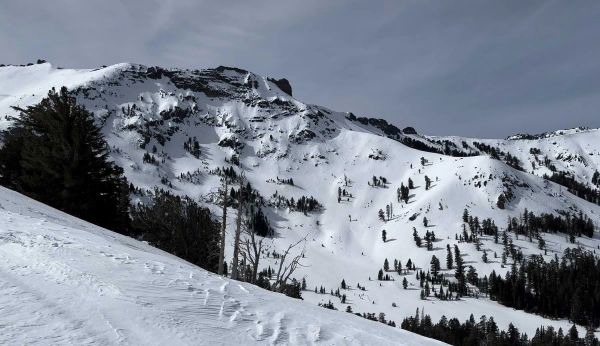
California Ski Resort Opening Dates 2026-27: Mammoth Leads, Tahoe Follows
Mammoth Mountain is first up in California, targeting Friday 13 November after a dusting of September snow. Heavenly and Northstar follow on 20 November, Palisades Tahoe on Wednesday 25 November and Sugar Bowl on 27 November, with Kirkwood on 4 December and June Mountain on 19 December. Plenty of smaller areas have no date yet. A super El Niño favours the Sierra, but a warmer storm track is the catch.
7 Oct 2026
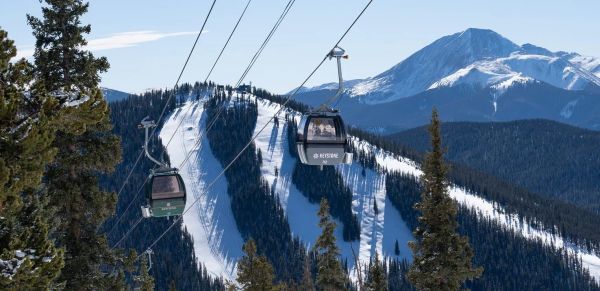
Colorado Ski Resort Opening Dates 2026-27: A-Basin and Keystone Race to Be First
Arapahoe Basin, Keystone and Winter Park are all chasing an October start, though none has a firm date yet. The first dated openers are Breckenridge and Copper on Friday 6 November, then Vail on 13 November, with most of the rest bunched around US Thanksgiving. Hesperus did not open at all last season. A super El Niño offers hope but no guarantee, and forecasters say the southern mountains have the better odds.
5 Oct 2026
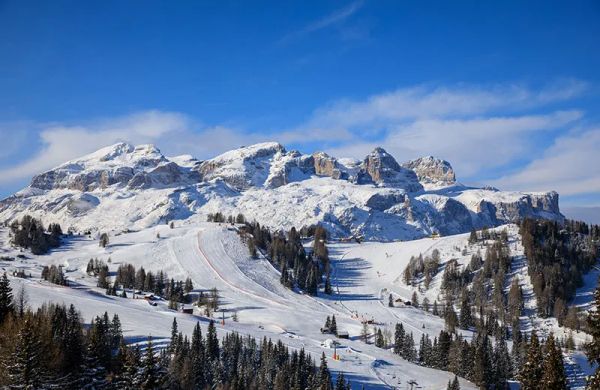
Dolomiti Superski 2026-27: Four New Gondolas, New Reservoirs and an €89 Peak Day Pass
Dolomiti Superski is spending around €100 million across its 12 areas before winter. Kronplatz gets a new 10-passenger gondola with a middle station, 3 Zinnen gets Helmissimo, and Val di Fassa swaps a chairlift for a gondola above Col Valvacin. New water-storage basins and upgraded snowmaking follow, and construction has started on the San Martino to Passo Rolle link. A peak adult day pass is €89.
4 Oct 2026
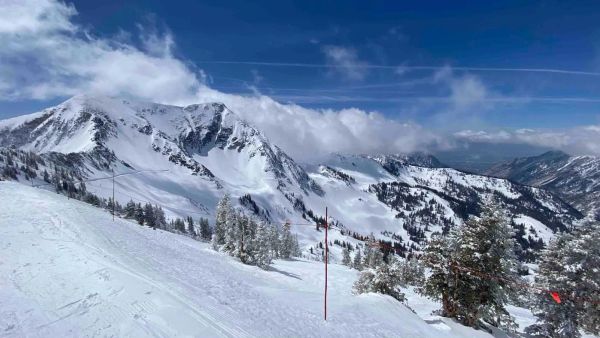
Utah Ski Resort Opening Dates 2026-27: Brian Head First, Eagle Point Out
Brian Head is targeting 6 November, though last year it aimed for 7 November and did not open until the 25th. Park City, Alta and Solitude are pencilled in for 20 November, Snowbird and Snowbasin for 27 November, and Deer Valley for 5 December. Eagle Point will stay closed after the Cottonwood Fire. A super El Niño is forecast, but the big snow is not expected until January.
4 Oct 2026
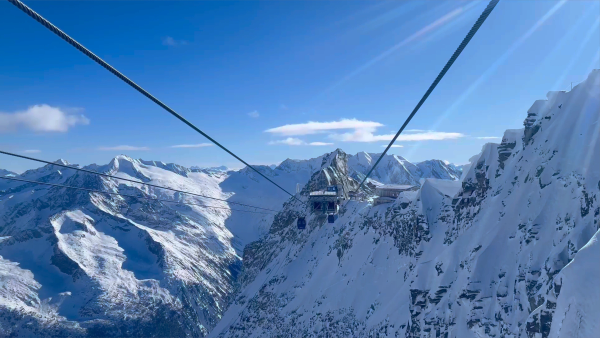
Hintertux Glacier Opens for 2026-27 With 12 Kilometres of Piste
Hintertux became Austria's second glacier to open for 2026-27 on Friday 2 October, after the Pitztal Glacier. Twelve kilometres of piste are running around the Olperer and Gefrorene Wand, served by one gondola and two drag lifts, with the Betterpark also open. Lifts officially run 8:15 am to 4:30 pm, but skiing stops at 2 pm for now.
4 Oct 2026
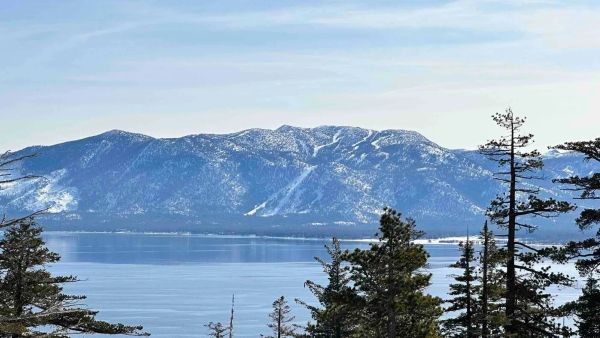
Vail Resorts Counts the Cost of a Thin Winter as Pass Sales Slide Further
A historically poor western winter cut Vail Resorts' annual net income from $280 million to $147.5 million and skier visits by 13.4 per cent. Now 2026-27 pass units are down 12 per cent as of 18 September, worse than the 10 per cent flagged in spring. Vail blames the weather and thinks some buyers are simply waiting, and it forecasts a rebound if the snow behaves.
3 Oct 2026
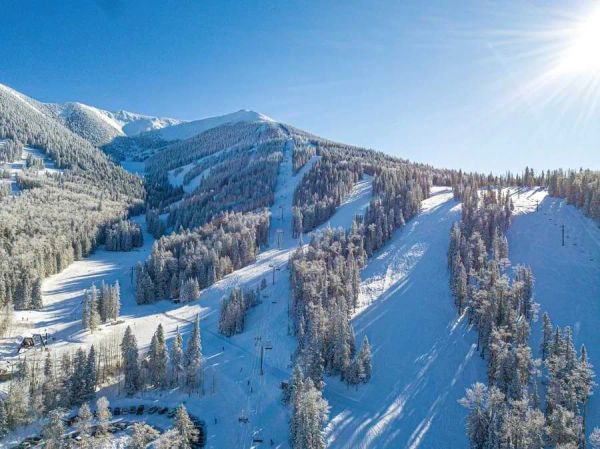
Arizona Snowbowl's $1 Lift Tickets Are Hard to Find, but $9 Days Are Not
Arizona Snowbowl advertised eight $1 lift ticket days this winter. Go looking and only three are showing - 10 March, 1 April and 10 April - so the rest may already have gone. The consolation is a calendar full of $9 days, including all but one day in April. Opening day is 20 November, weather permitting, and opening weekend is $19.
2 Oct 2026
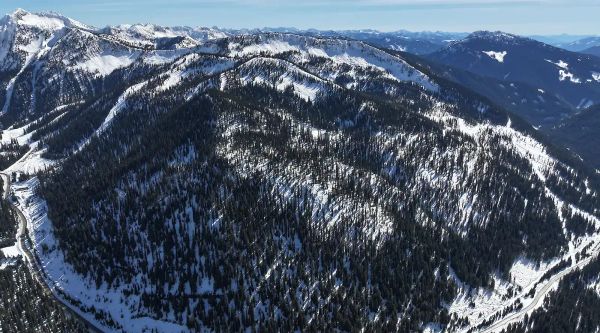
Whitewater Brings Its Short Side Inbounds, With Six New Runs for 2026-27
For years, Whitewater's Short Side was where you ducked a rope and hoped for the best: unmapped, ungroomed and unpatrolled. This winter it's inbounds. Six new runs of glades and fall-line skiing add 190 acres (about 77 hectares), taking the resort past 1,400 acres in total. F2 Logging spent a month in the trees to make it happen, and opening day is pencilled in for 4 December. Bonanza now needs less snow to groom, too.
1 Oct 2026
Leysin Snow Report
Snow Report
Updated 8 Oct 2026
2198m
summit
+15cm
new snow · last 24 hours
Slight Rain Showers1°C / 7°C · W 21km/h
Snowfall
24 hours
15cm
48 hours
15cm
7 days
15cm
Base depth
0cm
Season total
15cm
Total lifts9
Live open status isn’t available right now.
28 Nov 2026 - 11 Apr 2027
Hour by Hour
Next 47 hours· Updated Oct 8, 2026 at 6:02 PM
Scroll for the full outlook · Open-Meteo
7-Day Outlook
2,198 mUpdated Oct 8, 2026 at 6:02 PMOpen-Meteo
Days 1–7
0.3cm
Days 8–14
5.0cm
Thu, Oct 8
Slight Rain Showers
Temp7° / 1°°C
Snow0.0cm(100%)
Wind21 km/h W
Live snow from the resort feed; forecast from Open-Meteo, via Supabase.
Understanding the Leysin snow report
See what's happening on the mountain at Leysin right now — snowfall, snow depth, and weather data to help you plan your day in Switzerland.
Snow measurements
Our snow reports measure snowfall in centimeters over multiple time windows — last 24 hours, last 7 days, and the season total. Base depth reflects accumulation at the 1250m base area, while summit depth captures conditions 948m higher at 2198m, where snow typically stays colder and lingers longer. Imperial conversions are shown alongside for convenience.
Weather conditions
Wind and temperature swings matter as much as fresh snowfall. Cold, calm conditions hold snow quality well, while wind-loading or a warm-up can change things quickly — especially given the elevation spread between Leysin's base and summit.
Data sources
Snowfall and depth figures for Leysin come from official mountain sources; weather and outlook data comes from independent forecasting services. The mountain is served by 9 lifts, including 4 quad chairlifts and a 6-person chairlift.
When to check
Conditions can change overnight, so mornings and late afternoons are the best times to check back on Leysin.