
Mürren Schilthorn
54km piste, 2174m vertical, 2970m summit. Car-free Bernese Oberland village with Jungfrau pass access. 15 Nov-20 Apr 2026.
Season 2026 - 2027
Opens
7 Nov 2026
Closes
2 May 2027
Days open
176
Annual snow
10m
The Overview
Michael Fulton
Melbourne-based skier and snowboarder with 50+ resorts across 5 continents. Specialises in Australian resorts and international resort comparisons.
The ski area spans 796 to 2970 metres across the Schilthorn massif above the Lauterbrunnen valley. 54 kilometres of piste and 24 marked runs deliver 2174 metres of vertical drop, the highest ski terrain in the Bernese Oberland. The Jungfrau Ski Region pass grants access to 206 kilometres across Mürren, Wengen, Männlichen and Grindelwald-First, with train travel from Interlaken Ost included.
Terrain splits 35% beginner, 43% intermediate, 15% advanced and 7% expert. The Allmendhubel funicular accesses gentle slopes ideal for first turns, whilst the Schiltgrat and Winteregg quad chairs serve long groomed cruisers. Run 9, the Direttissima from Birg, pitches at 88% gradient and ranks as the steepest marked piste in the Jungfrau Region. The 14.9-kilometre Inferno course from below Piz Gloria to Lauterbrunnen traces the route of the world's largest amateur downhill race, held each January since 1928 with 1850 competitors.
The car-free village of Mürren sits at 1638 metres on a clifftop terrace, accessible only by cable car and mountain railway from Lauterbrunnen or Stechelberg. Twelve mountain restaurants dot the ski area, including the revolving Piz Gloria at the 2970-metre Schilthorn summit, filming location for the 1969 James Bond film On Her Majesty's Secret Service. The Pända Snowpark at Maulerhubel offers kickers, rails and boxes for freestylers, whilst freeriders access steep couloirs and open bowls above Birg.
The resort suits confident intermediates and advanced skiers seeking verticality and high-altitude snow reliability. Families benefit from Mürren's traffic-free environment and dedicated beginner zones, though the terrain quickly becomes challenging. The Jungfrau Ski Region pass opens three neighbouring ski areas within a single day, making this a strategic base for exploring the Bernese Oberland's interconnected lift network across five to seven days.
2174m
Vertical
24
Runs
54 km
Piste
10m
Annual snow
Watch
See Mürren Schilthorn in motion
The Terrain
24 runs across 54 km of piste
Mürren Schilthorn drops a dramatic 2,174 metres, from the 2,970-metre Schilthorn to a valley base at 796 metres, across 24 runs and 54 kilometres. The terrain is varied, at 35% beginner, 43% intermediate, 15% advanced and 7% expert. Six aerial trams, a train and a handful of chairs make up the lift network, and around 10 metres of snow falls each year, so the top slopes get regular refreshment. This is a high-contrast mountain rather than a large lift-linked circuit, where a single day can span nursery slopes, groomed cruising and some of the steepest marked pistes in the Bernese Oberland.
The Inferno, a roughly 15-kilometre amateur downhill from the Schilthorn to Lauterbrunnen, runs each January and shapes how many skiers think of the area. Visitors can ski the upper slopes around Piz Gloria, the revolving restaurant made famous by the 1969 Bond film, while the Allmendhubel side offers gentler terrain and the Pända snowpark sits at Maulerhubel. Experts and strong intermediates will enjoy the length and steep pitches, and learners have nursery terrain near Mürren. Car-free access and a quiet village atmosphere suit skiers who prefer character over size.
Terrain split
24
runs
24 runs across 4 grades
Beginner8 runs · 35%
Intermediate10 runs · 43%
Advanced4 runs · 15%
Expert2 runs · 7%
Time it right
When to visit Mürren Schilthorn
The 2025-26 season runs from 15 November 2025 to 20 April 2026, spanning 22 weeks. Mürren-Schilthorn typically opens mid-November and maintains upper-mountain skiing through late April, benefiting from altitude that reaches nearly 3000 metres. The broader Jungfrau Ski Region operates from 15 November to 26 April across its four interconnected areas, with slight variations in opening and closing dates between sectors.
Annual snowfall averages 10 metres, with the upper Birg-Schilthorn zone remaining snow-sure into spring due to elevation and north-facing aspects. March delivers peak accumulation and longer daylight, averaging 112 centimetres at the summit and 30 centimetres at base elevations. Snowmaking covers 15 kilometres of lower runs, supported by 38 cannons concentrated around Mürren village and Winteregg. Natural snow dominates the upper mountain, where steep terrain and exposure render snowmaking impractical.
January brings the Inferno race week from 21-24, drawing 1850 amateur competitors and transforming the quiet village into a four-day winter sports festival. The race starts below the Schilthorn summit, descends through the Engetal and Kanonenrohr sections, crosses the Winteregg Bridge and finishes in Lauterbrunnen after 2170 metres of vertical. December through February offers the most reliable snow cover and coldest temperatures, whilst March and April provide spring conditions with softer snow and stronger sun.
The Swiss Snow Happening telemark event occupies 8-11 April 2026, and mid-season coincides with the Lauberhorn races in neighbouring Wengen, creating regional buzz in mid-January. Quieter periods fall in early December before Christmas holidays and late January through mid-February outside school breaks. Night skiing is not offered, though the Schilthornbahn operates until 16:00 for summit dining and sightseeing.
Season 2026 - 2027
7 Nov 2026
Opens
2 May 2027
Closes
176
Days open
10 m
Annual snow
Getting there
Getting to Mürren Schilthorn, and where to stay
Mürren occupies a mountain terrace on the western flank of the Lauterbrunnen valley in the Bernese Oberland, Canton Bern. The car-free village perches at 1638 metres on a cliff edge, 800 metres above the valley floor, facing the Eiger, Mönch and Jungfrau massif across the gorge. The Schilthorn peak rises 1332 metres directly above to 2970 metres, forming the western boundary of the Jungfrau Region and the highest ski terrain in the Bernese Alps' northern range.
Lauterbrunnen sits in the valley eight kilometres south of Interlaken, serving as the road-head and railway terminus for Mürren-bound visitors. Interlaken lies 12 kilometres north along the valley road, a 20-minute drive or 20-minute train journey from Lauterbrunnen station. Stechelberg, three kilometres further up-valley from Lauterbrunnen, hosts the alternative cable car base station for the Schilthornbahn. The region sits in central Switzerland roughly midway between Bern and Lucerne.
By road, the A8 motorway from Bern reaches Interlaken in one hour, whilst Zurich lies two hours northeast via the A1 and A8. Geneva sits three hours west via the A1 through Bern, and Basel two hours north via the A2 and A8. From Interlaken, Route 11 runs south through Wilderswil to Lauterbrunnen, passing Zweilütschinen where the valley forks towards Grindelwald. Parking in Lauterbrunnen costs 17 Swiss francs per 24 hours in the multi-storey below the station; Stechelberg parking runs 11 francs daily.
Zurich Airport sits 149 kilometres and two hours' drive northeast; direct trains run every two hours to Interlaken Ost, connecting to Lauterbrunnen in 20 minutes. Bern Airport lies 66 kilometres and one hour by road, though rail connections require a bus transfer to Bern station. Geneva Airport sits 171 kilometres and two hours' drive, with trains connecting via Bern in approximately three hours. From Lauterbrunnen, passengers take either the Grütschalp cable car and BLM train to Mürren's north end, or the Stechelberg cable car to Mürren's south end, each route requiring 20-30 minutes.
Where to stay
Search all stays →Hotels and lodges near Mürren Schilthorn, powered by Stay22.
Latest News
From the SnowStash desk

Vermont Ski Resort Opening Dates 2026-27: Few Dates Set, Killington Waits on the Cold
Vermont's season is slow to take shape. Stratton is tentatively targeting 18 November and Sugarbush 21 November, while Pico has Friday 11 December on the calendar. Killington never sets a date and opens when the snowmaking allows, and Vail Resorts has yet to name days for Stowe, Okemo and Mount Snow. The forecasts disagree about snow, and the main El Niño worry for the Green Mountains is warmth.
9 Oct 2026
Crans-Montana 2027 World Championships President Resigns Ahead of Fraud Hearing
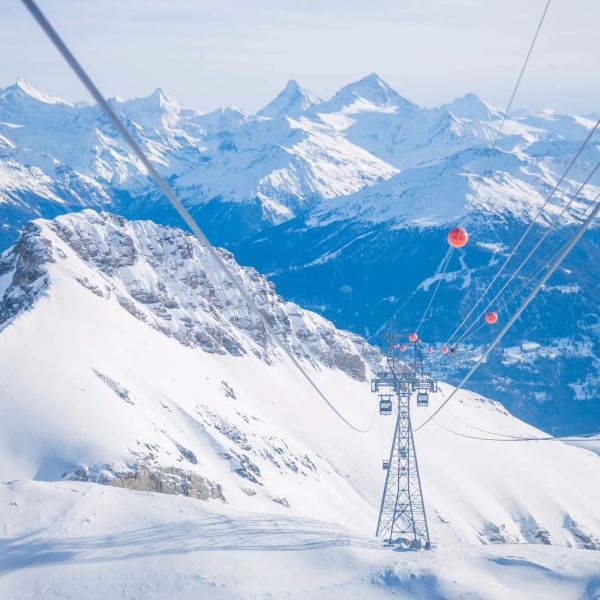
Less than four months out from the Crans-Montana 2027 World Championships, the man running the organising committee has stepped down. Claude-Alain Schmidhalter resigned as Swiss-Ski vice president and OC president after being indicted over a business dispute unrelated to skiing. He denies the allegations and faces court on October 27. Interim leaders are in place for the February 1-14 event.
9 Oct 2026
Kelly Canyon, Idaho, Adds Snowmaking, a Bigger Terrain Park and More Parking for 2026-27
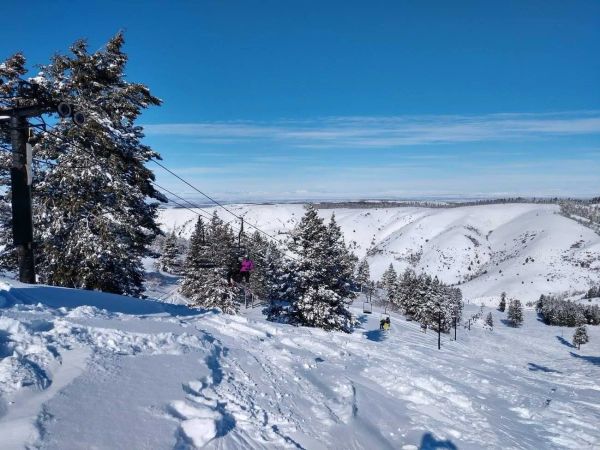
Kelly Canyon had a rough 2025-26, and the Idaho resort has spent the summer making sure it doesn’t repeat. Snowmaking now reaches the top of Goldrush, the terrain park is doubling in size with a stereo system, lights and a snack shack, and the car park is getting bigger. Grooming is stepping up too. Target opening is December 4, conditions permitting.
9 Oct 2026
Valle Nevado Extends Season to November 8 After 108 cm in 48 Hours
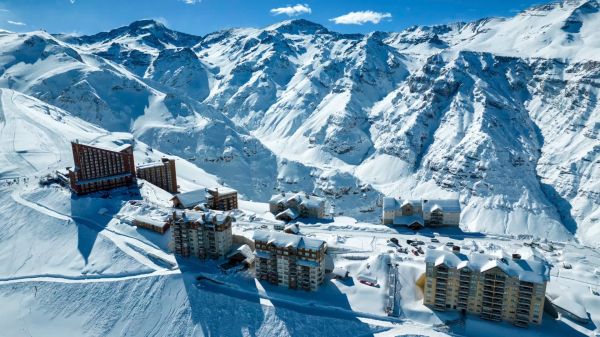
Winter was meant to be winding down in Chile. Then Valle Nevado took 108 cm in 48 hours in early October, and the resort has pushed its closing date out to November 8 - its latest in 38 years of operation. That makes 143 days of skiing since opening day on June 19, with 690 cm banked for the season. Only part of the mountain is running while the storm settles, so check the mountain report before you plan a trip.
9 Oct 2026
Alps Snow Forecast: Cold Front Brings Thursday Snow to the High Alps
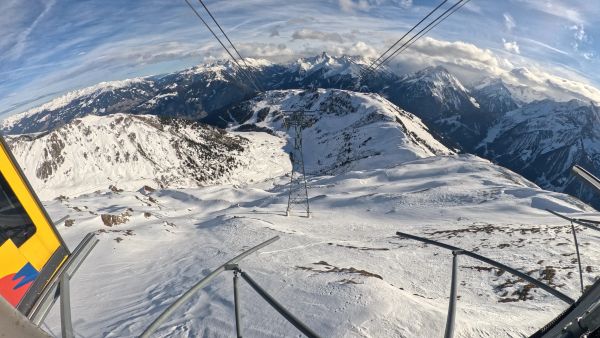
The Alps look a lot more like winter today, for a day or so. A cold front is moving west to east, dropping up to 35 cm on high glaciers and peaks, with snow levels falling to around 1,500-1,800 m at times. Don’t plan a trip around it: mid-elevation snow will be thin and wet, every area is closed bar a limited Sölden glacier opening tomorrow, and warmer weather returns by Monday.
8 Oct 2026
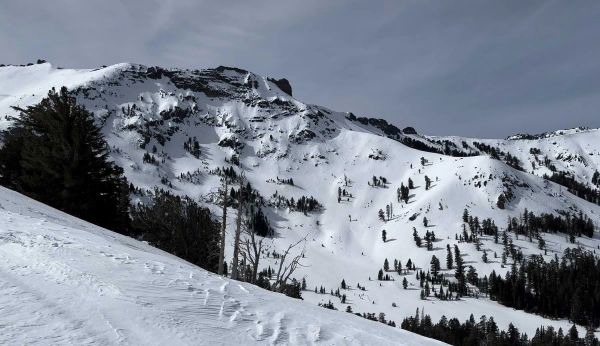
California Ski Resort Opening Dates 2026-27: Mammoth Leads, Tahoe Follows
Mammoth Mountain is first up in California, targeting Friday 13 November after a dusting of September snow. Heavenly and Northstar follow on 20 November, Palisades Tahoe on Wednesday 25 November and Sugar Bowl on 27 November, with Kirkwood on 4 December and June Mountain on 19 December. Plenty of smaller areas have no date yet. A super El Niño favours the Sierra, but a warmer storm track is the catch.
7 Oct 2026
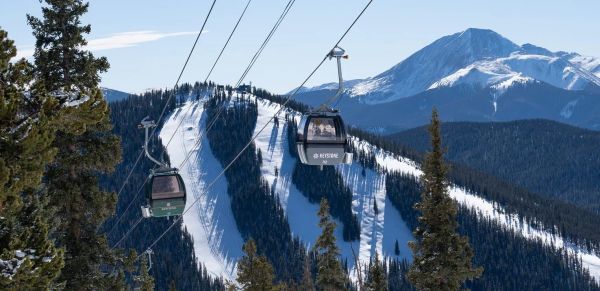
Colorado Ski Resort Opening Dates 2026-27: A-Basin and Keystone Race to Be First
Arapahoe Basin, Keystone and Winter Park are all chasing an October start, though none has a firm date yet. The first dated openers are Breckenridge and Copper on Friday 6 November, then Vail on 13 November, with most of the rest bunched around US Thanksgiving. Hesperus did not open at all last season. A super El Niño offers hope but no guarantee, and forecasters say the southern mountains have the better odds.
5 Oct 2026
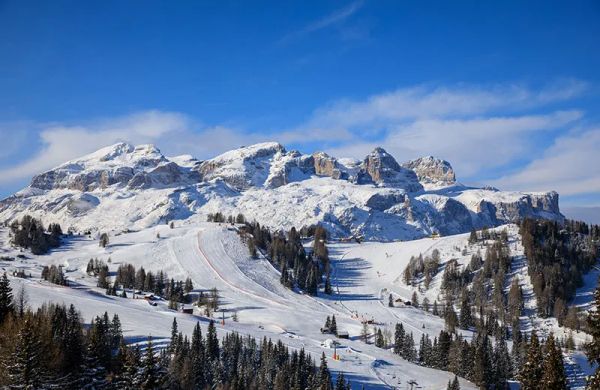
Dolomiti Superski 2026-27: Four New Gondolas, New Reservoirs and an €89 Peak Day Pass
Dolomiti Superski is spending around €100 million across its 12 areas before winter. Kronplatz gets a new 10-passenger gondola with a middle station, 3 Zinnen gets Helmissimo, and Val di Fassa swaps a chairlift for a gondola above Col Valvacin. New water-storage basins and upgraded snowmaking follow, and construction has started on the San Martino to Passo Rolle link. A peak adult day pass is €89.
4 Oct 2026
Mürren Schilthorn Webcams
5 live angles across the mountain. Tap any camera to go full-screen.
About Mürren Schilthorn's live webcams
Check live conditions across Mürren Schilthorn with 5 real-time webcams showing snow, weather, and lift operations, updated every 10 minutes. Check high-elevation cams for powder visibility and base-area cams for crowd levels before you head up.
Camera guide
- Schilthorn Birg2670m
- Experience dramatic high-mountain perspectives through this Mürren Schilthorn webcam positioned at Birg station at 2670 meters elevation in the Bernese Oberland. This Mürren live cam captures breathtaking views of the surrounding alpine terrain and challenging upper mountain runs beneath the iconic Schilthorn summit. Essential for assessing advanced slope conditions, this live snow cam provides real-time visibility across steep terrain, while this Schilthorn web cam reveals the spectacular landscape that makes this car-free resort a legendary destination for expert skiers exploring Switzerland's most dramatic alpine scenery.
- Schilthorn Allmendhubel1907m
- Monitor family-friendly terrain through this Schilthorn webcam at Allmendhubel area at 1907 meters elevation. This Mürren Schilthorn live cam provides sweeping views of the mid-mountain terrain and the car-free village of Mürren below, showcasing accessible slopes. Perfect for families assessing beginner and intermediate conditions, this live snow cam captures the welcoming atmosphere, while this Mürren web cam demonstrates the gentle terrain that makes this Bernese Oberland resort ideal for all ability levels alongside its challenging upper mountain skiing.
- Stechelberg Base Station863m
- Track valley departure conditions through this Mürren Schilthorn webcam at the new Stechelberg base station at 863 meters elevation. This Schilthorn live cam shows the departure point for the world's steepest aerial tram that accesses the high-altitude resort. Essential for monitoring valley weather and tram operations, this live snow cam captures arrival activity, while this Mürren web cam helps visitors plan their dramatic ascent via this engineering marvel to the car-free village and spectacular skiing terrain in the Lauterbrunnen valley.
- Mürren Station1640m
- Experience the heart of the car-free village through this Mürren Schilthorn webcam at the upper tram station in Mürren at 1640 meters elevation. This Mürren live cam shows the top station of the world's longest aerial tram, positioned at the base of the Schilthorn ski resort. Perfect for monitoring village conditions and ski area access, this live snow cam captures the charming alpine atmosphere, while this Schilthorn web cam reveals the unique character of this traffic-free Bernese Oberland destination accessible only by mountain railway.
- Schilthorn Piz Gloria2970m
- Experience iconic James Bond views through this Schilthorn webcam at the legendary Piz Gloria summit at 2970 meters elevation. This Mürren Schilthorn live cam offers spectacular 360-degree views of over 200 mountain peaks including the Eiger, Mönch, and Jungfrau triumvirate. Essential for checking summit conditions and visibility, this live snow cam showcases the dramatic alpine panorama from the revolving restaurant, while this Schilthorn web cam captures the cinematic scenery that made this Bernese Oberland peak famous worldwide in "On Her Majesty's Secret Service."
Mürren Schilthorn snow cams FAQ
How often do Mürren Schilthorn snow cams update?
All Mürren Schilthorn snow cams and webcams update every 10 minutes with fresh images showing current mountain conditions. This frequent update schedule ensures you have access to near real-time conditions for planning your ski day at Mürren Schilthorn.
Which Mürren Schilthorn webcam shows the best powder conditions?
The high-elevation Schilthorn Piz Gloria webcam at 2,970m provides the clearest view of powder conditions and snowfall. These Mürren Schilthorn webcams capture fresh snow accumulation and visibility better than base area cameras.
Can I see Mürren Schilthorn lift queues on the webcams?
Yes. Multiple Mürren Schilthorn snow cams specifically show lift queue areas and chairlift operations, helping you time your arrival and avoid peak queue periods.
When is the best time to check Mürren Schilthorn snow cams?
Check Mürren Schilthorn webcams early morning (7-8am) for overnight snowfall assessment, and mid-afternoon for current crowd levels and weather. The live cams are most useful after storm events to assess fresh powder.
How can I check current conditions before buying Mürren Schilthorn lift tickets?
Use our Mürren Schilthorn webcams alongside the live snow report to assess conditions before purchasing lift tickets. The webcams show real-time visibility, snow quality, and operational status.
Do Mürren Schilthorn webcams work on mobile devices?
Yes. All Mürren Schilthorn snow cams and webcams are optimized for mobile viewing, so you can check live conditions from anywhere using your phone or tablet.
More Mürren Schilthorn intelligence: snow report, lift tickets, trail map, resort overview.