
Titlis Engelberg
70km terrain, 3,020m summit, 4.3m annual snowfall. Central Switzerland's longest season: October to May glacier skiing.
Season 2026 - 2027
Opens
10 Oct 2026
Closes
2 May 2027
Days open
204
Annual snow
4m
The Overview
Michael Fulton
Melbourne-based skier and snowboarder with 50+ resorts across 5 continents. Specialises in Australian resorts and international resort comparisons.
Titlis-Engelberg spans 1,003 to 3,020 metres across 70 kilometres of marked terrain, delivering 2,017 metres of vertical drop - amongst Switzerland's largest lift-served descents. The area divides 26% beginner, 61% intermediate and 13% advanced across three separate sectors: the glacier-topped Titlis, family-oriented Brunni and the Jochpass zone connecting towards the Bernese Oberland. Annual snowfall averages 4.3 metres at elevation, with glacier skiing ensuring operations from late October through early May - one of the Alps' longest continuous seasons.
The 19-lift network accesses pistes from the monastery village at 1,003 metres to the Titlis summit at 3,020 metres, where the Rotair rotating cable car completes the ascent. Intermediate cruisers dominate the trail map, particularly the 12-kilometre valley run from Stand to Engelberg covering 2,000 vertical metres. Advanced terrain clusters on the Laub face and Rotegg itinerary, whilst beginners favour separated zones at Gerschnialp, Klostermatte and Brunni's sunny south-facing slopes.
On-mountain character shifts by sector: Titlis delivers high-alpine exposure and freeride reputation, Jochpass offers rolling intermediate terrain with a seasonal park, Brunni provides tree-lined family runs. Weekend crowds from Zürich and Lucerne concentrate at mid-mountain hubs, though off-piste access remains Engelberg's defining draw for confident skiers. The historic Benedictine monastery anchors village atmosphere, contrasting engineered summit infrastructure including Europe's highest suspension bridge at 3,041 metres.
No multi-resort pass affiliation limits the ski area to local season passes and the regional Schneepass Zentralschweiz covering 15 Central Switzerland areas. The 2025-26 season runs 26 October to 4 May with 220-plus operating days typical. Engelberg suits confident intermediates chasing vertical, experts pursuing couloirs and families requiring reliable snow, though layout fragmentation and separate base access points demand planning over spontaneous exploration.
2017m
Vertical
22
Runs
70 km
Piste
4m
Annual snow
The Terrain
22 runs across 70 km of piste
Titlis drops 2,017 vertical metres from 3,020 metres down to Engelberg at 1,003 metres. Across 70 kilometres of piste, 61% is intermediate, 26% beginner and 13% advanced, with no expert grading. The upper mountain is glacier, while Trübsee and Gerschnialp offer gentler cruising lower down. Three aerial trams, two gondolas and a mix of eight-seat, six-seat and quad chairs link the levels, and the full run to the valley depends on snow reaching the bottom, so check conditions before committing to the long way home.
Freeriding is the bigger drawcard than the pistes. The Big Five itineraries - Steinberg, Sulz, Laub, Steintäli and Galtiberg - are all reached by lift, with Laub the wide, accessible favourite and Galtiberg dropping towards Engelberg through a tricky traverse where a guide is strongly advised. Intermediates will enjoy the groomed runs, but experienced off-piste skiers are the ones who get the most from the mountain, and they should check avalanche conditions before every descent, glacier included. The lower sectors suit a warm-up lap before heading higher.
Terrain split
22
runs
22 runs across 4 grades
Beginner6 runs · 26%
Intermediate13 runs · 61%
Advanced3 runs · 13%
Expert0 runs · 0%
Time it right
When to visit Titlis Engelberg
The 2025-26 season operates 26 October 2025 to 4 May 2026, spanning 190 days with glacier access extending the calendar beyond typical Swiss resort closures. Engelberg averages over 220 skiing days annually, ranking amongst Switzerland's longest continuous winter operations. Early-season glacier openings from late October through November precede full area operations typically established by mid-December.
Snowfall character benefits from northerly storm exposure, with the area receiving 4.3 metres average annual accumulation at elevation. The Titlis glacier retains permanent snow cover above 2,800 metres, whilst lower sectors rely on natural precipitation and snowmaking covering approximately 33 kilometres. January and February deliver peak accumulation - the second week of January averages 47 centimetres across 3.4 snowy days, the resort's most productive weekly window.
Optimal conditions span December through March for combined snow depth and temperature stability. April and early May suit glacier skiing with extended daylight and softer snow, though lower runs close progressively from March onwards. Mid-winter north-facing aspects preserve powder longer than Brunni's sun-exposed slopes, where afternoon softening occurs even in cold periods.
The annual FIS Ski Jumping World Cup occupies Engelberg's 120-metre hill in late December, drawing international crowds. Night skiing operates Fridays at Klostermatte from late December through early March. Summer glacier skiing historically ran June through September, though recent seasons have reduced summer operations - check current schedules for off-season access beyond the May closure.
Season 2026 - 2027
10 Oct 2026
Opens
2 May 2027
Closes
204
Days open
4 m
Annual snow
Getting there
Getting to Titlis Engelberg, and where to stay
Engelberg occupies a glacially carved valley in Canton Obwalden, Central Switzerland, with the village at 1,003 metres beneath the Titlis massif's north face. The enclave sits 35 kilometres south of Lucerne in an isolated basin where the Engelberger Aa river drains northward through narrow gorges. Steep valley walls rise 2,000 metres directly from the village, creating dramatic topography and concentrated snowfall patterns.
Lucerne lies 35 kilometres north via the Luzern-Engelberg Express narrow-gauge railway - a scenic 47-minute journey departing hourly. The historic city provides cultural complement to mountain access, with Chapel Bridge and Lake Lucerne within easy reach. Zürich sits 85 kilometres northeast, Basel 137 kilometres northwest, both offering broader international connections whilst Engelberg's monastery heritage dates to 1120 AD.
Road access follows the A2 Gotthard motorway to Stans-Süd exit, then 20 kilometres on cantonal roads through Wolfenschiessen. Lucerne requires 30 minutes by car, Zürich 75 minutes in normal conditions. The year-round main road avoids high-altitude passes, ensuring reliable winter access unlike southern Graubünden resorts. Free ski buses circulate village to lift bases, though the main Titlis Xpress terminal sits 1.3 kilometres from centre.
Zürich Airport provides primary international access 85 kilometres distant, with train connections via Zürich Hauptbahnhof and Lucerne requiring two hours including transfers. Basel-Mulhouse Airport lies 137 kilometres north at 100 minutes driving time. Private transfers reach the village in 90 minutes from Zürich, 110 minutes from Basel. Bern Airport, whilst closer geographically, offers limited international services beyond European routes.
Where to stay
Search all stays →Hotels and lodges near Titlis Engelberg, powered by Stay22.
Latest News
From the SnowStash desk
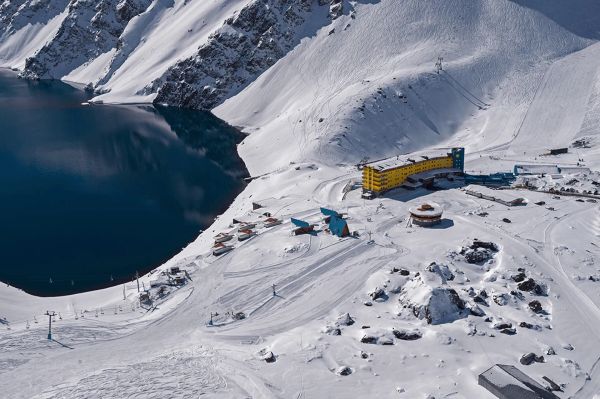
Four Dead After Avalanche Near Ski Portillo in Chile
A large avalanche struck near Laguna del Inca adjacent to Ski Portillo on Saturday afternoon, killing four people and injuring four others. The group were day visitors mountaineering in the backcountry after reportedly being warned about elevated avalanche risk by resort staff.
18 Oct 2026

Europe Ski Resorts Open Now: What Is Skiable in Mid-October 2026
Europe’s ski season is open, technically. After a record-warm summer, glaciers in Austria, Switzerland and Italy are running a few pistes apiece, Sölden, Stubai and Kitzsteinhorn started late, Titlis has pushed back to 24 October, and Zermatt reopens a few lifts on 14 October after more than two months shut. Finland’s Levi and Ruka are skiing on stored snow. Here is what is open, and what you actually get at each.
14 Oct 2026

Zermatt Plans World Cup Downhill Return on the Gornergrat for 2028
Zermatt is having another crack at a World Cup downhill, and this time nobody has to cross a border. Around 13 million Swiss francs is going into rebuilding the Gornergrat piste, including a jump fed by a roughly 300-metre in-run across the roof of the Gornergrat Railway gallery, with the Matterhorn lined up behind it for the TV cameras. First men’s race is pencilled in for March 2028, pending FIS homologation.
14 Oct 2026

Mt. Rose Begins Snowmaking for the 2026-27 Season at Lake Tahoe
Lake Tahoe’s highest base elevation is paying off early: Mt. Rose has started making snow for 2026-27 after the first flurries and a cold snap. The Nevada resort is backing it with nearly US$2 million in upgrades, including a replacement snowmaking main line, a new PistenBully groomer and restraint bars on every lift. Opening day is yet to be confirmed, though Heavenly and Northstar are already eyeing 20 November.
13 Oct 2026

Utah Ski Resorts 2026-27: What’s New at Alta, Deer Valley, Powder Mountain and More
Utah is still building flat out. For 2026-27, Powder Mountain opens a steep new Skytrac chair into more than 1,000 acres of advanced terrain, Deer Valley adds 200 acres on Hail Peak, Sundance gets a new quad and Park City adds a gondola from its new parking structure. Snowmaking is expanding almost everywhere, Eagle Point stays closed after the Cottonwood Fire, and the 2034 Games are setting the pace. Here’s what’s new, resort by resort.
13 Oct 2026

Mt Hutt Invests NZ$12 Million in Base Area, Tripling Its Sun Deck
Mt Hutt is getting busier, and its base lodge is about to catch up. NZ$12 million goes into a heated sun deck roughly three times the current size (430 m² to 1,300 m²), plus a new toilet block, heated steps down to snow level, extra storage and a new food and beverage outlet. Building starts after the 2026 season, with everything due for winter 2027.
11 Oct 2026

Vermont Ski Resort Opening Dates 2026-27: Few Dates Set, Killington Waits on the Cold
Vermont's season is slow to take shape. Stratton is tentatively targeting 18 November and Sugarbush 21 November, while Pico has Friday 11 December on the calendar. Killington never sets a date and opens when the snowmaking allows, and Vail Resorts has yet to name days for Stowe, Okemo and Mount Snow. The forecasts disagree about snow, and the main El Niño worry for the Green Mountains is warmth.
9 Oct 2026
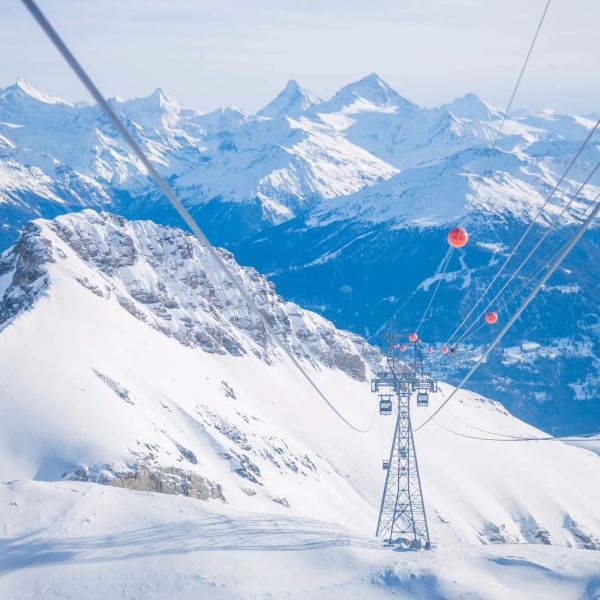
Crans-Montana 2027 World Championships President Resigns Ahead of Fraud Hearing
Less than four months out from the Crans-Montana 2027 World Championships, the man running the organising committee has stepped down. Claude-Alain Schmidhalter resigned as Swiss-Ski vice president and OC president after being indicted over a business dispute unrelated to skiing. He denies the allegations and faces court on October 27. Interim leaders are in place for the February 1-14 event.
9 Oct 2026