
Zermatt
322km terrain, 3,899m summit, year-round glacier access. Four sectors beneath the Matterhorn in Switzerland's Valais Alps.
Season 2026 - 2027
Opens
1 Oct 2026
Closes
31 Oct 2027
Days open
395
Annual snow
5m
The Overview
Michael Fulton
Melbourne-based skier and snowboarder with 50+ resorts across 5 continents. Specialises in Australian resorts and international resort comparisons.
Zermatt sprawls across 322 kilometres of marked terrain spanning 1,562 to 3,899 metres elevation, delivering 2,337 metres of vertical drop across four interconnected sectors. The resort operates 365 days per year on the Theodul Glacier, with 145 runs split 23% beginner, 69% intermediate and 8% advanced and expert combined. Access to Europe's highest cable car station at 3,883 metres on Klein Matterhorn anchors the ski area, whilst the cross-border link to Cervinia in Italy adds 160 kilometres when the international pass upgrade is purchased. The Ikon Pass includes seven days' access to the Swiss side only.
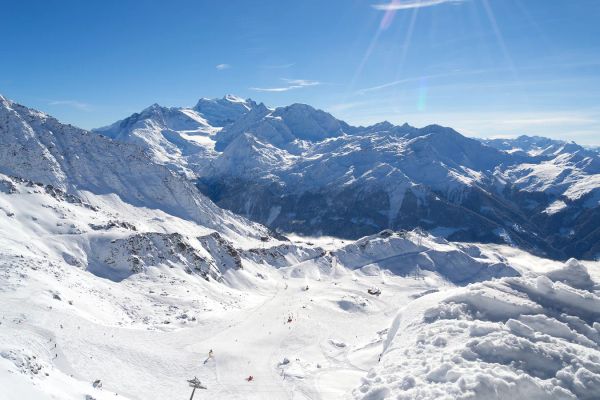
The ski area divides into Sunnegga-Rothorn, Gornergrat, Schwarzsee and Matterhorn Glacier Paradise, each offering distinct character and exposure. Gornergrat suits intermediates seeking wide cruisers and panoramic Matterhorn views via the cogwheel railway, whilst Rothorn at 3,103 metres stays sunny even when cloud fills the valley below. The glacier sectors above 3,000 metres hold snow reliably into May, with north-facing itineraries marked yellow providing ungroomed steeps for competent skiers. The longest descent runs 25 kilometres from Klein Matterhorn to Zermatt village when conditions permit the full vertical.
The car-free village at 1,620 metres combines timber chalets with luxury boutiques and over 100 hotels, accessed only by electric taxis and horse-drawn sleighs. Peak weeks around Christmas, February half-term and Easter bring crowds to key lifts, though weekday visits in January or late March offer quieter laps. Wind closures affect the highest sectors and Italian connection regularly, making Sunnegga and Gornergrat reliable alternatives on blustery days. The village supports families with Wolli Park for beginners, whilst intermediate skiers find the red-run network extensive across all four sectors.
The resort joined the Ikon Pass network in 2019 as the first European partner, offering seven days on the full pass or five on the base pass with blackout dates. Upgrading to include Cervinia and Valtournenche costs CHF 52 per day at ticket offices. The main winter season runs 1 November to early May, with Sunnegga and Gornergrat closing by mid-April whilst glacier skiing continues through summer. Confident intermediates and advanced skiers maximise the terrain, though beginners find limited gentle options outside Sunnegga's dedicated learner zone at 2,288 metres elevation.
2337m
Vertical
145
Runs
322 km
Piste
5m
Annual snow
Ikon Pass
Pass
The Terrain
145 runs across 322 km of piste
Zermatt strings together 322 kilometres of piste across 145 runs, from 1,562 metres in the village to 3,899 metres at the Klein Matterhorn, a vertical of 2,337 metres. Intermediates dominate at 69%, with 23% beginner and 4% each for advanced and expert, so most abilities will find their level. What sets it apart is altitude and scale. The uphill network runs from the Gornergrat rack railway and the Alpine Metro to eight aerial trams and 11 gondolas, spreading skiers across the main sectors. Lift rides are long, so plan the day by sector.
Sunnegga, Blauherd and the Rothorn offer long cruising runs, Gornergrat and Riffelberg have easier, sunny pistes, and the Hohtälli and Stockhorn area holds some of the toughest descents. Triftji is the famous mogul run, a steep test for expert legs. Klein Matterhorn leads onto the high glacier, with the Matterhorn in view at almost every turn. Zermatt suits confident intermediates wanting high, snow-sure terrain over an enormous area, and freeriders should go with a guide. Allow extra time for the views, because the Matterhorn tends to slow everyone down.
Terrain split
145
runs
145 runs across 4 grades
Beginner33 runs · 23%
Intermediate100 runs · 69%
Advanced6 runs · 4%
Expert6 runs · 4%
Time it right
When to visit Zermatt
The 2025-26 season operates 1 October 2025 to 31 October 2026 on the data provided, though official communications show winter operations 1 November 2025 to 3 May 2026 with year-round glacier access. Sunnegga, Rothorn and Gornergrat sectors open 29 November 2025 and close 19-21 April 2026, whilst Matterhorn Glacier Paradise and links to Italy remain accessible into early May. The Theodul Glacier at 3,883 metres maintains 21 kilometres of summer skiing July through September, primarily for race training and morning sessions before surfaces soften. Full winter terrain requires progressive openings as snow accumulates on lower runs through December.
Annual snowfall averages 4.5 metres across the ski area, with high-altitude sectors above 3,000 metres holding reliable coverage from November through May. The glacier's elevation and north-facing aspects preserve snow quality into spring, whilst lower runs to Zermatt village depend on natural accumulation and snowmaking below 2,500 metres. Base depths typically reach 2-3 metres during peak winter, with the current season showing 115 centimetres mid-mountain and 473 centimetres total seasonal accumulation. Altitude advantage means consistent conditions throughout the core season, though wind affects lift operations more frequently than snow cover.
January delivers the best combination of snow quality and reduced crowds after Christmas chaos subsides, with mid-week visits in late January particularly quiet. March and April offer longer daylight hours and spring snow, whilst December through February provides coldest temperatures and most reliable powder. Easter week and February half-term rank as busiest periods alongside Christmas-New Year, when accommodation and lift queues peak. Early December before 20 December and late April after Easter provide value pricing and empty pistes, though terrain may be limited until mid-December openings complete.
Zermatt Unplugged acoustic music festival runs 7-11 April 2026, creating a vibrant village atmosphere with international artists performing at mountain restaurants and valley venues. The Patrouille des Glaciers ski mountaineering race between Zermatt and Verbier returns in 2026, whilst summer glacier operations shift focus to training camps and technique work. Night skiing is not offered, though summer sessions run early morning before midday closures when surfaces soften. The resort markets year-round operations as its signature feature, though May-June sees minimal terrain open until July glacier programmes begin properly.
Season 2026 - 2027
1 Oct 2026
Opens
31 Oct 2027
Closes
395
Days open
5 m
Annual snow
Getting there
Getting to Zermatt, and where to stay
Zermatt sits at the head of the Matter Valley (Mattertal) in Valais canton, southwestern Switzerland, at 1,620 metres elevation where the valley terminates beneath the Pennine Alps. The village lies 10 kilometres from the Theodul Pass at 3,292 metres marking the Italian border, surrounded by 38 four-thousanders including Monte Rosa at 4,634 metres, Switzerland's highest peak. The Matterhorn at 4,478 metres dominates views from the car-free village, accessible only by train, taxi or helicopter. The Vispa river drains glacial meltwater through town from the Gorner and Zmutt glaciers flanking the resort's east and west boundaries.
The nearest substantial town is Visp in the Rhône Valley 31 kilometres north, requiring one hour by train on the Matterhorn Gotthard Railway through intermediate villages of Randa, Täsch and St Niklaus. Täsch at 1,450 metres serves as the mandatory parking terminus five kilometres down-valley, where all private vehicles must stop before the car-free zone begins. Sion, the cantonal capital, lies 82 kilometres northwest. Brig sits at the valley junction 40 kilometres north where routes split towards Italy via the Simplon Pass or north through the Lötschberg tunnel.
Geneva Airport sits 236 kilometres west requiring 2 hours 40 minutes driving to Täsch plus the 12-minute train shuttle, or 3 hours 50 minutes by rail via Visp with one change. Zurich Airport lies 237 kilometres northeast, taking 3 hours 50 minutes driving or 3 hours 40 minutes by train. Sion Airport at 82 kilometres offers the closest option at 1 hour 30 minutes by road, though commercial service is limited. Milan Malpensa Airport in Italy sits 197 kilometres south, requiring 3 hours driving or 3 hours 45 minutes by train via Brig and Domodossola. The A9 motorway through the Rhône Valley provides primary road access, with the final section from Visp to Täsch following a narrow valley road with sharp bends.
The Matterhorn Gotthard Railway operates shuttle trains from Täsch to Zermatt every 20 minutes from early morning through late evening, taking 12 minutes for the five-kilometre journey. Over 2,100 covered parking spaces at Matterhorn Terminal in Täsch handle day visitors and weekly stays, with additional private lots available. Electric taxis from Täsch to Zermatt village charge CHF 20-30, though trains run frequently enough to make this unnecessary. The Glacier Express panoramic train connects Zermatt to St Moritz via Andermatt in a full-day journey, offering scenic routing for those combining resorts. Helicopter transfers from Geneva or Zurich take 45-80 minutes, providing premium access for those prioritising time.
Where to stay
Search all stays →Hotels and lodges near Zermatt, powered by Stay22.
Latest News
From the SnowStash desk
Alps Snow Forecast: Up to 64 cm Headed for the High Glaciers as the Snow Line Drops
The Alps are about to swap mild, sunny October weather for something far more wintry. A cold front arrives Tuesday, and SnowStash forecasts have Monterosa Ski out in front with 64 cm over 14 days, ahead of Blatten Belalp (55 cm) and Verbier (43 cm). The snow line should fall below 2000 metres by Wednesday night, and glaciers across Switzerland, Italy and Austria are in line for the best of it. The wind will have a say too.
20 Oct 2026

Four Dead After Avalanche Near Ski Portillo in Chile
A large avalanche struck near Laguna del Inca adjacent to Ski Portillo on Saturday afternoon, killing four people and injuring four others. The group were day visitors mountaineering in the backcountry after reportedly being warned about elevated avalanche risk by resort staff.
18 Oct 2026

Europe Ski Resorts Open Now: What Is Skiable in Mid-October 2026
Europe’s ski season is open, technically. After a record-warm summer, glaciers in Austria, Switzerland and Italy are running a few pistes apiece, Sölden, Stubai and Kitzsteinhorn started late, Titlis has pushed back to 24 October, and Zermatt reopens a few lifts on 14 October after more than two months shut. Finland’s Levi and Ruka are skiing on stored snow. Here is what is open, and what you actually get at each.
14 Oct 2026

Zermatt Plans World Cup Downhill Return on the Gornergrat for 2028
Zermatt is having another crack at a World Cup downhill, and this time nobody has to cross a border. Around 13 million Swiss francs is going into rebuilding the Gornergrat piste, including a jump fed by a roughly 300-metre in-run across the roof of the Gornergrat Railway gallery, with the Matterhorn lined up behind it for the TV cameras. First men’s race is pencilled in for March 2028, pending FIS homologation.
14 Oct 2026

Mt. Rose Begins Snowmaking for the 2026-27 Season at Lake Tahoe
Lake Tahoe’s highest base elevation is paying off early: Mt. Rose has started making snow for 2026-27 after the first flurries and a cold snap. The Nevada resort is backing it with nearly US$2 million in upgrades, including a replacement snowmaking main line, a new PistenBully groomer and restraint bars on every lift. Opening day is yet to be confirmed, though Heavenly and Northstar are already eyeing 20 November.
13 Oct 2026

Utah Ski Resorts 2026-27: What’s New at Alta, Deer Valley, Powder Mountain and More
Utah is still building flat out. For 2026-27, Powder Mountain opens a steep new Skytrac chair into more than 1,000 acres of advanced terrain, Deer Valley adds 200 acres on Hail Peak, Sundance gets a new quad and Park City adds a gondola from its new parking structure. Snowmaking is expanding almost everywhere, Eagle Point stays closed after the Cottonwood Fire, and the 2034 Games are setting the pace. Here’s what’s new, resort by resort.
13 Oct 2026

Mt Hutt Invests NZ$12 Million in Base Area, Tripling Its Sun Deck
Mt Hutt is getting busier, and its base lodge is about to catch up. NZ$12 million goes into a heated sun deck roughly three times the current size (430 m² to 1,300 m²), plus a new toilet block, heated steps down to snow level, extra storage and a new food and beverage outlet. Building starts after the 2026 season, with everything due for winter 2027.
11 Oct 2026

Vermont Ski Resort Opening Dates 2026-27: Few Dates Set, Killington Waits on the Cold
Vermont's season is slow to take shape. Stratton is tentatively targeting 18 November and Sugarbush 21 November, while Pico has Friday 11 December on the calendar. Killington never sets a date and opens when the snowmaking allows, and Vail Resorts has yet to name days for Stowe, Okemo and Mount Snow. The forecasts disagree about snow, and the main El Niño worry for the Green Mountains is warmth.
9 Oct 2026