
Sapporo Moiwa
10 runs, 275m vertical, 8m annual snowfall. Night skiing until 9pm overlooking Sapporo. Hokkaido city ski area.
Season 2025-2026
Opens
5 Dec 2025
Closes
29 Mar 2026
Days open
114
Annual snow
8m
The Overview
Michael Fulton
Melbourne-based skier and snowboarder with 50+ resorts across 5 continents. Specialises in Australian resorts and international resort comparisons.
Sapporo Moiwa operates 10 runs across 86 acres on Mount Moiwa's southern slopes, with a base elevation of 173 metres rising to 448 metres and 275 metres of vertical drop. The resort receives 8 metres of annual snowfall and operates from early December through late March. Historically a skiers-only area since opening in 1960, Sapporo Moiwa now welcomes snowboarders from the 2025-26 season. The resort sits just 20 minutes by car from downtown Sapporo, making it the closest ski area to the city centre.
Terrain divides 40 per cent beginner, 40 per cent intermediate, and 20 per cent advanced across two base areas connected by the 2.6-kilometre Tourist Road Course. The Dynamic Course delivers an 840-metre run with gradients reaching 35 degrees, whilst the Karamatsu Course peaks at 38 degrees. Seven of the 10 runs operate for night skiing until 9pm, illuminated against the cityscape below. The south slope features mellower terrain whilst the north area houses the steeper advanced pitches.
The resort maintains an uncrowded, local atmosphere with minimal lift queues even during peak periods. Facilities remain functional rather than polished, with equipment rentals and ski school operating from the north lodge. Elementary-age children and younger ski free when accompanied by adults. Night skiing draws crowds seeking views over Sapporo's 2 million residents, with the city lights visible from most runs during evening sessions.
Full-day lift passes cost 3,800 yen regular season and 4,200 yen peak dates, with half-day and night passes available at reduced rates. Season passes retail for 38,000 yen. The resort suits beginners exploring their first powder days, intermediate skiers seeking convenient after-work sessions, and families based in Sapporo wanting quick mountain access. Advanced skiers will find limited challenge beyond the handful of steep mogul runs.
275m
Vertical
10
Runs
86 acres
Skiable
8m
Annual snow
The Terrain
10 runs across 86 acres skiable
Sapporo Moiwa is the closest ski area to downtown Sapporo, a compact hill of just 35 hectares rising 275 vertical metres from 173 metres to 448 metres. Ten runs split 40% beginner, 40% intermediate and 20% advanced, with no expert terrain, and a small network of two double chairs, two triples and a single chair keeps the lifts quick. The slopes face the city, so the lights make skiing at night a feature rather than an afterthought. It does not pretend to compete with Niseko or Kiroro, and visitors should treat it as an easy, convenient session close to their hotel.
The main descent is the Tourist Road Course, which links the two base areas over about 2.6 kilometres and gives intermediates a long cruise by local standards. The Dynamic Course runs for 840 metres, with pitches up to 35 degrees, and the Karamatsu Course is steeper again at around 38 degrees. Most of the steeper terrain sits on the north side, while the south slope is gentler. Seven of the ten runs are lit for night skiing until 9pm, with Sapporo spread below. Families, after-work skiers and travellers filling an evening in the city are the natural audience, rather than powder hunters.
Terrain split
10
runs
10 runs across 4 grades
Beginner4 runs · 40%
Intermediate4 runs · 40%
Advanced2 runs · 20%
Expert0 runs · 0%
Time it right
When to visit Sapporo Moiwa
The 2025-26 season opens 5 December 2025 and closes 29 March 2026, spanning approximately 16 weeks. This aligns with typical Sapporo city ski areas, which open mid-December as snowfall accumulates and close before April as spring conditions set in. Operations run daily through mid-March, with night skiing available until 9pm except on New Year's Eve and New Year's Day. The season length depends on natural snowfall with no extensive snowmaking infrastructure.
The resort averages 8 metres of annual snowfall, benefiting from Hokkaido's northwest winter systems that dump consistent light powder from December through February. Low base elevation at 173 metres and south-facing slopes reduce snow retention compared to higher Hokkaido resorts, with average mid-winter base depths around 120 centimetres. December sees accumulation building, whilst January and February deliver peak powder conditions when city snowfall translates directly to skiable terrain. March brings spring corn snow as temperatures moderate.
Optimal timing runs mid-January through mid-February when snowfall peaks and cold temperatures preserve powder quality despite the modest elevation. Weekday visits avoid school groups that can crowd the area during holiday periods. Night skiing sessions offer lighter crowds and firmer snow surfaces after evening temperatures drop. Early December and late March shoulder periods present inconsistent coverage and variable conditions as the season transitions.
Sapporo's annual Snow Festival runs each February, drawing crowds to the city and creating busy periods at local ski areas. The resort's 20-minute proximity to downtown makes it popular for after-work sessions amongst Sapporo residents. Night operations represent a signature offering, with eight illuminated courses allowing skiing against the glittering cityscape. Weekend and holiday periods see increased visitation, though rarely reaching capacity given the local-focused market positioning.
Season 2025-2026
5 Dec 2025
Opens
29 Mar 2026
Closes
114
Days open
8 m
Annual snow
Getting there
Getting to Sapporo Moiwa, and where to stay
The resort occupies the southern slopes of Mount Moiwa in Chuo Ward, 5 kilometres southwest of Sapporo Station within city limits. Mount Moiwa rises to 531 metres, with the ski area operating on terrain between 173 and 448 metres elevation. The location sits within Sapporo proper, a city of 2 million residents and Hokkaido's capital, positioned on the Ishikari Plain with the mountain forming part of the city's southwestern boundary. Two separate base areas access the mountain from Route 230.
The north base lies 8.8 kilometres from Sapporo Station, reachable in 20 minutes by car via the Minami 36-jo intersection on Route 230. Makomanai Station on the Namboku subway line provides the nearest public transport hub, 10 to 15 minutes from the resort by taxi or shuttle bus. The south base accesses via Route 230 toward the tourist road with free parking at both locations. Sapporo's grid street system simplifies navigation from downtown hotels and the Susukino entertainment district.
Route 230 provides the primary road access, connecting Sapporo with southwestern Hokkaido destinations. The resort requires no mountain passes or extended rural driving, distinguishing it from more remote Hokkaido ski areas. Travel time from central Sapporo runs 20 to 30 minutes depending on traffic and weather conditions. Snow tyres remain mandatory during winter months, with November through April representing the typical requirement period for Hokkaido road travel.
New Chitose Airport sits approximately 45 to 50 kilometres southeast of Sapporo, requiring 60 to 80 minutes by road from the resort depending on traffic. JR Rapid Airport trains connect the airport to Sapporo Station in 40 minutes for 1,230 yen, departing every 15 minutes throughout the day. From Sapporo Station, visitors access the resort via taxi, rental car, or the Namboku subway line to Makomanai Station followed by the daily shuttle bus service introduced for the 2025-26 season. Bus service from Makomanai operates approximately hourly during the ski season, with a 15-minute ride to the north slope base.
Where to stay
Search all stays →Hotels and lodges near Sapporo Moiwa, powered by Stay22.
Latest News
From the SnowStash desk

Four Dead After Avalanche Near Ski Portillo in Chile
A large avalanche struck near Laguna del Inca adjacent to Ski Portillo on Saturday afternoon, killing four people and injuring four others. The group were day visitors mountaineering in the backcountry after reportedly being warned about elevated avalanche risk by resort staff.
18 Oct 2026

Europe Ski Resorts Open Now: What Is Skiable in Mid-October 2026
Europe’s ski season is open, technically. After a record-warm summer, glaciers in Austria, Switzerland and Italy are running a few pistes apiece, Sölden, Stubai and Kitzsteinhorn started late, Titlis has pushed back to 24 October, and Zermatt reopens a few lifts on 14 October after more than two months shut. Finland’s Levi and Ruka are skiing on stored snow. Here is what is open, and what you actually get at each.
14 Oct 2026

Zermatt Plans World Cup Downhill Return on the Gornergrat for 2028
Zermatt is having another crack at a World Cup downhill, and this time nobody has to cross a border. Around 13 million Swiss francs is going into rebuilding the Gornergrat piste, including a jump fed by a roughly 300-metre in-run across the roof of the Gornergrat Railway gallery, with the Matterhorn lined up behind it for the TV cameras. First men’s race is pencilled in for March 2028, pending FIS homologation.
14 Oct 2026

Mt. Rose Begins Snowmaking for the 2026-27 Season at Lake Tahoe
Lake Tahoe’s highest base elevation is paying off early: Mt. Rose has started making snow for 2026-27 after the first flurries and a cold snap. The Nevada resort is backing it with nearly US$2 million in upgrades, including a replacement snowmaking main line, a new PistenBully groomer and restraint bars on every lift. Opening day is yet to be confirmed, though Heavenly and Northstar are already eyeing 20 November.
13 Oct 2026

Utah Ski Resorts 2026-27: What’s New at Alta, Deer Valley, Powder Mountain and More
Utah is still building flat out. For 2026-27, Powder Mountain opens a steep new Skytrac chair into more than 1,000 acres of advanced terrain, Deer Valley adds 200 acres on Hail Peak, Sundance gets a new quad and Park City adds a gondola from its new parking structure. Snowmaking is expanding almost everywhere, Eagle Point stays closed after the Cottonwood Fire, and the 2034 Games are setting the pace. Here’s what’s new, resort by resort.
13 Oct 2026

Mt Hutt Invests NZ$12 Million in Base Area, Tripling Its Sun Deck
Mt Hutt is getting busier, and its base lodge is about to catch up. NZ$12 million goes into a heated sun deck roughly three times the current size (430 m² to 1,300 m²), plus a new toilet block, heated steps down to snow level, extra storage and a new food and beverage outlet. Building starts after the 2026 season, with everything due for winter 2027.
11 Oct 2026

Vermont Ski Resort Opening Dates 2026-27: Few Dates Set, Killington Waits on the Cold
Vermont's season is slow to take shape. Stratton is tentatively targeting 18 November and Sugarbush 21 November, while Pico has Friday 11 December on the calendar. Killington never sets a date and opens when the snowmaking allows, and Vail Resorts has yet to name days for Stowe, Okemo and Mount Snow. The forecasts disagree about snow, and the main El Niño worry for the Green Mountains is warmth.
9 Oct 2026
Crans-Montana 2027 World Championships President Resigns Ahead of Fraud Hearing
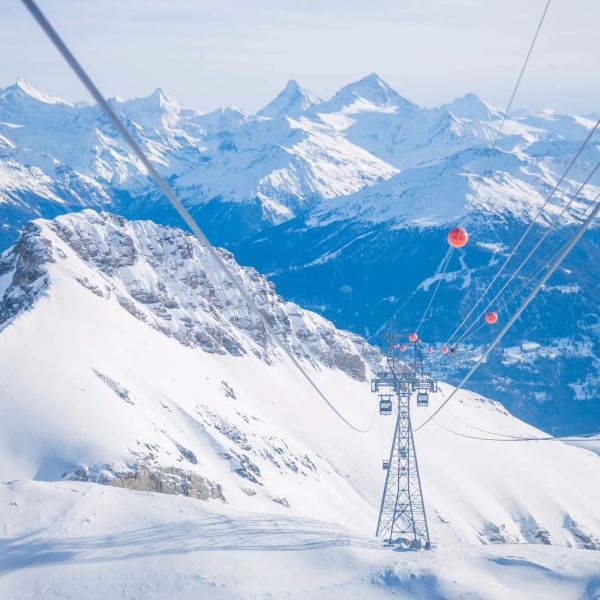
Less than four months out from the Crans-Montana 2027 World Championships, the man running the organising committee has stepped down. Claude-Alain Schmidhalter resigned as Swiss-Ski vice president and OC president after being indicted over a business dispute unrelated to skiing. He denies the allegations and faces court on October 27. Interim leaders are in place for the February 1-14 event.
9 Oct 2026