
Hakkoda
666m vertical on Mt Tamoyachidake, 17m annual snowfall, 101-person ropeway. Backcountry powder in Aomori Prefecture, Japan.
Season 2025-2026
Opens
5 Dec 2025
Closes
29 Mar 2026
Days open
114
Annual snow
17m
The Overview
Michael Fulton
Melbourne-based skier and snowboarder with 50+ resorts across 5 continents. Specialises in Australian resorts and international resort comparisons.
Hakkoda occupies the western face of Mt Tamoyachidake in Aomori Prefecture, rising from 658 metres to a 1,324-metre summit with 666 metres of vertical drop. The area offers 5 designated runs across 200 hectares, split 20 per cent beginner, 60 per cent intermediate and 20 per cent advanced. Annual snowfall averages 17 metres, placing it amongst Japan's snowiest ski areas and creating base depths that regularly exceed 4 metres through midwinter.
The terrain character is backcountry-oriented rather than resort-groomed. Two marked courses descend from the ropeway summit: a 5-kilometre Forest Course and a 3.5-kilometre Direct Course. Between and beyond these boundaries lies vast untracked terrain, mostly ungroomed and open to anyone willing to navigate powder up to thigh depth. Four additional backcountry routes drop to the ring road circling the mountain, requiring avalanche safety equipment and typically a guide.
Sansou Lodge at the lift base provides hot food and vending machines, but infrastructure remains minimal by resort standards. No learner zone, daycare or extensive rental fleet exists. Weekdays see negligible crowds even during January and February storm cycles, whilst weekend queues form for the 101-person ropeway during peak season. The famous juhyo snow monsters—frost-laden evergreens shaped by wind and precipitation—fill the landscape from January through February.
Hakkoda operates independently without pass affiliations or connections to other resorts. The season runs mid-December through mid-May depending on conditions, amongst the longest in Japan. The area suits strong advanced and expert skiers comfortable navigating whiteouts, deep powder and tree wells. Those seeking groomed intermediate runs can access limited terrain via the separate double chairlift at Hakkoda Kokusai, located near the ropeway base.
666m
Vertical
5
Runs
494 acres
Skiable
17m
Annual snow
The Terrain
5 runs across 494 acres skiable
Hakkoda is different from nearly every other resort in Japan. The 200-hectare ski area climbs 666 vertical metres, from 658 metres to 1,324 metres on Mount Tamoyachidake, but the map shows only five runs, and almost none of the skiing is groomed. Sanity grades the terrain 20% beginner, 50% intermediate, 20% advanced and 10% expert, which reads gentler than the experience feels once snow is deep and visibility drops. One large ropeway and two double chairs provide the access. The mountain is dominated by volcanic, forested terrain where heavy Siberian-driven snowfall buries the trees and the terrain is more natural than patrolled.
Two signposted ungroomed routes, the Forest Course and the Direct Course, give less experienced skiers a way down from the ropeway summit, the longer one around five kilometres. Beyond them, several routes radiate from the top station into open slopes and tree lines, with short hikes unlocking more. In January and February, rime-coated trees form snow monsters across the upper mountain. Backcountry experience and avalanche gear are essential off the marked courses, and a local guide is strongly advisable. Hakkoda suits strong intermediates through to experts wanting tree skiing, and it is not an easy choice for first-timers.
Terrain split
5
runs
5 runs across 4 grades
Beginner1 run · 20%
Intermediate3 runs · 50%
Advanced1 run · 20%
Expert1 run · 10%
Time it right
When to visit Hakkoda
The 2025-2026 season opened 5 December 2025 and closes 29 March 2026, though Hakkoda typically operates from early December through mid-May when conditions allow. Backcountry routes often remain skiable into May, extending the season well beyond most Honshu resorts. The area sits within Towada-Hachimantai National Park in Japan's Tohoku region, 20 kilometres south of Aomori city at the northern tip of Honshu.
Annual snowfall averages 17 metres, with estimates ranging from 14 to 21 metres depending on the season. Snow quality remains lighter than southern Honshu resorts due to northerly latitude, though proximity to the Sea of Japan—just 30 kilometres west—brings moisture-laden storms. Base depths reach 4 metres through midwinter. No snowmaking exists across the mountain. Mid-December through late February delivers 6 to 7 powder days per week on average, though these coincide with harsh weather including high winds and low visibility.
January and February provide peak snowfall but severe conditions regularly close the ropeway and obscure navigation. March and April offer better visibility, milder temperatures and continued deep snow, making spring the preferred window for many visitors. Late September through mid-October delivers vibrant autumn colours for ropeway sightseers. The frost-covered snow monsters reach full formation from January through February, creating the area's most photographed scenery.
No night skiing, terrain parks or organised events feature in the winter programme. The focus remains entirely on natural snow and untracked descents. Guides operate daily through winter, offering packages that include gear rental, transport and post-ski onsen visits. The Hakkoda Ski Guide Club and similar outfitters run most commercial guiding operations, essential for accessing backcountry routes safely.
Season 2025-2026
5 Dec 2025
Opens
29 Mar 2026
Closes
114
Days open
17 m
Annual snow
Getting there
Getting to Hakkoda, and where to stay
Hakkoda sits 20 kilometres south of Aomori city in southern Aomori Prefecture, within the northern section of Towada-Hachimantai National Park. The ski area occupies Mt Tamoyachidake, one peak within the larger Hakkoda volcanic complex comprising approximately 20 summits. The highest peak, Mt Odake, reaches 1,585 metres. The base station sits at 658 metres elevation near the Sukayu Onsen hot spring area, surrounded by beech and fir forests that give way to alpine wetlands higher up.
Aomori city lies 28 kilometres north, accessible in 45 minutes by car or 60 minutes by JR Bus. Shin-Aomori Station, the shinkansen terminus, sits 28 kilometres away with direct bullet train service from Tokyo in 3 hours 10 minutes. Aomori Prefecture occupies Honshu's northernmost point, roughly 710 kilometres north of Tokyo at a latitude comparable to New York and Madrid. Lake Towada and Oirase Gorge lie southeast within the same national park, whilst Mutsu Bay and the Tsugaru Strait separate Aomori from Hokkaido to the north.
National Route 103 connects Aomori city to the ropeway base, though the road closes nightly from 9:00pm to 7:00am throughout winter for safety. Prefectural Route 394 passes nearby via the Jogakura Bridge, a 360-metre arch bridge spanning Jogakura Gorge. Fixed-rate taxis from the ropeway area to Aomori city cost approximately ¥8,000. The Sukayu Onsen bus stop sits 15 minutes from the lifts during winter road closures between Hakkoda and Lake Towada.
Aomori Airport lies 40 kilometres northeast with 40-minute drive time or 50-minute taxi transfers. JAL operates multiple daily flights from Tokyo Haneda (80 minutes) and Osaka (95 minutes), plus international connections via Seoul and Taipei. Airport buses to Aomori Station run hourly, taking 35 minutes. Misawa Airport, 90 kilometres east, provides additional access. Car hire at either airport or Aomori Station enables independent exploration, essential given limited public transport frequency through winter.
Where to stay
Search all stays →Hotels and lodges near Hakkoda, powered by Stay22.
Latest News
From the SnowStash desk
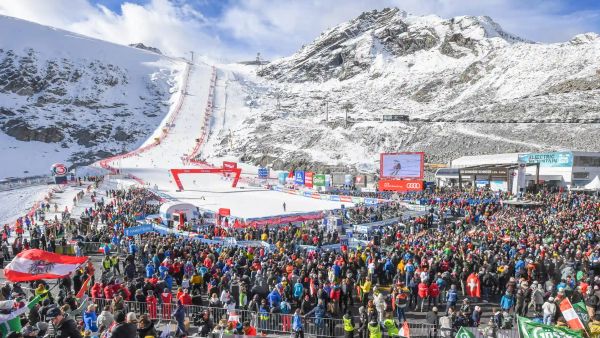
Pinheiro Braathen Wins Sölden Giant Slalom Opener by 0.48 Seconds
Two days at Sölden, two races decided by a hundredth somewhere on the podium, and one very quick Brazilian. Lucas Pinheiro Braathen led from the first run to win the men’s World Cup opener by 0.48 seconds, with Loïc Meillard second and Marco Odermatt third. River Radamus charged from 15th to fourth on a rutted course, and Britain’s Freddy Carrick-Smith banked his first World Cup points. Braathen still hasn’t lost a giant slalom since Olympic gold.
25 Oct 2026
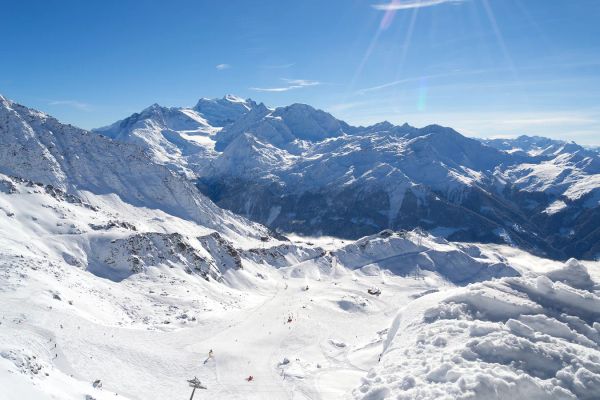
Alps Snow Forecast: Up to 64 cm Headed for the High Glaciers as the Snow Line Drops
The Alps are about to swap mild, sunny October weather for something far more wintry. A cold front arrives Tuesday, and SnowStash forecasts have Monterosa Ski out in front with 64 cm over 14 days, ahead of Blatten Belalp (55 cm) and Verbier (43 cm). The snow line should fall below 2000 metres by Wednesday night, and glaciers across Switzerland, Italy and Austria are in line for the best of it. The wind will have a say too.
20 Oct 2026
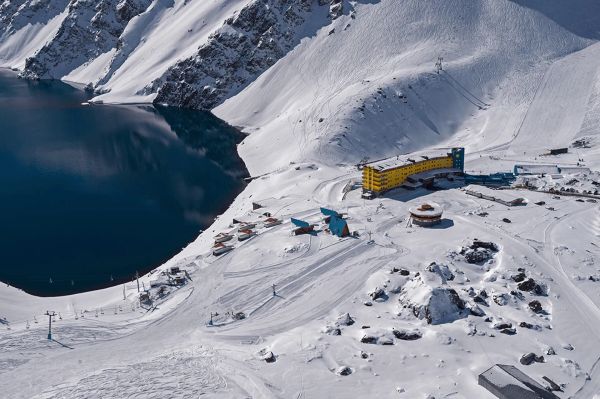
Four Dead After Avalanche Near Ski Portillo in Chile
A large avalanche struck near Laguna del Inca adjacent to Ski Portillo on Saturday afternoon, killing four people and injuring four others. The group were day visitors mountaineering in the backcountry after reportedly being warned about elevated avalanche risk by resort staff.
18 Oct 2026

Europe Ski Resorts Open Now: What Is Skiable in Mid-October 2026
Europe’s ski season is open, technically. After a record-warm summer, glaciers in Austria, Switzerland and Italy are running a few pistes apiece, Sölden, Stubai and Kitzsteinhorn started late, Titlis has pushed back to 24 October, and Zermatt reopens a few lifts on 14 October after more than two months shut. Finland’s Levi and Ruka are skiing on stored snow. Here is what is open, and what you actually get at each.
14 Oct 2026

Zermatt Plans World Cup Downhill Return on the Gornergrat for 2028
Zermatt is having another crack at a World Cup downhill, and this time nobody has to cross a border. Around 13 million Swiss francs is going into rebuilding the Gornergrat piste, including a jump fed by a roughly 300-metre in-run across the roof of the Gornergrat Railway gallery, with the Matterhorn lined up behind it for the TV cameras. First men’s race is pencilled in for March 2028, pending FIS homologation.
14 Oct 2026

Mt. Rose Begins Snowmaking for the 2026-27 Season at Lake Tahoe
Lake Tahoe’s highest base elevation is paying off early: Mt. Rose has started making snow for 2026-27 after the first flurries and a cold snap. The Nevada resort is backing it with nearly US$2 million in upgrades, including a replacement snowmaking main line, a new PistenBully groomer and restraint bars on every lift. Opening day is yet to be confirmed, though Heavenly and Northstar are already eyeing 20 November.
13 Oct 2026

Utah Ski Resorts 2026-27: What’s New at Alta, Deer Valley, Powder Mountain and More
Utah is still building flat out. For 2026-27, Powder Mountain opens a steep new Skytrac chair into more than 1,000 acres of advanced terrain, Deer Valley adds 200 acres on Hail Peak, Sundance gets a new quad and Park City adds a gondola from its new parking structure. Snowmaking is expanding almost everywhere, Eagle Point stays closed after the Cottonwood Fire, and the 2034 Games are setting the pace. Here’s what’s new, resort by resort.
13 Oct 2026

Mt Hutt Invests NZ$12 Million in Base Area, Tripling Its Sun Deck
Mt Hutt is getting busier, and its base lodge is about to catch up. NZ$12 million goes into a heated sun deck roughly three times the current size (430 m² to 1,300 m²), plus a new toilet block, heated steps down to snow level, extra storage and a new food and beverage outlet. Building starts after the 2026 season, with everything due for winter 2027.
11 Oct 2026
Hakkoda Snow Report
Snow Report
Updated 26 Oct 2026
1324m
summit
+0cm
new snow · last 24 hours
Partly Cloudy1°C / 8°C · SW 16km/h
Snowfall
24 hours
0cm
48 hours
0cm
7 days
0cm
Base depth
0cm
Season total
0cm
Total lifts3
Live open status isn’t available right now.
5 Dec 2025 - 29 Mar 2026
Hour by Hour
Next 41 hours· Updated Oct 27, 2026 at 5:02 AM
Scroll for the full outlook · Open-Meteo
7-Day Outlook
1,191 mUpdated Oct 27, 2026 at 5:02 AMOpen-Meteo
Days 1–7
28cm
Days 8–14
4.9cm
Tue, Oct 27
Rain
Temp8° / 1°°C
Snow0.0cm(100%)
Wind16 km/h SW
Live snow from the resort feed; forecast from Open-Meteo, via Supabase.
Understanding the Hakkoda snow report
Get the latest Hakkoda snow report — real-time snowfall, snow depth, and mountain weather for this Tohoku resort, spanning 658m to 1324m in elevation.
Snow measurements
Our snow reports measure snowfall in centimeters over multiple time windows — last 24 hours, last 7 days, and the season total. Base depth reflects accumulation at the 658m base area, while summit depth captures conditions 666m higher at 1324m, where snow typically stays colder and lingers longer. Imperial conversions are shown alongside for convenience.
Weather conditions
Snow quality tracks closely with temperature and wind. We surface both alongside the snowfall data so you can judge whether conditions at Hakkoda are holding up or starting to soften.
Data sources
We pull Hakkoda's conditions from on-the-ground mountain reporting, then layer in forecast data so you get a fuller picture than either source alone. The mountain is served by 3 lifts, including an aerial tram.
When to check
Conditions can change overnight, so mornings and late afternoons are the best times to check back on Hakkoda.