Back to News
Mt. Shasta Ski Park Closes Early as California Snowpack Hits 10-Year Low

Mt. Shasta Ski Park Closes Early as California Snowpack Hits 10-Year Low

Published Date:

Michael Fulton

Melbourne-based ski expert with 45+ resorts across 5 continents. Specialises in Australian skiing and riding and international resort comparisons.

45+ resorts visited14 years skiing

Mt. Shasta Ski Park Shuts Down for the Season After Just 55 Days on Snow

California's northernmost ski area has closed for the season, and it didn't go out quietly — temperatures near Mt. Shasta City are forecast to hit 70°F next week, with Redding potentially reaching the 90s. When your local weather looks more like summer than spring, there's not much a ski resort can do.

Mt. Shasta Ski Park, an independently owned area and Indy Pass partner, made the call on 10 March after a season disrupted multiple times by warm spells and rain. The resort had already shuttered temporarily on 9 February, reopened, then closed again on 2 March before making the final call. Total days on snow for the season: 55, just shy of the 60-day guarantee offered to season pass holders.

What Happens to Season Pass Holders

Anyone holding a season pass will receive credits valid for the 2026-27 winter. Given the resort came up five days short of its guarantee, that's the appropriate call — and worth knowing if you had a pass this year or are considering one for next season.

Mt. Shasta Ski Park is closed for the 25/26 season.
The Broader Picture: California Snowpack in Trouble

This isn't just a Mt. Shasta problem. The Sierra Nevada snowpack is currently sitting at less than half its historical average, making it the leanest season since 2015 according to California Department of Water Resources data. That's a significant number — California had an extraordinarily wet 2022-23 season that reset expectations, and this winter has been a sharp reminder of how quickly conditions can swing in the opposite direction.

Nearby Mt. Ashland, just over the Oregon border, has also paused operations pending more snow. Both resorts opened late — after Christmas — and both have endured repeated mid-season closures caused by rain and above-average temperatures. It's been a rough stretch for the northern end of the California-Oregon corridor.

What's Left of the Season

With no meaningful storm systems on the forecast and brown dirt already visible on Shasta's lower slopes, there's no realistic scenario where operations resume this season. The National Weather Service's temperature outlook for the region effectively rules out any recovery.

On the bright side — if you can call it that — Mt. Shasta Ski Park is hosting a season wrap-up party on Saturday 14 March, complete with a St. Patrick's Day theme and a scavenger hunt. Which is honestly a pretty decent way to close out a difficult season. Better than just turning the lights off and going home.

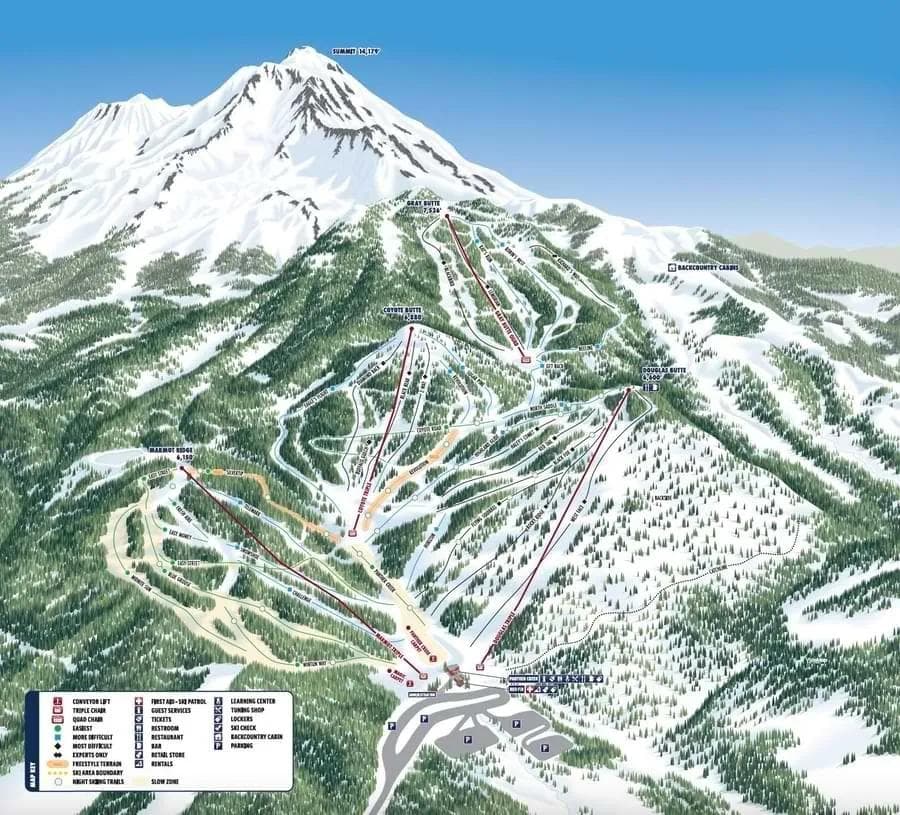
Mt Shasta trail map.
Mt Shasta trail map. Credit: Mt Shasta Resort

What This Means for Western US Skiing

The early closure at Mt. Shasta is another data point in what's shaping up to be one of the more challenging seasons for smaller, lower-elevation Western US resorts. Larger resorts at higher elevations have fared better, but mid-tier and independently owned areas — which often rely on a narrower operational window and tighter margins — are feeling the pressure of a warm, low-snow winter more acutely.

If you're planning a late-season California trip, the major Sierra Nevada resorts remain a safer bet at this point. Mt. Shasta was always going to be the most weather-vulnerable option in the state given its latitude and elevation profile, and this season has illustrated exactly why.

For season pass holders, watch for communications from the resort directly regarding credit redemption for next winter.