SnowStash LogoSnowStash Logo
Back to News
Two Skiers Killed in Val Ridanna Avalanche as 25 Tourers Caught on Same Slope

Two Skiers Killed in Val Ridanna Avalanche as 25 Tourers Caught on Same Slope

Published Date:

Michael Fulton

Melbourne-based ski expert with 45+ resorts across 5 continents. Specialises in Australian skiing and riding and international resort comparisons.

45+ resorts visited14 years skiing

Two Skiers Dead After Avalanche Sweeps 25 Tourers at Val Ridanna in South Tyrol

An avalanche at Val Ridanna in South Tyrol, Italy, killed two ski tourers and injured five others on Saturday, March 21 - despite the day's avalanche danger sitting at just Level 2 out of 5. Twenty-five people were caught on the same face when the slide released without warning, making it one of the most significant avalanche incidents in the region in recent years.

What happened and where

The slide released at around 11:40am on the Hohe Ferse - known in Italian as Tallone Grande, or Great Heel - a peak that sits at 2,669 metres and straddles the ridge between Val Ridanna and Val di Racines in Alto Adige. The snow struck the group at an elevation of around 2,445 metres.

According to Italian news agency ANSA, the final toll confirmed by the Bolzano Emergency Coordination Centre stands at two dead, three seriously injured, and two with minor injuries. The majority of the 25 tourers were only grazed by the slide. One critically injured woman from Brescia was airlifted directly to the University Hospital in Innsbruck by the Austrian rescue helicopter Christophorus.
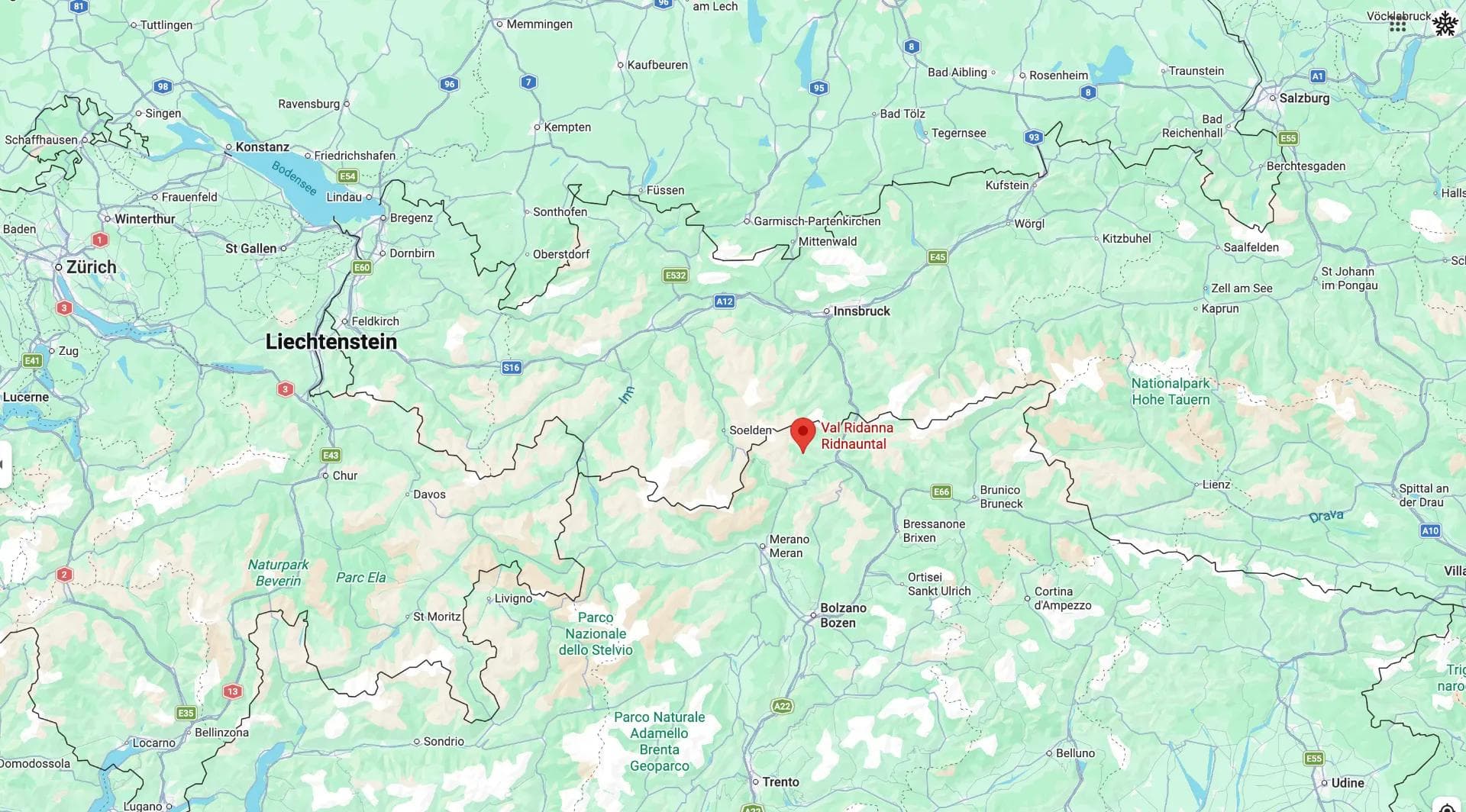
Location of Val Ridanna in South Tyrol
Location of Val Ridanna in South Tyrol ©️ Google Maps

Rescue operation

The response was large by any measure. Six helicopters and around 100 rescuers were deployed, including teams from the South Tyrol Mountain Rescue Service, the Bergrettung, the Alpine Rescue Corps of the Guardia di Finanza (SAGF), and Austrian Mountain Rescue. A coordination base camp was established in Val Ridanna, with additional technical support from Tyrolean responders across the border.

From the Italian side, three Pelikan helicopters, the Aiut Alpin, and Guardia di Finanza aircraft were deployed alongside roughly 80 rescuers drawn from across the Upper Isarco Valley. Hospitals in Vipiteno, Bressanone, Merano, and Bolzano were all placed on alert, as were ECMO - extracorporeal membrane oxygenation - facilities in Innsbruck for the most critically injured.

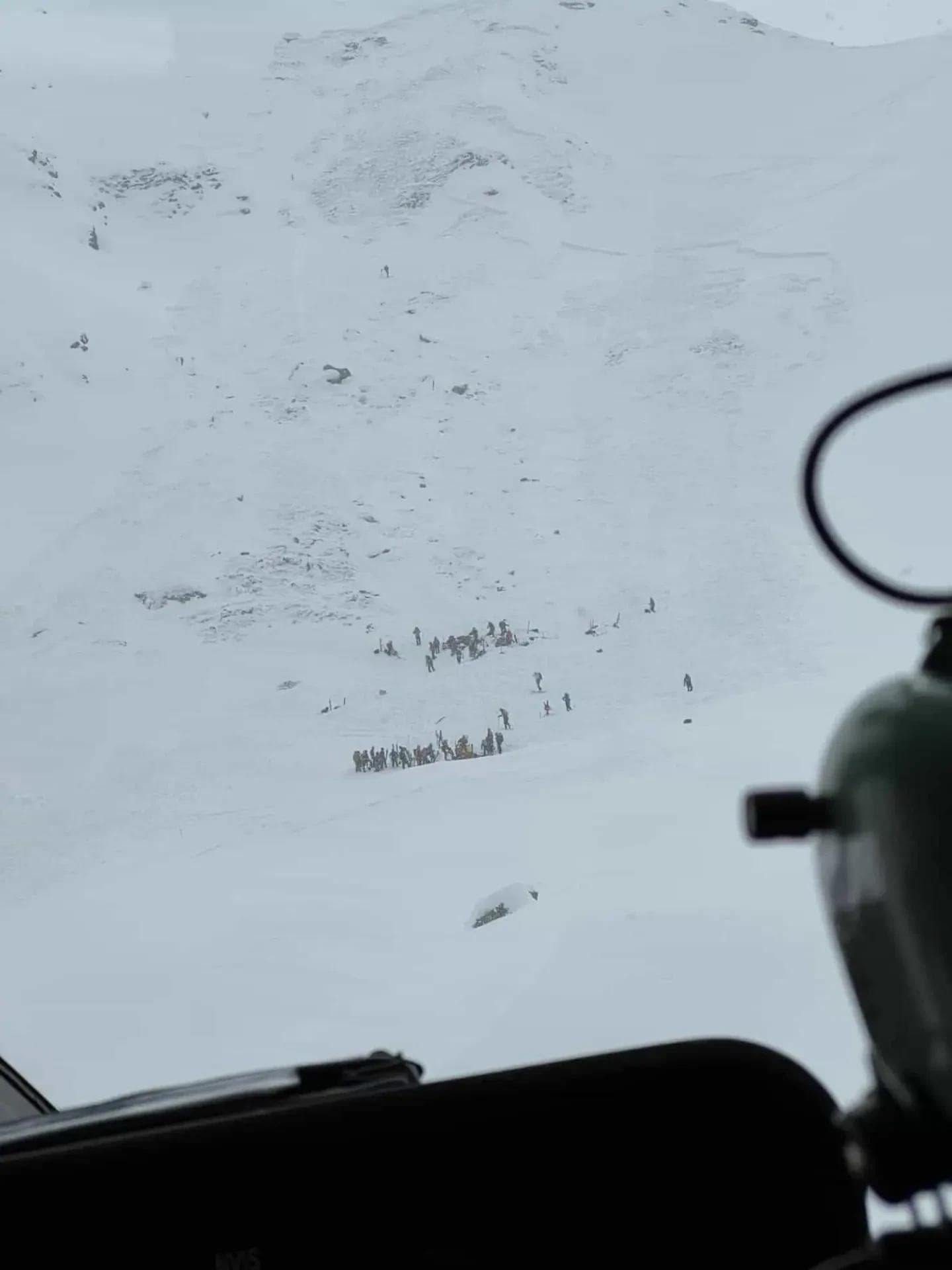
The avalanche spot high in the mountains with rescue crews working the scene.
The avalanche spot high in the mountains with rescue crews working the scene. ©️ LaPresse

Gear, groups, and the danger rating problem

Reports from LaPresse indicate that all 25 tourers were carrying ARTVA avalanche transceivers - so equipment wasn't the issue here. The 25 individuals came from several different groups who happened to be on the same slope at the same time.

What makes this incident particularly worth paying attention to is the danger rating at the time. The avalanche bulletin published by Meteo Trentino for Saturday listed a Level 2 "Moderate" rating - the second-lowest on the five-point scale. The bulletin did flag that wind-packed snow and old snow with persistent weak layers required close attention, but Level 2 is a rating on which most backcountry skiers and tourers would typically feel comfortable operating.

It's a reminder that avalanches don't read forecasts. Moderate danger doesn't mean no danger, and a loaded slope can release regardless of what the bulletin says.

A difficult winter for the Alps

This incident adds to an already heavy season for avalanche fatalities across the Alps. Earlier reporting has noted that Europe recorded 100 avalanche deaths by February this season alone.

South Tyrol also marked a grim anniversary just nine days before this slide. On March 12, the region observed the 10th anniversary of the Monte Nevoso avalanche near Riva di Tures, which killed six people and remains the deadliest avalanche disaster in the province's recent history.

Investigators have not yet released information on the nationalities of the victims or the precise triggering cause. Authorities continue to urge anyone heading into high-altitude terrain - particularly on slopes affected by wind loading or with known weak layers - to check local avalanche bulletins carefully before heading out.

Want to be notified when Claude responds?