TL;DR
St. Anton's annual Der Weisse Rausch race sends 555 skiers and snowboarders down 7.3 kilometres of slushy, mogulled terrain after the lifts close. The course includes uphill boot-packing and a final obstacle section that participants navigate with skis in hand.
St. Anton's end-of-season ritual is a 7.3-kilometre descent down deteriorating snow after a day of spring skiing
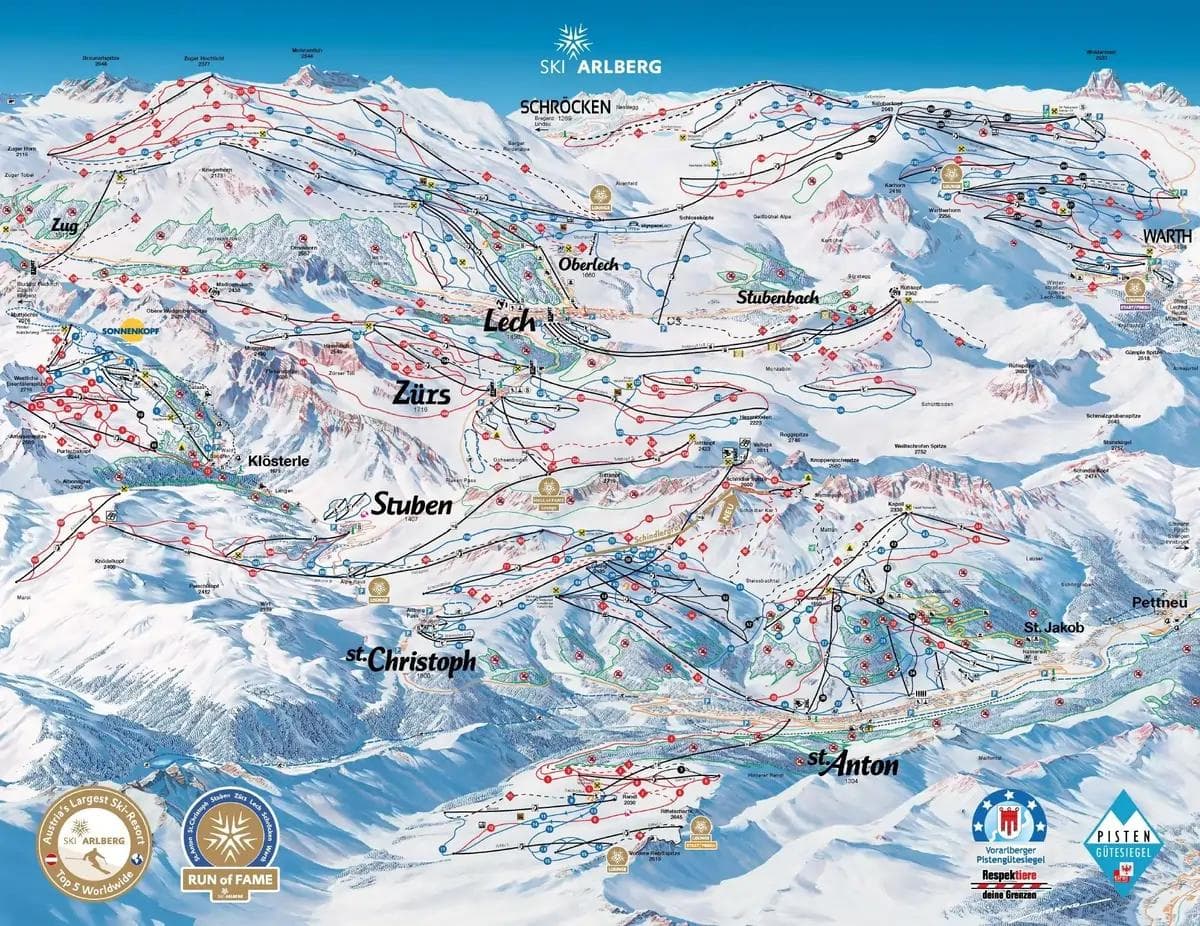
Der Weisse Rausch ("the white rush") at St. Anton runs 555 competitors down 1,346 metres of vertical from Vallugagrat to the valley. The race starts at 5 p.m. after the lifts shut down, which means participants face exactly what you'd expect from late-April snow that's been skied all day: moguls, deep ruts, and varying states of slush depending on aspect and altitude.
The White Rush at St Anton is a closing event every season.
Race Format and Challenges
The 7.3-kilometre course starts at Vallugagrat (2,811 metres), the highest point in St. Anton's ski area. Beyond the standard challenge of managing deteriorating snow conditions, the course includes an uphill boot-packing section near the start that takes the faster competitors three to five minutes. Participants then ski to the valley where they navigate a final obstacle course with skis in hand.
Austrian Dieter Bischof won the men's race in 8:26.64, his fourth consecutive victory. Germany's Petra Zeller took the women's title in 11:34.10, also her fourth White Rush win. The three-minute gap between winning times is worth noting, though without course profiles showing where the uphill and obstacle sections occur, it's difficult to assess whether this reflects the physical demands of those segments or simply baseline speed differences.