SnowStash Logo
AustraliaCanadaEuropeJapanNew ZealandUnited StatesNews
Sign InSign Up Free

Contact Us

hello@snowstash.com

Download Our App

Download on the App Store

Company

About UsWork With UsPrivacy PolicyMobile App

© 2026 Snowstash. All rights reserved.

    Back to News
    Wind Gust Likely Caused Fatal Titlis Gondola Crash, Swiss Investigators Find

    Wind Gust Likely Caused Fatal Titlis Gondola Crash, Swiss Investigators Find

    Published Date: April 17, 2026

    Michael Fulton

    Michael Fulton

    Melbourne-based skier and snowboarder with 50+ resorts across 5 continents. Specialises in Australian resorts and international resort comparisons.

    50+ resorts visited15 years skiing

    Categories

    Engelberg-Titlis
    Titlis
    Switzerland

    A sudden wind gust is the most likely cause of the fatal Titlis Xpress gondola accident, according to investigators and the lift's manufacturer

    A 61-year-old woman was killed on March 18 when an eight-person cabin on the Titlis Xpress gondola detached from its cable, fell onto a snow-covered slope, and rolled several times before coming to rest. She was the sole occupant of the cabin. First responders attempted resuscitation at the scene but were unable to save her. The accident occurred shortly before 11 a.m.

    While the investigation by the Swiss Transportation Safety Investigation Board (SUST) is ongoing, early findings point to extreme wind as the triggering factor. Lift manufacturer Doppelmayr Garaventa has reached the same preliminary conclusion.
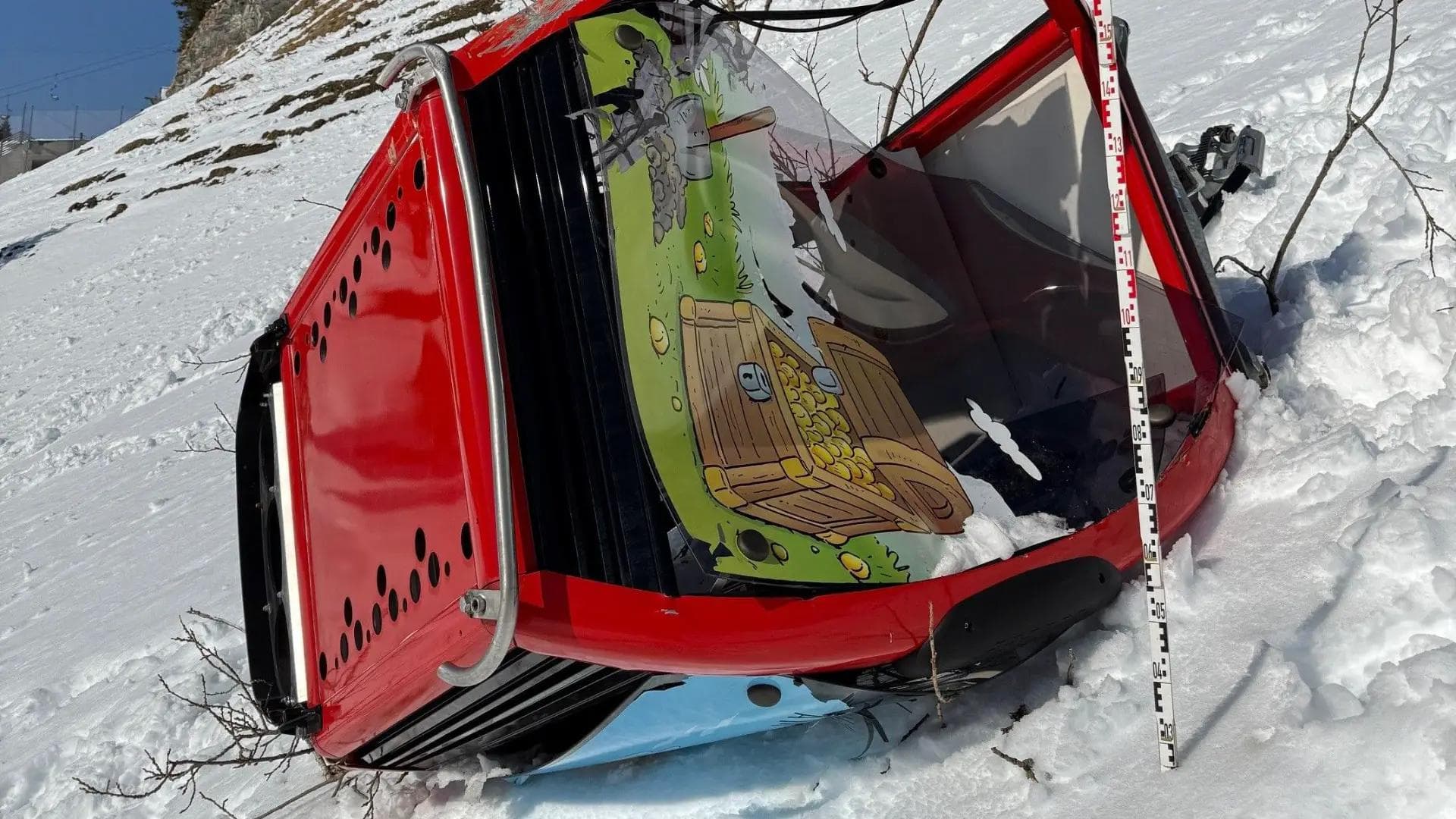
    The rubble of the gondola at fell to the ground and killed the sole rider.
    The rubble of the gondola at fell to the ground and killed the sole rider.

    What investigators believe happened

    According to Doppelmayr Garaventa CEO Arno Inauen, the cabin was violently swung by an unexpectedly strong gust of wind, causing it to collide with a support tower. SUST's physical examination of the lift infrastructure supports this sequence - investigators found evidence of contact between the gondola's clamp mechanism and the roller assembly on the tower. That impact appears to have been the critical moment, after which the cabin was torn from the cable and fell.


    Wind gusts in the region were recorded at up to 105 km/h on the day, with potentially higher speeds at exposed points along the lift line. National weather services had already issued wind warnings, and some lift installations in the area had been shut down before the crash occurred. The resort has stated that staff had begun the process of closing the Titlis Xpress gondola when the accident took place.

    No mechanical fault identified - but one question remains open

    Both the manufacturer and SUST have said there is no indication of a design or mechanical flaw with the gondola system. Doppelmayr Garaventa has stated the lift was in full working order prior to the incident. However, investigators have noted the possibility that the clamp - the mechanism that secures the cabin to the cable - may not have been fully closed, which could have made the gondola more susceptible to detachment under the force of the wind gust. Even in that scenario, the wind remains the primary contributing factor.

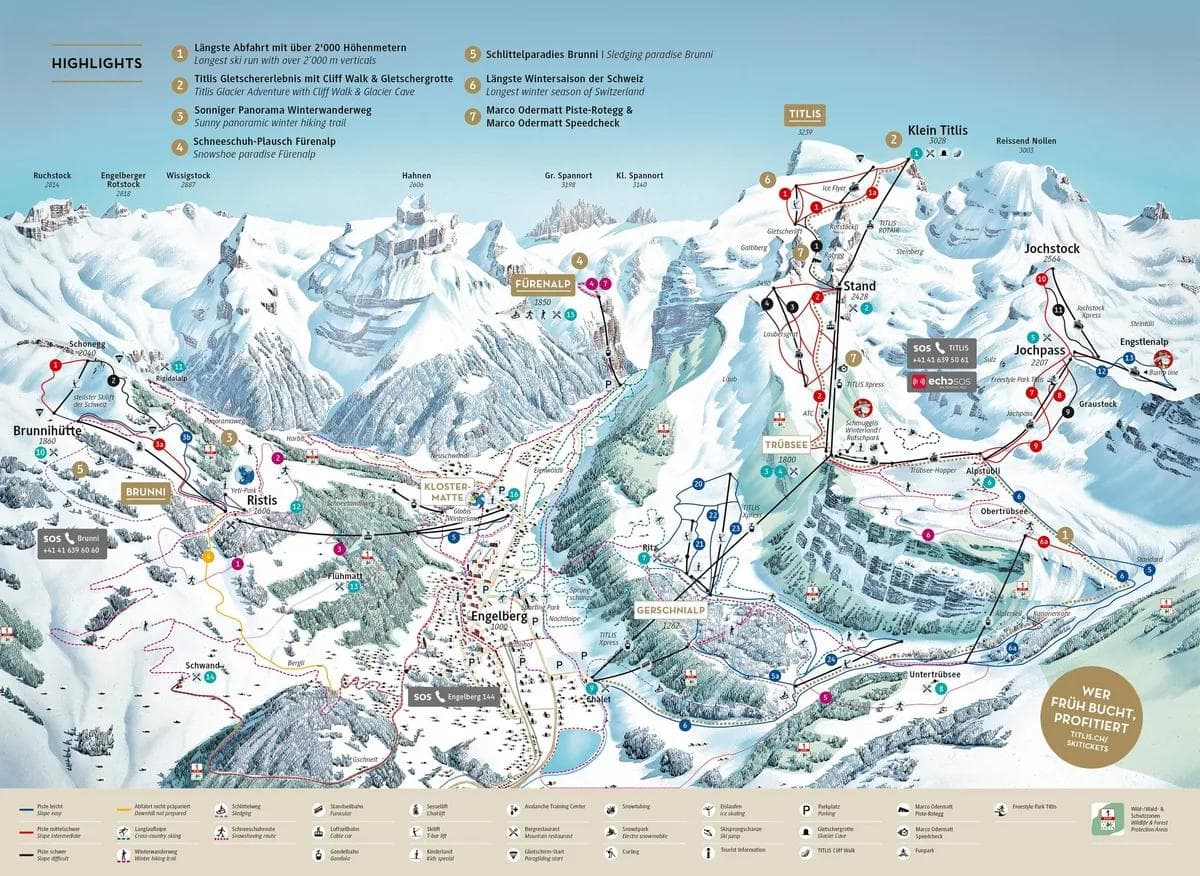
    The trail map at Titlis ski resort in Engelberg, Swtizerland
    The trail map at Titlis ski resort in Engelberg, Swtizerland

    Operational decisions under scrutiny

    Cable car systems use wind sensors mounted on support towers to feed real-time data back to operators. Industry guidelines generally trigger a warning at around 40 km/h, with an operational alarm at roughly 60 km/h that typically prompts speed reductions or a full shutdown. Whether conditions at the exact point of the crash exceeded those thresholds - and how quickly operators acted on the data - is a central focus of the ongoing investigation. The resort maintains that its staff followed correct procedures.

    SUST is continuing to analyse wind sensor data from the lift, along with operational records and camera footage. A separate criminal investigation is also underway. The final report will determine whether the accident resulted solely from extreme weather or whether the timing of operational decisions played a contributing role.

    What this means for skiers

    Gondola and cable car systems across the Alps are built to handle significant wind loads, and incidents like this are exceptionally rare. That said, the Titlis accident is a reminder that mountain weather can change rapidly and that lift operations involve real-time judgement calls about when conditions become unsafe. If you're skiing in high-alpine terrain and notice lifts closing around you due to wind, it's worth paying attention and making your way to lower elevations sooner rather than later. Wind at altitude can escalate far more quickly than conditions in the village suggest.

    Latest News

    Spring Glacier Skiing in Tyrol: Five Resorts Still Open Above 3,000 Metres

    Spring Glacier Skiing in Tyrol: Five Resorts Still Open Above 3,000 Metres

    Apr 18, 2026

    Banff Sunshine Named Best Overall Ski Destination in North America by OnTheSnow

    Banff Sunshine Named Best Overall Ski Destination in North America by OnTheSnow

    Apr 18, 2026

    Copper Mountain Extends 2025-26 Season to May 3 With $49 Lift Tickets

    Copper Mountain Extends 2025-26 Season to May 3 With $49 Lift Tickets

    Apr 17, 2026

    Top 5 Runs at Obertauern: A Piste-by-Piste Breakdown of Austria's Snow-Sure Resort

    Top 5 Runs at Obertauern: A Piste-by-Piste Breakdown of Austria's Snow-Sure Resort

    Apr 12, 2026

    Top 5 Runs at Hintertux Glacier - Zillertal Valley, Austria

    Top 5 Runs at Hintertux Glacier - Zillertal Valley, Austria

    Apr 11, 2026