Mayrhofen has a reputation that starts with one famously steep groomed run and ends with 548 kilometres of valley-wide terrain. Here's an honest breakdown of all six sectors, the lift system, pricing, and who this resort actually suits.
Mayrhofen is hard to ignore - and harder to do justice to in a single visit.
A 78% gradient on the steepest groomed run in Austria. Six interconnected sectors. A lift network moving over 60,000 people per hour. And a multi-day pass that automatically unlocks 548 kilometres of terrain across the entire Zillertal valley from day two onwards. I had two days of access courtesy of the team at Mayrhofen Bergbahnen - not a sponsored trip, but worth acknowledging their generosity in making it happen. Two days is enough to form a strong view. It's not enough to ski everything. Here's what I found.
Resort Overview
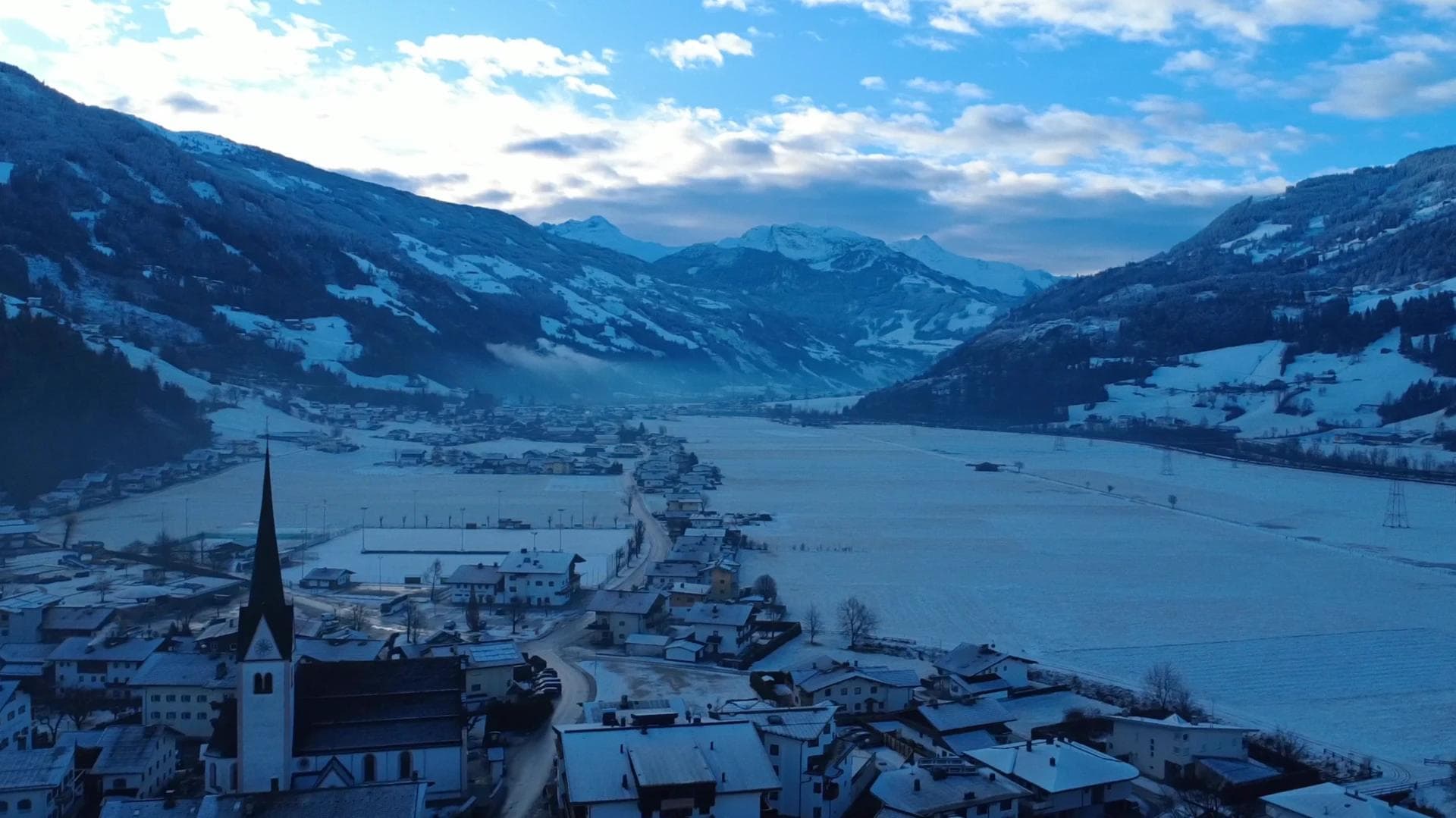
Mayrhofen village sits at 630 metres at the head of the Zillertal valley in the Austrian state of Tyrol, about 67 kilometres southeast of Innsbruck. The town is compact and walkable, with two separate lift base stations within a few hundred metres of each other in the village centre.
The resort runs across six distinct sectors: Penken, which is the main attraction, then Horberg, Finkenberg, Ahorn, Rastkogel, and Eggalm. Each has its own character. Together they cover enough variety that you're getting meaningfully different skiing depending on which part of the mountain you're on.
The lift network totals 61 lifts - 2 aerial trams, 7 gondolas, 17 chairlifts, and the rest a mix of T-bars, rope tows, and moving carpets. Uphill capacity exceeds 60,000 skiers per hour. That number matters when you're deciding whether queues are worth worrying about.
On any pass of two days or more, the Zillertal Superskipass is automatically included. That covers all four major ski areas in the valley - , , , and the - totalling 548 kilometres of piste, with free ski buses connecting everything. That's the headline value proposition.
Mayrhofen Ski Review - One Pass, Four Resorts, 548km of Skiing
Beginner Terrain
Beginners are well served here, and the key word is separation. The Ahorn sector - reached by the Ahornbahn, Austria's largest aerial tram at 160 passengers per cabin - is essentially a dedicated beginner and family mountain. The tram climbs 1,300 metres to a plateau in around seven minutes, and what you find at the top is a low-pressure environment that most mixed-ability groups will appreciate.
The Albert Adler tour is the standout feature for new skiers - a series of gently winding blue runs tracking down the mountain with enough variety to stay interesting across a full day. You're looking at roughly 500 to 600 metres of vertical on this route, which is a solid amount of terrain for someone still working on parallel turns. A six-seater and an eight-seater chair cover the full top-to-bottom span of Ahorn, and in my time over there neither the chairlifts nor the runs were particularly busy.
Dedicated magic carpets and learner infrastructure at the plateau mean beginners aren't sharing lift lines with faster riders - something a lot of resorts get wrong, and Mayrhofen gets right on this side.
One limitation to flag: Ahorn is a separate mountain. You're not skiing back to the Penken side mid-day without a descent to the valley and a tram ride. For a mixed-ability group, that logistics reality is worth thinking through before you arrive.
The beginner terrain in Ahorn at Mayrhofen ski resort.
Intermediate Terrain
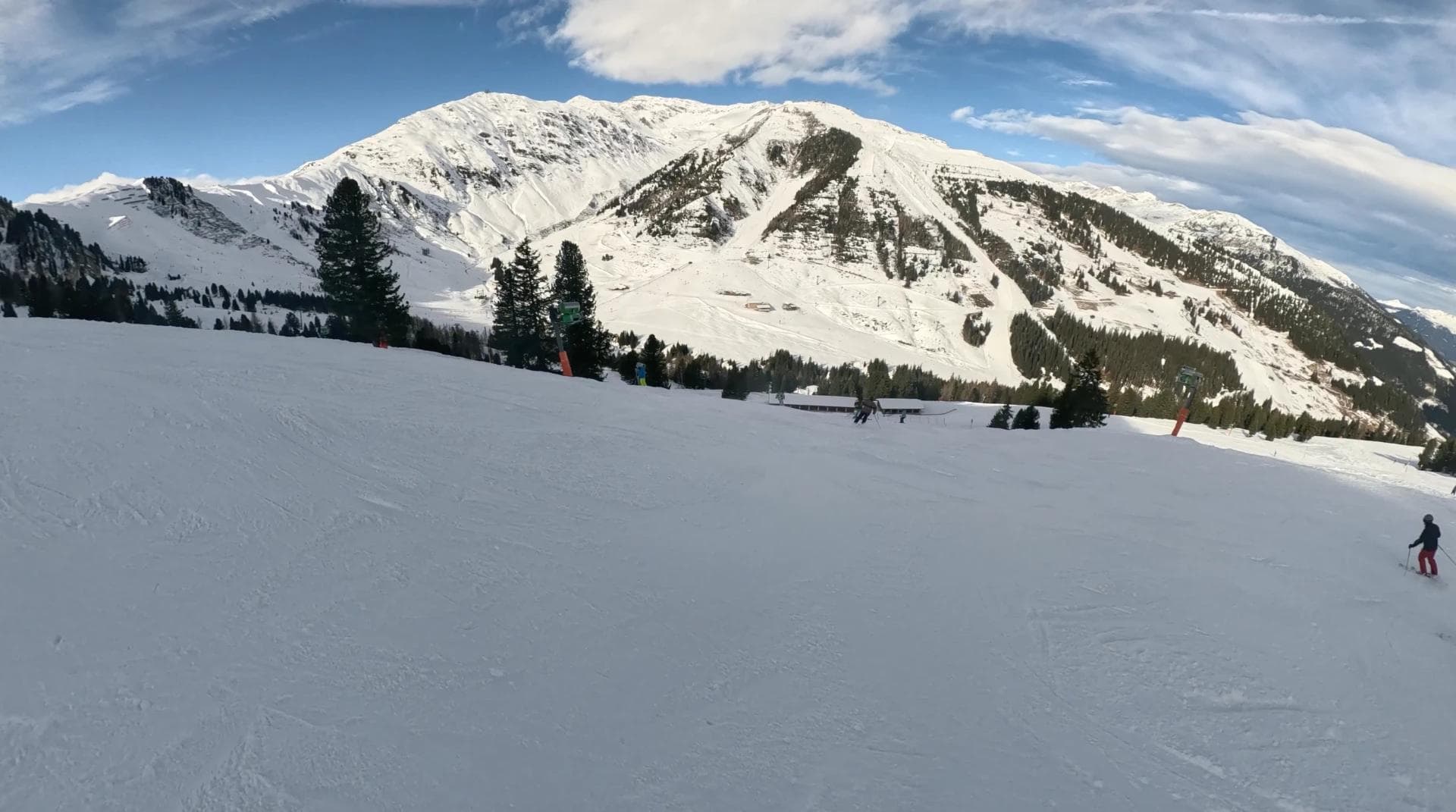
Intermediates make up the majority of most ski groups, and 46% of Mayrhofen's terrain is pitched directly at them. The skiing quality is strong - the question is knowing which sectors to prioritise.
The Rastkogel and Eggalm sectors, accessed via a 150-person aerial tram from within the Penken bowl, are where I'd send confident intermediates first. These two sectors sit above Lanersbach in the Tuxertal and offer long, open red runs with sightlines straight down towards Hintertux. The orientation catches plenty of sun, which means spring conditions earlier in the afternoon - but also some of the best scenery in the valley for your trouble.
Back on the Penken side, the Nordhangbahn and Schneekar lifts deliver pitched red runs that sit comfortably at the upper end of intermediate - the kind of terrain where you're working but not in trouble. The Schneekar zone has sustained pitch and good width, and is worth several laps on a good snow day.
Horberg, accessed from the Schneekar six-person express, rewards riders who like to build momentum and carry speed through a long vertical. The Mountopolis Race Track - a maintained speed course that professional teams use for training - sits in this zone and is open to the public when not in use. Worth a lap if your ego needs a reality check. I made it over there during my visit but it was completely overcast and I could barely see anything, so that one's going back on the list for next time.
Everything inside the main bowl from Penken through to Horberg will keep any intermediate rider satisfied for a few days - and that still leaves Rastkogel and Eggalm to explore separately. You're not running out of terrain mid-week.
The intermediate terrain is expansive at Mayrhofen.
Advanced and Expert Terrain
Let's address the obvious one first.
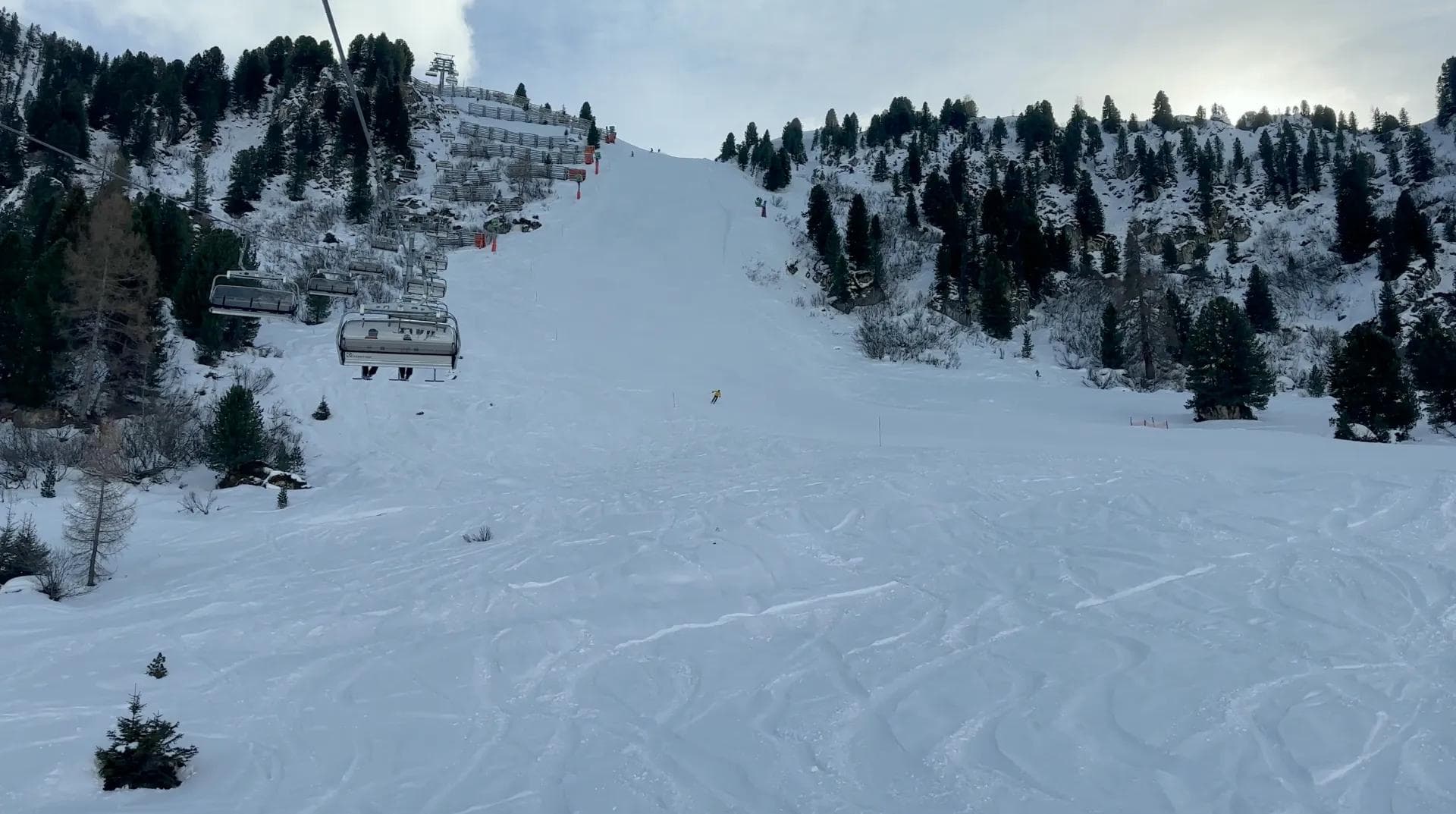
Harakiri is one of Austria's most famous groomed runs, with a gradient of 78%. For years it held the record as the country's steepest. The Kaunertal Glacier's Black Ibex has since pushed that record to 87.85%, but Harakiri remains the run that put steep Austrian skiing on the map - and the one people actually come to ski. It sits on the Penken sector, directly under the Knorren lift. Standing at the top is one of those moments where you immediately reassess what you thought you knew about your own skiing. The pitch is real, the grooming is real, and the consequences of losing your edges are equally real.
If you're a competent advanced rider who hasn't done it, put it on the list. Check your binding settings first, get a couple of warm-up runs in, and don't hike up there first thing on day one. The position of this run keeps it in the shade for most of the day, which is actually a plus - it keeps the snow cold and firm when the sunny aspects are starting to soften. And I know it doesn't look steep on video. Once you see it from the lift, you'll understand what all the fuss is about.
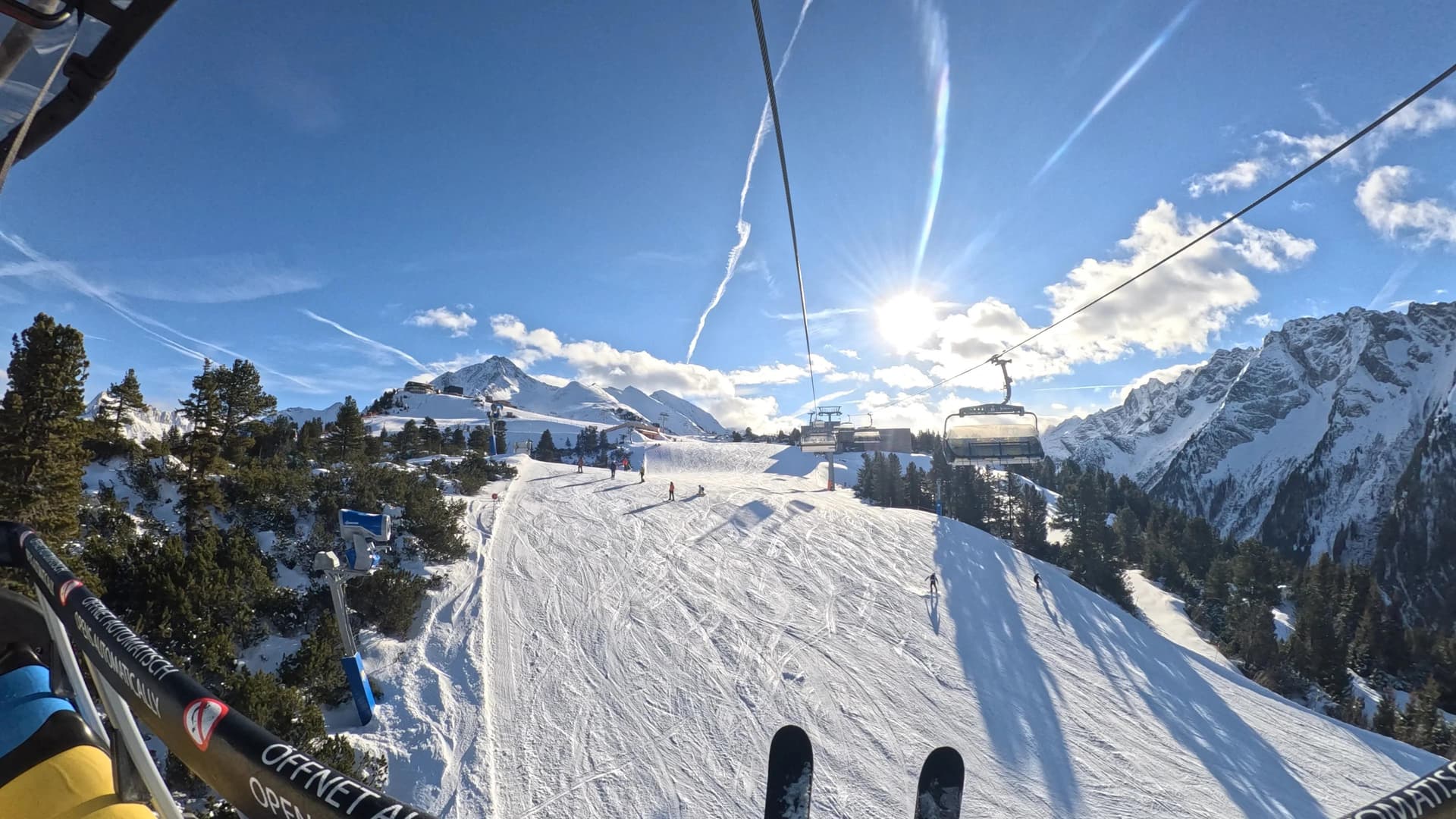
The Harakiri does not look that steep from the chairlift.
Beyond Harakiri, the Penken sector has more to offer the expert end of the ability range. Teufelsritt - the Devil's Run - tracks the full length under the Schneekar six-seater and is considered one of Austria's longest single black pistes. On a powder day, the flanks hold fresh snow well while the groomed central strip stays consistent. There's also a single black run on the Ahorn side - the main descent from the base of the Ebenwald chair down to the Ahornbahn valley station. On the Penken side, the 45 piste runs from top to bottom of the Katzenmoos zone. I didn't make it over there in two days, but that's always the deal with a resort this size - you leave something unexplored so you've got a reason to come back.
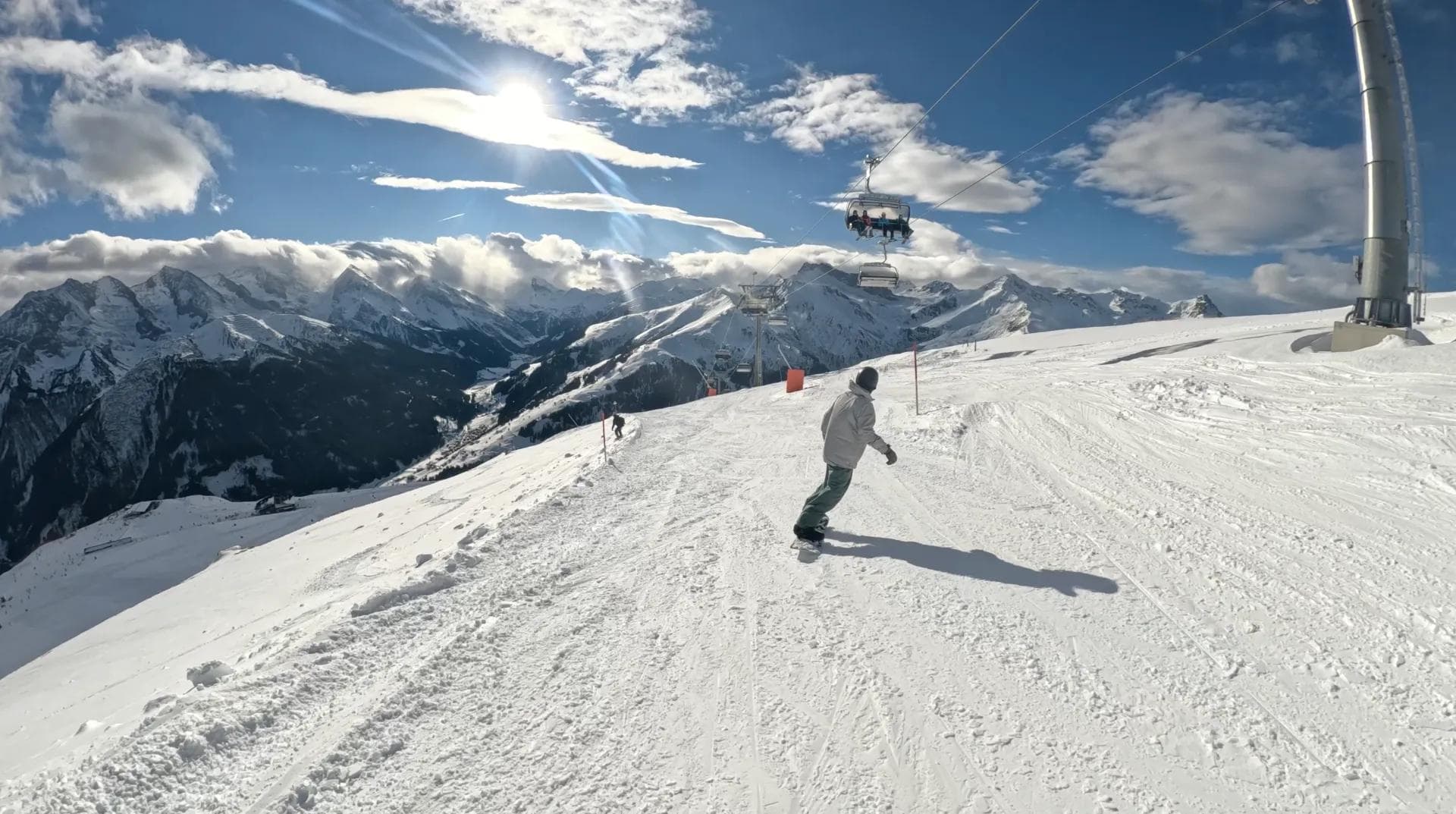
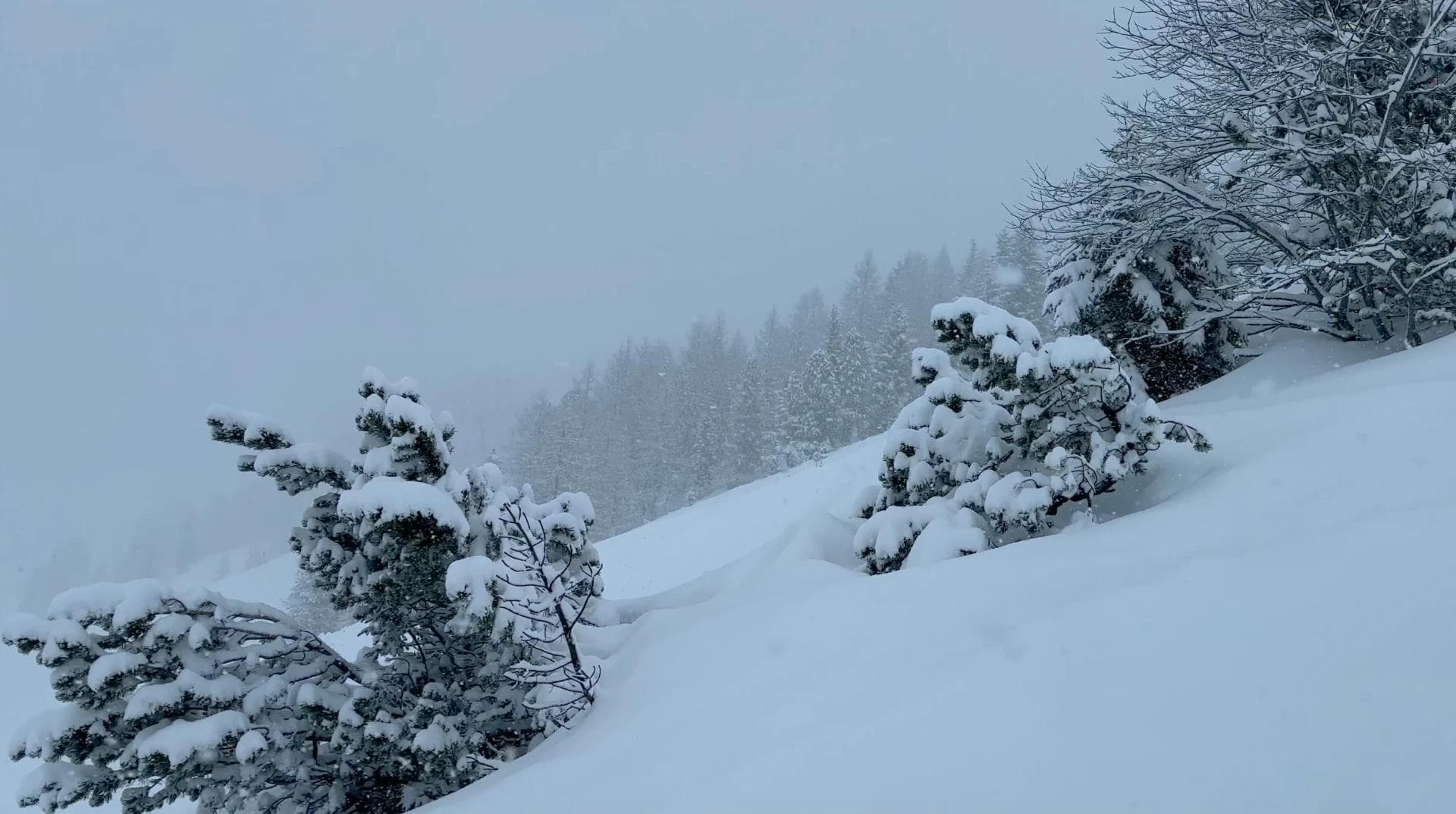
For riders comfortable off-piste, the terrain between marked runs opens up considerably after a storm. The bowls above Rastkogel and the steeper aspects on Penken hold powder well. My second day it snowed non-stop and I spent most of it lapping the off-piste under the Lärchwald quad with a group of snowboarders I'd met at the resort. When it's dumping here, get into the trees - visibility at the upper mountain in a storm is a real problem.
Austrian off-piste culture is worth understanding if you're coming from North America. Stepping off a marked run puts you into unmanaged terrain that the resort doesn't patrol or control. Check the avalanche bulletin before you go. If you're not familiar with the specific terrain, ski with someone who is or hire a local guide.
The Penken Park rounds out the expert offering for freestyle riders - an eight-zone facility running from beginner-accessible features through to professional-level lines, with a solid reputation as one of the more serious terrain parks in the Alps.
The Penken Park is found in the lower sections of the Penken Bowl at Mayrhofen.
Snow and Conditions
Mayrhofen receives an average of around 420 centimetres of natural snow annually at summit elevation. The snowiest stretch typically falls in the second week of January, with February delivering the most reliable base depths - averaging around 115 centimetres at upper elevations. The 2025-26 season ran from 5 December through 21 April, a solid 20-week window.
A few things work in the resort's favour on the conditions front. First, 89% of the ski area sits above 1,700 metres, where snow quality stays consistent through the season. Second, snowmaking covers 80% of marked runs using 360 snow cannons fed by five reservoirs with a combined capacity of 470,000 cubic metres of water. That's a serious infrastructure commitment - not a backup system - and it means the lower mountain stays skiable even in lean natural snow years.
When it snow at Mayrhofen, it snows!
The weak point is the base elevation. The town sits at 630 metres, and in warm spells from mid-March onwards the valley floor and lower sections of any descent back to town can get heavy and wet. The fix is straightforward: stay high, and use the gondola down when the base softens.
One practical note worth repeating: the Superskipass means Hintertux Glacier is 30 minutes away by free ski bus. The glacier sits above 3,000 metres and operates year-round. On a day when Mayrhofen's conditions aren't ideal, it's a legitimate alternative on the same pass - colder, drier, and more consistent than anything you'll find at lower elevation.
Lift System
Two lifts define the Mayrhofen experience more than anything else.
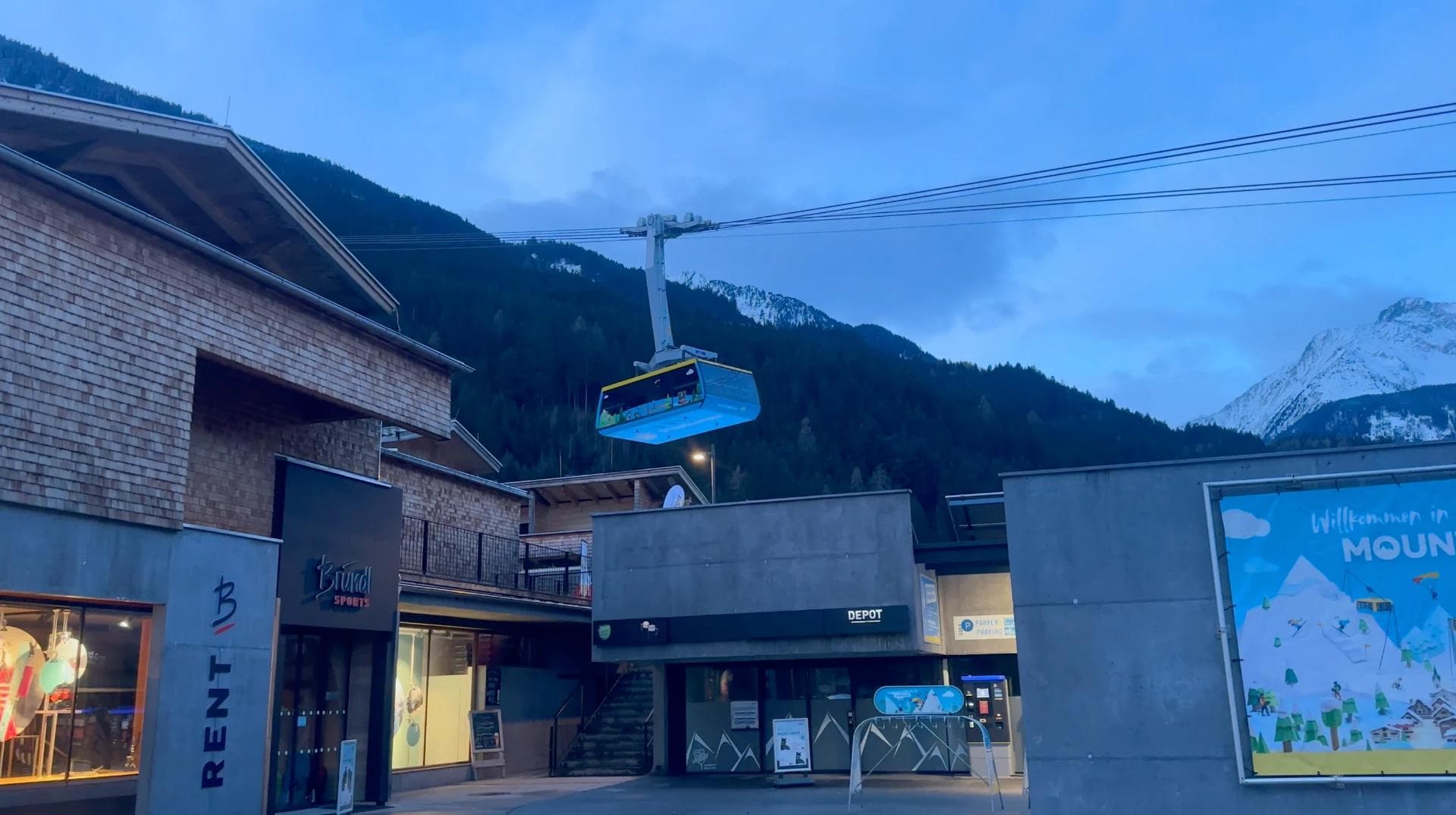
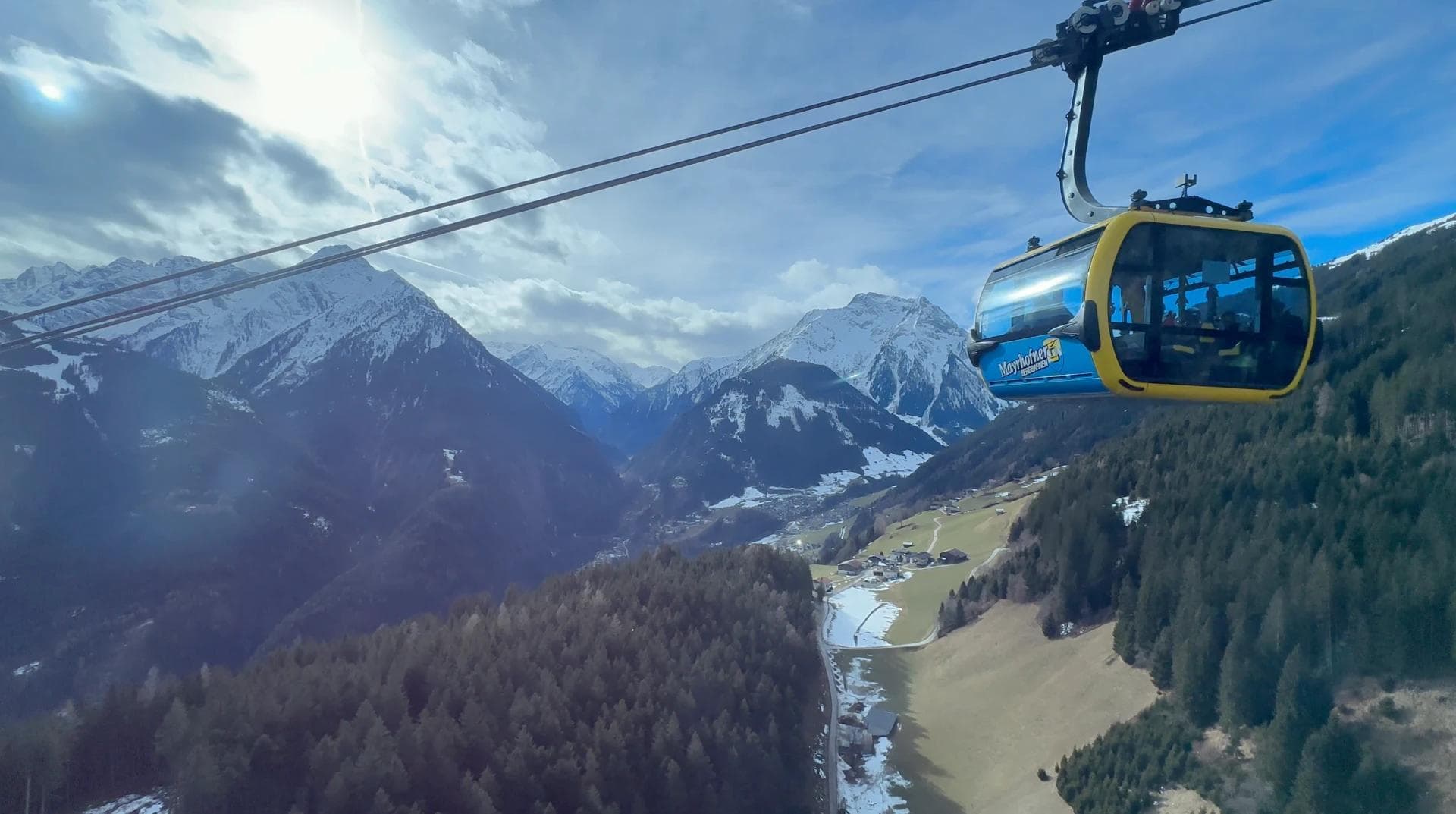
The Penkenbahn 3S tricable gondola is the main access lift from the village to the Penken summit. It opened in December 2015 at a cost of 50 million euros and carries a genuine engineering distinction - it was the first tricable gondola in the world built with a curve incorporated into the tower design. Each of its 33 cabins seats 32 passengers, total capacity runs to 3,840 people per hour, and the trip takes around eight minutes with onboard Wi-Fi. The Ahornbahn on the other side runs Austria's largest cable car cabin at 160 passengers, climbing 1,300 metres to the Ahorn plateau in seven minutes, with departures every 15 minutes.
Ahornbahn starts up early in the mornings.
The Kombibahn Penken is worth a mention as a piece of engineering history - it was the first combination lift in the world to run both 10-person gondolas and 8-person chairlifts on the same cable, letting riders choose between enclosed comfort and quick-boarding efficiency.
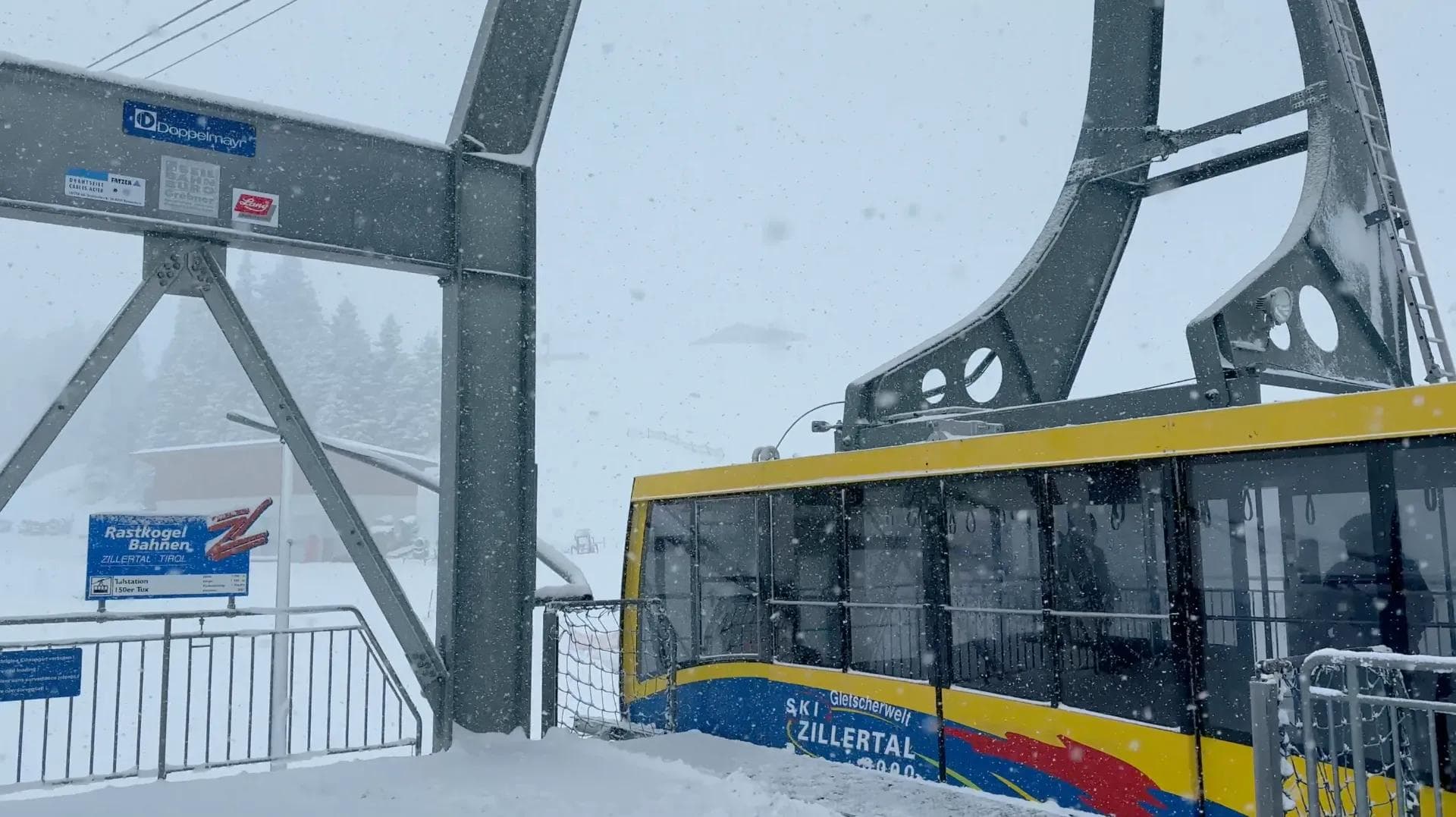
The 150er Tux aerial tram is a different animal. It sits in the heart of the Penken bowl - not at the valley floor - and carries riders up and over to the Rastkogel sector. As you ride it, you're looking down over what appears to be serious freeride terrain on the faces below. Whether that actually skis as well as it looks from the cabin I can't tell you - but it's the kind of view that gets you thinking.
The huge Aerial Tram is found in the centre of the resort.
Peak times - Christmas week and February half-term mainly - can generate morning queues at the Penkenbahn. The 3,840-person hourly capacity handles the volume reasonably well, but if you're there in peak season, the early Ahornbahn opening gives you a first-tracks option on the other side while the crowd disperses at Penken.
Pricing and Pass Options
A single-day adult lift ticket for Mayrhofen alone runs €79 to €82. That's at the higher end for an Austrian resort, though it sits well below a comparable day in North America - or in Australia these days, for that matter.
Where the value shifts is on multi-day passes. From two days onwards, the Zillertal Superskipass kicks in automatically, expanding your access from 142 kilometres at Mayrhofen alone to 548 kilometres across the full valley network. The per-day rate on that pass runs around €80 depending on season, which means you're paying roughly the same per day as a single-resort ticket but getting the entire valley.
A six-day Superskipass runs €399 in regular season. For a week in the Zillertal, that's the pass to buy.
Children born after 1 January 2020 ski free when accompanied by a paying adult - bring ID to prove it at the ticket office. Youth tickets for those born after 1 January 2007 run €39 to €47.
For Epic Pass holders: Mayrhofen and Hintertux joined the Epic network for the 2025-26 season, with the broader Zillertal valley following. A standard Epic Pass includes five consecutive days of access across the valley resorts. [⚑ Flag: confirm current Epic Pass day allocation and whether days are shared across valley or per resort - verify against Epic Pass terms before publishing.] If you're already holding one, that's a strong reason to put Mayrhofen on the itinerary.
Valley public transport - the Zillertalbahn train and the ski buses - is included with multi-day passes, which matters practically when you're moving between base areas or heading to Hintertux for the day.
Accommodation
Mayrhofen town is the obvious base. You're walking distance from both the Penkenbahn and the Ahornbahn, and the village has everything you need in terms of restaurants, shops, and après-ski. Expect to pay a premium for that convenience.
The surrounding valley villages - Hippach, Stumm, Finkenberg, Tux - all offer solid alternatives at lower prices with easy access via car or the included ski buses. Finkenberg has direct access to the Finkenberger Almbahn gondola into the Penken area. Tux sits closest to Hintertux Glacier if glacier access is a priority.
On a previous stay I based myself in Stumm, about 15 minutes from Mayrhofen by car. Accommodation cost was meaningfully lower than anything in town, breakfast was included, and the short drive was a non-issue when I was exploring the whole valley. Across the valley, expect a range of roughly €100 to €250 per night depending on standard and proximity to the lifts, with many properties offering half-board. Book well in advance for Christmas and February half-term - the valley fills quickly during those windows.
Stumm is just 15 minutes from Mayrhofen by car and significantly cheaper.
On-Mountain Food and Après
Tyrolean mountain huts are scattered throughout the entire resort - more than you'd expect even by Austrian standards. I didn't sit down at any of them during my two-day visit because I was trying to cover as much terrain as possible, but several run their own après scene from early afternoon. Making my way back down to Mayrhofen on one of my last runs, I could already hear the hut at the top of the Penkenbahn going well before I reached it.
The village has a well-established party reputation and draws a significant British crowd who treat the skiing as the warm-up act for the evening. That's not a criticism - it just sets your expectations for the atmosphere.
My personal pick for après was low-key and cost about five euros. Metzgerei Hans Gasser is a local butcher in the village. The move is a bread roll packed with roasted meat and a beer, then you stand outside and watch everyone come off the mountain. Packed every afternoon at 4pm without exception. That kind of thing tells you a lot about a resort village.
Getting There
Mayrhofen sits at the tail end of the main section of the Zillertal valley in eastern Tyrol. The nearest international airport is Innsbruck, about 67 kilometres away and roughly 60 minutes in normal driving conditions - though Innsbruck primarily services intra-European routes, so it's not always the practical entry point for longer-haul travellers.
Munich is around 190 kilometres via the A8 and A12 motorways - approximately two hours - and for anyone flying from outside mainland Europe, that's likely the arrival airport. No mountain passes are involved in reaching the valley floor from either direction, which is a practical advantage over some Austrian resorts.
By train, Austrian Federal Railways runs to Jenbach, where you connect to the Zillertalbahn narrow-gauge railway for the 55-minute run directly to Mayrhofen station. That drops you at the northern end of the village, within easy walking distance of most accommodation. If you're not hiring a car, the train-plus-ski-bus combination works well here and removes the parking question entirely.
Verdict
Mayrhofen earns its reputation, but it's worth being specific about who it earns it for.
Intermediates get the strongest deal - 46% of terrain at a consistent quality level, with Rastkogel and Eggalm adding genuine variety beyond what you'd get at a single-sector resort. The mileage available across the full valley on the Superskipass is the kind of skiing that takes multiple trips to fully cover.
Advanced riders have real terrain here. Harakiri and the Devil's Run are not marketing props - they're actual challenging runs that will expose any gaps in your technique you've been quietly ignoring. The Penken Park is a serious facility if you ride freestyle. The off-piste potential after snowfall is real, provided you approach it with appropriate preparation.
Beginners are well set up on Ahorn, with the caveat that the physical separation from the main mountain requires some logistics thinking for mixed-ability groups.
The huge 3S gondola takes riders from Mayrhofen up to Penken.
The value on multi-day passes - particularly the Superskipass with its built-in glacier access, valley transport, and Epic Pass inclusion - is among the stronger propositions in the Alps right now. Mayrhofen is not cheap on a day-ticket basis. The infrastructure is there for your money.
The resort suits groups more than solo travellers hunting niche terrain. It suits people who want options - a different sector each day, the park when conditions are right - rather than those who want to master one mountain deeply. And it suits anyone who wants Austrian resort culture done properly: efficient lifts, food worth stopping for, and a village that actually functions after 4pm.