TL;DR
The U.S. Forest Service has approved a 694-acre boundary expansion at Grand Targhee Resort in Wyoming, clearing the way for new terrain in Teton Canyon and a summit restaurant on Fred's Mountain. The decision follows a five-year review process and comes with wildlife protections, architectural restrictions, and a pair of objection windows before construction can begin.
Grand Targhee Resort has received federal approval to expand its ski area boundary by 694 acres, opening the door to new terrain development and a new on-mountain restaurant.
The U.S. Forest Service's Caribou-Targhee National Forest published the formal decision following a review process that drew more than 2,100 public comments after a draft environmental assessment was released in March 2025. The expansion was first reported by the Jackson Hole News&Guide.
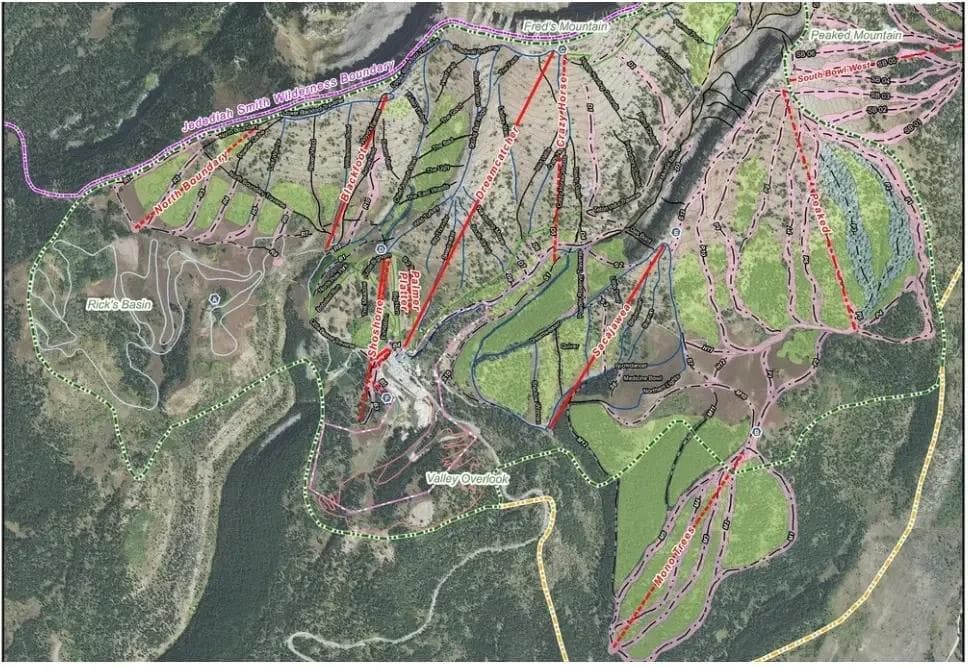
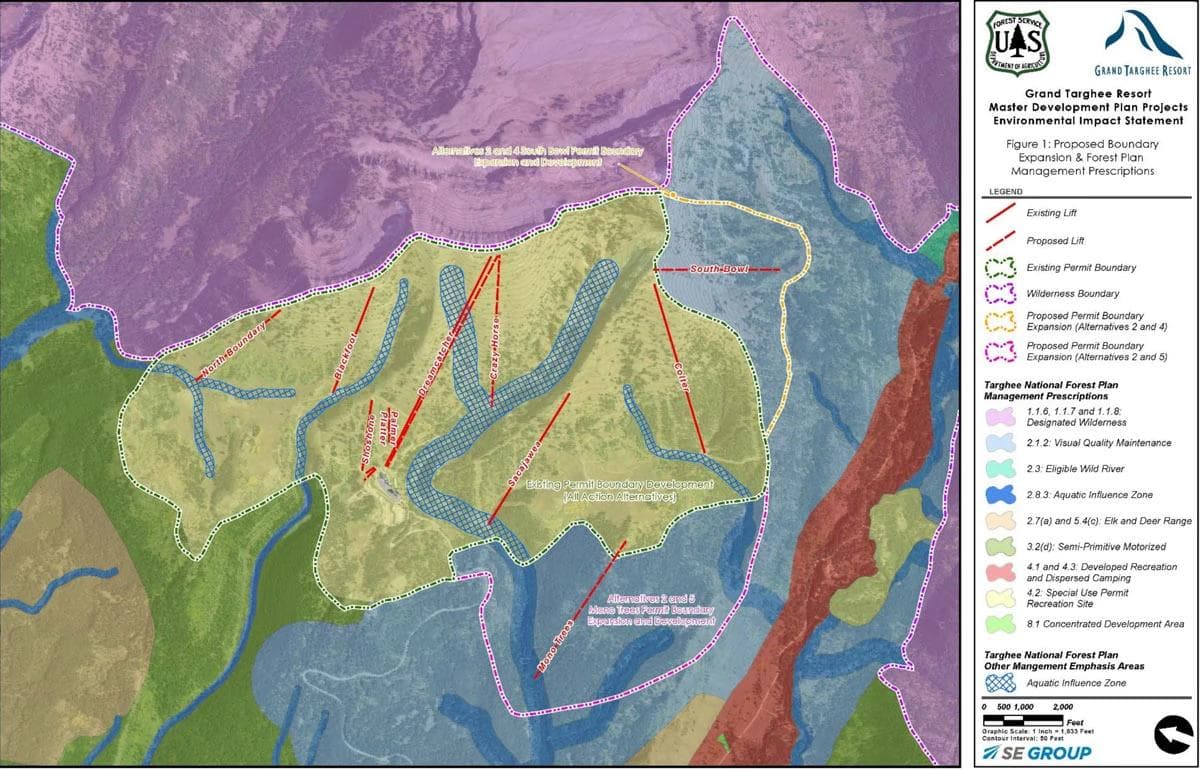
The approved footprint is smaller than the 866 acres Grand Targhee originally requested in 2020. Federal land managers reduced the final boundary to address wildlife concerns and issues raised during the public comment period. The approved development breaks into two areas: 459 acres in the Mono Trees area and 235 acres in the South Bowl area, both in Teton Canyon on Fred's Mountain.
What's Been Approved
The expansion allows Grand Targhee to develop new skiable terrain across the two approved zones and to construct a restaurant at the summit of Fred's Mountain. The restaurant approval comes with strict conditions - the Forest Service requires materials that blend into the mountain landscape to protect sightlines from neighbouring Grand Teton National Park, and has restricted the facility to daytime operations only to preserve dark sky conditions in the region.