Who is Mt Norquay Best For
Families staying in Banff get clear advantages here. Ten minutes from town means less driving, less fuss with small children, and the option to split days between skiing and other activities. The beginner terrain (38% of the mountain) provides adequate learning space, and the base facilities are manageable in scale - no overwhelming mega-lodge confusion.
Strong intermediate and advanced skiers will find more to work with than the small footprint suggests. The advanced terrain is legitimate, not inflated for marketing purposes. If you're comfortable on black runs elsewhere, Mt Norquay's steeps will test technique properly. The tree skiing on Norquay's north-facing slopes holds snow well when conditions align.
Where it falls short: expert skiers hunting extensive off-piste or all-day vertical. Five lifts mean you'll lap the same terrain repeatedly. The advanced runs are good, but there aren't many of them. After a morning session, strong skiers often find they've exhausted the available challenges. It's a half-day mountain for that demographic, not a full-week destination.
Intermediate cruisers may feel shortchanged with only 25% of terrain in their category. The blues that exist are fine, but limited in variety and length. You'll ski them all by midday.
Mt Norquay Snow and Season
The 2025-26 season runs from November through April - longer than many assume for an area this size. That duration relies heavily on snowmaking rather than natural snowfall alone. At 4.36 metres average annual snowfall, Mt Norquay sits below the 5-6 metre averages of deeper Canadian powder destinations but remains workable with artificial backup.
Snow quality varies by aspect and elevation. North-facing terrain on the upper mountain holds quality longer, particularly in the gladed sections. South-facing runs get sun-affected earlier in the day, especially during spring. That 85% snowmaking coverage means groomed runs stay consistent, but it's groomed snow - firm, predictable, not the deep Rockies powder that marketing imagery suggests.
Mid-January through March typically offers the most reliable window. December can be thin despite opening dates, and April transitions into spring conditions quickly. Night skiing operates in that reliable window, adding utility for accommodation-limited visitors who want evening runs after daytime activities.
Getting to Mt Norquay
Ten minutes from central Banff via Norquay Road - that proximity is Mt Norquay's primary logistical advantage. Calgary International Airport sits 150 kilometres east, roughly 90 minutes by road in good conditions. Winter driving requires appropriate tyres and comfort with mountain highways; the Trans-Canada through the Rockies gets snow, wind, and reduced visibility.
No public transit runs directly to Mt Norquay. You need a vehicle or pre-arranged shuttle service. Most Banff hotels offer or can arrange ski shuttle services, but scheduling flexibility suffers compared to having your own transport. Parking at the resort base is adequate for its size, rarely reaching capacity except on peak weekends.
The short distance from town means you can reasonably stay in Banff proper rather than at the hill, accessing better dining and accommodation variety while still making morning first lifts without unreasonable wake times.
Mt Norquay Lift Tickets
Regular adult day tickets run CAD $119, jumping to CAD $134 on peak dates. Junior and senior tickets at CAD $89 offer meaningful discounts; children ski for CAD $45. By comparison, neighbouring Lake Louise charges CAD $179 peak adult, Sunshine Village CAD $189. Mt Norquay positions itself 25-30% cheaper than the big two.
Whether that represents value depends on what you're after. The advanced terrain justifies half the price differential, but the limited lift infrastructure and run variety don't fully cover the gap. For families with young learners, the pricing makes more sense. For strong skiers planning multi-day trips, buying a SkiBig3 pass (covering Mt Norquay, Lake Louise, and Sunshine Village) provides better value than daily tickets at any single resort.
Night skiing tickets offer additional value if you're using them strategically - morning ski elsewhere, afternoon break, evening laps at Norquay.
The Verdict on Mt Norquay
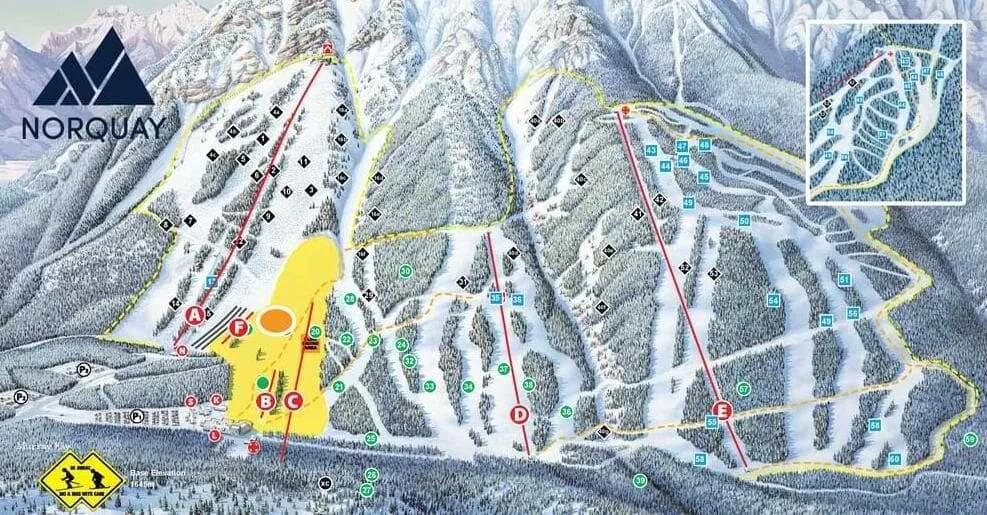
Mt Norquay works best as part of a Banff ski trip rather than a standalone destination. The steep terrain is genuine and the proximity to town is unmatched, but five lifts and 60 runs don't sustain multiple full days for strong skiers. Families with younger children get better value from the scale and pricing. Full resort details, webcams, and trail maps are on the Snowstash resort page.
Full resort details, live webcams, and trail maps for Mt Norquay on Snowstash →