SnowStash Logo
AustraliaCanadaEuropeJapanNew ZealandUnited StatesCompareNews
Sign InSign Up Free

Contact Us

hello@snowstash.com

Download Our App

Download on the App Store

Company

About UsCompare resortsWork With UsPrivacy PolicyMobile App

© 2026 Snowstash. All rights reserved.

    Back to News
    Resort Spotlight: Aspen Buttermilk - The Smartest Learning Mountain in North America

    Resort Spotlight: Aspen Buttermilk - The Smartest Learning Mountain in North America

    Published Date: June 25, 2026

    Michael Fulton

    Michael Fulton

    Melbourne-based skier and snowboarder with 50+ resorts across 5 continents. Specialises in Australian resorts and international resort comparisons.

    50+ resorts visited15 years skiing

    Categories

    Aspen Buttermilk
    Resort Spotlight

    Most resorts claim to be beginner-friendly whilst offering token green runs flanked by intimidating black diamonds. Buttermilk takes the opposite approach - it exists specifically to teach people to ski, then let them progress at a sensible gradient. The fact it also hosts the Winter X Games creates an odd juxtaposition: families learning to pizza beside some of the most technical terrain park features in North America.

    Whether this split personality works for you depends entirely on what you're after. The mountain delivers 619 metres of vertical across 44 runs, but calling it a "mountain" feels generous when you're comparing it to the other three peaks in the Aspen portfolio.

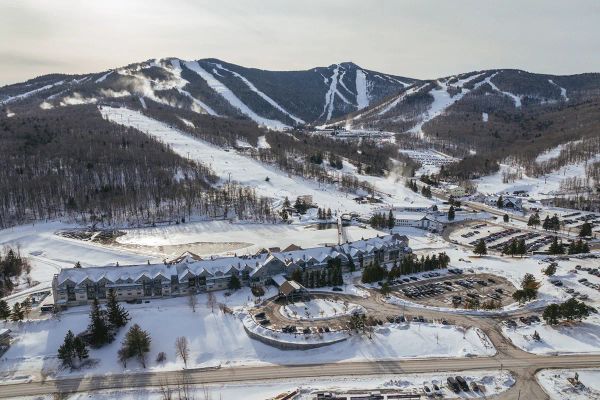
    Aspen Buttermilk Mountain Overview

    The terrain breakdown tells the story: 35% beginner, 39% intermediate, 21% advanced, 5% expert. Those percentages translate to an actual learning progression rather than the usual resort fiction where everything blue and above gets lumped into "intermediate". Eight lifts service the 470-acre skiable area, and you're never waiting long given the limited vertical.

    The beginner terrain sits on the lower mountain with proper width and consistent pitch - none of the narrow, rutted nightmare runs that pass for green circles at many areas. Tiehack, the mountain's second peak, offers longer intermediate cruisers that feel more like proper ski runs than extended teaching zones.

    The terrain parks occupy significant real estate, particularly the superpipe and slopestyle course that appear each winter for X Games. Unless you're actually riding park, this represents dead acreage, which matters when you're already working with limited terrain. The advanced and expert runs cluster on the upper mountain but don't offer the sustained steeps or technical challenge you'd find ten minutes away at Aspen Mountain or Highlands.
    Aspen Buttermilk Snow Situation
    Aspen Buttermilk Snow Situation

    Who is Aspen Buttermilk Best For

    First-time skiers and riders will find this is one of the few areas in North America purpose-built for learning. The beginner zones aren't afterthoughts - they're the main product. Families with young children benefit from the Hideout facility and genuinely manageable terrain that won't traumatise anyone.

    Progressing intermediates have enough blue runs to feel like they're actually skiing rather than endlessly lapping bunny slopes. The Tiehack area particularly suits this cohort, offering 400+ metres of vertical on runs that build confidence without inducing panic.

    Park riders obviously benefit from the X Games infrastructure, though whether you want to session alongside families learning to turn is another question. Advanced and expert skiers will find this limiting unless they're specifically here to coach others or lap parks. The Aspen pass grants access to all four mountains - treat Buttermilk as a morning warm-up before heading elsewhere.

    Aspen Buttermilk Snow & Season

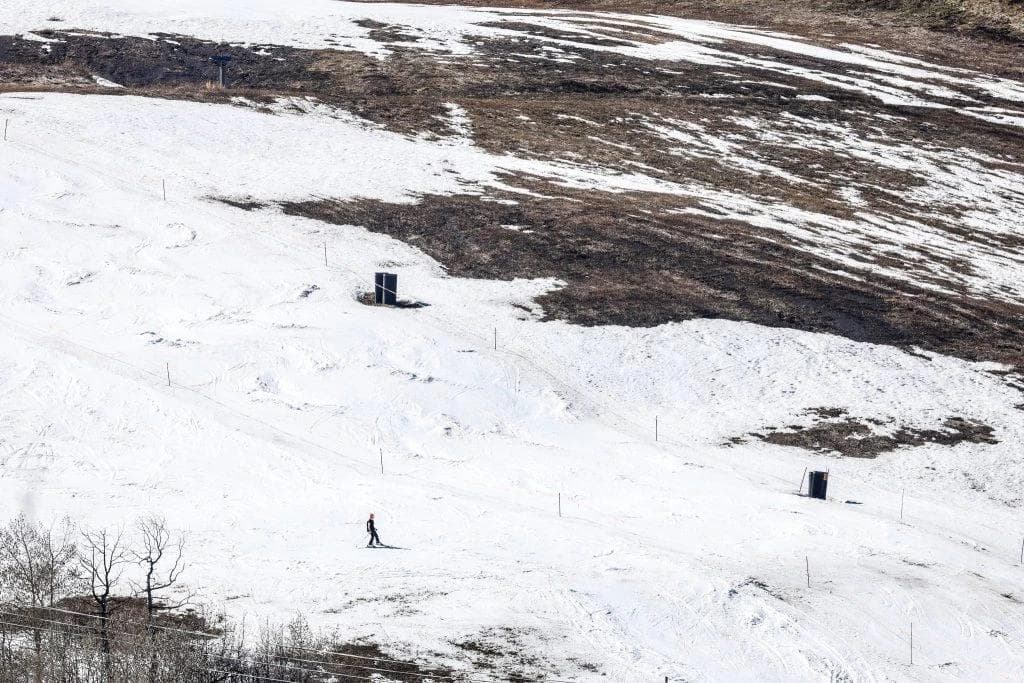
    The 5.33-metre annual snowfall average sits below Colorado's deeper resorts, but comprehensive snowmaking covers the teaching terrain where it matters most. Current base depth of 64cm with 199cm season-to-date shows typical mid-season conditions.

    The December to early April season runs shorter than higher-elevation areas, and the western exposure means afternoon sun affects snow quality. Morning sessions on groomed runs offer the best conditions. Spring skiing here ends earlier than the surrounding peaks - when Aspen Mountain and Highlands are still banking corn snow in April, Buttermilk's lower elevation and sun exposure make for challenging conditions.

    Nine centimetres in the past week represents modest accumulation. The mountain's strength lies in manufactured consistency rather than deep powder days - appropriate given its teaching mission.

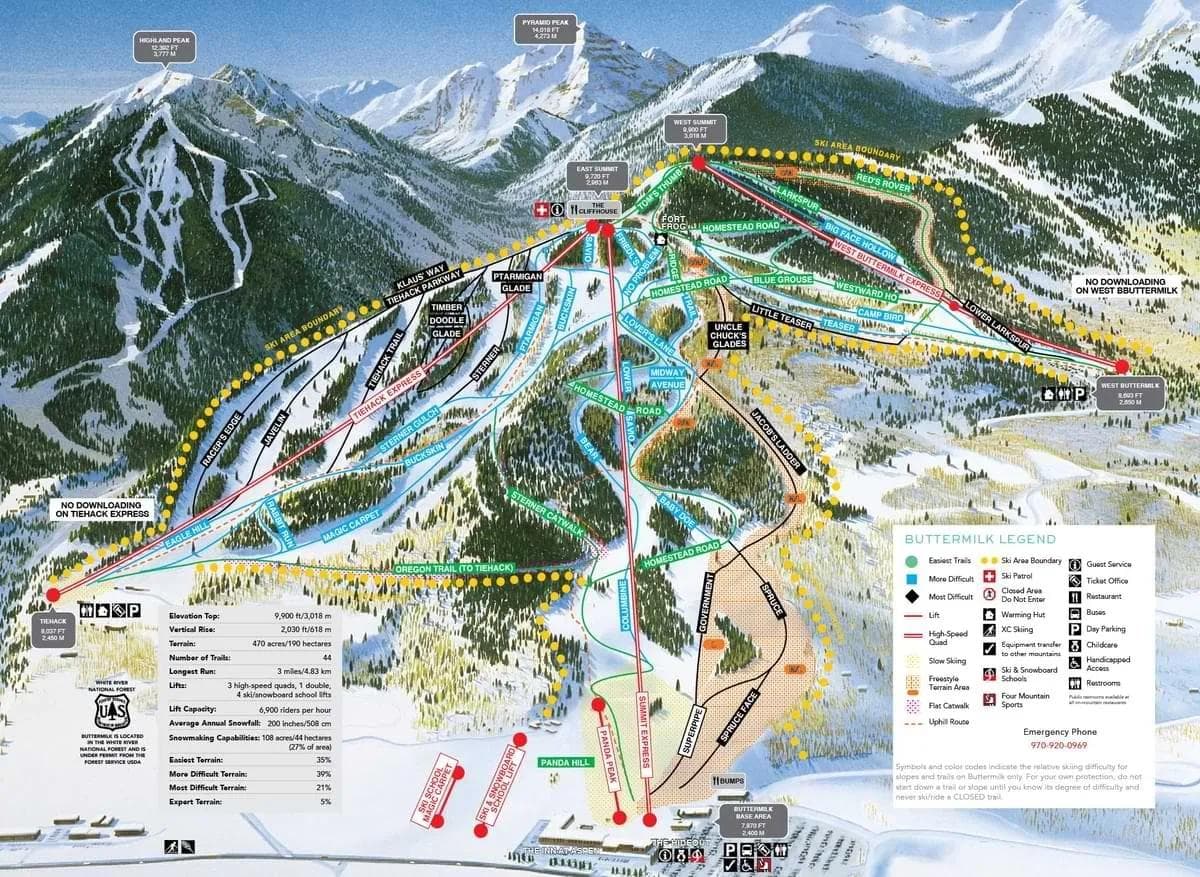
    The trail map at Aspen Buttermilk. © Aspen Buttermilk
    The trail map at Aspen Buttermilk. © Aspen Buttermilk

    Getting to Aspen Buttermilk

    Aspen Airport sits 8km from the base area, making this one of the most accessible ski areas from a commercial airport. The free shuttle connects all four Aspen mountains and runs frequently enough to be genuinely useful rather than theoretical. Three miles from downtown Aspen means you can stay in town and still access the mountain without hiring a car.

    Driving from Denver takes four hours via Interstate 70 and Highway 82 through Glenwood Springs. The final approach up the Roaring Fork Valley can be slow during peak periods, but the infrastructure handles traffic better than many Colorado resort roads. Parking at the base area is straightforward - not something to take for granted at Aspen.

    Aspen Buttermilk Lift Tickets

    Daily tickets run $189 regular, $259 peak - the full Aspen pricing despite significantly less terrain than the other three mountains. Junior, child, and senior tickets at $169 offer marginal savings. The pricing makes sense only in the context of the four-mountain pass, where Buttermilk functions as an access point to the larger system rather than a standalone destination.

    Advance online purchase is essential - these prices climb at the window. Multi-day tickets and Ikon Pass access provide better value if you're planning extended time in the area. Beginners paying $259 for peak-day access to what amounts to a large learning hill might question the economics, though the teaching infrastructure and snow reliability arguably justify the premium over cheaper alternatives.

    The Verdict on Aspen Buttermilk

    Buttermilk succeeds at exactly what it attempts: providing proper progression terrain in a system dominated by advanced skiing. The pricing remains difficult to justify for anyone not using it as part of the four-mountain package. If you're learning or teaching, the infrastructure works. If you're seeking sustained vertical or challenging terrain, look elsewhere in the Aspen portfolio. Full resort details, webcams, and trail maps are on the Snowstash resort page.

    Full resort details, live webcams, and trail maps for Aspen Buttermilk on Snowstash →

    Latest News

    Eagle Point Resort Destroyed by Cottonwood Fire as Utah Blaze Tops 59,000 Acres

    Eagle Point Resort Destroyed by Cottonwood Fire as Utah Blaze Tops 59,000 Acres

    Jun 25, 2026

    Resort Spotlight: Adelboden/​Lenk - Where the Bernese Oberland Meets the Beginner's Plateau

    Resort Spotlight: Adelboden/​Lenk - Where the Bernese Oberland Meets the Beginner's Plateau

    Jun 24, 2026

    Resort Spotlight: Greek Peak - Central New York's Family Ski Tradition Examined

    Resort Spotlight: Greek Peak - Central New York's Family Ski Tradition Examined

    Jun 23, 2026

    Resort Spotlight: Saas Fee - The Glacier Resort That Opens in July

    Resort Spotlight: Saas Fee - The Glacier Resort That Opens in July

    Jun 22, 2026

    Resort Spotlight: Arizona Snowbowl - The Desert's Unexpected Lift-Served Vertical

    Resort Spotlight: Arizona Snowbowl - The Desert's Unexpected Lift-Served Vertical

    Jun 21, 2026