TL;DR
Beaver Creek is getting ready for the biggest Birds of Prey ever, and this time it is not leaving the snow to chance. Crews started making snow on 27 October with 16 newly installed automated guns on the lower third of the course, after last December’s warm spell forced a downhill off the schedule. Seven races across two weekends run from 3 to 13 December, the most the course has hosted since its 1997 debut, and the guns start themselves whenever the weather allows.

The snow guns on Birds of Prey are now doing a good share of the early-season work on their own.
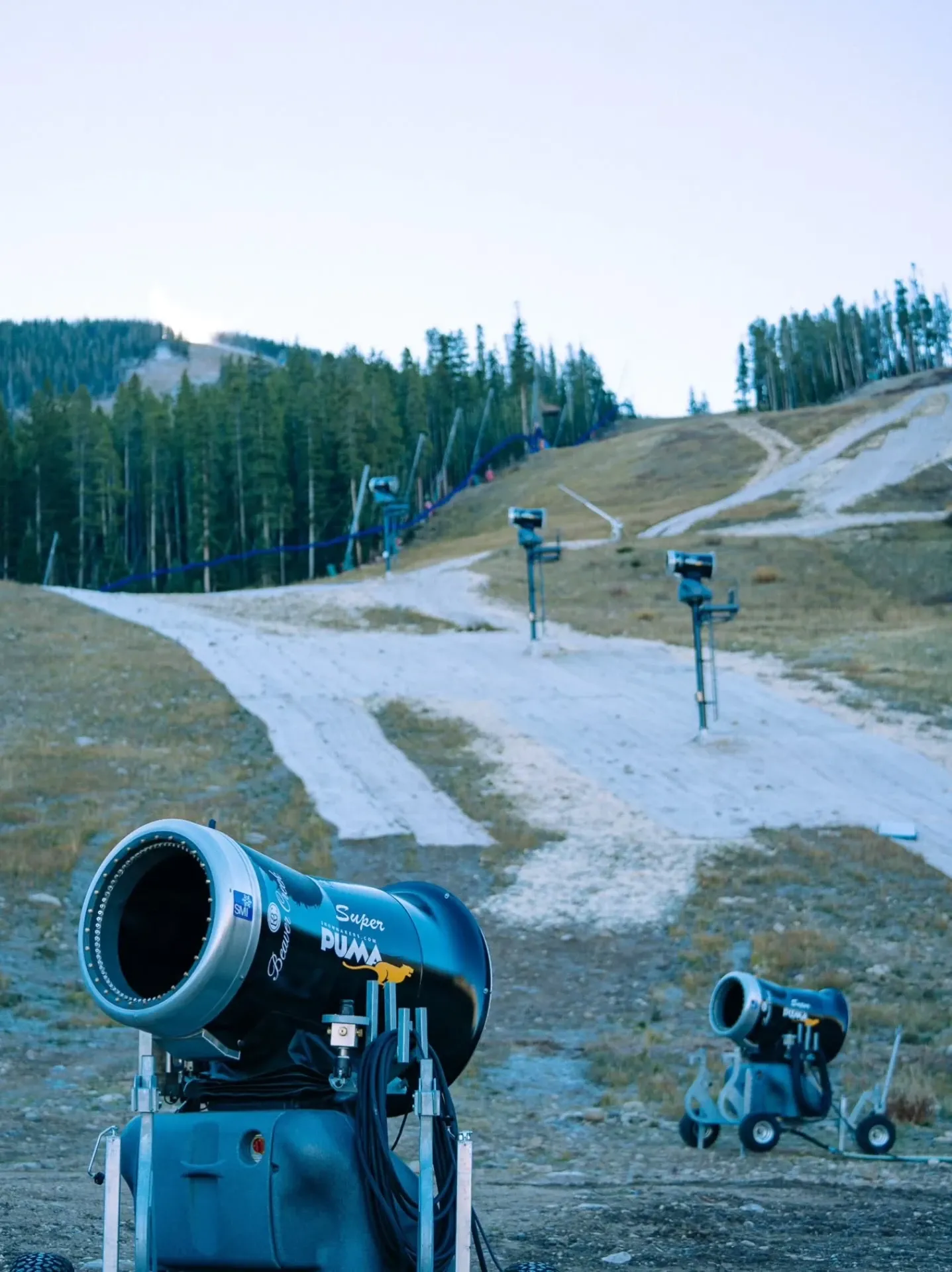
Beaver Creek began making snow on the Colorado resort’s World Cup course on 27 October, using newly installed automated equipment on the lower third of the Birds of Prey racecourse. The upgrade comes ahead of the Stifel Birds of Prey Audi FIS Ski World Cup from 3 to 13 December, which will be the largest edition in the event’s history.
The Vail Valley Foundation, which organises the races, announced the work as crews started on the course.
What has gone in
The system is 16 snow guns: 10 SMI Grizzly stick guns, each with an onboard air compressor, and six SMI Super Puma fan guns. They are backed by six concrete vaults, 10 metal shelters, a new weather station and about 4,500 feet (1,370 m) of power and communications lines. All of the guns can be monitored and operated remotely, and they start automatically when conditions allow snowmaking.
The idea is to let crews take advantage of every cold window while using less water and energy to build the racing surface. The extra capacity also helps Beaver Creek’s overall early-season conditions for public skiing.
Why the lower third
That section of the course is the most exposed to early-season weather, particularly temperature inversions, which can make snowmaking unpredictable. Last December it caused trouble.
Unusually warm conditions meant organisers had to drop a downhill race from the schedule and alter the course’s start and finish positions because there wasn’t enough snow near the traditional finish area. The new guns are aimed squarely at that part of the mountain.
Seven races, two weekends
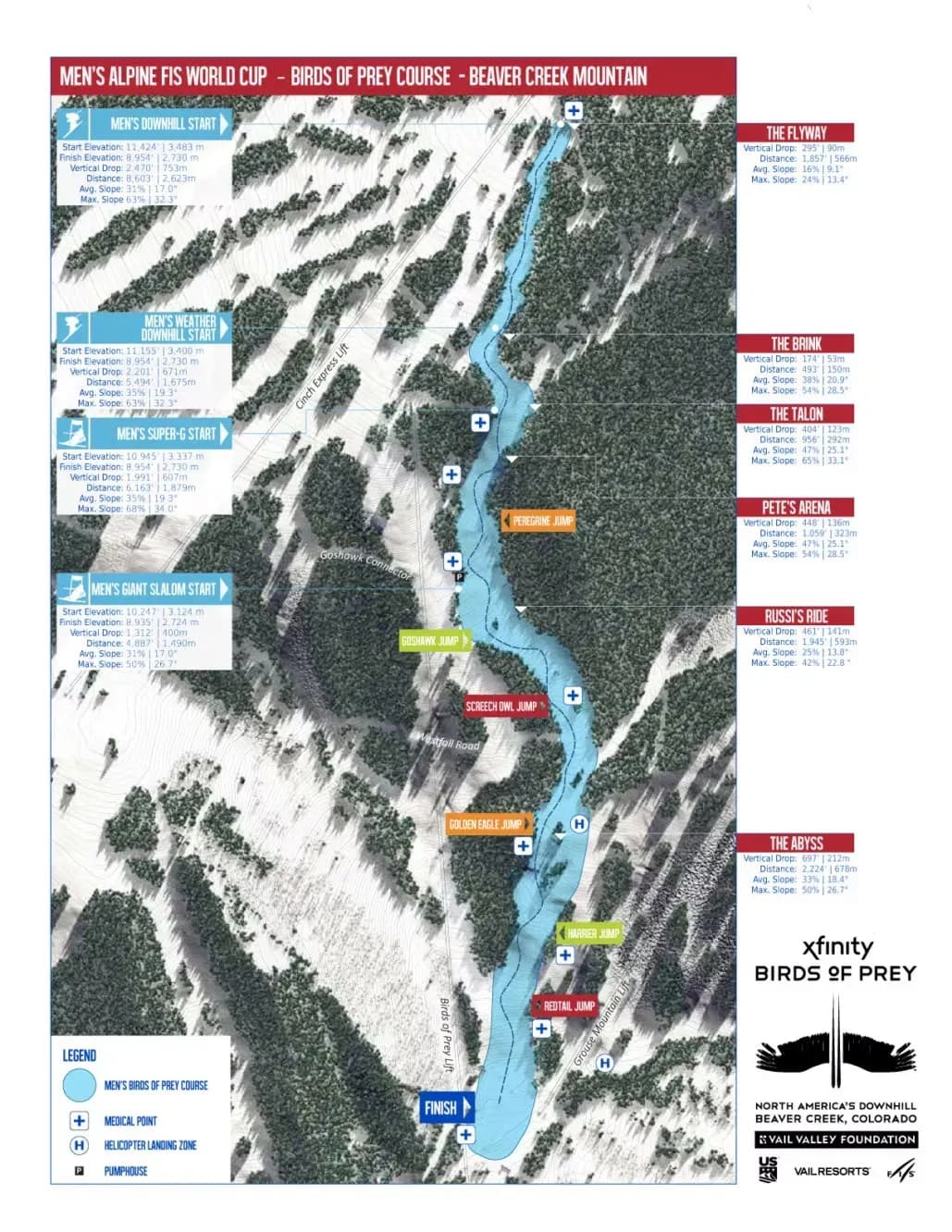
The men race first, from 3 to 6 December, with two downhills, a super-G and a giant slalom. The women follow from 11 to 13 December with two downhills and a super-G. Seven races is the most Birds of Prey has hosted since its World Cup debut in 1997, and the women’s schedule is the second time they have raced on the course, following their debut in 2024.
General admission to all seven races stays free, with spectators watching from the John and Karen Arnold Red Tail Stadium, and the festival will include free live music, athlete autograph sessions and the Beers of Prey Festival in Beaver Creek Village.
Who paid for it
The snowmaking was funded by the John and Karen Arnold Ski Racing Legacy Fund. The Arnolds, who give their name to the Red Tail Stadium at the base of the course, have also paid for a regrading of the finish area and improvements to the grandstands and spectator areas.
Vail Valley Foundation president and CEO Mike Imhof said the gift is what keeps the grandstands free for spectators, which few World Cup events manage. Beaver Creek itself is scheduled to open for the season on 25 November, weather and conditions permitting.
About Beaver Creek
Beaver Creek sits above Avon in Colorado’s Vail Valley and is part of the Epic Pass network. It covers 1,832 acres (741 ha) across 150 runs, with a summit at 11,437 feet (3,487 m), a base at 7,398 feet (2,255 m) and a vertical drop of 4,040 feet (1,232 m), served by 26 lifts. It opened on 15 December 1980 and hosted the 1989 Alpine World Ski Championships alongside neighbouring Vail. The Birds of Prey downhill course is its best-known piece of terrain.
About the author

Michael Fulton
Melbourne-based skier and snowboarder with 50+ resorts across 5 continents. Specialises in Australian resorts and international resort comparisons.