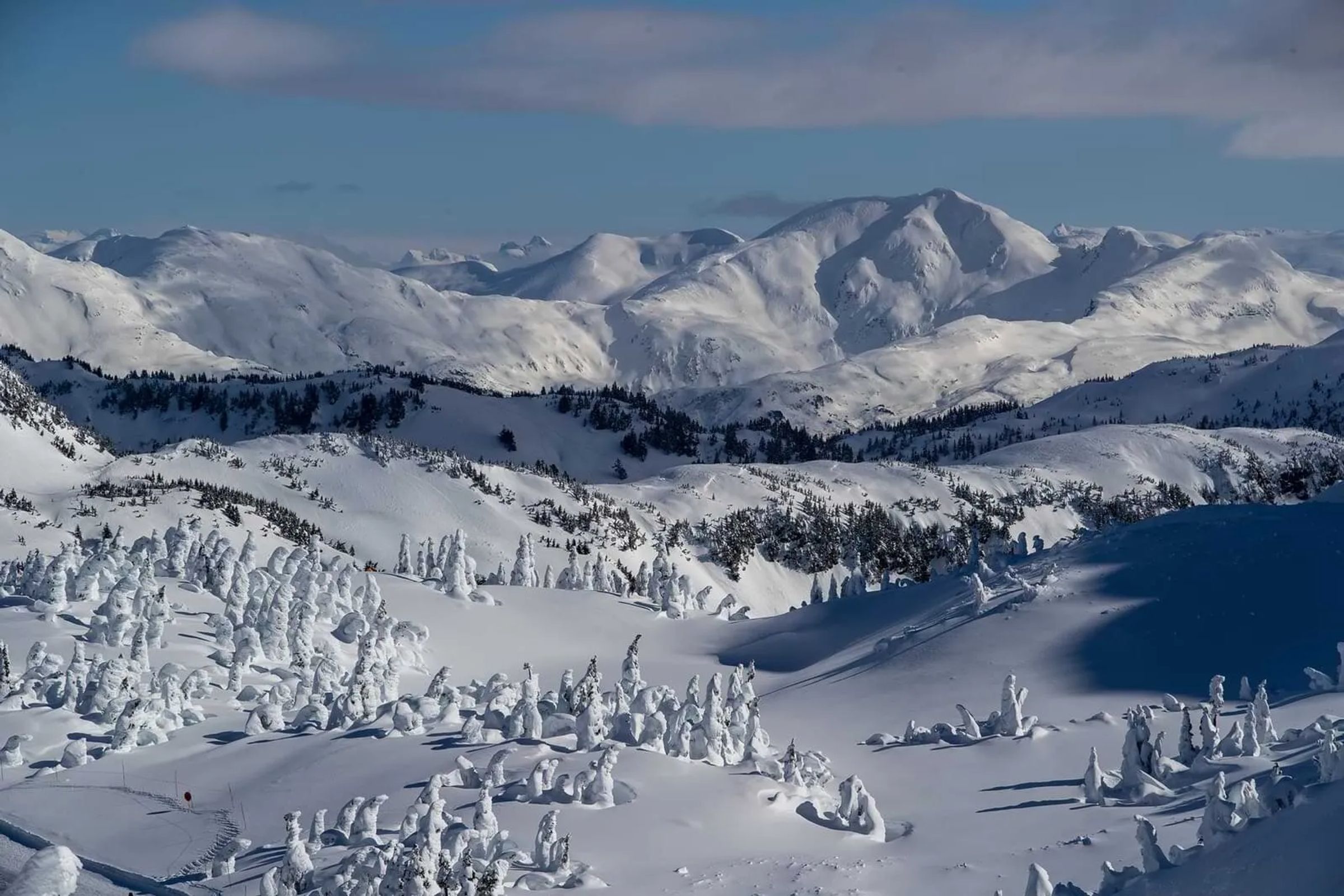
The Overview
Michael Fulton
Melbourne-based skier and snowboarder with 50+ resorts across 5 continents. Specialises in Australian resorts and international resort comparisons.
Eaglecrest's summit reaches 2,749 feet, dropping 1,620 vertical feet to a base at 1,129 feet across 36 runs spread over 640 acres on Douglas Island, across the channel from Juneau, Alaska. Terrain splits 40 per cent intermediate, 40 per cent advanced and 20 per cent beginner, with no expert-rated runs. Average annual snowfall reaches roughly 350 inches. Eaglecrest operates on the Powder Alliance pass network and is owned and run by the City and Borough of Juneau, making it one of the few municipally owned ski areas in the United States.
Only two double chairlifts serve the entire mountain, a modest lift count relative to the 640-acre footprint and 1,620-foot vertical drop. The 40 per cent advanced terrain share, with no groomed expert runs but access to substantial backcountry, gives Eaglecrest a rawer character than most municipally run ski areas. Two Nordic skiing loops supplement the alpine terrain. The resort's community ownership model is unusual even among smaller American ski areas, most of which are privately or corporately run.
Juneau locals founded Eaglecrest in 1975 after identifying Douglas Island as a site with both north and east-facing slopes and a reliable access road free of avalanche risk. The ski area has been owned and operated by the City and Borough of Juneau since its founding, a genuinely public model distinct from Vail, Alterra or independent private ownership seen elsewhere. As of mid-2026, the ski area has reportedly been running at a financial loss, prompting public discussion about the city's continued funding of the operation. Notably, Juneau itself has no road connection to the rest of Alaska or the Lower 48, reachable only by air or sea, though Douglas Island and Eaglecrest are accessible by a short local drive from downtown.
Powder Alliance membership gives pass holders reciprocal access to other member resorts, mostly smaller community and independent areas. Adult full-day tickets run 75 US dollars, with a full adult season pass at 870 dollars and free season access for Alaska residents aged 75 and over. The resort suits Juneau locals and visitors already in the isolated Alaska capital rather than travellers making a dedicated trip, given Juneau's lack of road access from outside. Its exceptional snowfall and steep terrain, combined with municipal ownership, make Eaglecrest a distinctive presence in American skiing.
1,621ft
Vertical
36
Runs
640 acres
Skiable
29ft
Annual snow
Powder Alliance
Pass
The Terrain
36 runs across 640 acres skiable
Eaglecrest spreads 36 runs across 640 acres skiable of terrain. It leans intermediate at 40%, with 7 beginner runs to find your feet and 14 advanced or expert runs when you want to push.
Terrain split
36
runs
36 runs across 4 grades
Beginner7 runs · 20%
Intermediate14 runs · 40%
Advanced14 runs · 40%
Expert0 runs · 0%
Time it right
When to visit Eaglecrest
The 2025-26 season at Eaglecrest ran from 6 December 2025 to 13 April 2026, a roughly nineteen-week window. Juneau's coastal, far-northern position supports a long season relative to its snowfall reliability. Season dates can shift based on Southeast Alaska's variable coastal weather. This length is typical for a resort at Eaglecrest's elevation and latitude.
Average annual snowfall of roughly 350 inches is substantial, a product of Southeast Alaska's wet, storm-driven coastal climate. A record snowfall of 640 inches was recorded in 2011, illustrating the range of variability in the region's weather. Base depth and season totals vary considerably year to year given the maritime climate's inherent unpredictability. Snowmaking plays a limited role given the area's naturally high, if variable, snowfall.
Midwinter, from January through February, typically offers the most reliable conditions, though Southeast Alaska's coastal storms can bring rain as well as snow even in winter. Juneau's far-northern latitude means short daylight hours in December and January, lengthening substantially into spring. Late-season visits in March and April often benefit from improving daylight alongside a still-substantial snowpack. Weekday visits are generally quieter than weekends, given the resort's small, largely local visitor base.
Eaglecrest's calendar centres on serving Juneau's local community rather than destination event programming, consistent with its municipal ownership. As of 2026, financial pressure on the city-run operation has become a matter of public discussion, potentially affecting future investment and programming. Backcountry access from the ski area's boundary draws experienced skiers beyond the groomed 36-run network. Specific festival or competition programming is not confirmed in available resort information.
Season 2025 - 2026
6 Dec 2025
Opens
13 Apr 2026
Closes
128
Days open
29 ft
Annual snow
Getting there
Getting to Eaglecrest, and where to stay
Eaglecrest sits on Douglas Island, across the Gastineau Channel from Juneau, Alaska, with a base elevation of 1,129 feet and a summit at 2,749 feet across a 1,620-foot vertical drop over 640 acres. Douglas Island itself has road access, distinct from Juneau's broader isolation. The ski area lies within the Tongass National Forest region of Southeast Alaska. This is a temperate rainforest and coastal mountain environment rather than a dry interior climate.
Juneau, Alaska's capital, lies across the channel and is the nearest city of any size, reached via a roughly 15 to 20-minute drive from downtown across the Douglas Island bridge. Notably, Juneau has no road connection to the rest of Alaska or the contiguous United States, reachable only by air or sea, a defining feature of the region. This isolation shapes Eaglecrest's visitor base, drawing primarily from Juneau's resident population rather than road-tripping visitors. Douglas, a smaller community on the island itself, sits closer still to the ski area.
Local Douglas Island roads provide access from downtown Juneau across the bridge connecting the island to the mainland side of the channel. The drive from downtown Juneau takes roughly 15 to 20 minutes under normal conditions. Winter driving on Dou-las Island can include coastal Alaska's wet snow and occasional icy conditions. No long-distance road connects Juneau to the rest of Alaska, meaning all visitors arrive by air or sea regardless of their final approach to the ski area.
Juneau International Airport is the only airport serving the area, located on the mainland side of the channel from Douglas Island and Eaglecrest. Given Juneau's lack of road access to the rest of Alaska, the airport, along with the Alaska Marine Highway ferry system, is the only way to reach the region. Most visitors are already in Juneau for other reasons rather than travelling specifically for Eaglecrest. Flights connect Juneau primarily to Anchorage, Seattle and other Southeast Alaska communities.
Where to stay
Search all stays →Hotels and lodges near Eaglecrest, powered by Stay22.
Latest News
From the SnowStash desk
Utah Ski Resort Opening Dates 2026-27: Brian Head First, Eagle Point Out
Brian Head is targeting 6 November, though last year it aimed for 7 November and did not open until the 25th. Park City, Alta and Solitude are pencilled in for 20 November, Snowbird and Snowbasin for 27 November, and Deer Valley for 5 December. Eagle Point will stay closed after the Cottonwood Fire. A super El Niño is forecast, but the big snow is not expected until January.
4 Oct 2026
Hintertux Glacier Opens for 2026-27 With 12 Kilometres of Piste
Hintertux became Austria's second glacier to open for 2026-27 on Friday 2 October, after the Pitztal Glacier. Twelve kilometres of piste are running around the Olperer and Gefrorene Wand, served by one gondola and two drag lifts, with the Betterpark also open. Lifts officially run 8:15 am to 4:30 pm, but skiing stops at 2 pm for now.
4 Oct 2026
Vail Resorts Counts the Cost of a Thin Winter as Pass Sales Slide Further
A historically poor western winter cut Vail Resorts' annual net income from $280 million to $147.5 million and skier visits by 13.4 per cent. Now 2026-27 pass units are down 12 per cent as of 18 September, worse than the 10 per cent flagged in spring. Vail blames the weather and thinks some buyers are simply waiting, and it forecasts a rebound if the snow behaves.
3 Oct 2026
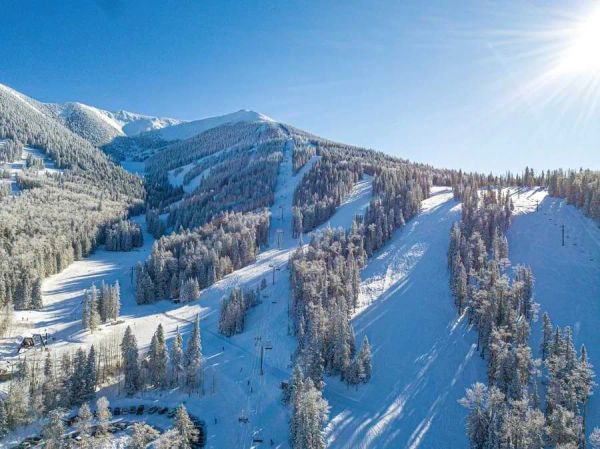
Arizona Snowbowl's $1 Lift Tickets Are Hard to Find, but $9 Days Are Not
Arizona Snowbowl advertised eight $1 lift ticket days this winter. Go looking and only three are showing - 10 March, 1 April and 10 April - so the rest may already have gone. The consolation is a calendar full of $9 days, including all but one day in April. Opening day is 20 November, weather permitting, and opening weekend is $19.
2 Oct 2026
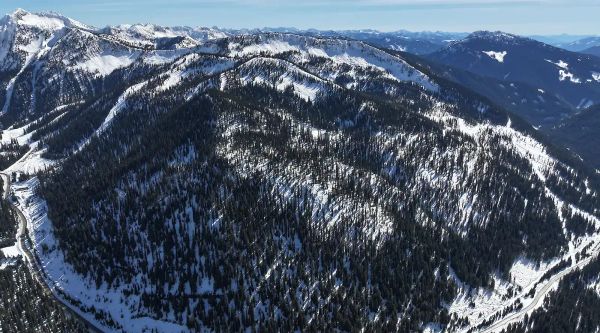
Whitewater Brings Its Short Side Inbounds, With Six New Runs for 2026-27
For years, Whitewater's Short Side was where you ducked a rope and hoped for the best: unmapped, ungroomed and unpatrolled. This winter it's inbounds. Six new runs of glades and fall-line skiing add 190 acres (about 77 hectares), taking the resort past 1,400 acres in total. F2 Logging spent a month in the trees to make it happen, and opening day is pencilled in for 4 December. Bonanza now needs less snow to groom, too.
1 Oct 2026
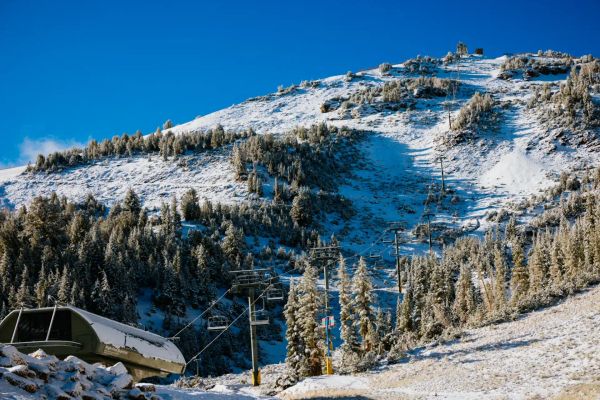
September Dusting Hits Mammoth Mountain Six Weeks Before Opening Day
Mammoth got its first snow of 2026-27 on Monday 28 September - and promptly lost it by Tuesday morning. Barely an inch fell at McCoy Station, but with opening day pencilled in for Friday 13 November, it's the first sign the Sierra is waking up. Last year's date slipped from 14 November to 20 November, so nobody's booking flights on a dusting just yet. Here's where California's early openers stand.
1 Oct 2026
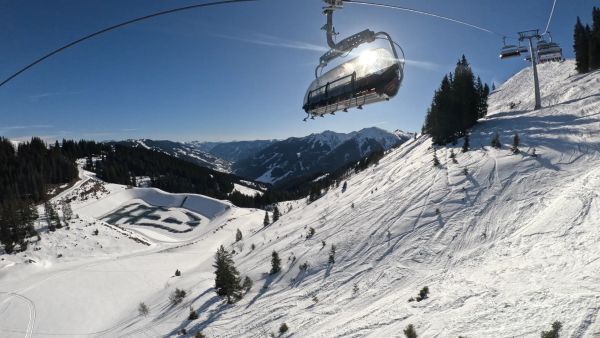
Saalbach Hinterglemm Resort Review: 270 km of Piste, 70 Lifts and a Three-Resort Pass
Four connected areas, 70 lifts and a World Championship course, yet Saalbach Hinterglemm still runs like a family holiday. Two days on snow and a Worlds Super-G later, here is who it suits, what the Ski ALPIN CARD covers and why Epic Pass holders should pay attention. Big on blues, light on steeps.
30 Sept 2026
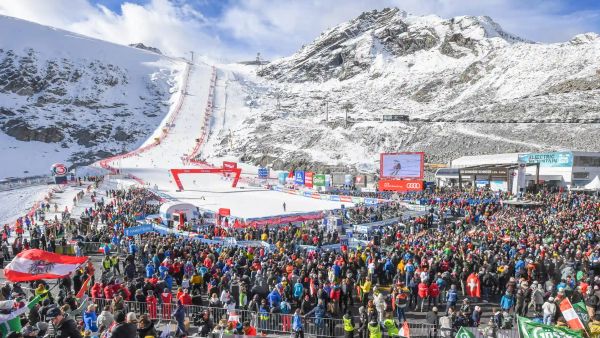
Sölden Plans Four-Race World Cup Opener on the Rettenbach Glacier from 2027
Sölden's World Cup opener has been two giant slaloms on the Rettenbach glacier for as long as most fans can remember. From 2027/28 it could be four. Director Jack Falkner wants to add two Super-Gs, backed by a nod from Vincent Kriechmayr, and turn the opening into a full week where the ski world gathers in the Ötztal. FIS and the ÖSV are yet to sign off. This year, it's still just the two GS races on 24 and 25 October.
29 Sept 2026
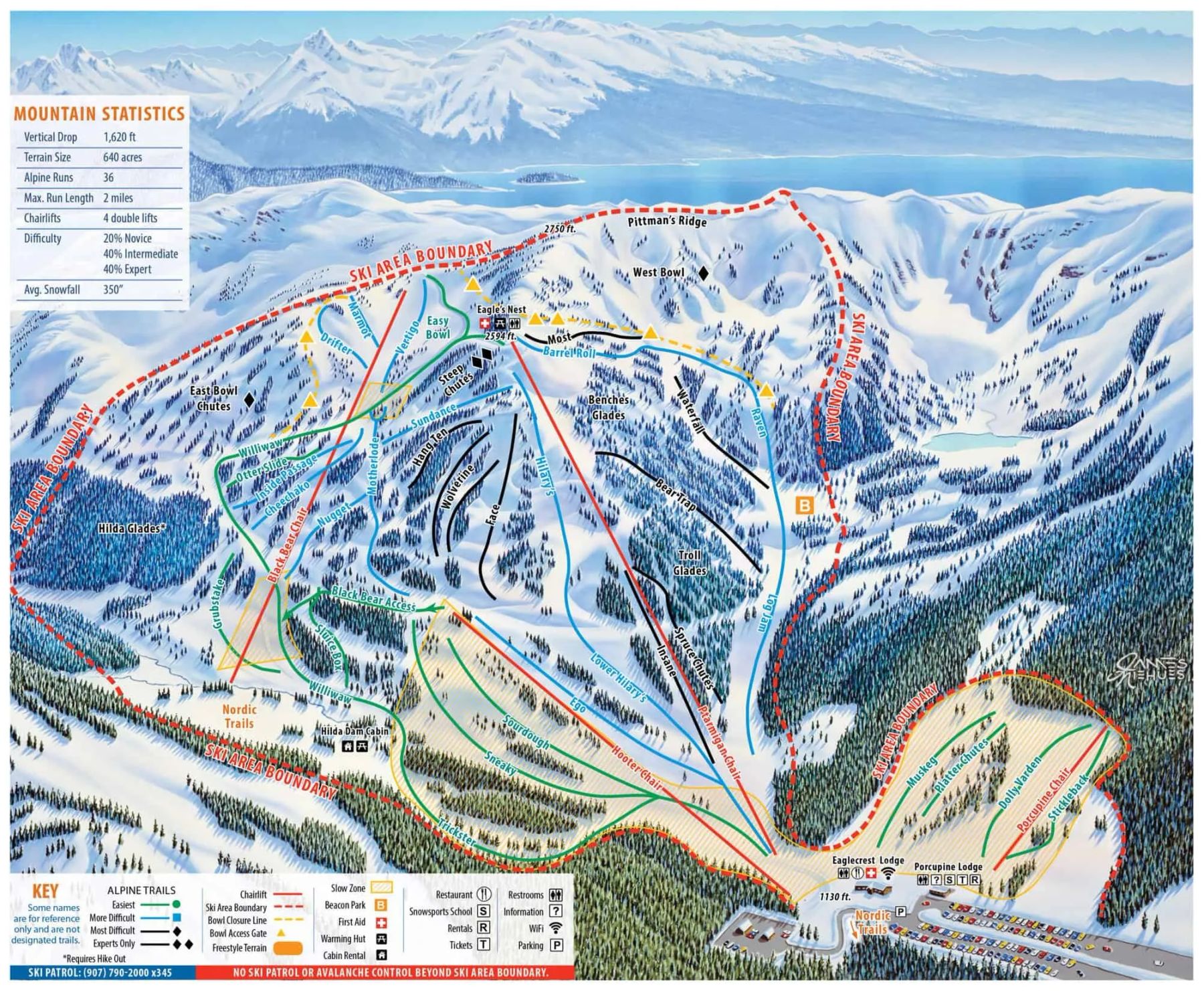
Eaglecrest Ski Trails
Downloadable Eaglecrest trail map
Terrain split
36
runs
Beginner20%
Intermediate40%
Advanced40%
Expert0%
640 acres skiable259 hectares
Resort Stats
Elevation
Base1,129ft
Summit2,749ft
Annual snowfall
29ft
Season
2025 - 2026
6 Dec 2025 - 13 Apr 2026
Trail coverage
36 runs
640 acres (259 ha)
Eaglecrest ski trails
Eaglecrest offers 36 runs across a mix of difficulties. The terrain split and trail map here show how the mountain breaks down so you can plan a day that suits your group.
- • Match runs to your ability - the terrain split shows how much of Eaglecrest is beginner, intermediate and advanced.
- • Check grooming and open-run status against the live conditions before committing to the upper mountain.
- • Early season and after fresh snow, favour the lifts serving your preferred grade to make the most of the day.
More Eaglecrest intelligence: trail map, lift system, resort overview.