
Big Bear
Ski Southern California's highest lift-served peak at 8,805ft. Three mountains — Bear Mountain, Snow Summit and Snow Valley — just 2 hours from LA.
Season 2026 - 2027
Opens
28 Nov 2026
Closes
11 Apr 2027
Days open
134
Annual snow
11ft
The Overview
Michael Fulton
Melbourne-based skier and snowboarder with 50+ resorts across 5 continents. Specialises in Australian resorts and international resort comparisons.
Bear Mountain sits at the eastern end of Big Bear Valley in the San Bernardino National Forest, reaching a summit of 8,805 feet at Geronimo Peak — the highest lift-served point in Southern California — with a base at 7,140 feet and a vertical drop of 1,665 feet. The 198 acres of skiable terrain across three peaks — Bear Peak, Silver Mountain and Goldmine Mountain — break down as 20% beginner, 33% intermediate, 33% advanced and 14% expert, making Bear Mountain the most technically demanding of the three mountains that make up Big Bear Mountain Resort.
Snow Summit and Snow Valley, both within 15 miles, complete the resort group under Alterra Mountain Company ownership, and a single Ikon Pass or daily lift ticket provides access across all three mountains on the same day. Snow Summit (peak 8,200 feet, 240 acres) focuses on intermediate and family terrain with direct views of Big Bear Lake, while Snow Valley (peak 7,841 feet) serves as the primary beginner and family mountain to the west.
Bear Mountain's most significant historical distinction is in freestyle: the Outlaw terrain park, built in 1992, was the first freestyle terrain park in North America, establishing a legacy that the mountain has built on ever since. Bear Mountain still operates the only halfpipes in Southern California and hosts the Hot Dawgz and Hand Rails freestyle competition, running since 2003 as one of the longest-running freestyle events in the US.
The broader resort's snowmaking infrastructure — more than 560 hydrants, 330 snow guns and 40 fans capable of converting 6,000 gallons of water to snow per minute — underpins reliable conditions across all three mountains from opening day, and Snow Summit was selected to host the inaugural Winter X Games in 1997, cementing the Big Bear area's standing in competitive winter sports history.
1,667ft
Vertical
29
Runs
198 acres
Skiable
11ft
Annual snow
Ikon
Pass
The Terrain
29 runs across 198 acres skiable
Big Bear's Bear Mountain is a compact Southern California ski area of 198 acres (80 hectares), rising from a 7,140 ft (2,176 m) base to the 8,810 ft (2,684 m) summit for 1,670 ft (508 m) of vertical. Its 29 runs split 20% beginner, 33% intermediate, 33% advanced and 14% expert, which is a steeper mix than most people expect this close to Los Angeles. Geronimo Peak, the highest lift-served point in Southern California, tops the mountain. Scale is the honest limitation, so expect a good day rather than a week of new terrain.
Freestyle defines Bear Mountain. The Outlaw terrain park, opened in 1992, is recognised as the first freestyle terrain park in North America, and the mountain continues to run terrain parks alongside its trails. Away from the park, there are black diamond pitches for strong skiers, while the lower mountain is full of blue square cruisers and green circle slopes for progression. Lift tickets and season passes are valid at both Bear Mountain and Snow Summit, so a day can be split between the two. Bear Mountain suits park riders, Southern California day-trippers and intermediates who like to push into steeper terrain, and it is a good test of how much a small hill can offer.
Terrain split
29
runs
29 runs across 4 grades
Beginner6 runs · 20%
Intermediate10 runs · 33%
Advanced10 runs · 33%
Expert4 runs · 14%
Time it right
When to visit Big Bear
Big Bear Mountain Resort operates from late November through to mid-April, with the 2025/26 season running 22 November to 12 April across the three mountains. The San Bernardino Mountains' position above the Los Angeles basin creates a distinct seasonal pattern: cold air pooling at elevation through winter combined with snowmaking water drawn from Big Bear Lake sustains the season across all three mountains regardless of natural accumulation patterns, which vary considerably year to year at this latitude.
The current 2025/26 season has recorded a base of around 36 inches as of early March with a season total of approximately 16 inches of natural snowfall, reflecting the supplementary snowmaking load the system regularly carries in lower-precipitation years. In strong snow years, the Big Bear mountains deliver considerably more natural cover, and the combination of elevation, aspect and snowmaking gives the resort the most operating days per season of any Southern California ski area.
The proximity to the Los Angeles metropolitan area shapes the seasonal rhythm more than at any comparable US ski resort: with 15 million people within a two-hour drive, Big Bear weekends during January and February fill quickly, and the resort's management of lift capacity, parking and snowmaking is oriented substantially around the Southern California day-trip market.
Midweek conditions are consistently less crowded, and the midweek season pass option reflects how significant that segment is to the resort's visitor profile. Night sessions at Snow Summit on select dates extend the usefulness of the trip for those arriving late from the city, and the combination of Snow Valley, Snow Summit and Bear Mountain across a single ski day gives visitors more terrain variety than any other Southern California destination.
Season 2026 - 2027
28 Nov 2026
Opens
11 Apr 2027
Closes
134
Days open
11 ft
Annual snow
Getting there
Getting to Big Bear, and where to stay
Bear Mountain sits in the San Bernardino National Forest in the Big Bear Valley, approximately 100 miles east of downtown Los Angeles and 25 miles northeast of San Bernardino. The primary access routes are California State Route 18 via Highway 330 from Redlands off Interstate 10, or the more scenic State Route 38 along the Big Bear Scenic Byway — both climbs of around 5,000 feet from the valley floor to the resort.
The drive from central Los Angeles takes approximately two hours under normal freeway conditions, making Big Bear the closest major ski destination to one of the world's largest urban populations and explaining why Snow Summit, Bear Mountain and Snow Valley collectively represent one of the highest-visitor-volume ski operations in the US by sheer throughput. Chain controls are enforced regularly on the access roads during winter storm conditions, and the resort recommends checking Caltrans chain control status before departure.
Big Bear Lake township at 6,752 feet sits immediately adjacent to the ski area and provides the full range of accommodation, dining and après-ski options within a few minutes of all three mountains. The lake itself — around nine miles long and the largest freshwater lake in Southern California — is the source of the resort's snowmaking water supply and gives the valley its distinctive high-desert alpine character, surrounded by Jeffrey pine and white fir forest on the upper slopes.
San Bernardino International Airport is the closest commercial gateway, approximately 40 miles west via Highway 330, with Ontario International Airport and Los Angeles International Airport offering broader connections for visitors flying in. The Big Bear Valley's position in the San Bernardino Mountains above the Mojave Desert and Coachella Valley creates weather patterns where clear, cold nights and sunny daytime conditions dominate much of the ski season, with the snowmaking system bridging the gaps when Pacific storm systems track north of the region.
Where to stay
Search all stays →Hotels and lodges near Big Bear, powered by Stay22.
Latest News
From the SnowStash desk
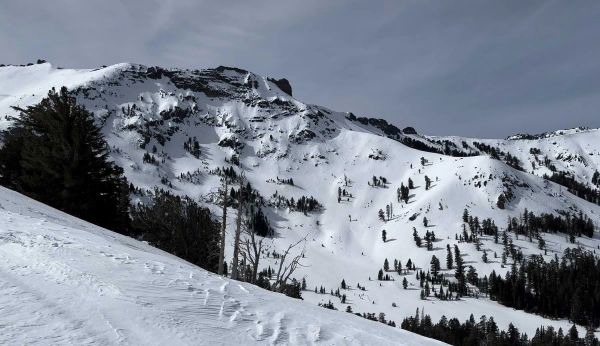
California Ski Resort Opening Dates 2026-27: Mammoth Leads, Tahoe Follows
Mammoth Mountain is first up in California, targeting Friday 13 November after a dusting of September snow. Heavenly and Northstar follow on 20 November, Palisades Tahoe on Wednesday 25 November and Sugar Bowl on 27 November, with Kirkwood on 4 December and June Mountain on 19 December. Plenty of smaller areas have no date yet. A super El Niño favours the Sierra, but a warmer storm track is the catch.
7 Oct 2026
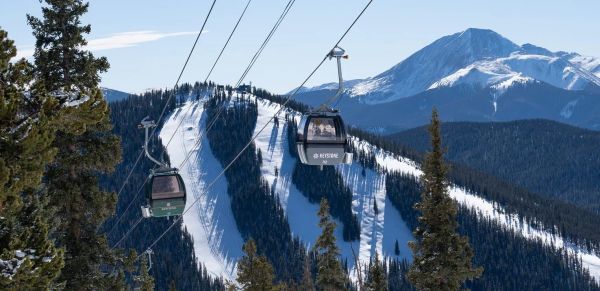
Colorado Ski Resort Opening Dates 2026-27: A-Basin and Keystone Race to Be First
Arapahoe Basin, Keystone and Winter Park are all chasing an October start, though none has a firm date yet. The first dated openers are Breckenridge and Copper on Friday 6 November, then Vail on 13 November, with most of the rest bunched around US Thanksgiving. Hesperus did not open at all last season. A super El Niño offers hope but no guarantee, and forecasters say the southern mountains have the better odds.
5 Oct 2026
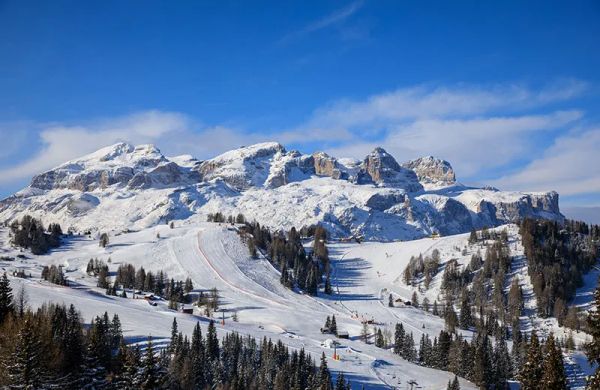
Dolomiti Superski 2026-27: Four New Gondolas, New Reservoirs and an €89 Peak Day Pass
Dolomiti Superski is spending around €100 million across its 12 areas before winter. Kronplatz gets a new 10-passenger gondola with a middle station, 3 Zinnen gets Helmissimo, and Val di Fassa swaps a chairlift for a gondola above Col Valvacin. New water-storage basins and upgraded snowmaking follow, and construction has started on the San Martino to Passo Rolle link. A peak adult day pass is €89.
4 Oct 2026
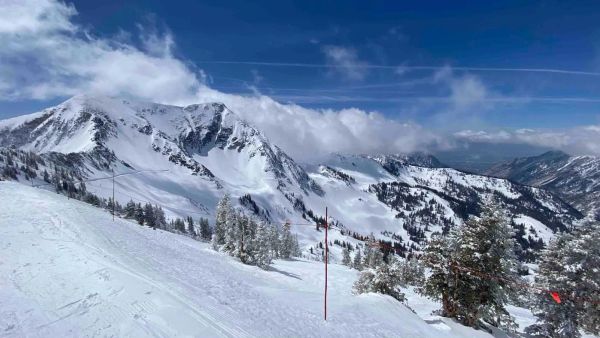
Utah Ski Resort Opening Dates 2026-27: Brian Head First, Eagle Point Out
Brian Head is targeting 6 November, though last year it aimed for 7 November and did not open until the 25th. Park City, Alta and Solitude are pencilled in for 20 November, Snowbird and Snowbasin for 27 November, and Deer Valley for 5 December. Eagle Point will stay closed after the Cottonwood Fire. A super El Niño is forecast, but the big snow is not expected until January.
4 Oct 2026
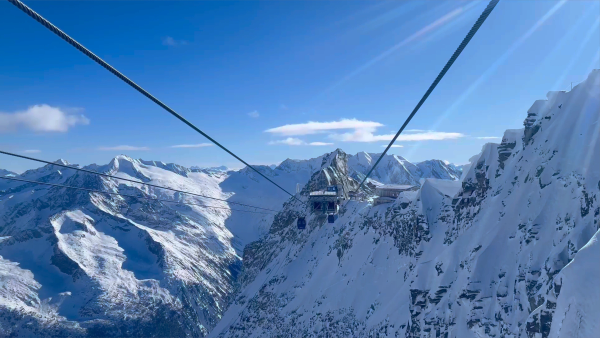
Hintertux Glacier Opens for 2026-27 With 12 Kilometres of Piste
Hintertux became Austria's second glacier to open for 2026-27 on Friday 2 October, after the Pitztal Glacier. Twelve kilometres of piste are running around the Olperer and Gefrorene Wand, served by one gondola and two drag lifts, with the Betterpark also open. Lifts officially run 8:15 am to 4:30 pm, but skiing stops at 2 pm for now.
4 Oct 2026
Vail Resorts Counts the Cost of a Thin Winter as Pass Sales Slide Further
A historically poor western winter cut Vail Resorts' annual net income from $280 million to $147.5 million and skier visits by 13.4 per cent. Now 2026-27 pass units are down 12 per cent as of 18 September, worse than the 10 per cent flagged in spring. Vail blames the weather and thinks some buyers are simply waiting, and it forecasts a rebound if the snow behaves.
3 Oct 2026
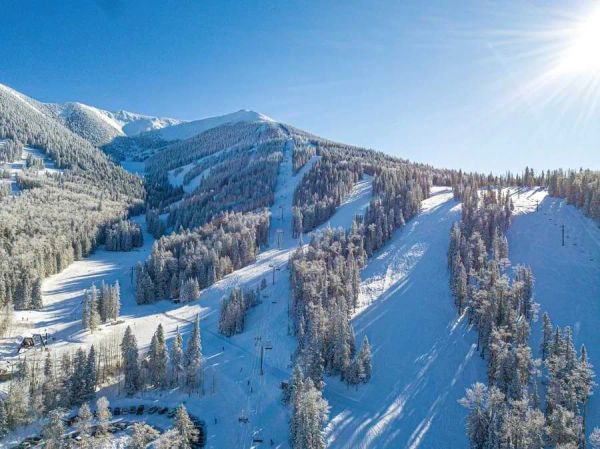
Arizona Snowbowl's $1 Lift Tickets Are Hard to Find, but $9 Days Are Not
Arizona Snowbowl advertised eight $1 lift ticket days this winter. Go looking and only three are showing - 10 March, 1 April and 10 April - so the rest may already have gone. The consolation is a calendar full of $9 days, including all but one day in April. Opening day is 20 November, weather permitting, and opening weekend is $19.
2 Oct 2026
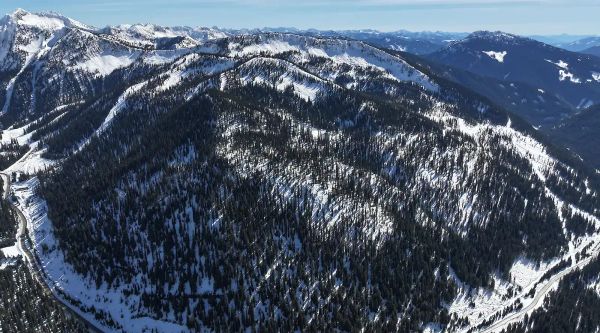
Whitewater Brings Its Short Side Inbounds, With Six New Runs for 2026-27
For years, Whitewater's Short Side was where you ducked a rope and hoped for the best: unmapped, ungroomed and unpatrolled. This winter it's inbounds. Six new runs of glades and fall-line skiing add 190 acres (about 77 hectares), taking the resort past 1,400 acres in total. F2 Logging spent a month in the trees to make it happen, and opening day is pencilled in for 4 December. Bonanza now needs less snow to groom, too.
1 Oct 2026
Big Bear Lift System
Bear Mountain's 11-lift network — one six-seat chair, two quads, two triples, three doubles and three surface lifts — serves the three-peak ski area across Goldmine Mountain, Silver Mountain and Bear Peak. The six-seat chair provides the primary high-speed access to the upper mountain terrain, while the quads and triples distribute intermediate and beginner traffic efficiently across the lower and mid-mountain zones.
Bear Peak's Geronimo summit at 8,805 feet is reached via the upper lift network and is the highest lift-accessible point in Southern California, with views extending across the San Bernardino Mountains and on clear days toward the San Gorgonio Wilderness to the south. The terrain park infrastructure at Bear Mountain — six parks including the historic Outlaw — is served by dedicated lift access and represents the most developed freestyle set-up of the three Big Bear mountains.
The collective Big Bear Mountain Resort snowmaking system across all three mountains represents one of the largest artificial snow operations in California, drawing water from Big Bear Lake to feed the 560-hydrant network and sustaining coverage on all marked terrain regardless of natural snowfall variability. Bear Mountain averages approximately 100 inches of natural snowfall annually — modest by Sierra Nevada standards but supplemented by the snowmaking capacity to deliver consistent conditions throughout the season.
Night sessions operate on select dates at Snow Summit, extending the usable hours of the resort for visitors making the drive from Los Angeles. Snow Valley, Snow Summit and Bear Mountain can all be skied in a single day on one ticket, with road distances of under 15 miles between the furthest pair of mountains.
11lifts across 5 types
1
6-Person Chair
2
Quad Chairs
2
Triple Chairs
3
Double Chairs
3
Surface Lifts
Big Bear lift system
Big Bear is served by 11 lifts, listed here by type. Check which lifts are turning against the live conditions before you plan your first laps - early lifts and high-speed chairs get you to the best snow fastest.
More Big Bear intelligence: trail map, snow report, webcams, resort overview.