
The Overview
Michael Fulton
Melbourne-based skier and snowboarder with 50+ resorts across 5 continents. Specialises in Australian resorts and international resort comparisons.
Paoli Peaks' summit reaches 823 feet, dropping roughly 280 vertical feet to a base at 545 feet across 15 runs spread over 65 acres in southern Indiana. Terrain splits 46 per cent intermediate, 39 per cent beginner and 15 per cent advanced, with no expert-rated runs. Nine lifts serve the compact hill, a high lift count relative to its size. The resort operates on the Epic Pass under Vail Resorts ownership.
Built on a natural hill rather than a mountain, Paoli Peaks relies on snowmaking for most of its season given the region's modest natural snowfall. The terrain mix favours beginners and intermediates, consistent with its role as an introductory hill for skiers across southern Indiana, Louisville and Cincinnati. There is no expert terrain, and advanced runs make up only 15 per cent of the trail count. The nine-lift network keeps queues short even at this scale.
Peak Resorts acquired the area in 1997 through a new entity, New Paoli Peaks, Inc., expanding the company's footprint into southern Indiana. Vail Resorts bought Peak Resorts in 2019 for 264 million US dollars, bringing Paoli Peaks into the largest ski resort portfolio in the Americas. The resort sits in Paoli Township, Orange County, on a hill with a comparatively short 300-foot drop by Peak Resorts' own historical description. It remains one of the smaller properties in Vail's Epic Pass network.
Epic Pass holders get access to Paoli Peaks alongside Vail's much larger portfolio of destination resorts. The resort functions as a regional day-trip hill rather than a destination in its own right, serving skiers within driving range of southern Indiana. Its beginner and intermediate-leaning terrain, combined with snowmaking-dependent conditions, makes it a practical entry point for skiers new to the sport in the Midwest and Ohio Valley. Being under Vail ownership since 2019 links it operationally to a much larger corporate network despite its small physical footprint.
279ft
Vertical
15
Runs
65 acres
Skiable
7ft
Annual snow
Epic Pass
Pass
The Terrain
15 runs across 65 acres skiable
Paoli Peaks is a compact ski hill in southern Indiana with just 65 acres (26 hectares) of terrain, so expectations should be set accordingly. The base sits at 540 ft (166 m) and the top at 820 ft (251 m), a vertical of 280 ft (85 m). Its 15 runs split 39% beginner, 46% intermediate and 15% advanced, with no expert terrain. Nine lifts, made up of three triples, a quad, a double and four surface lifts, are packed into the small footprint, so lift lines stay short and laps come quickly.
Snowmaking carries the season, and the system can lay down roughly 12 inches overnight across the whole mountain. The hill has two terrain parks and a halfpipe, night skiing and a separate tubing park. Paoli Peaks suits first-timers, families and park riders from Louisville, Cincinnati and Indianapolis who want a convenient Epic Pass stop close to home. Strong skiers will tire of the terrain quickly, but it is an easy place to learn, practise turns and build confidence before heading to bigger mountains, and evening sessions fit neatly around a working week.
Terrain split
15
runs
15 runs across 4 grades
Beginner6 runs · 39%
Intermediate7 runs · 46%
Advanced2 runs · 15%
Expert0 runs · 0%
Time it right
When to visit Paoli Peaks Resort
The 2025-26 season at Paoli Peaks ran from 19 December 2025 to 29 March 2026, a roughly fifteen-week window typical for a snowmaking-dependent southern Indiana hill. Season length depends heavily on temperatures cold enough to run snowmaking, rather than natural snowpack. Opening and closing dates can shift year to year based on early and late-season weather. This is a shorter season than most higher-elevation Midwest resorts further north.
Average annual snowfall of roughly 80 inches is modest, meaning Paoli Peaks depends on snowmaking for the bulk of its season-long conditions rather than natural accumulation. This makes the resort's operating window more sensitive to temperature than to storm cycles. Base depth is maintained artificially rather than tracked as natural accumulation. Specific snowmaking coverage percentage is not confirmed in available resort information, though it is understood to cover the great majority of terrain.
Midwinter, from late December through February, typically offers the most reliable conditions once snowmaking has built a consistent base. Weekday visits are generally quieter than weekends, given the resort's role serving day-trip visitors from Louisville, Cincinnati and Indianapolis. Late-season visits in March can be inconsistent as temperatures warm and snowmaking becomes less viable. The resort briefly closed in January 2026, a week after opening, illustrating how weather-dependent operations remain even with extensive snowmaking.
Paoli Peaks' season calendar centres on serving as an accessible learning hill rather than hosting festival programming. As part of Vail Resorts' Epic Pass network, its operating calendar is set with reference to the broader portfolio rather than independent local decision-making. Specific event programming beyond standard operations is not documented in available resort information. The resort's core role remains introducing new skiers and snowboarders across the Ohio Valley region.
Season 2026 - 2027
18 Dec 2026
Opens
7 Mar 2027
Closes
79
Days open
7 ft
Annual snow
Getting there
Getting to Paoli Peaks Resort, and where to stay
Paoli Peaks sits in Paoli Township, Orange County, in southern Indiana, built on a natural hill with a base elevation of 545 feet. The summit reaches 823 feet, giving a modest vertical drop of roughly 280 feet across 65 acres. This is farmland and forest country rather than mountainous terrain, making Paoli Peaks a regional novelty as one of the few ski areas in Indiana. The surrounding Hoosier National Forest lies nearby.
Paoli, Indiana, is the nearest town, a small county seat rather than a resort town. Louisville, Kentucky, and Cincinnati, Ohio, are the nearest major cities, both within a reasonable weekend drive, forming the resort's primary visitor base alongside Indianapolis further north. The region carries a rural, agricultural character rather than any ski-tourism identity. Paoli Peaks exists as a standalone recreational hill rather than part of a broader mountain resort corridor.
State and local roads connect Paoli to nearby highways, with no dedicated mountain access road required given the area's low-relief terrain. The drive from Louisville takes a little over an hour under normal conditions, while Cincinnati and Indianapolis are each roughly two hours away. Winter driving conditions are typically light given the region's modest snowfall, though ice can be a factor on rural roads. No public transport service reaches the resort, making a car necessary for access.
Louisville Muhammad Ali International Airport is the nearest airport with substantial commercial service, roughly 90 minutes away by road. Cincinnati/Northern Kentucky International Airport offers a comparable alternative to the northeast. Indianapolis International Airport is a further option for visitors from the north. Most visitors drive to Paoli Peaks as a day trip rather than flying in specifically for a ski visit.
Where to stay
Search all stays →Hotels and lodges near Paoli Peaks Resort, powered by Stay22.
Latest News
From the SnowStash desk
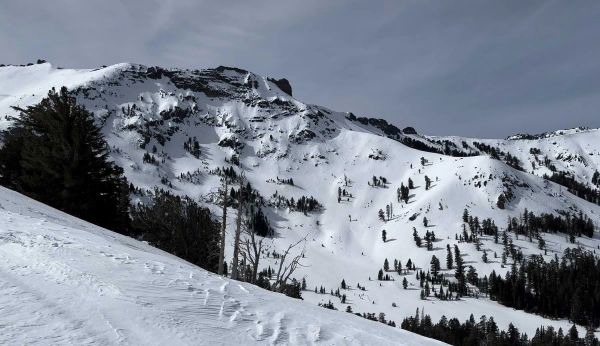
California Ski Resort Opening Dates 2026-27: Mammoth Leads, Tahoe Follows
Mammoth Mountain is first up in California, targeting Friday 13 November after a dusting of September snow. Heavenly and Northstar follow on 20 November, Palisades Tahoe on Wednesday 25 November and Sugar Bowl on 27 November, with Kirkwood on 4 December and June Mountain on 19 December. Plenty of smaller areas have no date yet. A super El Niño favours the Sierra, but a warmer storm track is the catch.
7 Oct 2026
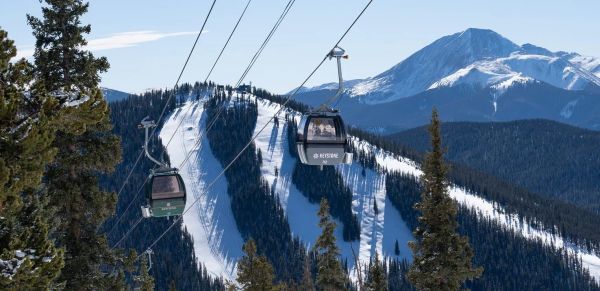
Colorado Ski Resort Opening Dates 2026-27: A-Basin and Keystone Race to Be First
Arapahoe Basin, Keystone and Winter Park are all chasing an October start, though none has a firm date yet. The first dated openers are Breckenridge and Copper on Friday 6 November, then Vail on 13 November, with most of the rest bunched around US Thanksgiving. Hesperus did not open at all last season. A super El Niño offers hope but no guarantee, and forecasters say the southern mountains have the better odds.
5 Oct 2026
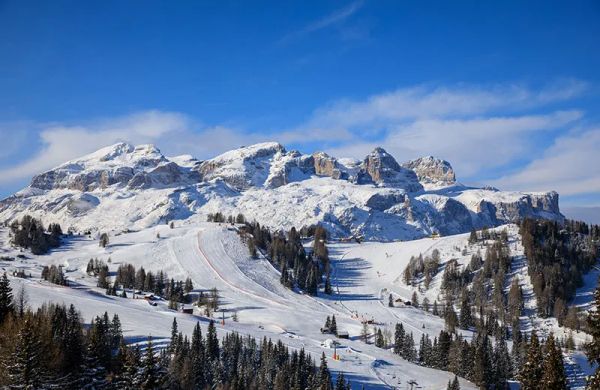
Dolomiti Superski 2026-27: Four New Gondolas, New Reservoirs and an €89 Peak Day Pass
Dolomiti Superski is spending around €100 million across its 12 areas before winter. Kronplatz gets a new 10-passenger gondola with a middle station, 3 Zinnen gets Helmissimo, and Val di Fassa swaps a chairlift for a gondola above Col Valvacin. New water-storage basins and upgraded snowmaking follow, and construction has started on the San Martino to Passo Rolle link. A peak adult day pass is €89.
4 Oct 2026
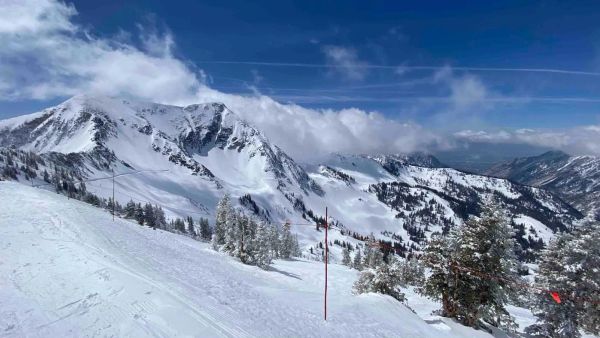
Utah Ski Resort Opening Dates 2026-27: Brian Head First, Eagle Point Out
Brian Head is targeting 6 November, though last year it aimed for 7 November and did not open until the 25th. Park City, Alta and Solitude are pencilled in for 20 November, Snowbird and Snowbasin for 27 November, and Deer Valley for 5 December. Eagle Point will stay closed after the Cottonwood Fire. A super El Niño is forecast, but the big snow is not expected until January.
4 Oct 2026
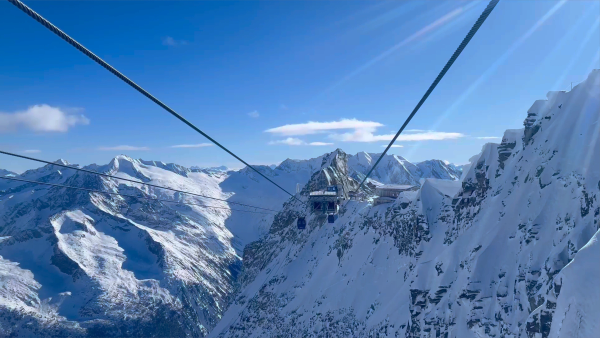
Hintertux Glacier Opens for 2026-27 With 12 Kilometres of Piste
Hintertux became Austria's second glacier to open for 2026-27 on Friday 2 October, after the Pitztal Glacier. Twelve kilometres of piste are running around the Olperer and Gefrorene Wand, served by one gondola and two drag lifts, with the Betterpark also open. Lifts officially run 8:15 am to 4:30 pm, but skiing stops at 2 pm for now.
4 Oct 2026
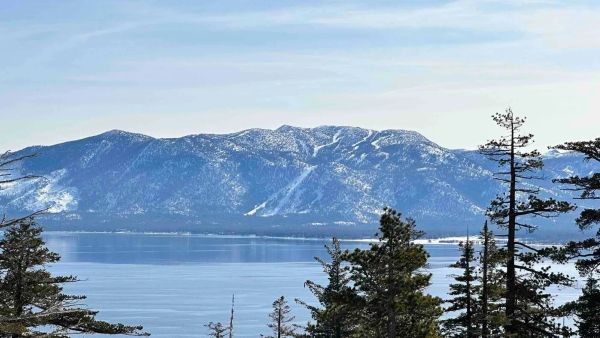
Vail Resorts Counts the Cost of a Thin Winter as Pass Sales Slide Further
A historically poor western winter cut Vail Resorts' annual net income from $280 million to $147.5 million and skier visits by 13.4 per cent. Now 2026-27 pass units are down 12 per cent as of 18 September, worse than the 10 per cent flagged in spring. Vail blames the weather and thinks some buyers are simply waiting, and it forecasts a rebound if the snow behaves.
3 Oct 2026
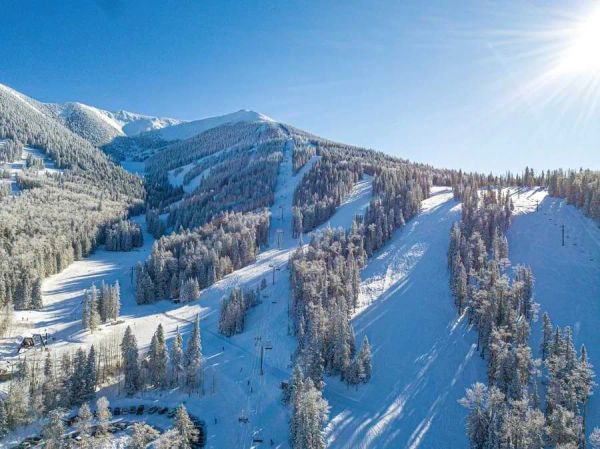
Arizona Snowbowl's $1 Lift Tickets Are Hard to Find, but $9 Days Are Not
Arizona Snowbowl advertised eight $1 lift ticket days this winter. Go looking and only three are showing - 10 March, 1 April and 10 April - so the rest may already have gone. The consolation is a calendar full of $9 days, including all but one day in April. Opening day is 20 November, weather permitting, and opening weekend is $19.
2 Oct 2026
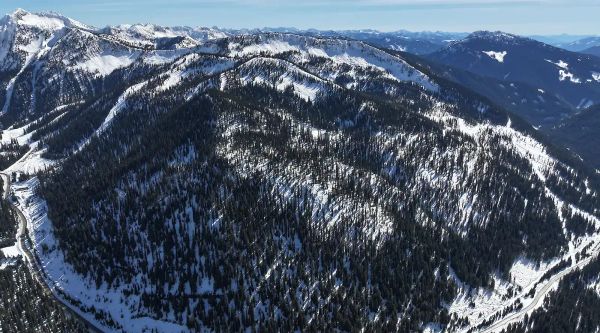
Whitewater Brings Its Short Side Inbounds, With Six New Runs for 2026-27
For years, Whitewater's Short Side was where you ducked a rope and hoped for the best: unmapped, ungroomed and unpatrolled. This winter it's inbounds. Six new runs of glades and fall-line skiing add 190 acres (about 77 hectares), taking the resort past 1,400 acres in total. F2 Logging spent a month in the trees to make it happen, and opening day is pencilled in for 4 December. Bonanza now needs less snow to groom, too.
1 Oct 2026