Bretton Woods
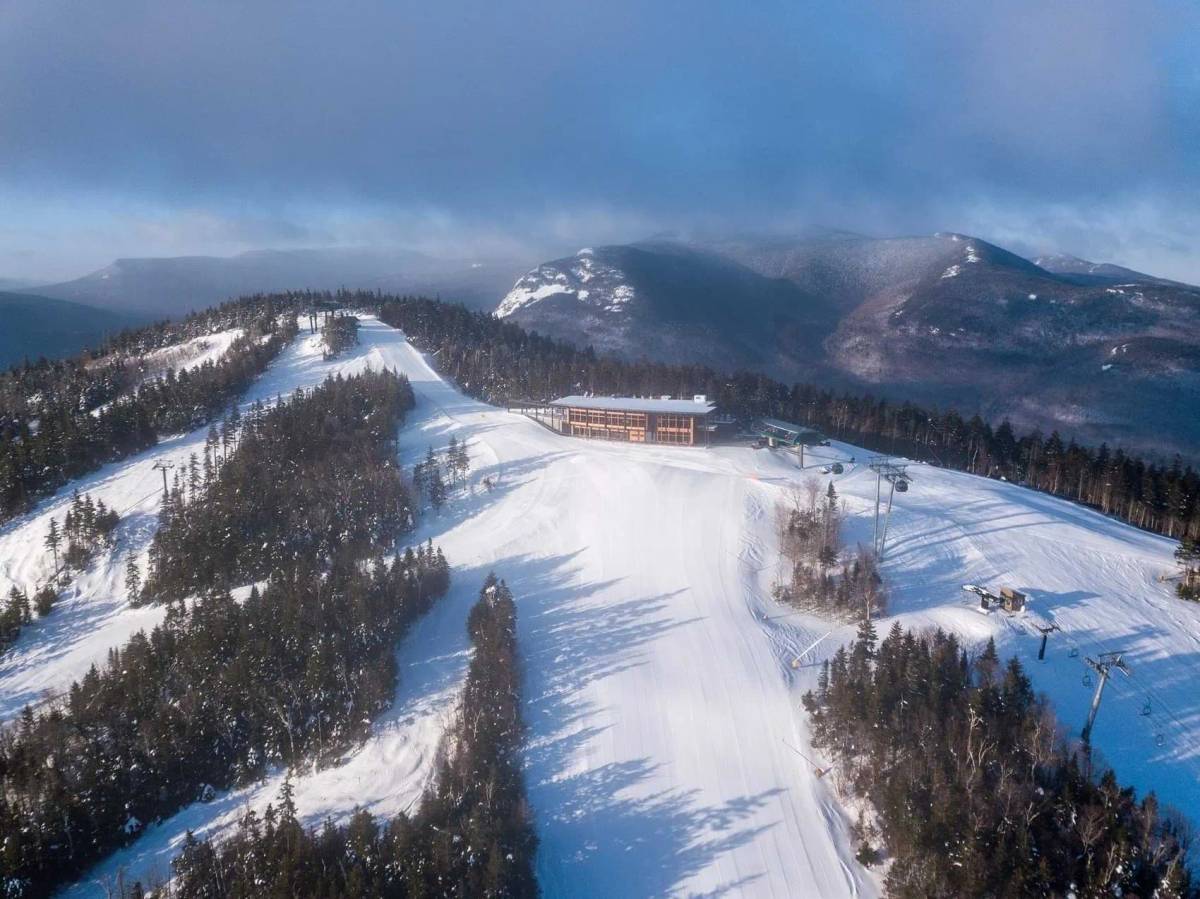
New Hampshire's largest ski area with Mount Washington views. Features 464 acres of pristine terrain luxury amenities at the Omni Mount Washington Resort and perfect groomers.
Season 2026 - 2027
Opens
21 Nov 2026
Closes
11 Apr 2027
Days open
141
Annual snow
127in
The Overview
Michael Fulton
Melbourne-based skier and snowboarder with 50+ resorts across 5 continents. Specialises in Australian resorts and international resort comparisons.
Bretton Woods ski resort commands 464 acres of skiable terrain across three distinct mountain areas in New Hampshire’s legendary White Mountains, making it the largest ski area in the state. Established in December 1973 and now celebrating over 50 years of operation, the resort sprawls across Mount Rosebrook, West Mountain, and Mount Stickney with a vertical drop of 1,500 feet from its 3,100-foot summit to its 1,600-foot base.
The mountain features 63 named trails complemented by 35 glades that add another dimension to the skiing experience, with terrain distributed as 25% beginner, 29% intermediate, and 46% advanced to expert runs.
What truly distinguishes Bretton Woods is its dramatic setting in the shadow of the Presidential Range, offering unobstructed views of Mount Washington and the surrounding peaks from virtually every run. The resort’s 92% snowmaking coverage across 428 acres ensures consistent conditions throughout its mid-November to mid-April season, whilst annual natural snowfall exceeding 200 inches provides regular powder refreshers.
Bretton Woods has earned SKI Magazine’s award for Best Grooming in the East for six consecutive years, alongside rankings as the top resort in New Hampshire for overall satisfaction, family friendliness, and guest services. The mountain’s north-facing orientation and sheltered position provide excellent snow preservation and wind protection, creating reliably comfortable skiing conditions.
Located directly across from the historic Omni Mount Washington Resort—site of the famous 1944 Bretton Woods Conference that established the World Bank and International Monetary Fund—the ski area benefits from integration with one of New England’s grandest hotels whilst maintaining its own distinct character as a spacious, uncrowded destination surrounded by the 800,000-acre White Mountain National Forest.
1,499ft
Vertical
63
Runs
467 acres
Skiable
127in
Annual snow
The Terrain
63 runs across 467 acres skiable
Bretton Woods is the largest ski area in New Hampshire, with 467 acres (189 hectares) and 63 runs spread across three separate mountains beside Mount Washington. The vertical is 1,500 ft (457 m), from a 1,600 ft (488 m) base to a 3,100 ft (945 m) summit. The skill split leans harder than most of the state, at 23% beginner, 28% intermediate, 34% advanced and 15% expert. Snowfall averages around 127 inches a year. Mount Rosebrook is the main face, West Mountain sits alongside it, and Mount Stickney anchors the glade skiing.
Rosebrook holds the expert lines, including Bode's Run, named for local Olympic gold medallist Bode Miller, plus Chute and McIntire's Ride. West Mountain, added for the 1999-2000 season, brings its own birch glades and a quieter feel. Over on Mount Stickney, a T-bar serves around 30 acres of glades that range from steep to low-angle tree skiing on roughly 500 ft of vertical. Bretton Woods suits intermediates and advanced skiers who want variety and space, and tree skiers will find more to explore here than at most New Hampshire areas.
Terrain split
63
runs
63 runs across 4 grades
Beginner14 runs · 23%
Intermediate18 runs · 28%
Advanced21 runs · 34%
Expert9 runs · 15%
Time it right
When to visit Bretton Woods
Bretton Woods typically operates from mid-November through mid-April, delivering one of the longer ski seasons in New England with the 2024-25 season running from 16 November to 13 April across approximately five months of consistent conditions. The resort’s location in the northwestern corner of the White Mountains positions it ideally for upslope-driven snow patterns that regularly deliver 200-plus inches of annual snowfall—amongst the highest totals in New Hampshire—whilst the mountain’s extensive snowmaking infrastructure covering 92% of terrain ensures reliable coverage even when natural snow proves elusive. January and February represent peak conditions with the deepest natural snow base and most consistent powder refreshers, though the resort’s north-facing orientation and elevation ranging from 1,600 to 3,100 feet provide excellent snow preservation well into March and early April.
December through mid-March constitutes the prime operating period with full facility operation, vibrant atmosphere, and optimal grooming across all terrain zones, whilst the shoulder periods of late November and late March through mid-April offer quieter experiences with shorter lift queues for visitors seeking less crowded slopes. The resort maintains snowmaking operations typically through mid-February, after which natural snowfall and grooming maintain conditions on the 428 acres of snowmaking-equipped terrain. Night skiing operates Friday and Saturday evenings until 8:00pm from late December through mid-March, with five trails and two lifts dedicated to evening operations and extending to nightly service during holiday periods.
Bretton Woods has earned recognition as having the Best Snow in the East from SKI Magazine, with conditions benefiting from the sheltered position that provides wind protection whilst the extensive grooming fleet—responsible for the resort’s six consecutive years winning Best Grooming in the East—maintains immaculate corduroy across green, blue, and select black diamond runs.
Season 2026 - 2027
21 Nov 2026
Opens
11 Apr 2027
Closes
141
Days open
127 in
Annual snow
The record
Historical snowfall at Bretton Woods
Daily snow reports at Bretton Woods go back to 2025, 2 winters on the books. Open the record to compare winters, lifts and piste.
19 in
Snowiest day
27 Jan 2026
0 in
This winter · 2026-27
so far
191 in
Typical winter
average of complete seasons
Winter totals
in
Past wintersThis winter
Getting there
Getting to Bretton Woods, and where to stay
Bretton Woods ski resort sits at 99 Ski Area Road in the White Mountains of New Hampshire, positioned in the dramatic shadow of the Presidential Range where Mount Washington—New England’s highest peak at 6,288 feet—dominates the skyline with views visible from across the mountain.
Located in the village of Bretton Woods within Carroll County, the resort occupies a spectacular setting between Crawford Notch and Franconia Notch, virtually surrounded by the White Mountain National Forest’s 800,000 protected acres with minimal visible development beyond the historic Mount Washington Hotel and the Mount Washington Cog Railway.
The resort is named after Bretton Hall in West Yorkshire, England, honouring the 1772 land grant from King George III to Sir Thomas Wentworth, whilst the area gained international recognition in 1944 when the Mount Washington Hotel hosted the United Nations Monetary and Financial Conference that established the Bretton Woods financial system.
Access is straightforward via U.S. Route 302, which runs directly through Bretton Woods as the main east-west scenic highway through Crawford Notch, connecting to Interstate 93—the primary north-south corridor providing direct routes from Boston (157 miles/2.5 hours north via I-93), Portland, Maine (93 miles/2 hours east), Burlington, Vermont (115 miles/2 hours west), and Montreal (187 miles/3 hours north).
The nearest major commercial airport is Manchester-Boston Regional at 105 miles requiring approximately two hours’ drive, whilst Boston Logan International Airport sits 165 miles or 2.5 hours away offering the most extensive flight connections for domestic and international visitors.
Regional towns include Twin Mountain five miles west at the junction of Routes 3 and 302, North Conway 32 miles east through Crawford Notch offering extensive outlet shopping and dining, and Littleton 32 miles west serving as the major regional hub.
The resort’s position in the northwestern White Mountains places it amongst several notable ski areas including Cannon Mountain in Franconia Notch, Loon Mountain 25 miles south in Lincoln, and various Mount Washington Valley resorts, though Bretton Woods’ 464 acres make it New Hampshire’s largest ski area by total terrain.
Where to stay
Search all stays →Hotels and lodges near Bretton Woods, powered by Stay22.
Latest News
From the SnowStash desk
Pinheiro Braathen Wins Sölden Giant Slalom Opener by 0.48 Seconds
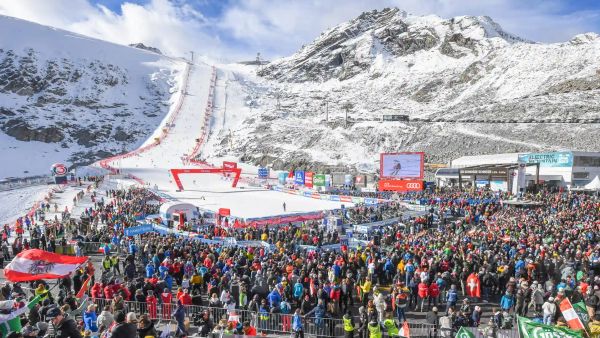
Two days at Sölden, two races decided by a hundredth somewhere on the podium, and one very quick Brazilian. Lucas Pinheiro Braathen led from the first run to win the men’s World Cup opener by 0.48 seconds, with Loïc Meillard second and Marco Odermatt third. River Radamus charged from 15th to fourth on a rutted course, and Britain’s Freddy Carrick-Smith banked his first World Cup points. Braathen still hasn’t lost a giant slalom since Olympic gold.
25 Oct 2026
Alps Snow Forecast: Up to 64 cm Headed for the High Glaciers as the Snow Line Drops
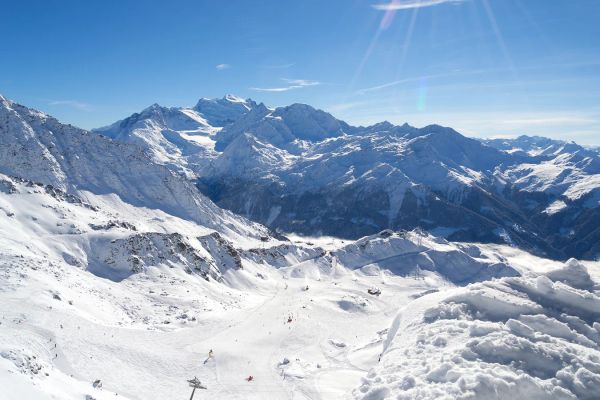
The Alps are about to swap mild, sunny October weather for something far more wintry. A cold front arrives Tuesday, and SnowStash forecasts have Monterosa Ski out in front with 64 cm over 14 days, ahead of Blatten Belalp (55 cm) and Verbier (43 cm). The snow line should fall below 2000 metres by Wednesday night, and glaciers across Switzerland, Italy and Austria are in line for the best of it. The wind will have a say too.
20 Oct 2026
Four Dead After Avalanche Near Ski Portillo in Chile
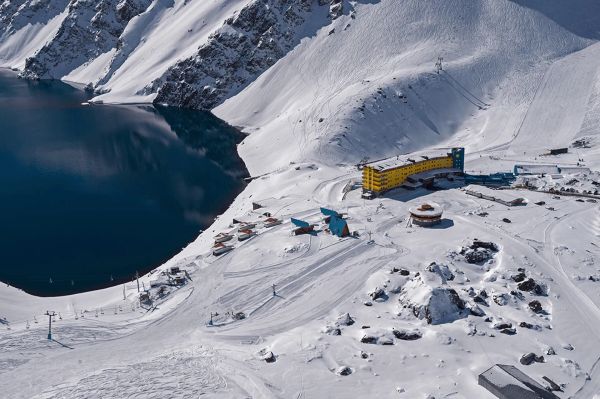
A large avalanche struck near Laguna del Inca adjacent to Ski Portillo on Saturday afternoon, killing four people and injuring four others. The group were day visitors mountaineering in the backcountry after reportedly being warned about elevated avalanche risk by resort staff.
18 Oct 2026
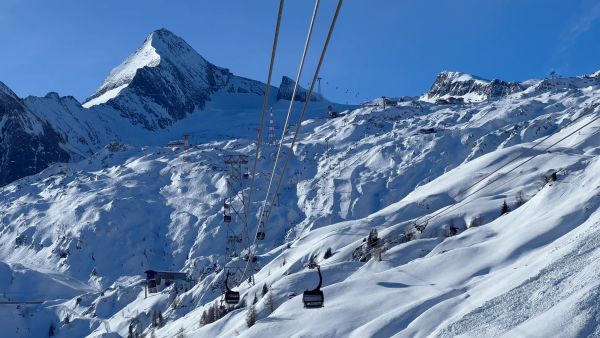
Europe Ski Resorts Open Now: What Is Skiable in Mid-October 2026
Europe’s ski season is open, technically. After a record-warm summer, glaciers in Austria, Switzerland and Italy are running a few pistes apiece, Sölden, Stubai and Kitzsteinhorn started late, Titlis has pushed back to 24 October, and Zermatt reopens a few lifts on 14 October after more than two months shut. Finland’s Levi and Ruka are skiing on stored snow. Here is what is open, and what you actually get at each.
14 Oct 2026
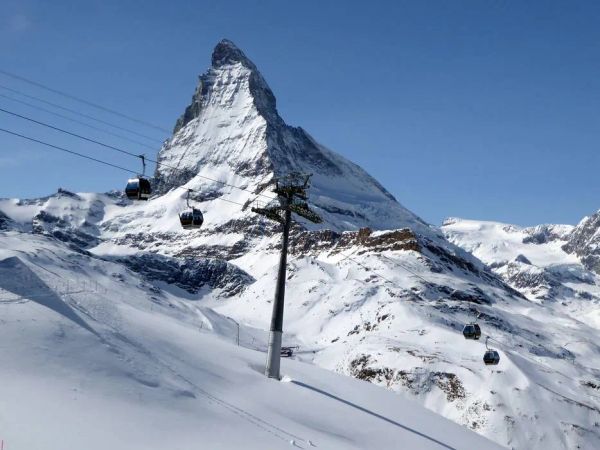
Zermatt Plans World Cup Downhill Return on the Gornergrat for 2028
Zermatt is having another crack at a World Cup downhill, and this time nobody has to cross a border. Around 13 million Swiss francs is going into rebuilding the Gornergrat piste, including a jump fed by a roughly 300-metre in-run across the roof of the Gornergrat Railway gallery, with the Matterhorn lined up behind it for the TV cameras. First men’s race is pencilled in for March 2028, pending FIS homologation.
14 Oct 2026
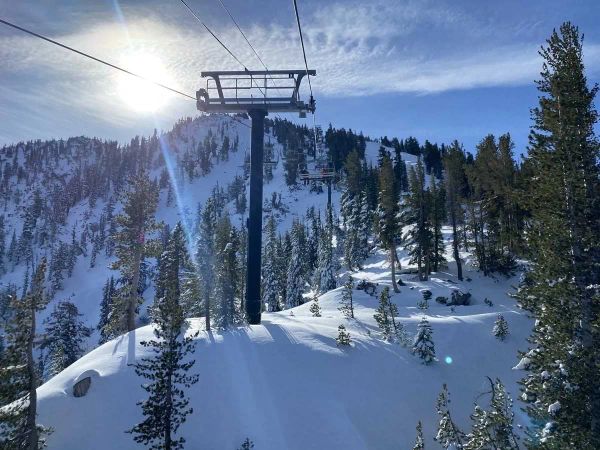
Mt. Rose Begins Snowmaking for the 2026-27 Season at Lake Tahoe
Lake Tahoe’s highest base elevation is paying off early: Mt. Rose has started making snow for 2026-27 after the first flurries and a cold snap. The Nevada resort is backing it with nearly US$2 million in upgrades, including a replacement snowmaking main line, a new PistenBully groomer and restraint bars on every lift. Opening day is yet to be confirmed, though Heavenly and Northstar are already eyeing 20 November.
13 Oct 2026
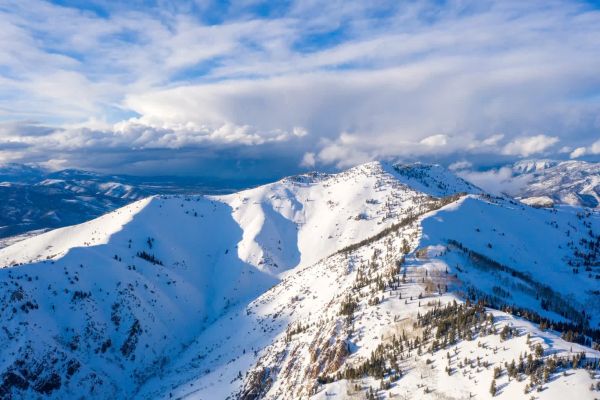
Utah Ski Resorts 2026-27: What’s New at Alta, Deer Valley, Powder Mountain and More
Utah is still building flat out. For 2026-27, Powder Mountain opens a steep new Skytrac chair into more than 1,000 acres of advanced terrain, Deer Valley adds 200 acres on Hail Peak, Sundance gets a new quad and Park City adds a gondola from its new parking structure. Snowmaking is expanding almost everywhere, Eagle Point stays closed after the Cottonwood Fire, and the 2034 Games are setting the pace. Here’s what’s new, resort by resort.
13 Oct 2026
Mt Hutt Invests NZ$12 Million in Base Area, Tripling Its Sun Deck
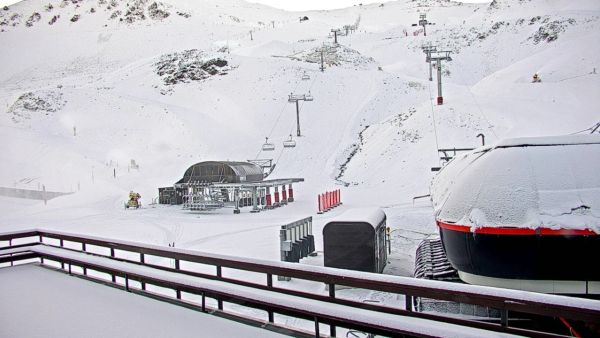
Mt Hutt is getting busier, and its base lodge is about to catch up. NZ$12 million goes into a heated sun deck roughly three times the current size (430 m² to 1,300 m²), plus a new toilet block, heated steps down to snow level, extra storage and a new food and beverage outlet. Building starts after the 2026 season, with everything due for winter 2027.
11 Oct 2026
Bretton Woods Lift System
Bretton Woods operates a modern 10-lift system with a combined uphill capacity of 14,000 to 15,700 skiers per hour, anchored by New Hampshire’s only eight-passenger gondola and four high-speed detachable quad chairlifts that provide efficient access across the mountain’s three distinct terrain pods.
The Bretton Woods Skyway Gondola, installed for the 2019-20 season, serves the majority of Mount Rosebrook’s vertical rise with capacity for 2,600 passengers per hour, offering enclosed comfort during cold weather whilst providing spectacular Presidential Range views during the scenic ascent.
Four high-speed quads—Bethlehem Express, Zephyr Express, Rosebrook Summit Express, and West Mountain Express—fan out across the terrain, with the Bethlehem Express scheduled for replacement with an upgraded Leitner-Poma detachable quad for the 2025-26 season.
This lift infrastructure creates remarkable redundancy, with multiple routes to access the same terrain zones and virtually eliminating bottlenecks even on busy weekends. The system is rounded out by Crawford fixed-grip quad, Fabyan’s triple chair (which rarely operates as it duplicates the gondola’s upper section), Telegraph T-Bar serving advanced glades on Mount Stickney when conditions permit, and two magic carpets in the isolated Learning Centre for absolute beginners.
Every lift except the T-Bar provides green trail descent options, allowing novice skiers to explore the entire mountain whilst high-speed lift coverage ensures experienced skiers maximise their vertical.
The strategic lift placement across three mountain areas—Mount Rosebrook as the main terrain hub, West Mountain offering its own distinct character, and Mount Stickney providing glade-focused advanced terrain—creates natural crowd dispersion and maintains the resort’s reputation for minimal lift queues.
On-mountain facilities include the striking Rosebrook Lodge at the gondola summit, considered one of the Northeast’s finest mountaintop buildings, alongside Top O’ Quad Restaurant, Stickney Cabin, and Chutters candy cabin at the Zephyr Express summit.
10lifts across 5 types
1
Gondola
5
Quad Chairs
1
Triple Chair
1
T-Bar
2
Surface Lifts
Bretton Woods lift system
Bretton Woods is served by 10 lifts, listed here by type. Check which lifts are turning against the live conditions before you plan your first laps - early lifts and high-speed chairs get you to the best snow fastest.
More Bretton Woods intelligence: trail map, snow report, webcams, resort overview.