
Taos
1,294 acres, 110 runs in the Sangre de Cristo Mountains. Steep terrain, Ikon Pass, European village.
Season 2026 - 2027
Opens
26 Nov 2026
Closes
28 Mar 2027
Days open
122
Annual snow
19ft
The Overview
Michael Fulton
Melbourne-based skier and snowboarder with 50+ resorts across 5 continents. Specialises in Australian resorts and international resort comparisons.
Taos Ski Valley's summit reaches 12,480 feet, dropping 3,281 vertical feet to a base at 9,199 feet across 110 runs spread over 1,294 acres in northern New Mexico. Terrain splits 30 per cent advanced, 25 per cent beginner, 24 per cent intermediate and 21 per cent expert, with average annual snowfall of roughly 230 inches. The resort carries Ikon Pass and Mountain Collective access. Fourteen lifts, including four quad chairs, three triple chairs and a gondola, serve the mountain alongside two double chairs and four surface lifts.
Taos is widely regarded as New Mexico's premier ski destination, with a reputation for steep, technical terrain that draws serious skiers from across the country. Its 3,281-foot vertical drop is among the largest in the southern Rocky Mountains, and its European-influenced village atmosphere reflects the character its founders deliberately cultivated from the outset. The resort's substantial expert and advanced terrain share sets it apart from New Mexico's more intermediate-focused mountains.
Ernie Blake, born Ernst Hermann Bloch, was flying his Cessna 170 over the mountains of northern New Mexico in 1955 when he spotted a site he judged perfect for a ski resort. Blake and his wife Rhoda, along with their children, lived in a camper in a parking lot while beginning the work that would become Taos Ski Valley, installing the first lift in 1956 and opening the first run, now known as Snakedance, in 1957.
The Blake family owned and ran Taos for more than half a century before hedge fund billionaire Louis Bacon purchased the resort in December 2013. Bacon's ownership has brought continued investment and Ikon Pass and Mountain Collective access, extending Taos's reach well beyond its historic New Mexico visitor base. Adult daily tickets run from 149 to 179 US dollars, with the Kachina Season Pass at 1,395 dollars.
3,281ft
Vertical
110
Runs
1,294 acres
Skiable
19ft
Annual snow
Ikon / Mountain Collective
Pass
The Terrain
110 runs across 1,294 acres skiable
Taos Ski Valley covers 1,294 acres (524 hectares) of steep Sangre de Cristo terrain, with 110 runs and a vertical of 3,280 feet (1,000 m). The base sits at 9,200 feet and the summit at 12,480 feet (3,804 m). The grading is skewed toward the hard stuff: 30% advanced and 21% expert, against 25% intermediate and 24% beginner. A gondola, quads, triples, doubles and surface lifts spread skiers around, and snowfall averages about 230 inches a year. Taos is known for steep in-bounds terrain, and beginners and intermediates should plan their days around the lower mountain.
Kachina Peak holds the big-mountain lines, though its lift is often closed. Highline Ridge and West Basin Ridge are reached by hiking, with Stauffenberg the start point on West Basin. Lift 1 serves the Front Side Steeps, where Al's Run, a mogul descent at about 30 degrees, is the rite of passage. Bambi, Pollux, Lorelei, Werner's and Longhorn are local favourites, and Walkyries Glade and Lorelei Trees offer spaced ponderosa skiing. Taos suits strong intermediates through to experts, and the ridges and Kachina are for experts only, so allow time to earn them.
Terrain split
110
runs
110 runs across 4 grades
Beginner26 runs · 24%
Intermediate28 runs · 25%
Advanced33 runs · 30%
Expert23 runs · 21%
Time it right
When to visit Taos
The 2025-26 season at Taos Ski Valley ran from 26 November 2025 to 29 March 2026, a roughly eighteen-week season supported by average annual snowfall of around 230 inches. This substantial snowfall, combined with the resort's high elevation, gives Taos one of the more reliable natural seasons among New Mexico's ski areas. Season dates can shift slightly depending on early and late-season weather.
Midwinter, from December through February, typically brings the most consistent conditions to the resort's steep, advanced-weighted terrain. As an Ikon Pass and Mountain Collective destination, Taos draws visitors from across the country, with holiday periods bringing considerably heavier crowds than New Mexico's smaller regional resorts. Weekday visits generally remain calmer.
The resort's European-influenced village, established under the Blake family's founding vision, continues to shape its seasonal atmosphere with a distinct character relative to other American ski towns. Advance-purchase discount tickets reward early booking, a pricing approach consistent with the resort's destination status. School holiday periods bring particularly strong demand given the resort's national visibility through the Ikon Pass network.
Specific event programming beyond standard operations is not confirmed in available resort information. Louis Bacon's ownership since 2013 has continued to build on the foundation established by founders Ernie and Rhoda Blake, who lived in a camper while building the resort in the mid-1950s. Taos's reputation for steep, technical terrain remains the defining draw for skiers through the season.
Season 2026 - 2027
26 Nov 2026
Opens
28 Mar 2027
Closes
122
Days open
19 ft
Annual snow
Getting there
Getting to Taos, and where to stay
Taos Ski Valley sits in the Sangre de Cristo Mountains of northern New Mexico, with a base elevation of 9,199 feet and a summit at 12,480 feet across a 3,281-foot vertical drop over 1,294 acres. The resort forms the centre of the village of Taos Ski Valley, a purpose-built mountain community distinct from the historic town of Taos itself.
The town of Taos, roughly 19 miles from the resort, is renowned for its arts community, historic Taos Pueblo and distinctive adobe architecture, giving visitors a cultural destination beyond the ski resort alone. Santa Fe, New Mexico's capital, lies about two and a half hours to the south, while Albuquerque is a further drive beyond that. The resort village itself offers lodging, dining and services within walking distance of the lifts.
New Mexico State Highway 150 provides the main route from Taos to the ski valley, climbing steadily into the Sangre de Cristo Mountains. Winter driving conditions on this route can include snow and ice at elevation, and travellers should allow extra time during storms given the mountain roads involved. There is no direct public transport service to the resort from Taos.
Santa Fe Regional Airport and Albuquerque International Sunport both offer commercial service within a few hours' drive, with Albuquerque providing more extensive flight options for visitors travelling from further afield. The resort's Ikon Pass and Mountain Collective access has broadened its visitor base well beyond what its relatively remote northern New Mexico location might otherwise support.
Where to stay
Search all stays →Hotels and lodges near Taos, powered by Stay22.
Latest News
From the SnowStash desk
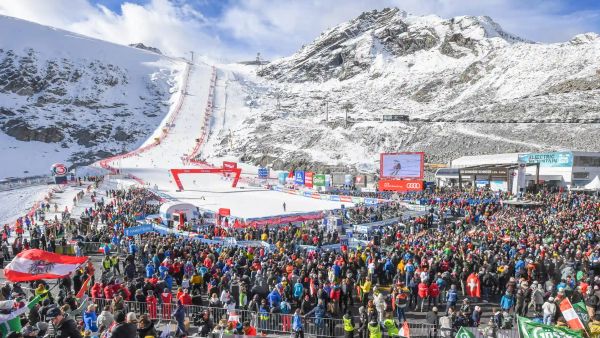
Pinheiro Braathen Wins Sölden Giant Slalom Opener by 0.48 Seconds
Two days at Sölden, two races decided by a hundredth somewhere on the podium, and one very quick Brazilian. Lucas Pinheiro Braathen led from the first run to win the men’s World Cup opener by 0.48 seconds, with Loïc Meillard second and Marco Odermatt third. River Radamus charged from 15th to fourth on a rutted course, and Britain’s Freddy Carrick-Smith banked his first World Cup points. Braathen still hasn’t lost a giant slalom since Olympic gold.
25 Oct 2026
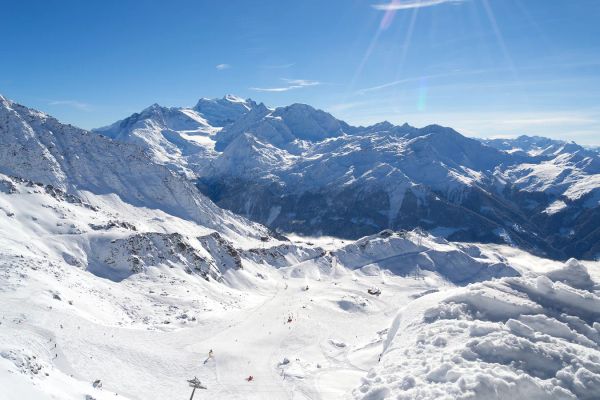
Alps Snow Forecast: Up to 64 cm Headed for the High Glaciers as the Snow Line Drops
The Alps are about to swap mild, sunny October weather for something far more wintry. A cold front arrives Tuesday, and SnowStash forecasts have Monterosa Ski out in front with 64 cm over 14 days, ahead of Blatten Belalp (55 cm) and Verbier (43 cm). The snow line should fall below 2000 metres by Wednesday night, and glaciers across Switzerland, Italy and Austria are in line for the best of it. The wind will have a say too.
20 Oct 2026
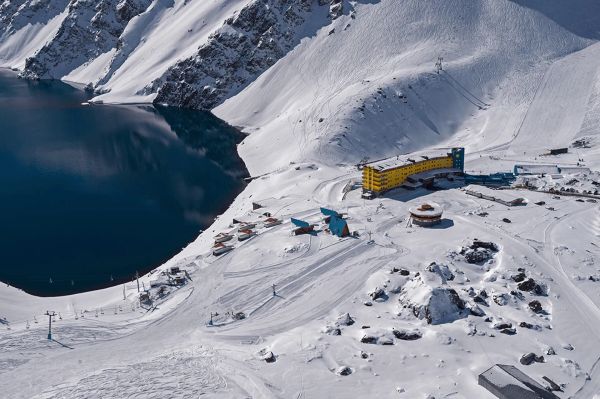
Four Dead After Avalanche Near Ski Portillo in Chile
A large avalanche struck near Laguna del Inca adjacent to Ski Portillo on Saturday afternoon, killing four people and injuring four others. The group were day visitors mountaineering in the backcountry after reportedly being warned about elevated avalanche risk by resort staff.
18 Oct 2026

Europe Ski Resorts Open Now: What Is Skiable in Mid-October 2026
Europe’s ski season is open, technically. After a record-warm summer, glaciers in Austria, Switzerland and Italy are running a few pistes apiece, Sölden, Stubai and Kitzsteinhorn started late, Titlis has pushed back to 24 October, and Zermatt reopens a few lifts on 14 October after more than two months shut. Finland’s Levi and Ruka are skiing on stored snow. Here is what is open, and what you actually get at each.
14 Oct 2026

Zermatt Plans World Cup Downhill Return on the Gornergrat for 2028
Zermatt is having another crack at a World Cup downhill, and this time nobody has to cross a border. Around 13 million Swiss francs is going into rebuilding the Gornergrat piste, including a jump fed by a roughly 300-metre in-run across the roof of the Gornergrat Railway gallery, with the Matterhorn lined up behind it for the TV cameras. First men’s race is pencilled in for March 2028, pending FIS homologation.
14 Oct 2026

Mt. Rose Begins Snowmaking for the 2026-27 Season at Lake Tahoe
Lake Tahoe’s highest base elevation is paying off early: Mt. Rose has started making snow for 2026-27 after the first flurries and a cold snap. The Nevada resort is backing it with nearly US$2 million in upgrades, including a replacement snowmaking main line, a new PistenBully groomer and restraint bars on every lift. Opening day is yet to be confirmed, though Heavenly and Northstar are already eyeing 20 November.
13 Oct 2026

Utah Ski Resorts 2026-27: What’s New at Alta, Deer Valley, Powder Mountain and More
Utah is still building flat out. For 2026-27, Powder Mountain opens a steep new Skytrac chair into more than 1,000 acres of advanced terrain, Deer Valley adds 200 acres on Hail Peak, Sundance gets a new quad and Park City adds a gondola from its new parking structure. Snowmaking is expanding almost everywhere, Eagle Point stays closed after the Cottonwood Fire, and the 2034 Games are setting the pace. Here’s what’s new, resort by resort.
13 Oct 2026

Mt Hutt Invests NZ$12 Million in Base Area, Tripling Its Sun Deck
Mt Hutt is getting busier, and its base lodge is about to catch up. NZ$12 million goes into a heated sun deck roughly three times the current size (430 m² to 1,300 m²), plus a new toilet block, heated steps down to snow level, extra storage and a new food and beverage outlet. Building starts after the 2026 season, with everything due for winter 2027.
11 Oct 2026
Taos Lift System
Taos Ski Valley runs fourteen lifts: two double chairs, four quad chairs, three triple chairs, a gondola and four surface lifts, serving 110 runs across 1,294 acres. This extensive network supports access to some of the steepest lift-served terrain in the southern Rocky Mountains, including the resort's renowned Kachina Peak zone.
The lift network has grown enormously since Ernie and Rhoda Blake installed the resort's first lift in 1956, a single installation that has expanded over nearly seventy years into today's fourteen-lift configuration. Investment accelerated notably following Louis Bacon's December 2013 purchase of the resort from the Blake family, bringing renewed capital into lift and facility upgrades alongside Ikon Pass and Mountain Collective access.
The gondola and quad chairs provide high-capacity access across the mountain's varied terrain, while the triple chairs and remaining double chairs distribute skiers to additional zones including the resort's substantial expert terrain. The four surface lifts serve beginner areas, including the dedicated Kachina Bowl beginner-only ticket option, reflecting the resort's deliberate separation of terrain by skill level.
Since Louis Bacon's 2013 acquisition, lift investment has continued to support Taos's growing destination profile under Ikon Pass and Mountain Collective access. Specific further planned lift upgrades beyond the current fourteen-lift network are not confirmed in available resort information. The resort's combination of steep terrain and substantial lift infrastructure has cemented its reputation as New Mexico's leading ski destination.
14lifts across 5 types
1
Gondola
4
Quad Chairs
3
Triple Chairs
2
Double Chairs
4
Surface Lifts
Taos lift system
Taos is served by 14 lifts, listed here by type. Check which lifts are turning against the live conditions before you plan your first laps - early lifts and high-speed chairs get you to the best snow fastest.
More Taos intelligence: trail map, snow report, webcams, resort overview.