
The Overview
Michael Fulton
Melbourne-based skier and snowboarder with 50+ resorts across 5 continents. Specialises in Australian resorts and international resort comparisons.
Pico Mountain's summit reaches 3,966 feet, dropping roughly 1,965 vertical feet to a base at 2,001 feet across 61 runs spread over 267 acres near Killington, Vermont. Terrain splits 45 per cent intermediate, 36 per cent advanced, 16 per cent beginner and 3 per cent expert, with average annual snowfall of roughly 186 inches. The resort carries Ikon Pass affiliation. Six lifts, including two quad chairs and two double chairs, serve the mountain alongside two triple chairs.
Pico Mountain holds genuine historical significance as one of the first commercial ski resorts established in Vermont, and its more modest scale relative to neighbouring Killington has earned it a reputation as a hidden gem offering big-mountain skiing with small-mountain charm and value.
The Mead family founded Pico, opening it as Pico Peak on Thanksgiving Day in 1937. Their daughter, Andrea Mead-Lawrence, went on to win a pair of gold medals in alpine skiing at the 1952 Winter Olympics in Oslo, Norway, a remarkable point of pride for the small resort that shaped her earliest skiing. Pico also holds the distinction of hosting the first T-bar lift ever operated in the United States, beginning service in 1940.
The resort went into receivership in 1996 and was purchased by neighbouring Killington Mountain Resort in December 1997, linking the two mountains under common ownership. Powdr Corp acquired both Killington and Pico in 2007, making significant capital investments over subsequent years, before a group of local investors, including Killington homeowners Phill Gross and Michael Ferri, acquired controlling interest in both resorts from Powdr in August 2024. Adult daily tickets run from 109 to 149 US dollars, with a substantial discount for Vermont and New Hampshire residents and free access for seniors aged 80 and over.
1,965ft
Vertical
61
Runs
267 acres
Skiable
15ft
Annual snow
Ikon
Pass
The Terrain
61 runs across 267 acres skiable
Pico Mountain, next door to Killington in central Vermont, has 61 runs over 267 acres (108 hectares), rising from a base at 2,000 ft (610 m) to a summit of 3,970 ft (1,209 m) for a vertical of 1,970 ft (599 m). The mix leans to the middle and upper end: 45% blue square, 36% black diamond, 16% green circle and 3% expert. About 186 inches of snow falls in a typical winter. Two double chairs, two quads, two triples and a T-bar serve the mountain, with far smaller crowds than its neighbour.
Pike is the longest trail, running from the summit to the base lodge. From the top, 49er is a blue square, while Summit Glades, Upper KA and Sunset 71 are winding, narrow black diamonds. Upper Pike is a sustained black that runs directly under the quad, and Giant Killer is the steepest, a double black. The Outpost lift opens glades such as Birch Glade and Doozie when conditions allow. Pico suits advanced intermediates and strong skiers who want fall-line pitches and tree skiing without Killington's size.
Terrain split
61
runs
61 runs across 4 grades
Beginner10 runs · 16%
Intermediate27 runs · 45%
Advanced22 runs · 36%
Expert2 runs · 3%
Time it right
When to visit Pico Mountain
The 2025-26 season at Pico Mountain ran from 13 December 2025 to 5 April 2026, a roughly sixteen-week season supported by average annual snowfall of around 186 inches across the resort's intermediate-and-advanced-weighted terrain. Season dates can shift depending on early and late-season weather.
Midwinter, from December through February, typically brings the most consistent conditions to Pico's varied terrain. As an Ikon Pass resort, Pico draws visiting skiers holding that multi-resort pass alongside its core Vermont and regional visitor base, many of whom appreciate the mountain's considerably lighter crowds relative to neighbouring Killington.
Substantial discounts for Vermont and New Hampshire residents, alongside free access for seniors aged 80 and over, reflect the resort's long-standing value-focused pricing philosophy. School holiday periods bring family visitation given the resort's varied terrain and more relaxed atmosphere compared to larger regional destinations.
Specific event programming beyond standard operations is not confirmed in available resort information. Following the August 2024 acquisition by local investors, alongside Killington, from Powdr Corp, Pico continues building on nearly nine decades of history since its Thanksgiving Day 1937 founding by the Mead family. The mountain's hidden-gem reputation and historic ties to Olympic gold medallist Andrea Mead-Lawrence remain central to its identity each season.
Season 2026 - 2027
11 Dec 2026
Opens
4 Apr 2027
Closes
114
Days open
15 ft
Annual snow
Getting there
Getting to Pico Mountain, and where to stay
Pico Mountain sits near Killington, Vermont, with a base elevation of 2,001 feet and a summit at 3,966 feet across a roughly 1,965-foot vertical drop over 267 acres. This central Vermont setting places the resort in the immediate vicinity of its considerably larger neighbour, Killington.
The town of Killington and nearby Rutland provide substantial lodging, dining and services within a short drive of the resort, giving Pico visitors access to the broader area's extensive amenities without the crowds of the larger neighbouring resort. The broader Green Mountains region surrounds both mountains.
US Route 4 provides direct access to the resort, the same route serving neighbouring Killington. Winter driving conditions on this route can include snow and ice, though the well-travelled road is regularly maintained given the area's status as a major regional ski destination. There is no direct public transport service to the mountain.
Rutland-Southern Vermont Regional Airport offers limited commercial service within a reasonable drive, while Burlington International Airport and airports in the greater Boston area serve as the primary gateways for visitors flying in from further afield.
Where to stay
Search all stays →Hotels and lodges near Pico Mountain, powered by Stay22.
Latest News
From the SnowStash desk
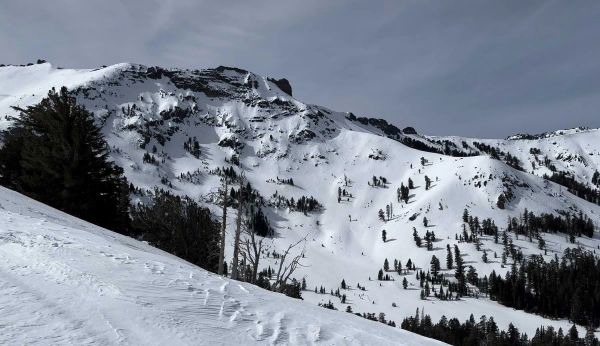
California Ski Resort Opening Dates 2026-27: Mammoth Leads, Tahoe Follows
Mammoth Mountain is first up in California, targeting Friday 13 November after a dusting of September snow. Heavenly and Northstar follow on 20 November, Palisades Tahoe on Wednesday 25 November and Sugar Bowl on 27 November, with Kirkwood on 4 December and June Mountain on 19 December. Plenty of smaller areas have no date yet. A super El Niño favours the Sierra, but a warmer storm track is the catch.
7 Oct 2026
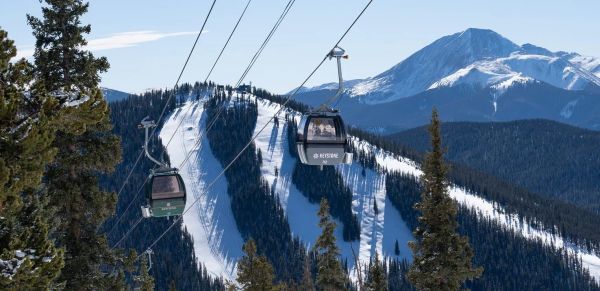
Colorado Ski Resort Opening Dates 2026-27: A-Basin and Keystone Race to Be First
Arapahoe Basin, Keystone and Winter Park are all chasing an October start, though none has a firm date yet. The first dated openers are Breckenridge and Copper on Friday 6 November, then Vail on 13 November, with most of the rest bunched around US Thanksgiving. Hesperus did not open at all last season. A super El Niño offers hope but no guarantee, and forecasters say the southern mountains have the better odds.
5 Oct 2026
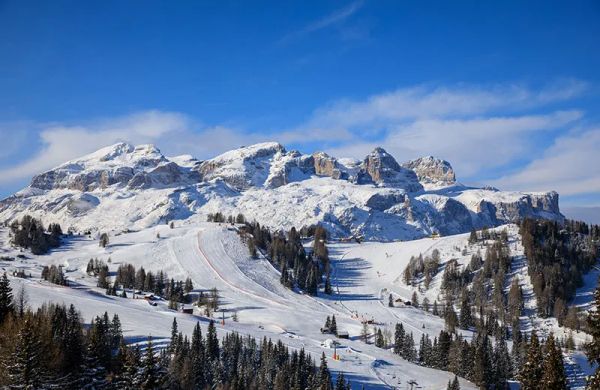
Dolomiti Superski 2026-27: Four New Gondolas, New Reservoirs and an €89 Peak Day Pass
Dolomiti Superski is spending around €100 million across its 12 areas before winter. Kronplatz gets a new 10-passenger gondola with a middle station, 3 Zinnen gets Helmissimo, and Val di Fassa swaps a chairlift for a gondola above Col Valvacin. New water-storage basins and upgraded snowmaking follow, and construction has started on the San Martino to Passo Rolle link. A peak adult day pass is €89.
4 Oct 2026
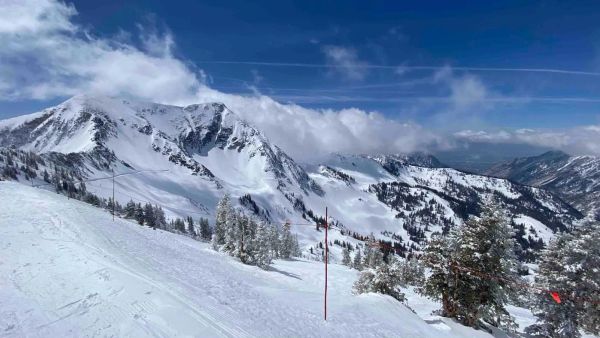
Utah Ski Resort Opening Dates 2026-27: Brian Head First, Eagle Point Out
Brian Head is targeting 6 November, though last year it aimed for 7 November and did not open until the 25th. Park City, Alta and Solitude are pencilled in for 20 November, Snowbird and Snowbasin for 27 November, and Deer Valley for 5 December. Eagle Point will stay closed after the Cottonwood Fire. A super El Niño is forecast, but the big snow is not expected until January.
4 Oct 2026
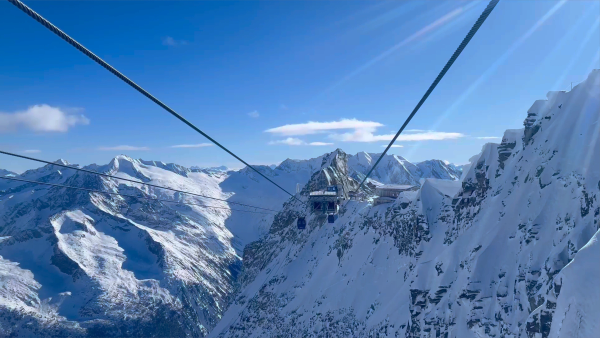
Hintertux Glacier Opens for 2026-27 With 12 Kilometres of Piste
Hintertux became Austria's second glacier to open for 2026-27 on Friday 2 October, after the Pitztal Glacier. Twelve kilometres of piste are running around the Olperer and Gefrorene Wand, served by one gondola and two drag lifts, with the Betterpark also open. Lifts officially run 8:15 am to 4:30 pm, but skiing stops at 2 pm for now.
4 Oct 2026
Vail Resorts Counts the Cost of a Thin Winter as Pass Sales Slide Further
A historically poor western winter cut Vail Resorts' annual net income from $280 million to $147.5 million and skier visits by 13.4 per cent. Now 2026-27 pass units are down 12 per cent as of 18 September, worse than the 10 per cent flagged in spring. Vail blames the weather and thinks some buyers are simply waiting, and it forecasts a rebound if the snow behaves.
3 Oct 2026
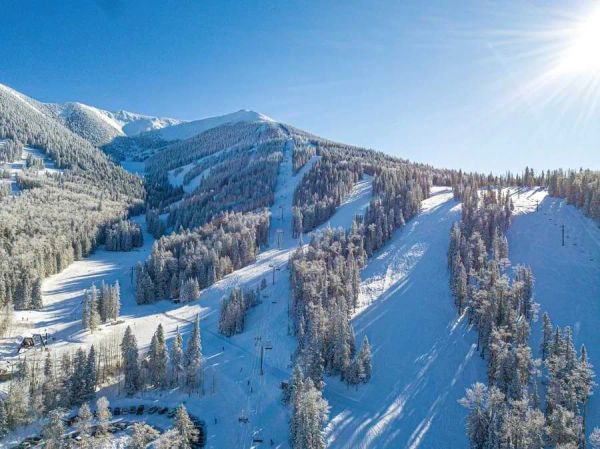
Arizona Snowbowl's $1 Lift Tickets Are Hard to Find, but $9 Days Are Not
Arizona Snowbowl advertised eight $1 lift ticket days this winter. Go looking and only three are showing - 10 March, 1 April and 10 April - so the rest may already have gone. The consolation is a calendar full of $9 days, including all but one day in April. Opening day is 20 November, weather permitting, and opening weekend is $19.
2 Oct 2026
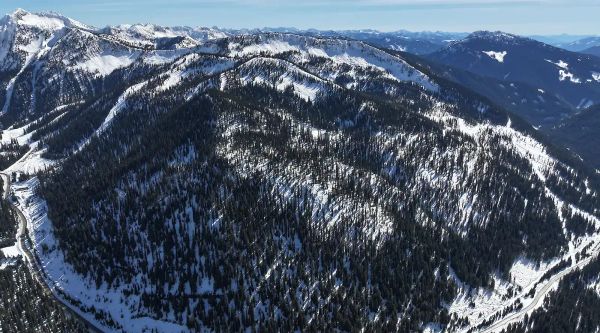
Whitewater Brings Its Short Side Inbounds, With Six New Runs for 2026-27
For years, Whitewater's Short Side was where you ducked a rope and hoped for the best: unmapped, ungroomed and unpatrolled. This winter it's inbounds. Six new runs of glades and fall-line skiing add 190 acres (about 77 hectares), taking the resort past 1,400 acres in total. F2 Logging spent a month in the trees to make it happen, and opening day is pencilled in for 4 December. Bonanza now needs less snow to groom, too.
1 Oct 2026
Pico Mountain Snow Report
Snow Report
Updated 8 Oct 2026
3,967ft
summit
+0in
new snow · last 24 hours
Clear47°F / 57°F · SW 18mph
Snowfall
24 hours
0in
48 hours
0in
7 days
0in
Base depth
0in
Season total
0in
Total lifts7
Live open status isn’t available right now.
11 Dec 2026 - 4 Apr 2027
Hour by Hour
Next 48 hours· Updated Oct 8, 2026 at 6:02 PM
Scroll for the full outlook · Open-Meteo
7-Day Outlook
3,967 ftUpdated Oct 8, 2026 at 6:02 PMOpen-Meteo
Days 1–7
0.0"
Days 8–14
0.0"
Thu, Oct 8
Slight Rain
Temp57° / 47°°F
Snow0.0"(46%)
Wind18 mph SW
Live snow from the resort feed; forecast from Open-Meteo, via Supabase.
Understanding the Pico Mountain snow report
Get the latest Pico Mountain snow report — real-time snowfall, snow depth, and mountain weather for this Vermont resort, spanning 610m to 1209m in elevation.
Snow measurements
Snow depth at Pico Mountain is tracked at both the base and summit, since the two elevations often see different totals — roughly a 599m difference here. We report fresh snowfall over the last 24 hours and 7 days alongside the running season total, in both metric and imperial units.
Weather conditions
Current weather conditions affect snow quality. Cold temperatures with low wind typically preserve snow quality, while warm temperatures or rain can impact conditions negatively — something worth watching closely at Pico Mountain's 610m base elevation, where temperatures run milder than the summit.
Data sources
We pull Pico Mountain's conditions from on-the-ground mountain reporting, then layer in forecast data so you get a fuller picture than either source alone. The mountain is served by 7 lifts, including 2 quad chairlifts.
When to check
The biggest swings usually happen right after a storm. Check Pico Mountain's report in the morning for the freshest numbers, and again in the afternoon as conditions evolve.