
Crystal Mountain
Washington's largest ski resort — 2,600 acres and 2,612ft vertical in the Cascades. Expert terrain, Mt. Rainier views and 348 inches of annual snowfall.
Season 2026 - 2027
Opens
27 Nov 2026
Closes
2 May 2027
Days open
156
Annual snow
35ft
The Overview
Michael Fulton
Melbourne-based skier and snowboarder with 50+ resorts across 5 continents. Specialises in Australian resorts and international resort comparisons.
Crystal Mountain opened in December 1962 with two double chairlifts on the slopes of Silver King in the Cascade Range of eastern Pierce County, Washington. Today it is the largest ski resort in Washington State, covering 2,600 total acres with 2,300 acres of lift-served terrain and 86 named runs from a base of 4,400 feet to a summit of 7,012 feet — a vertical drop of 2,612 feet. The terrain breakdown reflects the mountain's expert-weighted character: 8% beginner, 31% intermediate, 32% advanced and 29% expert.
The summit of Silver King is the highest point in a five-mile radius, and on clear days all five of Washington's major volcanoes are visible from the top — with Mount Rainier, less than 13 miles away, filling the western horizon in a way that is genuinely difficult to ignore. Crystal Mountain hosted the National Alpine Ski Championships in 1965, attracting a field that included Jimmie Heuga, Billy Kidd and Jean-Claude Killy, and in 1988 became the first Washington resort to install a high-speed detachable quad chairlift with the Rainier Express.
The mountain's expert terrain has a genuine national reputation. Campbell Basin, the Niagras below Gun Tower Ridge, and the North Back zone — opened to lift access via the 2007 Northway expansion that increased total developed terrain by 70% — deliver sustained steep lines that sit alongside the best inbounds expert terrain in the Pacific Northwest.
The 2007 Northway expansion was a transformational moment for the resort, converting what had been a backcountry access zone into a properly serviced lift pod while retaining much of the terrain's wild character. Alterra Mountain Company acquired Crystal Mountain in 2018, and the resort is now part of the Ikon Pass network alongside destinations including Mammoth Mountain, Jackson Hole and Whistler Blackcomb.
2,612ft
Vertical
86
Runs
2,500 acres
Skiable
35ft
Annual snow
Ikon
Pass
The Terrain
86 runs across 2,500 acres skiable
Crystal Mountain is the biggest ski area in Washington, with 2,500 acres (1,012 hectares) of terrain across 86 runs on Silver King, southeast of Seattle. The base sits at 4,400 ft (1,341 m) and the summit at 7,010 ft (2,137 m), a vertical of 2,610 ft (796 m). Difficulty leans steep, with 8% beginner, 31% intermediate, 32% advanced and 29% expert, so roughly six in ten runs are black diamond or harder. Ten lifts, including a gondola, move skiers around, and about 415 inches of snow falls each winter.
Chair 6 opens up Campbell Basin, where short hikes lead to Avalanche Basin and the large Silver Basin beyond. Powder Bowl is a wide, sustained pitch that holds chalky snow between storms, and the Throne bowl faces Silver King's north side. The Northway chair serves the north side, where runs are for experts only, with cliffs, steep pitches and dense trees, and the 2.5 mile Northway run is the longest at the resort. Strong intermediates have plenty of cruising, but this is a mountain for advanced and expert skiers who want inbounds steeps.
Terrain split
86
runs
86 runs across 4 grades
Beginner7 runs · 8%
Intermediate27 runs · 31%
Advanced28 runs · 32%
Expert25 runs · 29%
Time it right
When to visit Crystal Mountain
Crystal Mountain operates from early December through mid-April, with the 2025/26 season running 6 December to 13 April. The resort's official average annual snowfall is 348 inches, recorded across the 2001–2022 period, though seasonal totals frequently exceed 400 inches in strong Pacific storm years — the resort's all-time season total reached 486 inches in an exceptional year. The Pacific storm track delivers moisture-laden systems off the Pacific Ocean into the Cascades from November through April, with December and January historically the highest-accumulation months at 99 and 81 inches respectively.
The location adjacent to Mount Rainier National Park places Crystal Mountain in one of the most reliably snow-productive corridors in the continental US Pacific Northwest, and the summit elevation of 7,012 feet is high enough to convert Pacific moisture into dense snowpack across the bulk of the ski season. The current 2025/26 season has recorded a base depth of approximately 32 inches and a season total of around 57 inches as of early March.
The Pacific Northwest climate does carry a known variability: warm atmospheric river events can deliver rain rather than snow at base elevation during the shoulder season, and wind events can affect upper mountain lift operations. The base at 4,400 feet sits close to the rain/snow transition level during warm spells, meaning early and late season conditions can shift quickly with incoming fronts.
Mid-winter, from late December through February, is the most consistently cold period, delivering the dry, high-density snow that the resort's steep terrain handles best. The Snorting Elk Cellar Bar, in the Alpine Inn at the base area, has been voted the top ski bar in the West by Snow Country Magazine Snow Magazine and draws a loyal Seattle-based crowd, with live music from bands making the two-hour drive from the city most weekends through the season.
Season 2026 - 2027
27 Nov 2026
Opens
2 May 2027
Closes
156
Days open
35 ft
Annual snow
Getting there
Getting to Crystal Mountain, and where to stay
Crystal Mountain sits in eastern Pierce County in the Cascade Range, 67 miles southeast of Seattle and directly adjacent to the northeastern boundary of Mount Rainier National Park within the Mount Baker–Snoqualmie National Forest. Access is via State Route 410 through Enumclaw and the small community of Greenwater — the same highway that leads to the Sunrise entrance of Mount Rainier National Park — making the drive from Seattle or Tacoma straightforward without the mountain pass crossings required to reach some other Cascade ski areas.
Seattle–Tacoma International Airport is approximately 90 miles from the resort, a drive of around two hours under typical winter conditions, and the SR-410 corridor is one of the more reliable Cascade access routes given its relatively low-elevation approach from the Enumclaw plateau before climbing to the ski area.
The resort's position adjacent to Mount Rainier National Park shapes both its physical landscape and its identity. The national park boundary lies within a short distance of the ski area boundary, and the Sunrise road — closed in winter — means the immediate terrain around Crystal Mountain has an untrammelled character that larger resort complexes surrounded by development lack.
The town of Greenwater, a short distance down SR-410, provides a handful of accommodation options outside the resort's on-mountain lodging, and the LOGE Alta Crystal property nearby offers a more independent base for visitors. Seattle residents make up the dominant visitor demographic, and the resort's parking reservation system, introduced to manage growing demand, reflects how firmly Crystal Mountain has become embedded in the Pacific Northwest ski calendar over its six-decade history.
Where to stay
Search all stays →Hotels and lodges near Crystal Mountain, powered by Stay22.
Latest News
From the SnowStash desk
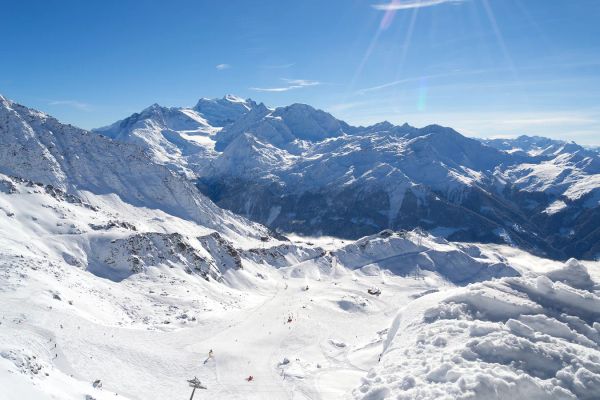
Alps Snow Forecast: Up to 64 cm Headed for the High Glaciers as the Snow Line Drops
The Alps are about to swap mild, sunny October weather for something far more wintry. A cold front arrives Tuesday, and SnowStash forecasts have Monterosa Ski out in front with 64 cm over 14 days, ahead of Blatten Belalp (55 cm) and Verbier (43 cm). The snow line should fall below 2000 metres by Wednesday night, and glaciers across Switzerland, Italy and Austria are in line for the best of it. The wind will have a say too.
20 Oct 2026
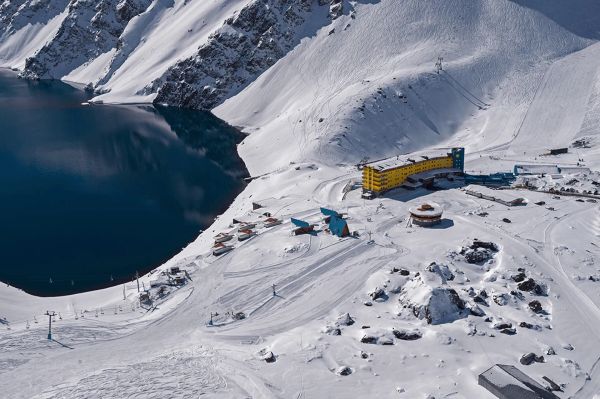
Four Dead After Avalanche Near Ski Portillo in Chile
A large avalanche struck near Laguna del Inca adjacent to Ski Portillo on Saturday afternoon, killing four people and injuring four others. The group were day visitors mountaineering in the backcountry after reportedly being warned about elevated avalanche risk by resort staff.
18 Oct 2026

Europe Ski Resorts Open Now: What Is Skiable in Mid-October 2026
Europe’s ski season is open, technically. After a record-warm summer, glaciers in Austria, Switzerland and Italy are running a few pistes apiece, Sölden, Stubai and Kitzsteinhorn started late, Titlis has pushed back to 24 October, and Zermatt reopens a few lifts on 14 October after more than two months shut. Finland’s Levi and Ruka are skiing on stored snow. Here is what is open, and what you actually get at each.
14 Oct 2026

Zermatt Plans World Cup Downhill Return on the Gornergrat for 2028
Zermatt is having another crack at a World Cup downhill, and this time nobody has to cross a border. Around 13 million Swiss francs is going into rebuilding the Gornergrat piste, including a jump fed by a roughly 300-metre in-run across the roof of the Gornergrat Railway gallery, with the Matterhorn lined up behind it for the TV cameras. First men’s race is pencilled in for March 2028, pending FIS homologation.
14 Oct 2026

Mt. Rose Begins Snowmaking for the 2026-27 Season at Lake Tahoe
Lake Tahoe’s highest base elevation is paying off early: Mt. Rose has started making snow for 2026-27 after the first flurries and a cold snap. The Nevada resort is backing it with nearly US$2 million in upgrades, including a replacement snowmaking main line, a new PistenBully groomer and restraint bars on every lift. Opening day is yet to be confirmed, though Heavenly and Northstar are already eyeing 20 November.
13 Oct 2026

Utah Ski Resorts 2026-27: What’s New at Alta, Deer Valley, Powder Mountain and More
Utah is still building flat out. For 2026-27, Powder Mountain opens a steep new Skytrac chair into more than 1,000 acres of advanced terrain, Deer Valley adds 200 acres on Hail Peak, Sundance gets a new quad and Park City adds a gondola from its new parking structure. Snowmaking is expanding almost everywhere, Eagle Point stays closed after the Cottonwood Fire, and the 2034 Games are setting the pace. Here’s what’s new, resort by resort.
13 Oct 2026

Mt Hutt Invests NZ$12 Million in Base Area, Tripling Its Sun Deck
Mt Hutt is getting busier, and its base lodge is about to catch up. NZ$12 million goes into a heated sun deck roughly three times the current size (430 m² to 1,300 m²), plus a new toilet block, heated steps down to snow level, extra storage and a new food and beverage outlet. Building starts after the 2026 season, with everything due for winter 2027.
11 Oct 2026

Vermont Ski Resort Opening Dates 2026-27: Few Dates Set, Killington Waits on the Cold
Vermont's season is slow to take shape. Stratton is tentatively targeting 18 November and Sugarbush 21 November, while Pico has Friday 11 December on the calendar. Killington never sets a date and opens when the snowmaking allows, and Vail Resorts has yet to name days for Stowe, Okemo and Mount Snow. The forecasts disagree about snow, and the main El Niño worry for the Green Mountains is warmth.
9 Oct 2026