
Hurricane Ridge
11 runs inside Olympic National Park. Rare national park skiing with Pacific Ocean views.
Season 2025 - 2026
Opens
20 Dec 2025
Closes
30 Mar 2026
Days open
100
Annual snow
33ft
The Overview
Michael Fulton
Melbourne-based skier and snowboarder with 50+ resorts across 5 continents. Specialises in Australian resorts and international resort comparisons.
Hurricane Ridge's summit reaches 5,498 feet, dropping 698 vertical feet to a base at 4,800 feet across 11 runs within Olympic National Park, Washington. Terrain splits 40 per cent advanced, 35 per cent intermediate, 15 per cent expert and 10 per cent beginner, with average annual snowfall of roughly 279 inches. The resort carries Indy Pass affiliation and operates as a small, weekend-focused ski area within a national park rather than a conventional commercial resort. Three t-bars serve the entire mountain.
Hurricane Ridge is one of very few ski areas operating inside a US national park, giving it a genuinely wild, backcountry-adjacent atmosphere unlike almost any other lift-served mountain in the country. Its modest scale, with just three t-bars and eleven runs, reflects a deliberate choice to keep the operation low-impact within the park's protected setting. Sweeping views over the Pacific Ocean and the Olympic Mountains define the visitor experience as much as the skiing itself.
The ski area opened on 1 January 1958 with two rope tows relocated from Deer Park on Blue Mountain, which had been Washington's premier ski area through the 1930s. Deer Park's light snowfall, sun-exposed slopes, narrow winter access road and tiny 50-car parking lot made it impractical to expand, prompting the move. The National Park Service's Mission 66 program, launched in 1956 to modernise park infrastructure ahead of the agency's 1966 fiftieth anniversary, funded the paved road that made Hurricane Ridge accessible.
A Poma surface lift was added in 1971 as the ski area's infrastructure continued to develop within the park. On 7 May 2023, the historic Hurricane Ridge Day Lodge and visitor centre, built in 1952, was destroyed by fire during preparations for a planned renovation. Adult daily tickets run from 32 to 42 US dollars, with a season pass from 195 dollars, reflecting the modest, community-scale nature of skiing within the park.
699ft
Vertical
11
Runs
33ft
Annual snow
Indy
Pass
The Terrain
11 runs
Hurricane Ridge is a small, community-run ski area inside Olympic National Park on Washington's Olympic Peninsula, with 11 runs and three surface lifts. The base sits at 4,800 ft (1,463 m) and the top at 5,500 ft (1,676 m), a vertical of about 700 ft (213 m). It is one of only a few ski areas in the United States operating entirely within a national park. The run split is 10% beginner, 35% intermediate, 40% advanced and 15% expert, weighted towards the steeper end for such a compact hill.
The front side holds the bunny slope, a small tubing park and one intermediate run, so beginners and families get an easy start. The real skiing is on the backside bowl served by the Poma lift, an in-bounds, backcountry-style mix of snowfields, trees and chutes. A ski school, ski team and terrain park round out the offering. Treat it as a friendly local hill with big views rather than a destination, ideal for learners, families and anyone visiting the national park who wants a few laps on a nonprofit mountain.
Terrain split
11
runs
11 runs across 4 grades
Beginner1 run · 10%
Intermediate4 runs · 35%
Advanced4 runs · 40%
Expert2 runs · 15%
Time it right
When to visit Hurricane Ridge
The 2025-26 season at Hurricane Ridge ran from 20 December 2025 to 30 March 2026, a comparatively short season of roughly fourteen weeks. Average annual snowfall of around 279 inches supports this window, though the ski area's weekend-only operating pattern, typical for a national park facility, shapes the practical rhythm of the season more than snowfall alone. Season dates can shift depending on weather and road conditions.
Midwinter, from January through February, typically offers the most reliable conditions on the mountain's advanced-weighted terrain. Given Hurricane Ridge's location within Olympic National Park and its road access via a route that can close during storms, conditions and access can vary considerably from week to week. Weekend operations are standard, reflecting the ski area's status as a small, community-run facility rather than a full-time commercial resort.
As an Indy Pass resort, Hurricane Ridge draws some visiting skiers holding that multi-resort pass in addition to its core Olympic Peninsula visitor base. The spectacular Pacific Ocean and Olympic Mountains views are a significant part of the experience regardless of skiing conditions. School holiday periods bring some increase in family visitation, weather and road access permitting.
Specific event programming beyond standard weekend operations is not confirmed in available resort information. Following the May 2023 fire that destroyed the historic day lodge, planned rebuilding efforts continue to shape the resort's near-term development. Hurricane Ridge's identity as a rare national-park ski area remains its clearest point of distinction each season.
Season 2025 - 2026
20 Dec 2025
Opens
30 Mar 2026
Closes
100
Days open
33 ft
Annual snow
Getting there
Getting to Hurricane Ridge, and where to stay
Hurricane Ridge sits within Olympic National Park on Washington's Olympic Peninsula, with a base elevation of 4,800 feet and a summit at 5,498 feet across a 698-foot vertical drop. This remote, mountainous setting offers sweeping views across both the Olympic Mountains and the Pacific Ocean, a combination unique among the ski areas covered here.
Port Angeles is the nearest town, serving as the gateway community to Olympic National Park and offering lodging, dining and services for visitors. The broader Olympic Peninsula combines the ski area with extensive hiking, wildlife viewing and coastal recreation, giving the region a four-season appeal well beyond winter sports. Seattle lies across Puget Sound, requiring a ferry crossing or a lengthy drive around the sound to reach the peninsula.
Hurricane Ridge Road, built during the National Park Service's Mission 66 program in the 1950s, provides the sole route from Port Angeles to the ski area, climbing steadily into the park. Winter driving conditions on this road can include snow and ice, and the road is subject to closure during storms or for avalanche control, a genuine consideration for visitors given the ski area's national park setting. There is no direct public transport service to the ski area itself.
William R. Fairchild International Airport in Port Angeles offers limited general aviation access, while Seattle-Tacoma International Airport, requiring a ferry or lengthy drive, provides far more extensive commercial flight options. Most Hurricane Ridge visitors travel from the Olympic Peninsula or the broader Puget Sound region by car and ferry rather than flying in directly.
Where to stay
Search all stays →Hotels and lodges near Hurricane Ridge, powered by Stay22.
Latest News
From the SnowStash desk

Vermont Ski Resort Opening Dates 2026-27: Few Dates Set, Killington Waits on the Cold
Vermont's season is slow to take shape. Stratton is tentatively targeting 18 November and Sugarbush 21 November, while Pico has Friday 11 December on the calendar. Killington never sets a date and opens when the snowmaking allows, and Vail Resorts has yet to name days for Stowe, Okemo and Mount Snow. The forecasts disagree about snow, and the main El Niño worry for the Green Mountains is warmth.
9 Oct 2026

Crans-Montana 2027 World Championships President Resigns Ahead of Fraud Hearing
Less than four months out from the Crans-Montana 2027 World Championships, the man running the organising committee has stepped down. Claude-Alain Schmidhalter resigned as Swiss-Ski vice president and OC president after being indicted over a business dispute unrelated to skiing. He denies the allegations and faces court on October 27. Interim leaders are in place for the February 1-14 event.
9 Oct 2026
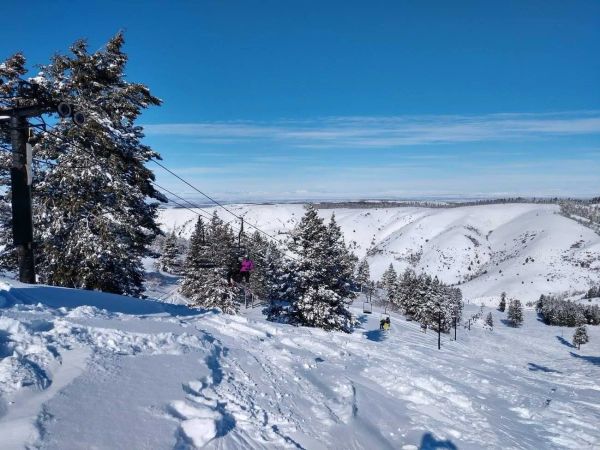
Kelly Canyon, Idaho, Adds Snowmaking, a Bigger Terrain Park and More Parking for 2026-27
Kelly Canyon had a rough 2025-26, and the Idaho resort has spent the summer making sure it doesn’t repeat. Snowmaking now reaches the top of Goldrush, the terrain park is doubling in size with a stereo system, lights and a snack shack, and the car park is getting bigger. Grooming is stepping up too. Target opening is December 4, conditions permitting.
9 Oct 2026
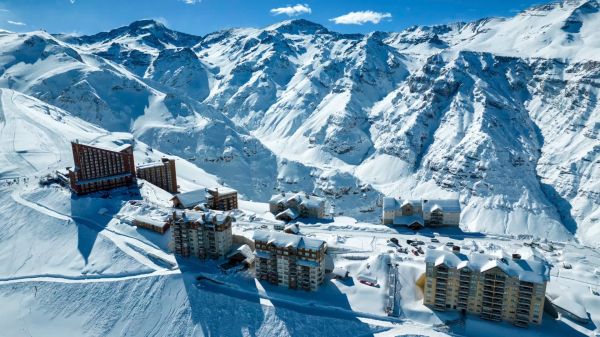
Valle Nevado Extends Season to November 8 After 108 cm in 48 Hours
Winter was meant to be winding down in Chile. Then Valle Nevado took 108 cm in 48 hours in early October, and the resort has pushed its closing date out to November 8 - its latest in 38 years of operation. That makes 143 days of skiing since opening day on June 19, with 690 cm banked for the season. Only part of the mountain is running while the storm settles, so check the mountain report before you plan a trip.
9 Oct 2026
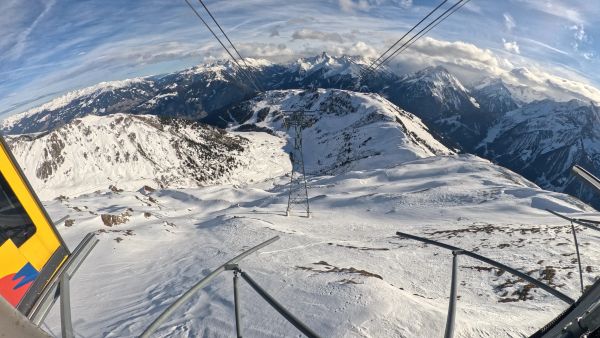
Alps Snow Forecast: Cold Front Brings Thursday Snow to the High Alps
The Alps look a lot more like winter today, for a day or so. A cold front is moving west to east, dropping up to 35 cm on high glaciers and peaks, with snow levels falling to around 1,500-1,800 m at times. Don’t plan a trip around it: mid-elevation snow will be thin and wet, every area is closed bar a limited Sölden glacier opening tomorrow, and warmer weather returns by Monday.
8 Oct 2026
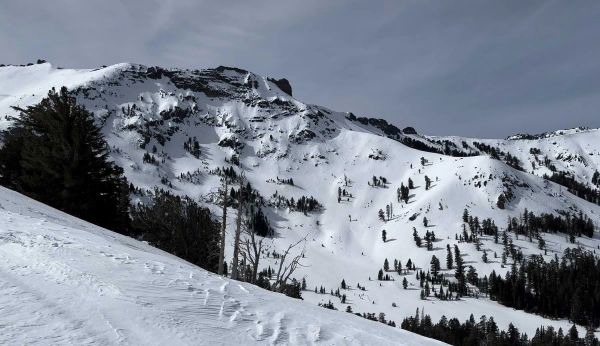
California Ski Resort Opening Dates 2026-27: Mammoth Leads, Tahoe Follows
Mammoth Mountain is first up in California, targeting Friday 13 November after a dusting of September snow. Heavenly and Northstar follow on 20 November, Palisades Tahoe on Wednesday 25 November and Sugar Bowl on 27 November, with Kirkwood on 4 December and June Mountain on 19 December. Plenty of smaller areas have no date yet. A super El Niño favours the Sierra, but a warmer storm track is the catch.
7 Oct 2026
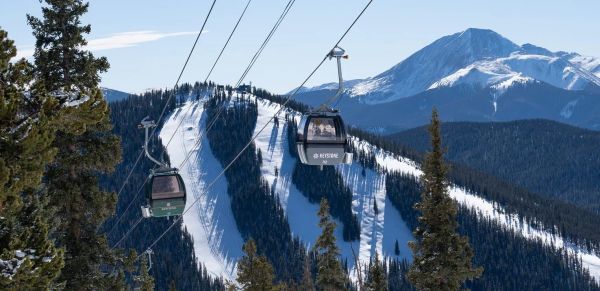
Colorado Ski Resort Opening Dates 2026-27: A-Basin and Keystone Race to Be First
Arapahoe Basin, Keystone and Winter Park are all chasing an October start, though none has a firm date yet. The first dated openers are Breckenridge and Copper on Friday 6 November, then Vail on 13 November, with most of the rest bunched around US Thanksgiving. Hesperus did not open at all last season. A super El Niño offers hope but no guarantee, and forecasters say the southern mountains have the better odds.
5 Oct 2026
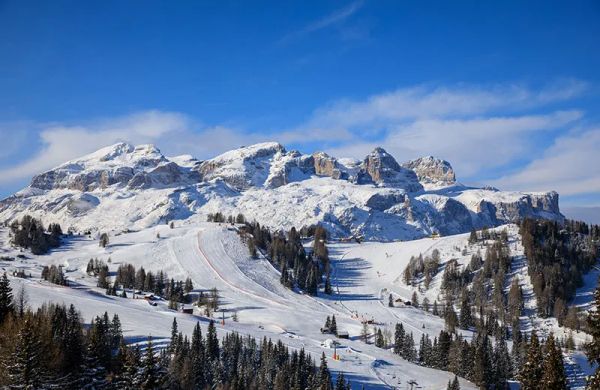
Dolomiti Superski 2026-27: Four New Gondolas, New Reservoirs and an €89 Peak Day Pass
Dolomiti Superski is spending around €100 million across its 12 areas before winter. Kronplatz gets a new 10-passenger gondola with a middle station, 3 Zinnen gets Helmissimo, and Val di Fassa swaps a chairlift for a gondola above Col Valvacin. New water-storage basins and upgraded snowmaking follow, and construction has started on the San Martino to Passo Rolle link. A peak adult day pass is €89.
4 Oct 2026
Hurricane Ridge Lift System
Hurricane Ridge runs three t-bars to serve 11 runs within Olympic National Park. This is one of the smallest lift networks of any ski area profiled here, a direct reflection of the area's deliberately minimal footprint inside a protected national park.
The original two rope tows, relocated from the abandoned Deer Park ski area on Blue Mountain when Hurricane Ridge opened in 1958, gave way over time to the current t-bar configuration, with a Poma surface lift added in 1971 as part of this evolution. This infrastructure has remained modest by design, consistent with the National Park Service's broader mandate to limit development within Olympic National Park.
The three t-bars provide the entirety of the resort's uphill capacity across terrain weighted toward advanced and intermediate skiing. There is no quad, triple or high-speed chair, and the absence of a gondola or larger lift reflects both the modest scale of the ski area and the constraints of operating within a national park.
The 2023 fire that destroyed the historic 1952 day lodge and visitor centre has prompted planned renovation and rebuilding, though specific details of any lift changes accompanying this work are not confirmed in available resort information. Hurricane Ridge's Indy Pass affiliation brings additional visiting skiers to a lift network that remains, by design, one of the simplest in the country.
3lifts across 1 types
3
T-Bars
Hurricane Ridge lift system
Hurricane Ridge is served by 3 lifts, listed here by type. Check which lifts are turning against the live conditions before you plan your first laps - early lifts and high-speed chairs get you to the best snow fastest.
More Hurricane Ridge intelligence: trail map, snow report, webcams, resort overview.