
Stevens Pass
1,125 acres, 53 runs two hours from Seattle. Epic Pass access, substantial Cascade snowfall.
Season 2026 - 2027
Opens
26 Dec 2026
Closes
11 Apr 2027
Days open
106
Annual snow
50ft
The Overview
Michael Fulton
Melbourne-based skier and snowboarder with 50+ resorts across 5 continents. Specialises in Australian resorts and international resort comparisons.
Stevens Pass's summit reaches 5,843 feet, dropping 1,781 vertical feet to a base at 4,062 feet across 53 runs spread over 1,125 acres in the central Washington Cascades. Terrain splits 45 per cent intermediate, 28 per cent advanced, 19 per cent expert and 8 per cent beginner, with average annual snowfall of roughly 601 inches. The resort carries Epic Pass access. Twelve lifts, including five quad chairs, three triple chairs and two double chairs, serve the mountain alongside two surface lifts.
Stevens Pass sits directly on Highway 2, one of the more accessible major Cascade passes, putting it within roughly two hours of Seattle and making it one of the closer Epic Pass destinations to a major West Coast city. Its substantial snowfall total supports extensive backcountry access alongside its lift-served terrain, and night skiing extends the ski day for the resort's large day-trip visitor base. The mountain's terrain parks and steep upper-mountain zones have built a strong following among younger Seattle-area skiers.
The ski area opened in 1937, with its original lodge built that year, destroyed by fire in 1939 and rebuilt the following year by the Civilian Conservation Corps. By 1963, the resort had expanded to three chairlifts and twelve rope tows. After 35 years of ownership, Harbor Resorts sold Stevens Pass to CNL Lifestyle in 2011, with operations handed to the operator of Mountain High in California, before CNL sold the resort on to Och-Ziff Capital Management in 2016.
Vail Resorts completed its acquisition of Stevens Pass on 15 August 2018 for a final purchase price of 64 million US dollars, subsequently investing in upgrades to the Daisy and Brooks chairs among other infrastructure. The transition to Vail ownership has not been without friction: staffing shortages and avalanche risk have at times limited operations to a fraction of the resort's lifts and terrain, prompting a widely signed online petition and complaints to the Washington Attorney General's office from frustrated pass holders. Adult daily tickets run from 120 to 159 US dollars, with the Epic Local Pass from 746 dollars.
1,781ft
Vertical
53
Runs
1,125 acres
Skiable
50ft
Annual snow
Epic
Pass
The Terrain
53 runs across 1,125 acres skiable
Stevens Pass covers 1,125 acres (455 hectares) on US Highway 2 in the central Washington Cascades, with 53 runs from a 4,060 ft (1,238 m) base to 5,840 ft (1,781 m) at the summit, a vertical of 1,780 ft (543 m). The terrain splits 8% beginner, 45% intermediate, 28% advanced and 19% expert, and about 601 inches of snow falls in a typical winter. Twelve lifts, five of them quads, spread skiers over two main mountains, so the area feels bigger than its acreage suggests on a busy weekend.
Skiing is split between Cowboy Mountain, topping out at 5,845 ft, and Big Chief Mountain at 5,600 ft. The Mill Valley area is full of tree runs, reached from the Jupiter Express and Southern Cross chairs. Terrain parks include Top Phlight, Tye Creek, Rail Garden and Daisy, and night skiing runs several evenings a week on lit lifts. It suits intermediates who like variety, park riders and Seattle day-trippers wanting a big-mountain feel without a long drive, with enough advanced and expert pitches to keep stronger skiers interested.
Terrain split
53
runs
53 runs across 4 grades
Beginner4 runs · 8%
Intermediate24 runs · 45%
Advanced15 runs · 28%
Expert10 runs · 19%
Time it right
When to visit Stevens Pass
The 2025-26 season at Stevens Pass ran from 13 December 2025 to 13 April 2026, a roughly seventeen-week season supported by average annual snowfall of around 601 inches, among the highest totals of any resort covered here. This substantial snowfall supports extensive terrain access, though avalanche risk associated with such heavy snow loading has at times contributed to operational limitations in recent seasons.
Midwinter, from December through February, typically brings the most consistent conditions to the resort's varied terrain. As an Epic Pass destination within roughly two hours of Seattle, Stevens Pass draws substantial weekend and holiday traffic from the Puget Sound region, with crowding and lift-line length depending significantly on how many lifts are operating on a given day. Night skiing extends the useful ski day for day-trip visitors.
Given the documented staffing and operational challenges under Vail Resorts ownership since 2018, visitors have reported variable experiences depending on the season and specific conditions, with some periods seeing reduced terrain and lift availability. School holiday periods and weekends typically bring the heaviest demand regardless of operational capacity on any given day.
Specific event programming beyond standard operations is not confirmed in available resort information. The resort's substantial snowfall and steep upper-mountain terrain remain significant draws despite the operational concerns raised by some pass holders in recent years. Stevens Pass's proximity to Seattle continues to make it one of the more heavily used Cascade resorts on the Epic Pass network.
Season 2026 - 2027
26 Dec 2026
Opens
11 Apr 2027
Closes
106
Days open
50 ft
Annual snow
Getting there
Getting to Stevens Pass, and where to stay
Stevens Pass sits directly on US Highway 2 in the central Washington Cascades, with a base elevation of 4,062 feet and a summit at 5,843 feet across a 1,781-foot vertical drop over 1,125 acres. This puts the resort roughly two hours from Seattle, making it one of the more accessible major Cascade ski areas from the Puget Sound region.
The towns of Leavenworth and Skykomish sit on either side of the pass, offering lodging and dining options for visitors travelling from either direction. Seattle, Washington's largest city, supplies the majority of the resort's day-trip and weekend visitor base given the relatively direct highway access. The broader Cascade Range surrounding the pass offers extensive backcountry recreation beyond the resort's lift-served terrain.
US Highway 2 provides direct access to Stevens Pass from both Seattle to the west and Leavenworth to the east. Winter driving conditions on this route can include heavy snow and occasional closures during storms, given the substantial snowfall the pass receives. There is no direct public transport service to the resort, though its highway location makes it a straightforward drive for day-trip visitors.
Seattle-Tacoma International Airport is the nearest airport with extensive commercial service, roughly two hours from the resort under normal driving conditions. This convenient distance from a major international airport supports Stevens Pass's role as one of the more accessible Epic Pass destinations on the West Coast.
Where to stay
Search all stays →Hotels and lodges near Stevens Pass, powered by Stay22.
Latest News
From the SnowStash desk

Europe Ski Resorts Open Now: What Is Skiable in Mid-October 2026
Europe’s ski season is open, technically. After a record-warm summer, glaciers in Austria, Switzerland and Italy are running a few pistes apiece, Sölden, Stubai and Kitzsteinhorn started late, Titlis has pushed back to 24 October, and Zermatt reopens a few lifts on 14 October after more than two months shut. Finland’s Levi and Ruka are skiing on stored snow. Here is what is open, and what you actually get at each.
14 Oct 2026

Zermatt Plans World Cup Downhill Return on the Gornergrat for 2028
Zermatt is having another crack at a World Cup downhill, and this time nobody has to cross a border. Around 13 million Swiss francs is going into rebuilding the Gornergrat piste, including a jump fed by a roughly 300-metre in-run across the roof of the Gornergrat Railway gallery, with the Matterhorn lined up behind it for the TV cameras. First men’s race is pencilled in for March 2028, pending FIS homologation.
14 Oct 2026

Mt. Rose Begins Snowmaking for the 2026-27 Season at Lake Tahoe
Lake Tahoe’s highest base elevation is paying off early: Mt. Rose has started making snow for 2026-27 after the first flurries and a cold snap. The Nevada resort is backing it with nearly US$2 million in upgrades, including a replacement snowmaking main line, a new PistenBully groomer and restraint bars on every lift. Opening day is yet to be confirmed, though Heavenly and Northstar are already eyeing 20 November.
13 Oct 2026

Utah Ski Resorts 2026-27: What’s New at Alta, Deer Valley, Powder Mountain and More
Utah is still building flat out. For 2026-27, Powder Mountain opens a steep new Skytrac chair into more than 1,000 acres of advanced terrain, Deer Valley adds 200 acres on Hail Peak, Sundance gets a new quad and Park City adds a gondola from its new parking structure. Snowmaking is expanding almost everywhere, Eagle Point stays closed after the Cottonwood Fire, and the 2034 Games are setting the pace. Here’s what’s new, resort by resort.
13 Oct 2026

Mt Hutt Invests NZ$12 Million in Base Area, Tripling Its Sun Deck
Mt Hutt is getting busier, and its base lodge is about to catch up. NZ$12 million goes into a heated sun deck roughly three times the current size (430 m² to 1,300 m²), plus a new toilet block, heated steps down to snow level, extra storage and a new food and beverage outlet. Building starts after the 2026 season, with everything due for winter 2027.
11 Oct 2026

Vermont Ski Resort Opening Dates 2026-27: Few Dates Set, Killington Waits on the Cold
Vermont's season is slow to take shape. Stratton is tentatively targeting 18 November and Sugarbush 21 November, while Pico has Friday 11 December on the calendar. Killington never sets a date and opens when the snowmaking allows, and Vail Resorts has yet to name days for Stowe, Okemo and Mount Snow. The forecasts disagree about snow, and the main El Niño worry for the Green Mountains is warmth.
9 Oct 2026
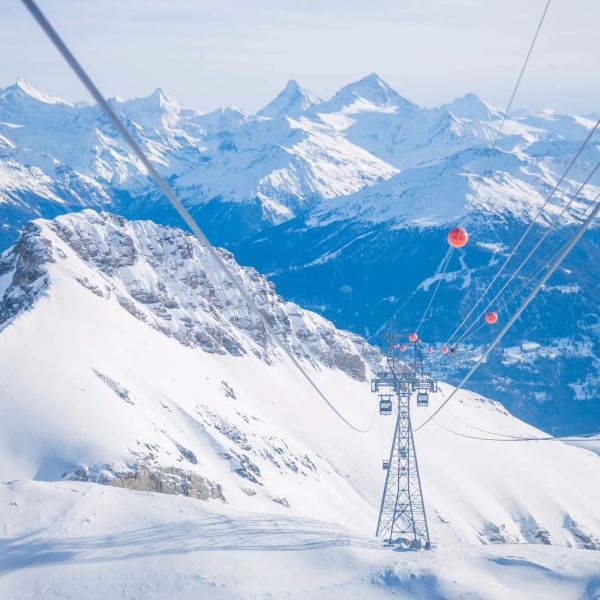
Crans-Montana 2027 World Championships President Resigns Ahead of Fraud Hearing
Less than four months out from the Crans-Montana 2027 World Championships, the man running the organising committee has stepped down. Claude-Alain Schmidhalter resigned as Swiss-Ski vice president and OC president after being indicted over a business dispute unrelated to skiing. He denies the allegations and faces court on October 27. Interim leaders are in place for the February 1-14 event.
9 Oct 2026
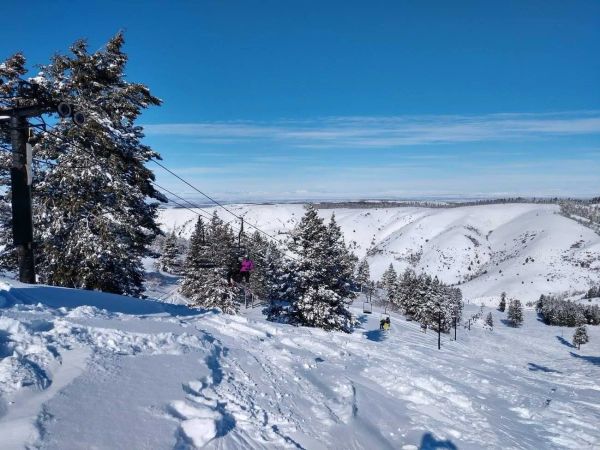
Kelly Canyon, Idaho, Adds Snowmaking, a Bigger Terrain Park and More Parking for 2026-27
Kelly Canyon had a rough 2025-26, and the Idaho resort has spent the summer making sure it doesn’t repeat. Snowmaking now reaches the top of Goldrush, the terrain park is doubling in size with a stereo system, lights and a snack shack, and the car park is getting bigger. Grooming is stepping up too. Target opening is December 4, conditions permitting.
9 Oct 2026
Stevens Pass Lift System
Stevens Pass runs twelve lifts: two double chairs, five quad chairs, three triple chairs and two surface lifts, serving 53 runs across 1,125 acres. The five quad chairs provide the bulk of uphill capacity across the resort's intermediate and advanced terrain, a configuration built up substantially since the area's more modest 1963-era network of three chairlifts and twelve rope tows.
Vail Resorts, following its 2018 acquisition, invested in upgrades to the Daisy and Brooks chairs as part of broader infrastructure improvements. However, the resort has faced documented operational challenges under Vail ownership, with staffing shortages and elevated avalanche risk at times limiting operations to as few as five lifts and 40 per cent of terrain, a shortfall that generated a widely circulated online petition and formal complaints to Washington state regulators.
The quad and triple chairs distribute skiers across the resort's varied terrain, including its steep upper-mountain zones and terrain parks, while the double chairs and surface lifts serve additional and beginner areas. There is no gondola or high-speed six-pack chair, though the overall twelve-lift network is substantial for a resort of Stevens Pass's acreage.
Specific further planned lift upgrades beyond the current network are not confirmed in available resort information. Vail's ownership since 2018 has brought both capital investment and, at times, documented operational strain, a dynamic that has shaped visitor sentiment toward the resort in recent years. The Epic Pass access gained through Vail ownership continues to bring substantial destination visitor traffic regardless of these operational challenges.
12lifts across 4 types
5
Quad Chairs
3
Triple Chairs
2
Double Chairs
2
Surface Lifts
Stevens Pass lift system
Stevens Pass is served by 12 lifts, listed here by type. Check which lifts are turning against the live conditions before you plan your first laps - early lifts and high-speed chairs get you to the best snow fastest.
More Stevens Pass intelligence: trail map, snow report, webcams, resort overview.